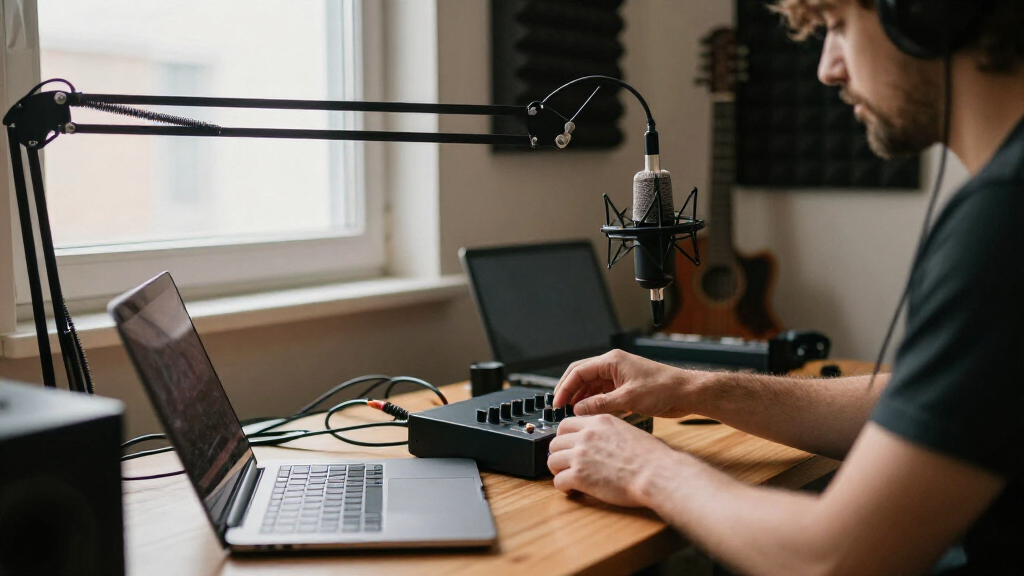
An audio interface for creators needs to balance clean preamps, low-latency monitoring, and software that fits a modern content workflow — whether that means podcasting, streaming, singing, or recording guitar. The Universal Audio Volt 2 earns the best overall spot for its vintage-inspired preamps, bundled plugin suite, and rock-solid build at a mid-range price. The Focusrite Scarlett Solo 3rd Gen remains the value benchmark for solo creators, while the Apogee Symphony Desktop Elite sets the ceiling for anyone producing finished tracks. The main tradeoff in this category is between simplicity and control: single-channel dongles like the Shure MVX2U are effortless but limited, while desktop units like the Volt 2 and Symphony Desktop offer routing and headroom that scale with your ambitions. Read on for the full breakdown, including budget picks from MAONO and M-Audio that punch above their price.

Get audio and creator gear delivered free — and shop member deals
- Fast, free delivery on millions of items
- Access to Prime Big Deal Days deals on October 6–7
- Prime Video, Amazon Music and more included
Complete the kit


Key Takeaways
- The Universal Audio Volt 2 won best overall because its preamp character and plugin bundle give creators room to grow; the Scarlett Solo 3rd Gen matched its core sound quality but offers fewer expansion paths.
- Single-channel XLR-to-USB adapters like the Shure MVX2U are the fastest route from mic to computer, but the comparison showed they hit a ceiling the moment you add a second source or instruments.
- Budget models from MAONO and M-Audio proved that sub-$100 interfaces are viable for streaming and voiceover, but phantom power reliability and driver support separated them from the mid-tier picks.
- Mobile-first creators get the most from hybrid units like the MAONO P2, which connects to phones and tablets directly — a flexibility the desktop-only interfaces in this lineup can’t match.
- High-resolution 24-bit/192kHz specs appeared across nearly every price point, which means sample rate mattered far less than preamp noise floor, monitoring latency, and software ecosystem in the final ranking.
| Synido USB C Audio Interface for Recording Music, Streaming, Podcasting |  | Best Value Pick | Sampling Rate: 48kHz | Bit Depth: 24-bit | Inputs: XLR, 6.35mm, Line In | VIEW LATEST PRICE | See Our Full Breakdown |
| 2×2 24-bit/192kHz USB C Studio Recording Interface |  | Best for Home Studios | Resolution: 24-bit/192kHz | Inputs: 2 XLR/TRS combo jacks | Phantom Power: 48V | VIEW LATEST PRICE | See Our Full Breakdown |
| Apogee Symphony Desktop Elite USB-C Audio Interface |  | Best Premium Pick | Channels: 10 | Max Sample Rate: 192kHz | Connectivity: USB-C | VIEW LATEST PRICE | See Our Full Breakdown |
| Shure MVX2U Gen 2 XLR-to-USB-C Audio Interface |  | Best for Solo Voice Creators | Connectivity: XLR to USB-C | Gain: +60 dB | Phantom Power: 48V | VIEW LATEST PRICE | See Our Full Breakdown |
| Focusrite Scarlett Solo 3rd Gen USB-C Audio Interface |  | Best for Singer-Songwriters | Connectivity: USB-C | Bit Depth: 24-bit | Sample Rate: 192kHz | VIEW LATEST PRICE | See Our Full Breakdown |
| Universal Audio Volt 2 USB Audio Interface |  | Best Premium Preamp Sound | Resolution: 24-bit / 192 kHz | Preamps: UA 610-style | Compatibility: macOS, Windows, iPad, iPhone | VIEW LATEST PRICE | See Our Full Breakdown |
| MAONO PS22 Lite USB Audio Interface for PC, Guitar & Vocals Streaming |  | Best for Streamers | Resolution: 24-bit / 192 kHz | Channels: 2 | Inputs: Microphone, Guitar, Bass, Computer, Smartphone | VIEW LATEST PRICE | See Our Full Breakdown |
| MAONO P2 Hybrid USB Audio Interface Dual XLR for PC, Phone, iPad, Guitar |  | Best for Hybrid Workflows | Resolution: 24-bit / 192 kHz | Channels: 2 | Inputs: Dual XLR, Microphone, Guitar, PC, Smartphone, iPad | VIEW LATEST PRICE | See Our Full Breakdown |
| M-AUDIO M-Track Duo USB Audio Interface |  | Best Value for Beginners | Audio Resolution: 48 kHz | Inputs: 2 combo XLR/Line/Instrument with phantom power | Outputs: 1/4″ headphone output, stereo 1/4″ outputs | VIEW LATEST PRICE | See Our Full Breakdown |
| ESI Neva Duo Professional 24-bit/192kHz USB Audio Interface |  | Best Plug-and-Play Simplicity | Bit Depth: 24-bit | Sample Rate: 192 kHz | Inputs: Dual XLR | VIEW LATEST PRICE | See Our Full Breakdown |
| audio interface for creator | Connectivity | Inputs |
|---|---|---|
| Synido USB C Audio Interface f | USB-C to USB-A | XLR, 6.35mm, Line In |
| 2×2 24-bit/192kHz USB C Studio | USB-C | 2 XLR/TRS combo jacks |
| Apogee Symphony Desktop Elite | USB-C | — |
| Shure MVX2U Gen 2 XLR-to-USB-C | XLR to USB-C | — |
| Focusrite Scarlett Solo 3rd Ge | USB-C | 1 microphone, 1 instrument |
| Universal Audio Volt 2 USB Aud | — | — |
| MAONO PS22 Lite USB Audio Inte | USB | Microphone, Guitar, Bass, Computer, Smartphone |
| MAONO P2 Hybrid USB Audio Inte | USB-C hybrid (multi-device) | Dual XLR, Microphone, Guitar, PC, Smartphone, iPad |
| M-AUDIO M-Track Duo USB Audio | USB | 2 combo XLR/Line/Instrument with phantom power |
| ESI Neva Duo Professional 24-b | USB plug-and-play | Dual XLR |
More Details on Our Top Picks
Synido USB C Audio Interface for Recording Music, Streaming, Podcasting
For creators who want full 2×2 flexibility on a tight budget, this Synido model covers the basics that matter: XLR, instrument, and line inputs, 48V phantom power, and three monitoring modes that let you switch between recording, streaming, and podcasting workflows without re-cabling anything. Compared to the Focusrite Scarlett Solo, you gain a second input channel and direct monitor flexibility, though you give up Scarlett’s polished bundled software ecosystem.
The real tradeoff here is sample rate — it tops out at 48kHz versus the 192kHz offered by pricier options like the 2×2 USB C interface below, which matters if you plan to deliver high-resolution audio. It also leans on a third-party ASIO driver for smooth DAW performance, which adds a small setup hurdle beginners should expect.
Pros:- Three monitoring modes that adapt to streaming versus recording setups
- Versatile inputs covering XLR, instrument, and line sources
- 48V phantom power supports condenser microphones
- Lightweight 300g build travels easily for mobile sessions
Cons:- Requires a third-party ASIO driver for best DAW compatibility
- Capped at 48kHz sampling, below the 192kHz standard of rivals
Best for: Podcasters and streamers who need two simultaneous inputs and monitoring modes without spending much
Not ideal for: Producers delivering hi-res 192kHz audio or anyone who wants polished manufacturer software bundles out of the box
- Sampling Rate:48kHz
- Bit Depth:24-bit
- Inputs:XLR, 6.35mm, Line In
- Outputs:Headphone, Line Out
- Phantom Power:48V
- Connectivity:USB-C to USB-A
- Weight:300g
- Dimensions:14 x 11.5 x 4.5 cm
Our verdict“A sensible budget choice when you need two inputs and monitoring control for under the price of premium competitors.”
2×2 24-bit/192kHz USB C Studio Recording Interface
This unbranded 2×2 unit positions itself as the studio-grade workhorse of the budget tier, offering 24-bit/192kHz resolution that matches the Focusrite Scarlett Solo spec-for-spec while adding a second combo input for dual-mic interviews or vocal-plus-guitar sessions. Its plug-and-play driverless setup across Mac, PC, and iOS makes it friendlier to mobile creators than the Synido, which needs an ASIO driver install for DAW use.
The compromise is power and polish. Being bus-powered only, it may struggle to feed power-hungry condenser mics reliably compared to units with external supply options, and its build and support ecosystem fall short of Focusrite’s reputation. Two channels also means it won’t grow with you the way a Universal Audio Volt 2 with its analog-style preamps might.
Pros:- 24-bit/192kHz resolution rivaling more expensive interfaces
- Driverless plug-and-play on Mac, PC, and iOS
- Dual combo inputs handle mic and instrument at once
- Zero-latency direct monitoring for clean tracking
Cons:- Bus-powered only, with no external power option
- Limited to 2 channels with no expansion path
Best for: Home studio creators recording vocals and instruments simultaneously who want hi-res capture across Mac, PC, and iOS
Not ideal for: Growing studios needing more than two channels or users with older USB-A-only machines without adapters
- Resolution:24-bit/192kHz
- Inputs:2 XLR/TRS combo jacks
- Phantom Power:48V
- Connectivity:USB-C
- Monitoring:Zero-latency direct monitoring
- Headphone Output:3.5mm jack
Our verdict“The strongest resolution-per-dollar option here for creators who record more than one source at a time.”
Apogee Symphony Desktop Elite USB-C Audio Interface
The Symphony Desktop Elite is in a different league from everything else in this lineup, and its price says so. What you’re paying for is Apogee’s flagship conversion with ultra-low distortion, plus a touchscreen workflow that no budget box from MAONO or M-Audio can match. The vintage mic preamp emulations and bundled DSP/native plugins let you print character onto tracks while tracking — a genuine production advantage, not a gimmick.
With 10 channels, it also outgrows the 2×2 crowd entirely, making it the only option here for drum sessions or full band capture. The tradeoffs are steep: cost is the obvious one, but also a dependence on Apogee’s Control 2 software for full functionality, and USB-C-only connectivity that leaves older machines behind. If you’re comparing this against the Scarlett Solo, you’re asking the wrong question — they serve different careers.
Pros:- Ultra-low distortion conversion at the flagship level
- Touchscreen control that speeds up session workflow
- Vintage preamp emulations add analog character while tracking
- 10 channels support full-band and drum recording
Cons:- High price multiple times beyond every other pick here
- Requires Apogee’s software for full functionality
- USB-C only, limiting compatibility with older setups
Best for: Professional producers and engineers who need flagship conversion, 10 channels, and in-the-box preamp character
Not ideal for: Hobbyists and first-time buyers — the price buys capabilities a bedroom podcaster will never touch
- Channels:10
- Max Sample Rate:192kHz
- Connectivity:USB-C
- Control Software:Apogee Control 2
- Compatibility:Mac, Windows, iPad Pro
- Weight:1.9 pounds
Our verdict“Buy this when your recordings are the product — skip it if you’re still learning the basics.”
Shure MVX2U Gen 2 XLR-to-USB-C Audio Interface
The MVX2U Gen 2 takes the opposite approach from every other interface here: instead of a box with multiple inputs, it’s a single-channel dongle that turns one XLR mic into a USB-C audio solution. What justifies its existence is the onboard processing — Auto Level Mode, a real-time denoiser, and a digital popper stopper that fixes problems before they hit your recording software. For podcasters and streamers, that’s less editing work after every session.
Its +60dB gain and 48V phantom power handle demanding dynamic mics like the SM7B, something budget interfaces like the MAONO PS22 Lite can struggle with. The tradeoff is singular focus: no instrument input, no second channel, and XLR mics only. If your workflow is voice-only — voiceover, streaming, podcasting — that specialization reads as a feature, not a flaw.
Pros:- Auto Level Mode delivers consistent output without manual gain riding
- Real-time denoiser and digital popper stopper reduce post-production
- +60dB gain drives low-sensitivity dynamic microphones
- Works with desktop, tablet, and smartphone via MOTIV apps
Cons:- Single XLR channel only — no instruments or second mics
- USB-C connection may need adapters on older devices
Best for: Podcasters, streamers, and voiceover artists using one XLR mic who want automatic gain and noise cleanup
Not ideal for: Musicians recording guitar or multiple sources — there’s a single XLR input and nothing else
- Connectivity:XLR to USB-C
- Gain:+60 dB
- Phantom Power:48V
- Audio Processing:Auto Level Mode, Real-Time Denoiser, Digital Popper Stopper
- Compatibility:Desktop, tablet, smartphone
- App Support:MOTIV Mix, MOTIV Audio, MOTIV Video
Our verdict“The right tool when one great microphone and zero post-production fuss is the entire job.”
Focusrite Scarlett Solo 3rd Gen USB-C Audio Interface
The Scarlett Solo remains the default answer for a reason: it pairs 24-bit/192kHz converters with the friendliest user experience in this lineup. The gain Halo metering makes setting input levels nearly foolproof, and the switchable Air mode adds presence to vocals and acoustic guitar — exactly what a singer-songwriter tracking both at once needs from its mic-plus-instrument input pair. Its bundled software stack (Ableton Live Lite, Pro Tools Intro, Hitmaker Expansion) is deeper than anything Synido or MAONO includes, so you can start producing the day it arrives.
Compared to the 2×2 192kHz interface above, the Solo trades a second mic channel for a dedicated hi-Z instrument input — the right call for guitarists, the wrong one for two-person podcasts. And unlike the Shure MVX2U, it demands more manual gain management, with no onboard processing to rescue a noisy room.
Pros:- 24-bit/192kHz recording with polished, reliable converters
- Air mode adds brightness to vocals and acoustic instruments
- Substantial bundled software including Ableton Live Lite and Hitmaker Expansion
- Gain Halo metering makes correct levels nearly automatic
Cons:- Only one mic input and one instrument input
- No onboard processing — a noisy room stays noisy
Best for: Singer-songwriters and guitarists recording vocal-plus-instrument takes at home with bundled software to grow into
Not ideal for: Multi-guest podcasters or bands — one mic input and one instrument input is the hard ceiling
- Connectivity:USB-C
- Bit Depth:24-bit
- Sample Rate:192kHz
- Inputs:1 microphone, 1 instrument
- Outputs:2 balanced line outputs
- Included Software:Pro Tools Intro+, Ableton Live Lite, Cubase LE, Hitmaker Expansion
Our verdict“The safest first interface for a solo musician, and one that holds its value if you upgrade later.”
Universal Audio Volt 2 USB Audio Interface
The Volt 2 earns its place on this list for one reason: the classic UA 610 preamp design, which gives vocals and instruments a warmth that the Focusrite Scarlett Solo 3rd Gen simply doesn’t match. Bundled access to UAD plug-ins and tutorials also means buyers get a taste of professional mixing tools out of the box, something the M-Audio M-Track Duo’s basic software bundle can’t compete with.
The tradeoffs are real, though. Compared with the MAONO P2’s hybrid connectivity, the Volt 2 is less mobile — it requires an external power supply and a separate Apple Lightning adapter for iPads, so it’s a desk unit rather than a grab-and-go option. For creators building a permanent home studio, that matters less than the sound quality on offer.
Pros:- Classic UA 610 preamps deliver warm, professional vocal character
- 24-bit/192 kHz resolution for detailed recordings
- Works across Mac, Windows, iPad, and iPhone
- Includes UAD plug-ins and tutorial content
Cons:- Requires an external Volt power supply
- Needs an Apple Lightning to USB Camera Adapter for iOS
- No battery or portable power option
Best for: Home studio creators who prioritize analog-style preamp character and want bundled professional plug-ins
Not ideal for: Mobile and travel-focused creators — no battery power and the external supply makes it cumbersome on the road
- Resolution:24-bit / 192 kHz
- Preamps:UA 610-style
- Compatibility:macOS, Windows, iPad, iPhone
- Power:External Volt power supply
- iOS Requirement:Apple Lightning to USB Camera Adapter
- Bundled Software:UAD plug-ins and tutorials
Our verdict“This pick makes the most sense for creators with a fixed studio space who want premium preamp tone over portability.”
MAONO PS22 Lite USB Audio Interface for PC, Guitar & Vocals Streaming
Where the M-Audio M-Track Duo focuses on straightforward recording, the PS22 Lite is built around the live streaming workflow. Its routing software lets creators blend game audio, mic, and chat across OBS, Twitch, TikTok, and Discord — a capability that matters far more to a streamer than raw preamp quality.
Recording quality holds up too, with 24-bit/192kHz capture that outclasses the M-Track Duo’s 48kHz ceiling. The compromises: it’s capped at 2 channels, so podcasters running multiple microphones will hit a wall, and the routing software has a learning curve that plug-and-play purists may find frustrating at first. Compared with the simpler ESI Neva Duo, the PS22 Lite trades simplicity for streaming-focused control.
Pros:- 24-bit/192kHz recording quality
- Powerful routing software built for live streaming
- Accepts microphones, guitars, bass, and smartphone audio
- Plug-and-play across Windows, macOS, iOS, Android, and ChromeOS
Cons:- Limited to 2 channels for multi-mic setups
- Routing software setup can feel complex for beginners
Best for: Streamers and content creators who need multi-source audio routing across OBS, Twitch, and TikTok
Not ideal for: Multi-mic podcast teams — the 2-channel limit forces an external mixer or an upgrade
- Resolution:24-bit / 192 kHz
- Channels:2
- Inputs:Microphone, Guitar, Bass, Computer, Smartphone
- Compatible Devices:Guitar, Headphone, Laptop, Smartphone, Microphone, Speaker
- Supported Software:Ableton Live, Studio One, Logic Pro, Cubase, GarageBand, FL Studio, OBS, Twitch, Discord
- Connectivity:USB
- Dimensions:6.29″D x 5.19″W x 2″H
- Weight:0.43 kg
Our verdict“The strongest choice here for livestreamers who need audio routing control rather than just clean recording.”
MAONO P2 Hybrid USB Audio Interface Dual XLR for PC, Phone, iPad, Guitar
The P2’s defining feature is its hybrid connectivity: it can connect to a computer, phone, and iPad simultaneously, which no other option in this lineup can do. For creators who record into a laptop while monitoring from a phone — or run IRL streams from mobile — that dual-device link is a genuine workflow advantage over the MAONO PS22 Lite’s single-host design.
Built-in real-time effects and noise reduction software also reduces the need for post-production cleanup, a step up from the ESI Neva Duo’s bare-bones approach. The downsides mirror its sibling: 2 channels only, and getting the software dialed in across different platforms takes patience. It’s slightly larger and heavier than the PS22 Lite too, a minor penalty for the added flexibility.
Pros:- Simultaneous connection to PC, phone, and iPad
- Studio-grade 24-bit/192kHz recording
- Real-time effects and noise reduction software
- Compact, durable build for home and mobile use
Cons:- Software setup needed for optimal cross-platform use
- Limited to 2 channels for multi-mic setups
Best for: Creators juggling phone and computer recording simultaneously, like mobile journalists and IRL streamers
Not ideal for: Anyone wanting a set-and-forget simple interface — simultaneous multi-device use requires setup effort
- Resolution:24-bit / 192 kHz
- Channels:2
- Inputs:Dual XLR, Microphone, Guitar, PC, Smartphone, iPad
- Connectivity:USB-C hybrid (multi-device)
- Compatible Devices:Guitar, Headphone, Laptop, Microphone, Smartphone
- Supported Software:Ableton Live, Studio One, Logic Pro, Cubase, GarageBand, FL Studio, OBS, Twitch, Discord
- Dimensions:6.42″D x 8.27″W x 3.23″H
- Weight:0.5 kg
Our verdict“This model is better suited to creators whose workflow spans phones and computers at once than to single-desk recorders.”
M-AUDIO M-Track Duo USB Audio Interface
For first-time creators, the M-Track Duo strips recording down to the essentials and prices it accordingly. The two combo XLR/Line/Instrument inputs with phantom power mean a beginner can plug in a condenser mic and a guitar at once — a more flexible starting point than a single-input option like the Focusrite Scarlett Solo.
The honest tradeoff is resolution: 48kHz audio is fine for podcasts and demos, but it sits well below the 192kHz ceiling of the MAONO PS22 Lite or ESI Neva Duo, which matters if ambitions grow toward music production. What it does offer is a zero-latency USB/Direct monitoring switch, sparing newcomers the confusing echo that plagues cheap setups, plus bundled MPC Beats software to start making tracks immediately.
Pros:- Combo XLR/Line/Instrument inputs with phantom power
- Zero-latency monitoring via USB/Direct switch
- Bundled MPC Beats production software
- Portable and affordable entry point
Cons:- 48kHz resolution lags behind 192kHz rivals
- Only 2 inputs, unsuitable for larger setups
Best for: Budget-conscious beginners recording first podcasts, demos, or vocal takes
Not ideal for: Producers aiming for release-quality music — the 48kHz ceiling limits long-term headroom
- Audio Resolution:48 kHz
- Inputs:2 combo XLR/Line/Instrument with phantom power
- Outputs:1/4″ headphone output, stereo 1/4″ outputs
- Monitoring:Zero-latency USB/Direct switch
- Software:MPC Beats included
- Connectivity:USB
Our verdict“The most sensible cheap first interface here — great for learning, easy to outgrow.”
ESI Neva Duo Professional 24-bit/192kHz USB Audio Interface
The Neva Duo stands out as the option with the least friction. Plug-and-play USB connectivity and real-time monitoring mean a creator can be recording within minutes — no routing software to learn, unlike the MAONO PS22 Lite or P2. For someone who finds software dashboards intimidating, that simplicity is the selling point.
Sound quality holds its own with 24-bit/192kHz capture and dual XLR inputs with 48V phantom power, matching the pricier Volt 2 on paper for resolution, if not preamp character. The honest cost of simplicity: there are no built-in preamp coloration or effects, and advanced features require external software. It’s a clean blank canvas rather than a feature-packed studio hub.
Pros:- 24-bit/192kHz high-resolution recording
- Dual XLR inputs with 48V phantom power
- True plug-and-play USB setup with real-time monitoring
- Cross-platform PC and Mac compatibility
Cons:- Limited to 2 input channels
- No built-in preamp coloration or effects
- Advanced features require external software
Best for: Creators who want high-resolution recording with minimal setup fuss on PC or Mac
Not ideal for: Streamers wanting built-in effects and routing — those features require third-party software here
- Bit Depth:24-bit
- Sample Rate:192 kHz
- Inputs:Dual XLR
- Phantom Power:48V
- Connectivity:USB plug-and-play
- Compatibility:PC and Mac
Our verdict“The right pick for creators who value instant, no-software setup over built-in processing and streaming tools.”

How We Picked
I ranked these interfaces through the lens of a working creator rather than a studio engineer. The criteria that carried the most weight were preamp quality and noise floor (does a quiet podcast recording stay quiet), direct monitoring latency (can you hear yourself without distracting delay), connectivity flexibility (USB-C, iOS support, instrument inputs), and the bundled software ecosystem, since most creators never buy plugins separately. Build quality and physical controls — real gain knobs, headphone volume separation, clear metering — also factored heavily, because interfaces get touched constantly during streams and sessions.
The ranking logic follows a growth curve. Plug-and-play adapters like the Shure MVX2U sit lower for versatility but earn strong marks for simplicity, while two-channel desktop units from Universal Audio, Focusrite, and Apogee rise to the top because they handle the moment a creator’s setup expands. Budget entries from MAONO, M-Audio, and ESI were judged against their price bracket — a $70 interface isn’t penalized for lacking loopback, but it is penalized for noisy preamps or flaky drivers.
| audio interface for creator | Connectivity |
|---|---|
| Synido USB C Audio Interface f | USB-C to USB-A |
| 2×2 24-bit/192kHz USB C Studio | USB-C |
| Apogee Symphony Desktop Elite | USB-C |
| Shure MVX2U Gen 2 XLR-to-USB-C | XLR to USB-C |
| Focusrite Scarlett Solo 3rd Ge | USB-C |
| Universal Audio Volt 2 USB Aud | — |
| MAONO PS22 Lite USB Audio Inte | USB |
| MAONO P2 Hybrid USB Audio Inte | USB-C hybrid (multi-device) |
| M-AUDIO M-Track Duo USB Audio | USB |
| ESI Neva Duo Professional 24-b | USB plug-and-play |
Factors to Consider When Choosing Audio Interface For Creators
Before picking an interface, it helps to understand what actually separates a satisfying purchase from an upgrade you make six months later. These are the factors that shaped my ranking — and the tradeoffs most creators get wrong.Channel Count: Buy for Your Setup in Six Months
The single most common mistake is buying a one-channel interface when a second mic, guitar, or synth is even a remote possibility. A single XLR input locks you into solo recording, and upgrading later means reselling at a loss. Two-channel units like the Volt 2 or ESI Neva Duo cost only slightly more but double your creative options — interviews, duets, and recording vocals over a live instrument all become possible. That said, if you are strictly a solo streamer or voiceover artist, a compact single-channel adapter frees up desk space and budget for a better microphone. The right answer depends on honest projection of your workflow, not your current one.
Preamp Noise Floor Matters More Than Sample Rate
Marketing leads with 24-bit/192kHz specs, but nearly every interface in this roundup supports them — and almost no creator needs rates above 48kHz. What you will hear in every recording is the preamp noise floor, especially if you use dynamic microphones like an SM7B that demand lots of gain. Cheap preamps run out of clean gain and introduce hiss that no amount of post-processing fully removes. This is a major reason the mid-tier Focusrite and Universal Audio options outrank cheaper units with identical spec sheets. When comparing, look for gain range in dB and reviews that specifically mention quiet or noisy preamps rather than headline resolution numbers.
Direct Monitoring and Latency
Latency is the delay between speaking into the mic and hearing yourself in headphones, and it can ruin vocal performances and livestreams alike. Every interface here offers some form of direct monitoring, but the implementation differs: a simple mono/stereo switch is fine for podcasting, while a blend knob that mixes input and playback gives musicians much finer control. Interfaces without a hardware monitoring path force you through software monitoring, which introduces delay even on fast computers. If you sing, rap, or play instruments, treat a monitoring blend control as non-negotiable. Streamers should also check for loopback capability, which lets you route computer audio into the recording — a feature several budget picks here quietly lack.
Device Compatibility and Power
Creators rarely record in one place anymore, so connectivity deserves more attention than it usually gets. Bus-powered USB-C units work with laptops and many tablets, but true phone and iPad support varies — hybrid models like the MAONO P2 handle mobile devices directly, while desktop-first units may need powered hubs or adapters. Phantom power (+48V) for condenser mics also draws current that some phones can’t supply, which is where battery or wall-powered designs earn their keep. Check that drivers exist for your specific OS, especially if you run an older Windows build or produce on iOS. An interface that only works reliably on one machine becomes a limitation rather than a tool.
Software Bundles and Long-Term Value
The bundled software often represents $100–$400 of real value and is where budget and premium interfaces diverge sharply. Universal Audio includes a serious plugin suite that would cost far more bought separately, while generic budget bundles tend to be stripped-down lite versions of DAWs you may outgrow. My advice: weigh the bundle as part of the price, not a bonus. A $180 interface with a full production toolkit can be a better deal than a $100 interface with trial software. Also check the manufacturer’s track record for driver updates — Focusrite and M-Audio have long histories of supporting hardware years after release, which extends how long your money keeps working.
Physical Controls and Build Quality
During an actual session you will touch your interface constantly — adjusting gain mid-take, changing headphone volume, checking clip lights — and small design choices determine whether that feels smooth or frustrating. Dedicated hardware knobs for gain and monitoring beat shared or software-only controls every time. Metal chassis survive the backpack life of a traveling podcaster far better than lightweight plastic, which is worth paying extra for if you record on location. Visible metering helps you catch clipping before it ruins a take, a surprisingly common issue for beginners. These details rarely appear on spec sheets, yet they shape the day-to-day experience more than almost anything else.
Frequently Asked Questions
Do I need an audio interface if my USB microphone already works?
If your USB mic sounds acceptable and you only record voice, an interface isn’t urgent — but it becomes worthwhile the moment you want a better XLR microphone, a second input, or hardware monitoring control. XLR mics paired with an interface like the Scarlett Solo or Volt 2 generally deliver cleaner gain and far more upgrade flexibility than all-in-one USB designs. An interface also future-proofs your setup: you can swap microphones without replacing your entire signal chain. Creators planning to grow into music production or multi-person podcasts will benefit almost immediately. Solo streamers who are happy with their current sound can reasonably wait.
Can I run an audio interface with my phone or iPad for mobile recording?
Many USB-C interfaces work with mobile devices, but not all — this roundup’s hybrid options like the MAONO P2 are built specifically for phone and tablet use, while desktop-focused units may need adapters or external power. The key constraints are power delivery and current draw: phantom power for condenser mics can drain or overload a phone’s port, so check whether the interface is bus-powered or needs a wall supply. iOS support is generally more reliable than Android for low-latency audio thanks to Core Audio. If mobile recording is central to your workflow, prioritize interfaces with explicit mobile compatibility rather than assuming USB-C means it works everywhere.
Is it worth paying $500+ for something like the Apogee Symphony Desktop over a $160 interface?
Only if you’re producing finished music where conversion quality, DSP effects, and detailed routing translate directly into your output. The Symphony Desktop Elite offers converter quality and onboard processing that genuinely improve mix decisions, but a voiceover creator or streamer will hear almost no difference through typical playback systems. The honest framing: premium interfaces refine the last 10% of quality, while mid-tier units like the Volt 2 already nail the fundamentals. If your income depends on music production, the investment pays back; if you record speech, redirect that budget toward a better microphone or acoustic treatment first.
Why do cheap interfaces and expensive ones both claim 24-bit/192kHz?
Because converter chips are commodities now — the spec describes the chip’s capability, not the analog circuitry around it. Preamp quality, power supply design, shielding, and driver optimization are what you actually pay more for, and those determine noise floor, gain cleanliness, and latency stability. Two interfaces with identical resolution specs can sound audibly different with a demanding dynamic microphone. That’s why I weighted real-world preamp performance over headline numbers in the ranking. Treat sample rate as a checkbox, not a differentiator — nothing above 48kHz improves a podcast or stream.
Do I need two inputs, or is one enough for a solo channel?
One input is genuinely enough if you will always record a single voice and nothing else — the Shure MVX2U style of adapter exists precisely for that use case. But two inputs cost relatively little extra and unlock guest interviews, vocal-plus-guitar recording, and stereo sources, which is why most of my top-ranked picks are two-channel. Consider also that a second input lets you keep a backup mic or instrument permanently connected instead of rewiring. The practical cutoff: if there’s any realistic chance of a second person or instrument within a year, buy the second channel now. Solo voice creators with fixed workflows can save the money and spend it on acoustic treatment.
Conclusion
For most creators, the Universal Audio Volt 2 is the best overall choice — it combines preamp quality, monitoring flexibility, and a plugin bundle that keeps earning its price long after purchase. The Focusrite Scarlett Solo 3rd Gen is the best value pick for solo podcasters and streamers who want proven sound at the lowest sensible price. At the premium end, the Apogee Symphony Desktop Elite justifies its cost only for music producers whose output depends on conversion quality and onboard processing. Beginners should start with the M-Audio M-Track Duo or MAONO PS22 Lite, which cover the fundamentals without overwhelming or overspending. For specific needs: mobile-first creators get the MAONO P2, single-mic simplicity belongs to the Shure MVX2U, and desktop producers wanting 192kHz headroom on a budget should look at the ESI Neva Duo. Match the interface to where your creative work is headed, not just where it is today.
Fall Picks
fall essentials
As an affiliate, we earn on qualifying purchases.