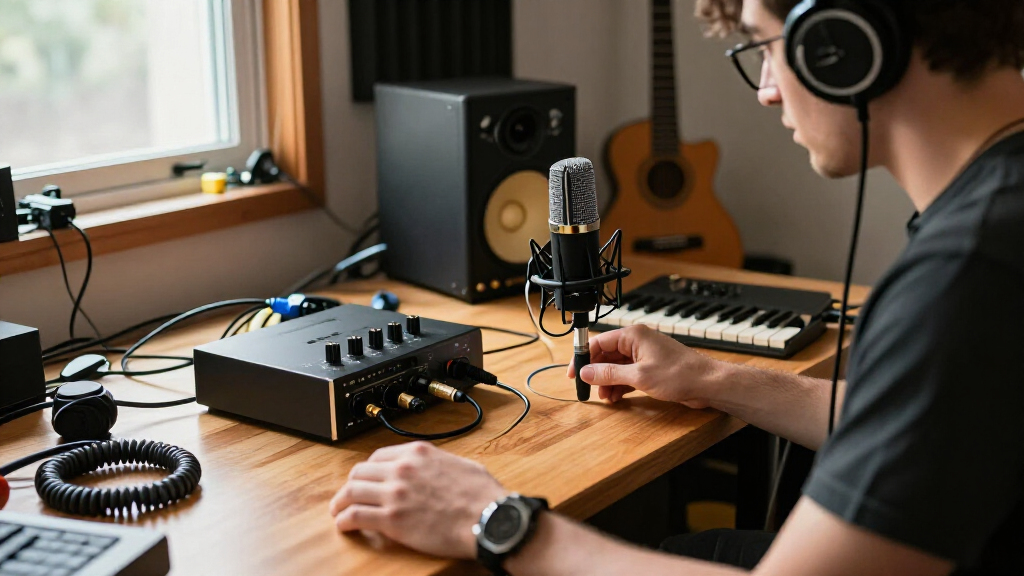
This checklist is for live music creators choosing gear for recording, streaming, performance prep, and capturing sound on location. It covers a mix of studio essentials and portable tools, with each slot focused on a distinct part of a creator setup. Use your actual workflow to decide which items belong at the top of your list.

Get audio and creator gear delivered free with Prime
- Fast, free delivery on millions of items
- Prime Video, Amazon Music and more included
- Member-only deals all year
The sections are organized by product type: audio interfaces, microphones, headphones, MIDI keyboards, field recorders, and desktop microphone stands. Each pick is named in its category, followed by practical checks for choosing and fitting that kind of gear. Check the connections and setup you already use before comparing options.
Use the “Look for” points as a quick shortlist, then read the notes to catch fit or compatibility details that can be easy to overlook. You do not need every category at once; start with the part of your setup that currently limits your work. Build around your next recording or performance and add gear as your needs become clearer.
USB Audio Interfaces
An audio interface is a central connection point when your setup needs to bring sound into a computer. The listed pick is the Focusrite Scarlett 2i2 Studio 4th Gen USB-C Audio Interface Bundle. Before choosing an interface, map out what you plan to connect at the same time: microphones, instruments, or other sources. Count your simultaneous inputs rather than choosing by appearance or bundle name alone.
A common buying mistake is assuming every included cable or accessory will match your computer and recording space. Check the computer’s available ports, the intended connection, and whether your recording software supports your workflow. Think through placement too: a desktop interface should be reachable without stretching across a crowded workspace. Confirm the complete signal path from source to interface to computer before settling on a setup.
For fit, consider how much desk space the interface and any bundled gear will occupy, and whether you need to move the setup between rooms or locations. Compatibility depends on your equipment and software, so verify those specifics rather than inferring them from the product name. Choose for your real input needs, leaving enough room for the way you expect to record.
What to look for:
- Count the sources you need to connect at once.
- Check the computer connection and available ports.
- Confirm compatibility with your recording software.
- Measure desk space for the interface and bundle.
- Review what the bundle includes before planning the setup.
Focusrite Scarlett 2i2 Studio 4th Gen USB-C Audio Interface Bundle
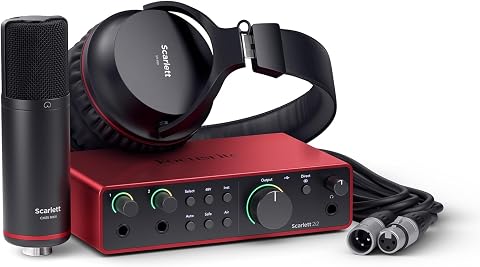
This recording bundle includes a two-channel USB audio interface, CM25 MkIII condenser microphone, SH-450 headphones, and recording software. The interface features a 120 dB dynamic range, 192 kHz maximum sample rate, Auto Gain, Clip Safe, and Air mode for vocals and guitars.
Pros:
- Includes microphone, headphones, and recording software
- 120 dB dynamic range and 192 kHz maximum sample rate
- Auto Gain and Clip Safe help manage recording levels
- Air mode adds presence to vocals and guitars
Cons:
- Availability can vary
Best for: Creators building a computer-based recording setup around the named bundle
Not ideal for: Anyone whose required connections or software compatibility are unconfirmed
Bottom line: Match the interface bundle to your sources, computer ports, and recording workflow before setting up.
Dynamic Vocal Microphones
A vocal microphone choice affects how your voice enters a recording, stream, or other creator setup. The pick here is the Shure SM7B Dynamic Vocal Microphone for Podcasting & Streaming. Before buying, consider where and how you plan to use it: desk-based speech, streaming, or vocal recording can call for different placement and support arrangements. Plan the mic’s position around your typical working posture.
A frequent mistake is treating a microphone as a complete recording chain. Check what else your setup requires, including a suitable connection path and a stable way to hold or position the mic. Confirm that your interface or other equipment can accommodate your intended microphone setup; the product name by itself does not establish compatibility with everything you own. Verify the supporting gear before planning a session around the mic.
Consider physical fit at the desk: where the microphone will sit, whether it blocks a screen or workspace, and how its position changes when you move. Check the included product details for the connection and mounting requirements that matter to your setup. Leave room for comfortable placement, especially if the mic will stay in position during longer recording or streaming sessions.
What to look for:
- Check the microphone connection against your existing gear.
- Confirm what mounting support your setup requires.
- Plan placement for your speaking or singing position.
- Make sure the mic will fit your desk or recording area.
- Review product details for included items and requirements.
Shure SM7B Dynamic Vocal Microphone for Podcasting & Streaming

The Shure SM7B is a professional dynamic microphone known for its warm, natural sound and exceptional vocal clarity. It features a cardioid pickup pattern, built-in pop filtering, and rugged all-metal construction, making it ideal for podcasting, streaming, voiceover, and studio recording environments.
Pros:
- Exceptional vocal clarity and warm sound
- Built-in pop filter and windscreen reduce noise and plosives
- Rugged all-metal construction for durability
- Seamless XLR integration with full control over gain and tone
Cons:
- Requires external pre-amp with sufficient gain (at least 60dB)
- Heavier and larger than some other microphones
- No built-in USB connectivity
Best for: Creators choosing a named dynamic mic for vocal, podcasting, or streaming use
Not ideal for: Buyers who have not confirmed the connection and mounting needs
Bottom line: Check the microphone’s connection, support, and placement against the way you record.
Closed-Back Studio Headphones
Headphones are a regular point of contact between your setup and your ears, so fit and intended use deserve close attention. The listed pick is the Focal Lensys Professional Closed-Back Headphones. Think about whether you need headphones for monitoring, focused listening, or work in a shared space, and confirm that the connection works with the device you plan to use. Prioritize a comfortable fit for the length of your sessions.
A common mistake is choosing headphones based on a category label without checking how they feel or connect in your own setup. Look for product details on the connector, included accessories, and any fit information. If possible, try the headphones on with your usual glasses or headwear, since those can change how a fit feels. Check the details that affect daily use, not just the product title.
Consider where the headphones will live when not in use and whether the cable or accessories suit your desk or mobile workflow. If you switch between devices, verify that each one can connect as intended; do not assume compatibility. Match the headphones to your listening routine and the spaces where you expect to use them.
What to look for:
- Confirm the connector suits your audio source.
- Review fit details and try them with usual headwear if possible.
- Check which accessories are included.
- Consider cable reach for your listening position.
- Verify compatibility with each device you plan to use.
Focal Lensys Professional Closed-Back Headphones

The Focal Lensys Professional headphones feature dual Al/Mg drivers and a sound-isolating design, making them suitable for studio monitoring, mixing, and authentic playback. They offer a comfortable fit with memory foam earpads and a durable build, ideal for both professionals and enthusiasts.
Pros:
- Excellent sound quality with dual Al/Mg drivers
- Sound isolation for focused listening
- Comfortable fit for extended use
- Durable construction with carrying case
Cons:
- May be expensive for casual users
- Design may be bulky for portable use
Best for: Creators seeking the named closed-back headphones for focused listening
Not ideal for: Anyone who has not checked fit or device connection
Bottom line: Check comfort, connector, and accessories against your listening setup before choosing.
Compact MIDI Keyboards
A compact MIDI keyboard can serve as a hands-on controller in a music-making workspace. The pick in this checklist is the Arturia MiniLab 37 MIDI Keyboard Controller. Before choosing a controller, consider how you will use it with your music software and what physical space you can spare. Measure the available desk area and think about how the keyboard will sit alongside your other gear.
A common mistake is assuming a MIDI controller will work with every instrument or software setup without configuration. Check the connection type, supported software, and any setup steps in the product details. Think through how you will position the keyboard while working: it should be reachable without crowding a computer keyboard, interface, or other controls. Confirm software and connection compatibility before planning a session around it.
Consider whether you expect to leave the controller in one place or move it between a desk and another workspace. Check the product dimensions and the location of its connections so that cables have room and controls remain accessible. Choose a layout that keeps controls within reach, and verify that it fits the way you create rather than relying on the category name alone.
What to look for:
- Measure the space available for the controller.
- Confirm connection compatibility with your computer or setup.
- Check support for your intended music software.
- Plan cable routing and access to controls.
- Review product dimensions before arranging your desk.
Arturia MiniLab 37 MIDI Keyboard Controller

The MiniLab 37 is a compact MIDI keyboard controller with 37 slim keys for two-handed play. It includes DAW-integrated pads and faders, a mini display, an arpeggiator, Chord mode, custom DAW mappings, and transposition features.
Pros:
- 37 keys support two-handed play
- Compact design suits small studios and mobile setups
- Includes arpeggiator and Chord mode
- Pads and faders support hands-on DAW control
Cons:
- Slim keys may not suit players who prefer full-size keys
Best for: Creators adding the named MIDI controller to a compatible music setup
Not ideal for: Buyers who have not checked software support or workspace fit
Bottom line: Verify software, connection, dimensions, and placement before adding the controller.
Portable Field Recorders
A field recorder is worth considering when your work involves capturing sound away from a fixed computer setup. The named pick is the Zoom F8n Pro Field Recorder for Filmmakers with 8 Inputs & 10 Tracks. The product name specifies its input and track counts, but your own recording plan determines whether those capacities suit the sources you need to capture. List the sources you expect to record before comparing recorder setups.
A common mistake is focusing on input count while overlooking the rest of the location workflow. Check which microphones and other sources you plan to connect, how you will monitor recordings, and how you will transfer files afterward. Confirm the recorder’s power and storage requirements in its product details, and plan how those items will travel with your kit. Prepare for the whole recording session, from setup through file handoff.
For portable use, consider the recorder’s size and weight in the context of the bag or case you already use. Check how its controls and connections will be reached when the recorder is positioned where you need it. Make sure your location kit fits together, including the recorder, connected gear, and the way you plan to carry everything.
What to look for:
- Count the sound sources you need to record at once.
- Check connection needs for microphones and other sources.
- Review power and storage requirements in the product details.
- Plan monitoring and file transfer steps.
- Consider recorder size and how it fits your carrying setup.
Zoom F8n Pro Field Recorder for Filmmakers with 8 Inputs & 10 Tracks
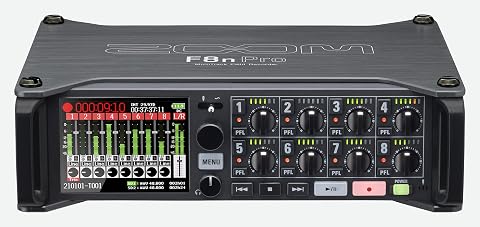
The Zoom F8n Pro is an 8-channel/10-track field recorder featuring 32-bit float recording and dual AD converters for clip-free audio capture. High-quality preamps deliver up to 75dB of gain with -127dBu EIN, while 0.2ppm timecode accuracy keeps tracks perfectly synced with picture.
Pros:
- 32-bit float recording eliminates clipping concerns
- High-gain, low-noise preamps for pristine audio
- Dual SD slots with redundant recording for data safety
- Accurate 0.2ppm timecode for reliable sync with video
Cons:
- Professional-grade feature set may be overkill for beginners
- Likely expensive compared to consumer recorders
Best for: Filmmakers planning location recordings with several sources
Not ideal for: Creators who have not mapped their connections, power, or storage needs
Bottom line: Match the recorder’s stated inputs and tracks to your complete location workflow.
Desktop Microphone Stands
A desktop stand helps determine where a microphone sits during desk-based recording or streaming. The listed option is the Heavy Duty Desktop Mic Stand with Flexible Arm and Weighted Base. Before choosing a stand, check the space around your desk and the position from which you speak or sing. Plan the microphone’s reach so it can be placed where you need it without crowding your work area.
A common buying mistake is assuming that a stand will fit every microphone or desk. Confirm that the stand’s attachment works with your microphone, and review the product’s dimensions and mounting details. A weighted base also needs a stable, level surface with enough room; consider how the stand will coexist with screens, keyboards, and other equipment. Verify microphone and desk compatibility before relying on the stand.
Think about how often you will reposition the mic and where the arm will rest when it is not in use. Check that the flexible arm can reach your intended position within your setup, and make sure its movement will not interfere with nearby gear. Leave clear space for adjustment so you can work comfortably and place the microphone consistently.
What to look for:
- Confirm the stand attachment suits your microphone.
- Measure desk space for the weighted base.
- Check arm reach against your recording position.
- Review product dimensions and mounting details.
- Plan clearance around screens and other desk gear.
Heavy Duty Desktop Mic Stand with Flexible Arm and Weighted Base

This heavy-duty desktop microphone stand offers unshakable stability with a weighted base and anti-slip rubber pad, securely supporting microphones up to 2.68 lbs. It features universal compatibility with various microphone and camera models, adjustable joints for precise positioning, and a space-saving, sleek design with cable management.
Pros:
- Provides excellent stability and vibration-free support
- Universal compatibility with popular microphones and webcams
- Adjustable joints for precise positioning and easy setup
- Space-saving design with cable management for a clean workspace
Cons:
- Limited to a maximum load of 2.68 lbs, not suitable for heavier microphones
- Requires assembly with included tools, which may be challenging for some users
- Design may be too compact for larger or heavier equipment
Best for: Creators positioning a compatible microphone at a desk
Not ideal for: Anyone whose desk space or microphone attachment has not been checked
Bottom line: Confirm attachment fit, base clearance, and arm reach before placing the stand.
When deciding what to buy first, start with the item that addresses your most immediate recording need, then check what supporting connections or accessories that choice requires. Next, prioritize the pieces that help complete that workflow, such as a microphone, headphones, controller, recorder, or stand. Spend first on the setup bottleneck you encounter most often, and confirm compatibility before adding more gear.
Use this checklist as a starting point, then compare the product details with your own workspace, devices, and recording habits. A setup that fits your workflow is easier to use consistently, whether you are working at a desk or capturing sound elsewhere. Take it one practical step at a time, and let each addition serve a clear purpose.
Halloween Picks
halloween
As an affiliate, we earn on qualifying purchases.