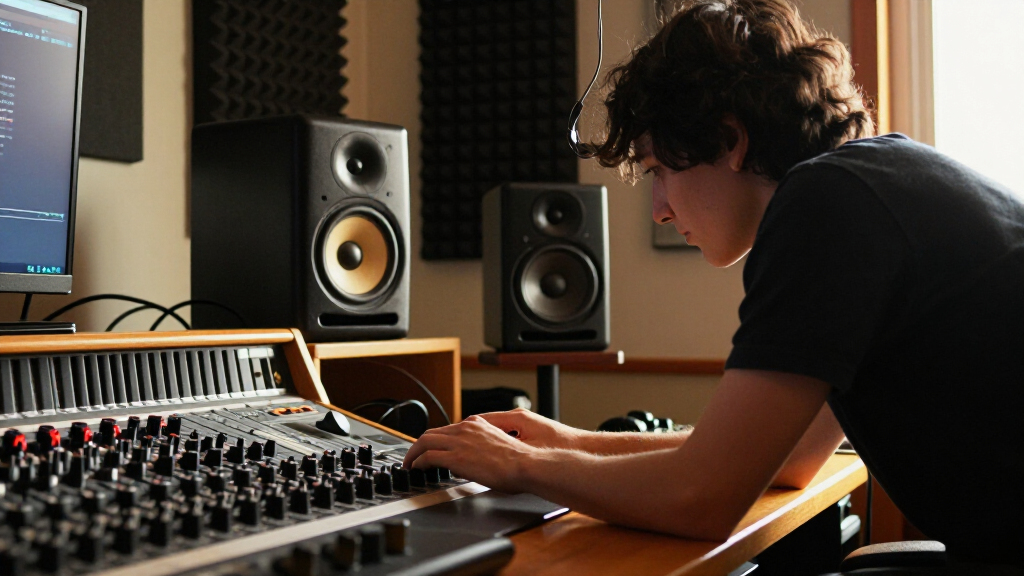
For most home studios, I’d start with the Yamaha HS8: its larger woofer suits buyers who need more low-end reach and have room to place full-size monitors. The PreSonus Eris E7 XT is a strong alternative for a wider listening area, while the Edifier MR5 offers a more versatile feature set for mixed studio and everyday use. The main tradeoff is between cabinet size and bass extension, desk-friendly compactness, and extras such as Bluetooth that can make a speaker less studio-focused. My lineup also includes smaller options for tight workspaces and lower-volume listening. Read on for the full comparison and a pick matched to your room, workflow, and priorities.

Get audio and creator gear delivered free with Prime
- Fast, free delivery on millions of items
- Prime Video, Amazon Music and more included
- Member-only deals all year
Complete the kit



Key Takeaways
- The Yamaha HS8 is the large-room choice in this lineup, but its size and bass output make room placement and listening distance more important than with compact models.
- The PreSonus Eris E7 XT offers a larger-monitor alternative to desktop speakers; buyers should choose it for room coverage rather than a space-saving setup.
- The Edifier MR5 stands apart for buyers who want studio-oriented speakers with more everyday connectivity, while the Bluetooth-equipped Ortizan C7 models lean further toward convenience.
- Small monitors such as the PreSonus Eris 3.5, Edifier MR4, and Mackie CR3.5 suit cramped desks, but their compact cabinets cannot substitute for a larger monitor’s low-frequency reach.
- Several entries are close variants or bundles: the Ortizan C7 pair appears in two finishes, and the Yamaha HS5 listing is a white two-pack bundle, so compare the actual configuration and available desk space before choosing.
| Yamaha HS8 8-Inch Powered Studio Monitor Pair – Black |  | Best for Full-Range Mixing | Woofer: 8 inches | Tweeter: 1-inch dome | Frequency response: 38Hz–30kHz | VIEW LATEST PRICE | See Our Full Breakdown |
| Edifier MR5 2.0 Studio Monitor Bookshelf Speakers, 110W RMS, Black |  | Best for Flexible Studio and Home Use | Woofer: 5 inches | Tweeter: 1 inch | Power: 110W RMS | VIEW LATEST PRICE | See Our Full Breakdown |
| PreSonus Eris E7 XT 2-Way Active Studio Monitor |  | Best for a Wide Listening Sweet Spot | Low-frequency driver: 6.55-inch woven composite | High-frequency transducer: 1.25-inch silk dome | Power output: 130W | VIEW LATEST PRICE | See Our Full Breakdown |
| Yamaha HS5 W 5-Inch Powered Studio Monitor (White, 2-Pack) Bundle |  | Best for Straightforward Stereo Mixing | Model: HS5W | Bundle: Two monitors | Woofer: 5 inches | VIEW LATEST PRICE | See Our Full Breakdown |
| PreSonus Eris 3.5 Powered Studio Monitors, Pair |  | Best Compact Desktop Pick | Speaker size: 3.5 inches | Tweeter: 1 inch | Power: 50W | VIEW LATEST PRICE | See Our Full Breakdown |
| Ortizan C7 Powered Studio Monitors Pair with Bluetooth 5.3, White |  | Best for Flexible Desktop Connectivity | Woofer diameter: 3.5 inches | Tweeter diameter: 0.75 inches | Connectivity: Bluetooth, RCA, AUX, TRS, Type-C | VIEW LATEST PRICE | See Our Full Breakdown |
| PreSonus Eris E4.5 2-Way 4.5-Inch Near Field Studio Monitor (Pair) |  | Best for Beginner Mixing | Woofer diameter: 4.5 inches | Tweeter diameter: 1 inch | Power: 50 watts total; 25 watts per side | VIEW LATEST PRICE | See Our Full Breakdown |
| Yamaha HS4 Powered Studio Monitor in White, Pair |  | Best for Compact Reference Monitoring | Woofer size: 4.5 inches | Frequency response: 60 Hz–22 kHz | Power output: 26 W + 26 W | VIEW LATEST PRICE | See Our Full Breakdown |
| M-AUDIO BX4 4.5-inch Wired Studio Monitors Pair |  | Best for Wired Feature Variety | Woofer diameter: 4.5 inches | Tweeter diameter: 2.54 centimeters | Power output: 120 watts | VIEW LATEST PRICE | See Our Full Breakdown |
| Edifier MR3 Powered Studio Monitor, Bluetooth Active Speaker |  | Best for Studio Work and Everyday Listening | Speaker size: 4 inches | Woofer diameter: 3.5 inches | Power output: 42 watts | VIEW LATEST PRICE | See Our Full Breakdown |
| Edifier MR4 Studio Monitor Speakers, 42W, 4-inch Powered Desktop Speakers, White |  | Best for Home Studio Versatility | Power output: 42W RMS (21W + 21W) | Woofer: 4-inch | Tweeter: 1-inch silk dome | VIEW LATEST PRICE | See Our Full Breakdown |
| Mackie CR3.5 Studio Monitors (Pair), 3.5″ Woofers, Tone Knob, Black | 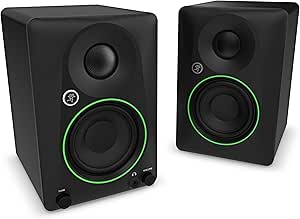 | Best Compact Desktop Pick | Power output: 50 watts | Woofer: 3.5 inches | Tweeter: 1 inch | VIEW LATEST PRICE | See Our Full Breakdown |
| Edifier R1280T Powered Bookshelf Speakers – 2.0 Near Field Studio Monitor |  | Best for Studio Listening in a Living Space | Power output: 42 watts RMS | Speaker type: Powered bookshelf, 2.0 | Driver size: 4 inches | VIEW LATEST PRICE | See Our Full Breakdown |
| Ortizan C7 Powered Studio Monitors Pair with Bluetooth 5.3, Black |  | Best for Wireless Desktop Convenience | Bluetooth: Version 5.3 | Woofer: 3.5 inches | Tweeter: 0.75 inches | VIEW LATEST PRICE | See Our Full Breakdown |
| studio monitor speaker | Connectivity | Tweeter | Frequency response | Color |
|---|---|---|---|---|
| Yamaha HS8 8-Inch Powered Stud | XLR | 1-inch dome | 38Hz–30kHz | Black |
| Edifier MR5 2.0 Studio Monitor | Bluetooth 6.0, XLR, TRS, RCA, AUX | 1 inch | 46Hz–40kHz | — |
| PreSonus Eris E7 XT 2-Way Acti | Versatile I/O options | — | — | — |
| Yamaha HS5 W 5-Inch Powered St | XLR | 1 inch | 30,000 Hz (listed) | White |
| PreSonus Eris 3.5 Powered Stud | TRS, RCA, AUX | 1 inch | 80Hz–20kHz | Black |
| Ortizan C7 Powered Studio Moni | Bluetooth, RCA, AUX, TRS, Type-C | — | — | White |
| PreSonus Eris E4.5 2-Way 4.5-I | — | — | — | — |
| Yamaha HS4 Powered Studio Moni | — | — | 60 Hz–22 kHz | White |
| M-AUDIO BX4 4.5-inch Wired Stu | — | — | — | Black |
| Edifier MR3 Powered Studio Mon | Bluetooth, RCA, AUX | — | — | — |
| Edifier MR4 Studio Monitor Spe | TRS, RCA, AUX | 1-inch silk dome | 60Hz–20kHz | White |
| Mackie CR3.5 Studio Monitors | RCA, TRS | 1 inch | — | — |
| Edifier R1280T Powered Bookshe | Auxiliary, wired | 13mm silk dome | 80Hz | — |
| Ortizan C7 Powered Studio Moni | — | 0.75 inches | — | — |
More Details on Our Top Picks
Yamaha HS8 8-Inch Powered Studio Monitor Pair – Black
The Yamaha HS8 is the strongest fit here for producers who need substantial low-frequency reach and a monitor aimed at mix decisions, not casual listening. Its 8-inch woofer and stated 38Hz–30kHz response give it more bass extension than the smaller Yamaha HS5 W, which can help reveal weight and balance issues without leaning as heavily on headphones. The bi-amped 120W design is built around separate low- and high-frequency amplification. That capability comes with a space penalty: these monitors need room for careful placement and are less suited to a cramped desk than the PreSonus Eris 3.5. They also offer only XLR connectivity in the supplied specs, so buyers wanting Bluetooth or several everyday inputs should look at the Edifier MR5 instead. I’d choose the HS8 for a dedicated mixing space, not a flexible all-purpose setup.
Pros:- 8-inch woofer and 38Hz lower frequency limit offer deeper stated bass reach than the Yamaha HS5 W.
- 120W total bi-amped amplification supports dedicated low- and high-frequency output.
- Designed for transparent reproduction and professional mixing.
- Robust construction includes a vibration-eliminating mounting system.
Cons:- Large cabinets require more desk or stand space and careful placement.
- XLR is the only listed connection, limiting plug-in flexibility compared with the Edifier MR5.
- Needs external power and is not suited to buyers seeking a casual, low-setup system.
Best for: Producers mixing in a dedicated room who need deeper bass reach and an XLR-based monitor setup.
Not ideal for: Casual listeners and small-desk users who need compact speakers, wireless playback, or multiple input types.
- Woofer:8 inches
- Tweeter:1-inch dome
- Frequency response:38Hz–30kHz
- Total amplification:120W (75W LF + 45W HF)
- Amplifier design:Bi-amped
- Connectivity:XLR
- Color:Black
Our verdict“Choose the HS8 for a dedicated mixing room where deeper bass reach matters more than compact size or connection variety.”
Edifier MR5 2.0 Studio Monitor Bookshelf Speakers, 110W RMS, Black
The Edifier MR5 suits buyers who want monitor-style tuning alongside the convenience of a home speaker system. Its 110W RMS output, room tuning options, and 3-way active crossover make it more adaptable than the Yamaha HS8, while its Bluetooth 6.0 and XLR, TRS, RCA, and AUX inputs accommodate both studio gear and everyday devices. That range makes it the most connection-friendly pick in this group. The tradeoff is that the MR5’s listed 46Hz bass reach does not extend as low as the HS8’s 38Hz response, so low-end mix judgments may call for another reference. At 11 inches deep and over 10kg, it also isn’t as desk-friendly as the PreSonus Eris 3.5. I’d pick it for a shared production and listening space, not for a tiny workstation.
Pros:- Bluetooth 6.0 plus XLR, TRS, RCA, and AUX connections supports a wide range of sources.
- Room acoustic tuning offers a way to adapt playback to the listening space.
- 110W RMS and a 3-way active crossover give it substantial output for near-field and room use.
- MDF enclosure and high-resolution audio support suit a versatile home setup.
Cons:- 46Hz stated lower frequency limit is higher than the Yamaha HS8’s 38Hz limit.
- The 11-inch depth and 10.38kg weight make it a substantial fit for a small desk.
- Room tuning and setup take more work than a simple compact pair such as the Eris 3.5.
Best for: Home producers and listeners who need one pair for wired studio equipment, Bluetooth playback, and room-tuned near-field use.
Not ideal for: Mix engineers prioritizing deeper low-frequency monitoring or buyers with very limited desk space.
- Woofer:5 inches
- Tweeter:1 inch
- Power:110W RMS
- Frequency response:46Hz–40kHz
- Crossover:3-way active
- Connectivity:Bluetooth 6.0, XLR, TRS, RCA, AUX
- Dimensions:11″D × 6.3″W × 10.4″H
- Weight:10.38kg
- Enclosure:MDF
Our verdict“Pick the MR5 if you want a flexible studio-and-home pair with broad connectivity and room tuning rather than the HS8’s deeper bass reach.”
PreSonus Eris E7 XT 2-Way Active Studio Monitor
The PreSonus Eris E7 XT stands apart for the way its EBM waveguide is intended to widen the usable listening area. That can help when collaborators need to hear a mix from nearby seats, whereas the compact PreSonus Eris 3.5 is a better match for one person working close to a desk. The E7 XT pairs a 6.55-inch woven composite driver with a 1.25-inch silk-dome transducer and provides acoustic tuning controls for adapting its response to a room. Its 130W output is the highest stated figure among these five, but the supplied data does not give a numeric frequency range, so I wouldn’t choose it on a specific bass-extension claim. It is also a tall, 16-inch cabinet with no listed wireless feature. This is a room-oriented choice, not a compact or cable-free one.
Pros:- EBM waveguide is designed for a wide, controlled sweet spot useful for shared listening.
- 130W power output provides strong stated amplification.
- Acoustic tuning controls allow adjustment for the room.
- 6.55-inch woven composite driver and 1.25-inch silk-dome transducer provide a substantial two-way configuration.
Cons:- 16-inch height and 11.5-inch depth make it a poor fit for many compact desks.
- No built-in Bluetooth or other wireless playback is listed.
- The supplied specifications do not give a numeric frequency-response range.
Best for: Producers who share a listening position with collaborators and want acoustic controls in a larger active monitor.
Not ideal for: Desk-only users, buyers who need Bluetooth, or anyone comparing monitors by a clearly stated frequency-response range.
- Low-frequency driver:6.55-inch woven composite
- High-frequency transducer:1.25-inch silk dome
- Power output:130W
- Design:2-way active monitor
- Waveguide:EBM
- Connectivity:Versatile I/O options
- Dimensions:11.5″D × 9.8″W × 16″H
- Acoustic controls:Adjustable tuning controls
Our verdict“Choose the E7 XT for a larger mixing space where a wider shared listening area matters more than compact size or wireless playback.”
Yamaha HS5 W 5-Inch Powered Studio Monitor (White, 2-Pack) Bundle
The Yamaha HS5 W pair is a straightforward choice for buyers who want two matching monitors with a studio-focused, flat-response design. Its 5-inch woofer and 70W maximum output make it a more modest room fit than the Yamaha HS8, which has a larger driver and a stated 38Hz lower frequency limit. That smaller format can suit a compact production room, though it gives up some low-end reach for bass-heavy work. The bundle includes two speakers for stereo monitoring, and XLR connectivity keeps the setup oriented toward audio interfaces rather than casual wireless playback. Compared with the Edifier MR5, the HS5 W offers a simpler connection profile and no listed Bluetooth, but avoids making versatility its selling point. I’d shortlist it for focused stereo mixing, while checking the supplied dimensions carefully: the listed bundle measurements are unusually large for a 5-inch monitor.
Pros:- Bundle includes two monitors for a matched stereo setup.
- Bi-amplified design and flat-response intent support mix-focused listening.
- 5-inch woofer offers a smaller driver format than the Yamaha HS8.
- XLR connectivity suits audio-interface-based studio systems.
Cons:- No wireless connectivity is listed.
- The smaller woofer is a less suitable choice than the HS8 for buyers prioritizing deeper bass reach.
- The supplied bundle dimensions are large and may complicate space planning.
Best for: Home-studio producers who want a matched stereo pair with a flat-response design and XLR connection.
Not ideal for: Bass-heavy producers who need deeper low-frequency reach, or listeners who want Bluetooth and several everyday inputs.
- Model:HS5W
- Bundle:Two monitors
- Woofer:5 inches
- Tweeter:1 inch
- Maximum output power:70W
- Frequency response:30,000 Hz (listed)
- Connectivity:XLR
- Color:White
- Mounting type:Tabletop
Our verdict“Choose the HS5 W pair for focused stereo mixing in a smaller production setup, but opt for the HS8 if deeper bass monitoring is the priority.”
PreSonus Eris 3.5 Powered Studio Monitors, Pair
The PreSonus Eris 3.5 pair is the clearest choice here for a crowded desk or close-range listening setup. With 3.5-inch speakers, a listed 50W output, and dimensions of just 5.5 inches deep by 6 inches wide by 8.3 inches high, it takes up far less room than the Yamaha HS8 or PreSonus Eris E7 XT. High- and low-frequency controls give desktop users some ability to tailor playback, and TRS, RCA, and AUX inputs make it easier to connect common sources than the XLR-only Yamaha HS8. The compromise is scale: its 80Hz lower frequency limit is less suited to judging deep bass, and the Eris E7 XT is the stronger fit for a wider shared listening area. I’d choose these for a compact editing, streaming, or music-making desk—not as the main reference for bass-dependent mixes.
Pros:- Compact dimensions fit desks and shelves where larger monitors such as the HS8 cannot.
- High- and low-frequency controls allow basic sound adjustment.
- TRS, RCA, and AUX inputs offer broader wired connection options than the HS8’s listed XLR input.
- Pair format supports stereo near-field monitoring.
Cons:- 80Hz lower frequency limit leaves deep bass evaluation to headphones or another reference.
- Small drivers are better suited to near-field use than filling a larger room.
- Requires external power and has no water-resistance rating.
Best for: Bedroom producers, streamers, and editors who need a compact pair for close-range desktop listening with multiple wired inputs.
Not ideal for: Mixers who need deep bass evaluation, higher output for a larger room, or a wide listening area for group sessions.
- Speaker size:3.5 inches
- Tweeter:1 inch
- Power:50W
- Frequency response:80Hz–20kHz
- Connectivity:TRS, RCA, AUX
- Dimensions:5.5″D × 6″W × 8.3″H
- Weight:6.4 pounds
- Mounting:Desktop or bookshelf
- Color:Black
Our verdict“Pick the Eris 3.5 for a compact desktop setup with flexible wired inputs, but choose a larger monitor for bass-critical mixing.”
Ortizan C7 Powered Studio Monitors Pair with Bluetooth 5.3, White
The Ortizan C7 is the most connection-flexible choice here for a compact desk setup: Bluetooth 5.3 joins TRS, RCA, AUX, and Type-C connections, so it can serve both a production device and everyday wireless playback. Compared with the PreSonus Eris E4.5, it gives up the listed headphone amplifier and tuning controls in favor of wireless convenience and a smaller 3.5-inch woofer. That makes it a practical fit for creators who switch between a computer, phone, and audio interface, but less compelling for close critical mixing where room and sound adjustments matter. The compact cabinet suits limited desktop space; the tradeoff is less capacity for low-end monitoring than the larger-w woofer options. It also needs wall power and is not intended for outdoor use.
Pros:- Bluetooth 5.3 plus TRS, RCA, AUX, and Type-C connections suit mixed desktop setups
- Compact design fits tighter workspaces
- Wireless Bluetooth range is listed at 18 meters
- Described as professionally tuned for balanced audio
Cons:- 3.5-inch woofer offers less low-frequency monitoring headroom than 4.5-inch options such as the Yamaha HS4
- No listed room tuning controls or headphone amplifier
- Requires corded power and is not waterproof
Best for: Desktop creators who want a compact pair for wired production connections and Bluetooth listening from a phone or tablet
Not ideal for: Mixers who need deeper bass, onboard tuning controls, or a built-in headphone amplifier
- Woofer diameter:3.5 inches
- Tweeter diameter:0.75 inches
- Connectivity:Bluetooth, RCA, AUX, TRS, Type-C
- Bluetooth range:18 meters
- Color:White
- Power source:Corded electric
Our verdict“Choose the Ortizan C7 if flexible wired and Bluetooth connections matter more than larger woofers or dedicated monitoring controls.”
PreSonus Eris E4.5 2-Way 4.5-Inch Near Field Studio Monitor (Pair)
The PreSonus Eris E4.5 makes sense for a first production setup because it combines a 4.5-inch woofer with tuning controls, several common inputs, and a built-in headphone amplifier. Those features let a beginner adapt the speakers to a desk and switch to headphones without adding another device. Compared with the Yamaha HS4, the Eris adds that headphone convenience, while the Yamaha lists a frequency range down to 60 Hz and specific room and high-trim adjustments. The E4.5 is still a compact near-field option, not a substitute for a subwoofer when judging deep bass, and its power may be modest in a large room. It needs clear placement on a desk or stands to work as a monitor pair, so it is less suited to a crowded, makeshift setup.
Pros:- 4.5-inch woofer and 1-inch tweeter in a compact pair
- Tuning controls allow adjustment for the listening environment
- Built-in headphone amplifier supports quick switching to headphones
- TRS, RCA, and ⅛-inch aux inputs accommodate common sources
Cons:- Limited low-end extension without a subwoofer
- Listed 50-watt output may be insufficient for very large rooms
- Needs suitable desk or stand placement rather than a cramped corner
Best for: New home-studio users who want a wired monitor pair with basic tuning and an easy headphone-monitoring option
Not ideal for: Producers working in large rooms or anyone who needs authoritative deep-bass monitoring without a subwoofer
- Woofer diameter:4.5 inches
- Tweeter diameter:1 inch
- Power:50 watts total; 25 watts per side
- Inputs:¼-inch TRS, RCA, ⅛-inch aux
- Enclosure material:Medium-density fiberboard and Kevlar
- Additional features:Tuning controls and headphone amplifier
Our verdict“Pick the Eris E4.5 for a first studio desk where tuning and headphone access matter more than big-room output or deep bass.”
Yamaha HS4 Powered Studio Monitor in White, Pair
The Yamaha HS4 is the more reference-focused compact option in this group, with a stated 60 Hz–22 kHz frequency response and room-control and high-trim adjustments. Those controls help tailor the response when a small work area forces the speakers close to walls or a desk surface. Compared with the PreSonus Eris E4.5, the HS4 gives buyers explicit room and high-frequency adjustment features, while the Eris includes a headphone amplifier. Its 4.5-inch woofer keeps the cabinet useful for limited spaces, but neither model is a strong choice for checking very low bass without a subwoofer. The HS4’s wired XLR/TRS combo, RCA, and stereo mini inputs favor studio gear and computers over wireless convenience. Casual listeners may find its monitoring-oriented controls and setup more than they need.
Pros:- Room control and high-trim adjustments help adapt the speakers to placement
- XLR/TRS combo, RCA, and stereo mini inputs cover common wired sources
- Compact 4.5-inch design suits limited workspaces
- Specified frequency response runs from 60 Hz to 22 kHz
Cons:- Small woofer limits bass reach compared with larger monitor designs
- No wireless connectivity is listed
- Requires external power and is aimed more at monitoring than casual convenience
Best for: Video editors and home-studio producers who need compact, adjustable wired monitors for a desk or small control room
Not ideal for: Buyers who want Bluetooth, built-in headphone amplification, or strong sub-bass from a standalone pair
- Woofer size:4.5 inches
- Frequency response:60 Hz–22 kHz
- Power output:26 W + 26 W
- Inputs:XLR/TRS combo, RCA, stereo mini
- Dimensions:8.4 × 5.9 × 9.4 inches
- Weight:15 pounds
- Color:White
Our verdict“Choose the HS4 if you want compact wired monitors with placement adjustments, and skip it if Bluetooth or deep bass is a priority.”
M-AUDIO BX4 4.5-inch Wired Studio Monitors Pair
The M-AUDIO BX4 stands out for a wired desktop setup that benefits from several connection choices and onboard EQ customization. Its 4.5-inch Kevlar woofers, silk dome tweeters, and MDF cabinet are aimed at producing a fuller presentation than the smaller Ortizan C7, whose 3.5-inch woofer and Bluetooth connection favor compact, flexible use. The BX4 also includes aux input and headphone output, which can keep everyday listening gear close at hand. That versatility comes with a clear limitation: there is no wireless connectivity, so a phone needs a cable. Its cabinet may also take up too much room on a small desk, and the product data does not provide a lower frequency limit to help buyers judge bass extension precisely. Treat it as a feature-rich wired desktop pair, not a guaranteed bass-reference system.
Pros:- 4.5-inch Kevlar woofers and silk dome tweeters
- Customizable EQ controls provide some sound-profile adjustment
- ¼-inch, ⅛-inch, and RCA inputs support varied wired sources
- Aux input and headphone output add desktop convenience
Cons:- No wireless connectivity
- Cabinet size may crowd a small desk
- Listed frequency information gives a high-end figure but no low-frequency limit
Best for: Streamers, podcasters, and desktop producers who want wired inputs, onboard EQ, and a headphone output in one pair
Not ideal for: Small-desk users or buyers who want Bluetooth and clearly specified low-frequency extension
- Woofer diameter:4.5 inches
- Tweeter diameter:2.54 centimeters
- Power output:120 watts
- Inputs:¼-inch, ⅛-inch, RCA
- Enclosure material:Engineered wood and Kevlar
- Additional features:Customizable EQ, aux input, headphone output
- Color:Black
Our verdict“Pick the BX4 for a wired desktop workflow that benefits from EQ and convenient connections, but not if desk space or Bluetooth is a concern.”
Edifier MR3 Powered Studio Monitor, Bluetooth Active Speaker
The Edifier MR3 is the most lifestyle-friendly option here without abandoning its monitor role: Bluetooth, RCA, and AUX inputs support multiple sources, while the EDIFIER ConneX app adds sound-mode customization. That makes it more adaptable for a desk shared between editing and general listening than the wired-only M-AUDIO BX4. The listed 42-watt output and 3.5-inch woofer point to a compact stereo setup rather than a large-room monitoring solution. App controls are useful for tailoring playback, but they also mean the full adjustment experience depends on using the app. The product data gives a 40 kHz frequency figure without a lower response limit, so it does not establish how confidently the MR3 can reproduce deep bass. Its Bluetooth range is listed at 10 meters, and it is not waterproof.
Pros:- Bluetooth, RCA, and AUX connections support both wireless and wired sources
- ConneX app offers customizable sound modes
- 42-watt output is suited to a desktop stereo setup
- 85 dB signal-to-noise ratio is specified
Cons:- Full sound customization requires the app
- 3.5-inch woofer is a limited basis for judging deep bass
- Not waterproof and listed Bluetooth range is 10 meters
Best for: Desktop editors and casual producers who want a monitor-style pair for wired sources, Bluetooth playback, and app-based sound adjustments
Not ideal for: Mixers who need clearly documented low-frequency response, a large-room setup, or controls that do not rely on an app
- Speaker size:4 inches
- Woofer diameter:3.5 inches
- Power output:42 watts
- Connectivity:Bluetooth, RCA, AUX
- Signal-to-noise ratio:85 dB
- Control method:App
- Bluetooth range:10 meters
Our verdict“Choose the MR3 for a desk shared between editing and everyday Bluetooth listening, but look elsewhere for more fully specified bass monitoring.”
Edifier MR4 Studio Monitor Speakers, 42W, 4-inch Powered Desktop Speakers, White
The Edifier MR4 is a practical middle ground for a desktop setup that serves both editing and everyday listening. Its Monitor and Music modes let you choose between a more work-focused presentation and a more casual sound, while TRS, RCA, and AUX inputs make it easier to connect common studio and computer sources. Compared with the smaller Mackie CR3.5, its 4-inch woofer may offer a fuller foundation for near-field work; it still cannot reproduce deep bass like a larger monitor, so bass-heavy mixes may need headphones or a subwoofer check. The white MDF cabinets suit a clean desk, but these are wired speakers with no wireless option and need mains power. I’d choose them for flexibility, not for the deepest low end or a large room.
Pros:- Monitor and Music modes suit focused work and casual playback
- TRS, RCA, and AUX inputs accommodate a range of wired sources
- 4-inch woofer offers a larger driver than the Mackie CR3.5
- Compact MDF cabinets fit desktop near-field setups
Cons:- 4-inch woofer limits deep-bass monitoring
- No wireless connectivity
- Requires an external power source
Best for: Home-studio and desktop users who switch between music editing, video work, and casual listening and need several wired input options.
Not ideal for: Producers mixing bass-heavy material without headphones or a subwoofer, and buyers who want Bluetooth or speakers for a large room.
- Power output:42W RMS (21W + 21W)
- Woofer:4-inch
- Tweeter:1-inch silk dome
- Frequency response:60Hz–20kHz
- Connectivity:TRS, RCA, AUX
- Enclosure:MDF
- Sound modes:Monitor Mode and Music Mode
- Color:White
Our verdict“Choose the MR4 for a flexible, wired desktop studio that also handles everyday listening, but look to larger monitors for stronger bass extension.”
Mackie CR3.5 Studio Monitors (Pair), 3.5″ Woofers, Tone Knob, Black
The Mackie CR3.5 makes the most sense when desk space is tight and convenient setup matters more than low-frequency reach. Its 3.5-inch woofers keep the pair compact, while the tone control gives you a simple way to adjust the presentation for different listening material. Compared with the Edifier MR4, this model is the more space-conscious choice, but its smaller drivers are a less convincing fit for judging bass in a mix. RCA and TRS inputs support common wired sources, and the included isolation pads and cables reduce setup friction. The 50-watt output is better suited to near-field desktop listening than filling a larger room; its feature set is also more basic than a dedicated larger studio monitor. I’d pick it for a small work surface, not for bass-critical production.
Pros:- Compact 3.5-inch design fits crowded desks
- Tone knob allows straightforward sound adjustment
- RCA and TRS connections support common audio sources
- Isolation pads and cables are included
Cons:- Small woofers provide limited bass extension for mix decisions
- 50-watt output is a poor match for large listening spaces
- Basic feature set offers less flexibility than more studio-focused alternatives
Best for: Desktop creators, students, and casual editors with limited workspace who want a compact powered pair with basic tone adjustment.
Not ideal for: Producers who need reliable low-bass judgment or anyone trying to cover a large room with monitor speakers.
- Power output:50 watts
- Woofer:3.5 inches
- Tweeter:1 inch
- Connectivity:RCA, TRS
- Audio channels:2
- Dimensions:7.1″D × 5.5″W × 8.1″H
- Weight:10.2 pounds
- Power source:Corded electric
Our verdict“Pick the CR3.5 for a compact desktop setup with simple controls, but choose the Edifier MR4 or a larger monitor when bass accuracy matters more.”
Edifier R1280T Powered Bookshelf Speakers – 2.0 Near Field Studio Monitor
The Edifier R1280T suits buyers who want a pair of powered speakers that can handle near-field listening without looking like dedicated studio equipment. Its wooden bookshelf cabinets, remote, and adjustable bass and treble make everyday use more convenient than the more work-oriented Edifier MR4. Dual AUX inputs also allow two wired sources to stay connected. That convenience comes with a studio tradeoff: the listed frequency response begins at 80Hz, and the product data does not provide the same monitor-mode option as the MR4, so I would not make it my first choice for bass-sensitive mix decisions. Its larger listed dimensions may also be awkward on a crowded desk. I’d favor it for a mixed-use room where appearance and easy control matter alongside audio, rather than a space devoted to critical production.
Pros:- Remote control makes everyday listening adjustments convenient
- Dual AUX inputs allow two wired sources
- Bass and treble controls offer basic sound tailoring
- Wood enclosure gives the speakers a home-friendly appearance
Cons:- Listed 80Hz frequency response offers limited guidance for deep-bass work
- Larger listed dimensions may not suit small desktop setups
- Wired connectivity only
Best for: Home creators who want powered near-field speakers for casual editing and listening in a living room or home office, with a remote and wood finish.
Not ideal for: Mix engineers who need a clearly specified low-frequency range, a monitor-focused mode, or a compact pair for a cramped desk.
- Power output:42 watts RMS
- Speaker type:Powered bookshelf, 2.0
- Driver size:4 inches
- Tweeter:13mm silk dome
- Frequency response:80Hz
- Impedance:4 ohm
- Connectivity:Auxiliary, wired
- Controls and accessories:Remote control; adjustable bass and treble
- Enclosure:Wood
Our verdict“Choose the R1280T for a home office or living space where easy controls and a bookshelf look outweigh dedicated mix-monitor features.”
Ortizan C7 Powered Studio Monitors Pair with Bluetooth 5.3, Black
The Ortizan C7 stands apart from the wired-focused Edifier MR4 and Mackie CR3.5 by combining Bluetooth 5.3 with RCA, 3.5mm AUX, and balanced TRS inputs. That mix can simplify a desktop shared by a computer, phone, or other source, while the compact cabinet dimensions suit a small workspace. Its 3.5-inch woofer keeps the design modest, though it also limits how much low bass you can judge compared with larger monitors such as the MR4’s 4-inch pair. The product data lists a built-in 24-bit DAC, but gives no frequency-response or power-output figures, making studio suitability harder to compare on measurable terms. I’d choose the C7 for connection flexibility and casual creator work, not as my first pick for bass-critical mixing.
Pros:- Bluetooth 5.3 adds wireless playback alongside wired inputs
- RCA, 3.5mm AUX, and balanced TRS cover several source types
- Compact listed dimensions suit desktop placement
- Built-in 24-bit DAC is listed as an additional digital-audio feature
Cons:- 3.5-inch woofer is limited for judging deep bass
- No frequency-response or power-output figures are provided in the supplied specs
- Listed weight is 1.3 g, an implausible figure that makes handling and placement harder to assess
Best for: Desktop creators who regularly switch between wired studio sources and Bluetooth devices and need compact speakers for a small workspace.
Not ideal for: Mixers who depend on published frequency-response and power specifications, or anyone needing deep bass and a strictly wired monitoring setup.
- Bluetooth:Version 5.3
- Woofer:3.5 inches
- Tweeter:0.75 inches
- Input types:RCA, 3.5mm AUX, balanced TRS
- Listed connectivity range:18 meters
- Dimensions:5.11″D × 5.9″W × 7.67″H
- Listed weight:1.3 g
- Additional feature:Built-in 24-bit DAC
Our verdict“Choose the C7 for flexible Bluetooth and wired desktop playback, but prefer the Edifier MR4 when clearer published monitoring specifications matter more.”
How We Picked
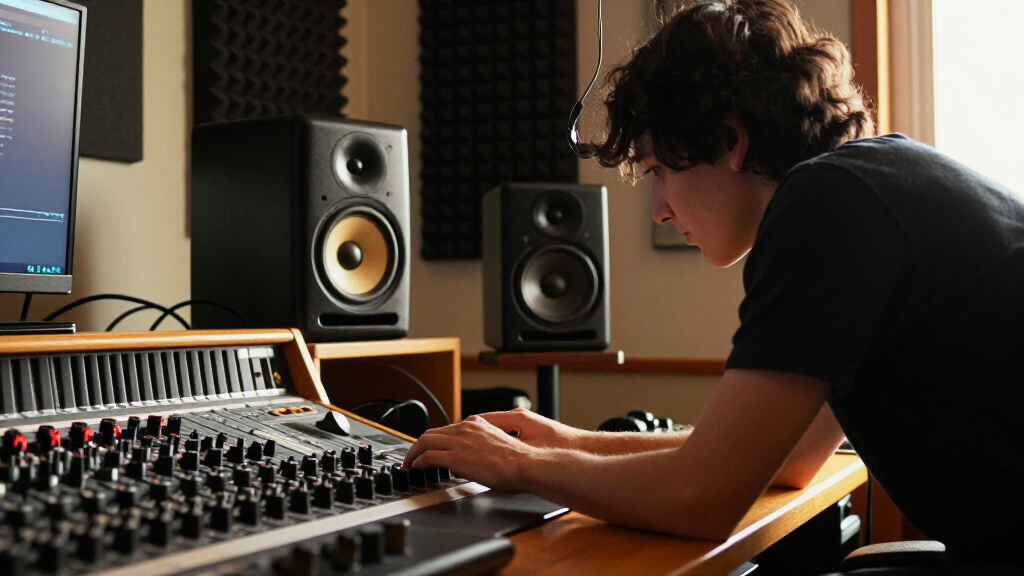
I ranked these studio monitor speakers by how well their stated design and features fit common home-studio needs: accurate, usable monitoring; practical low-frequency reach; suitable size for near-field placement; and useful input or control options. I also weighed setup demands, including whether a speaker’s cabinet and output make more sense on a desk or in a larger room. Connectivity features such as Bluetooth count as a convenience, not proof of better mixing accuracy.
The order favors models with a clear role and a better balance of monitoring usefulness, room fit, and flexibility. Larger speakers rank well for buyers who can accommodate them, but they do not automatically outrank compact models for desk users. Closely related listings, including the two Ortizan C7 finishes, are treated as one basic speaker proposition rather than separate performance tiers. Since these are not presented as hands-on test results, I avoid claims about measured sound or personal listening impressions and base the comparisons on the listed specifications and intended use.
Factors to Consider When Choosing Studio Monitor Speakers
Choosing studio monitors is less about picking the biggest speaker and more about matching its scale and connections to the work space and listening habits. I’d settle the room, placement, and signal-source questions before comparing feature lists.
Match woofer size to the room and listening distance
A larger woofer can support stronger low-frequency playback, but it does not guarantee better decisions in a small, untreated room. Room boundaries can exaggerate bass, while a desk can reflect sound toward the listening position. Small monitors may be easier to place near a computer, though they provide less low-end extension for judging bass-heavy material. Avoid buying larger speakers simply to gain volume if you cannot give them suitable space. If low bass matters and your room is small, headphones can complement compact monitors rather than forcing a large pair into an awkward setup.
Plan placement before buying
Check cabinet width, depth, and the space available for stands or isolation pads before choosing a pair. Monitors placed too close to a wall may produce a different bass balance from the one you expect, and a crowded desk can create uneven reflections. Near-field listening usually means placing the speakers at a similar distance from one another and from your listening position, then aiming them toward your ears. Leave room for cables and access to rear controls if the inputs or switches are on the back. A compact model that fits correctly can be more useful than a larger one that cannot be positioned well.
Separate mixing needs from convenience features
Bluetooth and tone controls can make speakers easier to use for casual listening, but they do not replace a reliable wired connection for production work. Decide which sources you need to connect, such as an audio interface, computer, or phone, and check that the speaker’s inputs suit them. Keep your main mixing signal path consistent so that switching between sources does not change what you are judging. A monitor with extra connections may suit a shared desk, while a simpler model may be enough for a dedicated interface-based setup. Pay for convenience only when you will use it.
Think about low-end limits and room treatment
Small monitors can make vocals, editing, and general arrangement comfortable, but their compact size limits how confidently you can judge deep bass. A subwoofer can extend low frequencies, yet it adds setup work: crossover settings, placement, and room interactions all affect what you hear. Before adding one, check whether your material truly needs that extension and whether the room can support it. Basic treatment and careful positioning can help more than moving to a larger speaker without addressing reflections. For critical bass decisions, many buyers benefit from checking mixes on headphones or another playback system as well.
Choose controls that suit your working space
Room and desk controls can help adapt a monitor’s response to its surroundings, but they are not a substitute for acoustic treatment or consistent placement. Look for controls you can understand and repeat, rather than assuming more switches mean a more accurate setup. If your monitors must sit near walls or on a reflective desk, adjustment options may be useful. Keep a written record of settings so that changes between sessions do not become a hidden variable. A straightforward speaker can be the better choice when the room is already arranged and you want fewer setup decisions.
Account for the full pair and the upgrade path
Listings can describe a single monitor, a pair, or a bundle, so verify the exact contents before ordering. Also check whether the speaker design is active or passive and whether it needs an external amplifier; powered models simplify many home setups, but still require suitable cables and power outlets. Think ahead about whether you may add an interface, stands, isolation pads, or a subwoofer. Spending more on a larger pair makes sense only if the room, placement, and work justify it. For a first setup, a well-positioned compact pair plus a consistent reference-checking routine can be a smarter start.
Frequently Asked Questions
Are studio monitor speakers a good choice for music listening as well as mixing?
They can work for both, but the right choice depends on whether you prefer a more direct monitoring presentation or extra convenience for everyday playback. Models with Bluetooth or additional controls may suit a shared work-and-listening desk, while a simpler wired setup can keep a production signal path straightforward. Do not assume that a speaker marketed for monitoring will sound flattering on every recording. If you mix, keep the source and listening settings consistent, then check important decisions on headphones or another playback system.
Should I buy the Yamaha HS8 or a compact pair for a small bedroom studio?
Choose based on usable placement, not on woofer size alone. The HS8 is the larger option and is better suited to a room where the cabinets can be positioned with enough space and the bass response can be managed. A compact pair is usually easier to place on a crowded desk and may be more practical for short listening distances. If you cannot position or control the larger monitors well, their extra low-frequency reach may not translate into more reliable mixing decisions. Check room dimensions and speaker placement before choosing.
Do I need Bluetooth on studio monitors?
No, Bluetooth is optional rather than a requirement for studio monitoring. It can be convenient for playing reference tracks from a phone or using the speakers for casual listening, but a wired connection is usually the simpler choice for a fixed production setup. Decide whether wireless playback solves a real problem in your workspace. If you use it, switch back to the same wired source and settings for mixing so that comparisons remain consistent. Connectivity should not outweigh fit, placement, and the kind of work you do.
Can 3.5-inch or 4-inch monitors handle bass-heavy music?
They can reproduce music with substantial bass, but small cabinets offer less low-frequency reach than larger monitors. That makes them useful for desk work and limited spaces, yet less dependable for judging the deepest bass by themselves. You can cross-check bass decisions on headphones or another playback system, or explore a subwoofer if your room and setup can support one. Adding a subwoofer without careful placement and level matching can create new problems. For bass-focused production, prioritize a setup that lets you verify the low end rather than relying on one compact pair.
Do these listings include a pair, or just one monitor?
Most product names here explicitly identify a pair, but the Yamaha HS5 listing is described as a white two-pack bundle and the PreSonus Eris E7 XT listing is described as one active monitor. Check the current listing details for the number of speakers and what the box contains before purchasing. A single monitor will not provide normal stereo monitoring on its own, though it can be used as part of a larger setup. Also confirm whether cables are included and whether you need an audio interface or other source equipment. Listing titles can be abbreviated, so verify the configuration rather than inferring it from the product family name.
Conclusion
For a balanced home-studio setup with room for larger cabinets, I’d choose the Yamaha HS8 as the best overall. The Edifier MR5 is my best value-minded pick for buyers who want studio use alongside everyday connectivity, while the PreSonus Eris E7 XT is the best premium-style choice for a workspace that can accommodate larger monitors. Beginners with a tight desk should start with a compact pair such as the PreSonus Eris 3.5 or Edifier MR4, rather than stretching their room to fit larger speakers. For a specific need, choose the Ortizan C7 if Bluetooth and a choice of finish matter, or the Yamaha HS5 bundle if you want a white pair in a smaller format than the HS8. Match the speaker to your room and signal setup first; the best fit is the one you can position and use consistently.
Halloween Picks
halloween
As an affiliate, we earn on qualifying purchases.