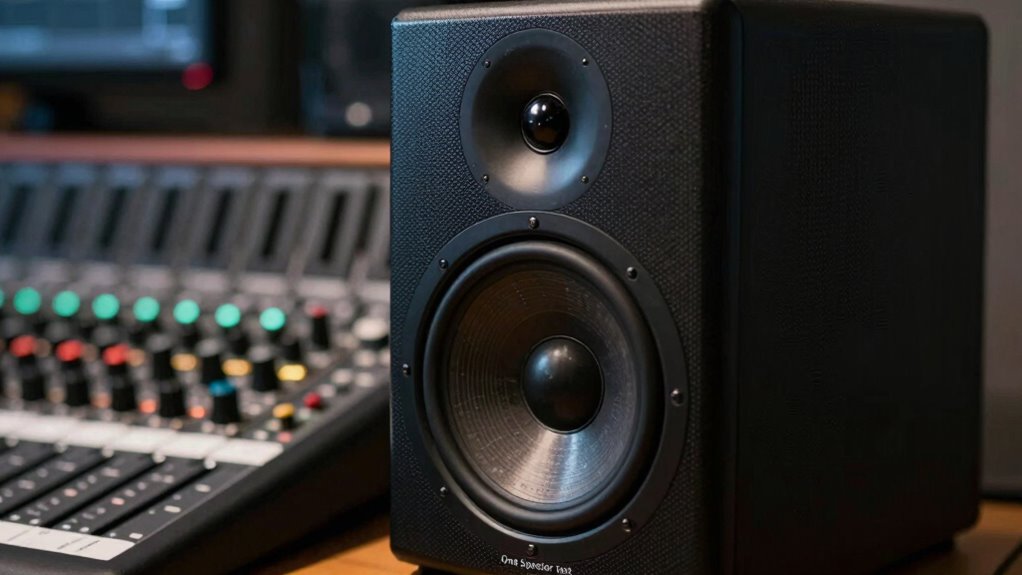

To spot mixing issues fast, try listening to your track through a single speaker or microphone. This ‘One Speaker Test’ exposes problems like phase cancellation, frequency imbalances, and stereo image collapse that may not be apparent in stereo or headphones. If sounds disappear or become hollow, you’ve got issues to fix. This quick method helps you guarantee your mix will sound clear and balanced on any system—keep going to learn more techniques.
Key Takeaways
- The ‘One Speaker Test’ plays your mix through a single speaker or mono to reveal phase issues and frequency conflicts instantly.
- It exposes how well your stereo image collapses into mono, highlighting hollow or narrow sounds that need adjustment.
- Listening in mono helps identify elements that disappear or distort, ensuring your mix maintains clarity and fullness across systems.
- The test makes frequency imbalances more noticeable, guiding precise EQ tweaks for a balanced sound.
- Incorporating this test into your workflow ensures your mix translates well and remains professional on all playback devices.
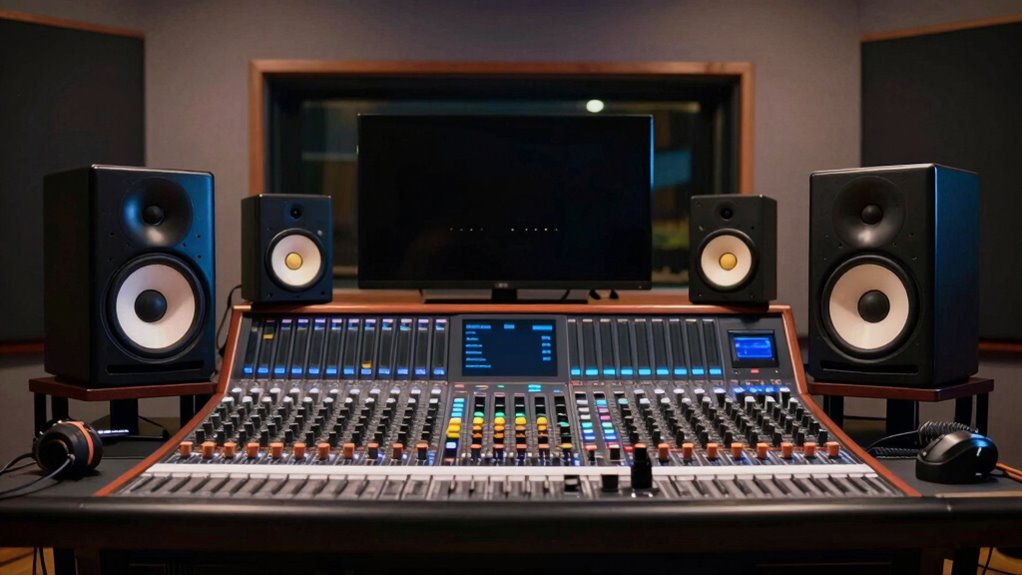
If you’re struggling to identify mixing issues in your audio, there’s a quick and effective test you can use—the ‘One Speaker Test.’ By listening to your mix through a single speaker, you can more easily spot problems like frequency imbalances, phase issues, or muddy sounds that might be hidden when using multiple speakers or headphones. This simple approach helps you assess how well your mix translates to different listening environments and ensures your track maintains clarity across various playback systems. Additionally, it can help you identify energy-efficient aspects of your mix that may require adjustment for optimal sound quality.
One of the key benefits of this test is checking for mono compatibility. When you listen through a single speaker, any phase cancellation or frequency conflicts become immediately apparent. If certain elements disappear or sound distorted, it indicates your mix may not translate well to mono systems like radio, smartphones, or club sound systems. Ensuring good mono compatibility means your mix retains its fullness and clarity, regardless of how listeners experience it. It also helps you identify if any panning choices are overly aggressive or if specific sounds are canceling each other out due to phase issues.
Checking mono compatibility ensures your mix retains clarity and fullness across all listening systems.
Another critical aspect you want to monitor during the ‘One Speaker Test’ is the stereo image. When you switch to mono, a well-balanced stereo image should collapse into a cohesive sound field without losing important details. If your mix sounds hollow or lacks width when played through a single speaker, it suggests that your stereo image isn’t translating well. You might need to adjust panning or re-equalize certain elements to maintain clarity and width in the stereo field while still sounding good in mono. This ensures your mix has both a broad stereo image and mono compatibility, making it versatile across different listening setups.
Listening through one speaker also reveals any frequency imbalances. If certain frequencies dominate or get lost, they’ll become more noticeable in mono. This allows you to make precise EQ adjustments, ensuring your bass, midrange, and treble are balanced and work cohesively. The goal is to create a mix that sounds balanced and full whether it’s heard through multiple speakers, headphones, or a single mono device.
In short, the ‘One Speaker Test’ is a powerful tool to improve your mixes. It highlights issues with mono compatibility, stereo image, and frequency balance that may not be obvious otherwise. By incorporating this simple step into your workflow, you can craft mixes that sound consistent and professional across all playback systems, ensuring your music reaches listeners exactly as intended.

Roland JUNO-D8 Synthesizer | 88-Note Weighted Keyboard with Hammer Action | ZEN-Core Engine with Over 3800 Onboard Sounds | Intuitive Creative Tools | USB-C Audio/MIDI Interface for Mobile & Computers
Gig-ready keyboard with pro sounds, an intuitive workflow, enhanced performance features, and support for USB-C mobile battery power
As an affiliate, we earn on qualifying purchases.
Frequently Asked Questions
Can the One Speaker Test Be Used for All Music Genres?
The one speaker test can be useful across many music genres, but it does have genre limitations. Some genres, like orchestral or multi-layered electronic music, require speaker compatibility checks to capture the full spectrum accurately. While it’s a quick way to identify mixing issues, you should consider the genre’s complexity and your speaker setup to guarantee reliable results. Use it as a starting point, not the sole test.
How Often Should I Perform the One Speaker Test?
Think of your studio like a ship steering through fog—regularly performing the one speaker test ensures you’re on course. You should do it every few sessions, especially after calibration, new gear, or room changes. Incorporate consistent listening frequency checks and calibration methods to catch issues early. This routine helps maintain clarity, balance, and accuracy in your mixes, much like a lighthouse guiding you safely through uncertain waters.
What Equipment Is Necessary for the One Speaker Test?
To perform the one speaker test, you’ll need a good set of speaker cables and an audio interface. Connect your audio source to the interface, then run a cable from the interface to the speaker. Make sure your speaker is powered or connected to an amplifier. This setup helps you quickly identify phase issues or other mixing problems, ensuring your sound is clear and balanced before moving on to stereo or multi-speaker configurations.
Does the Test Work Equally Well in Different Room Acoustics?
Room acoustics can impact the test accuracy, but the ‘One Speaker Test’ still works well across different environments. You might notice some variation depending on how reflective or absorbent your space is, but overall, it’s a reliable way to identify mixing issues quickly. To get the best results, try to minimize echo and background noise, ensuring your room’s acoustics don’t distort the test’s effectiveness.
Can Beginners Effectively Use the One Speaker Test?
Like a simple map guiding a traveler, the one speaker test can help beginners navigate mixing issues. While it’s a valuable tool, beginners’ challenges and the steep learning curve mean they might initially struggle to interpret results accurately. With practice, however, it becomes easier to identify problems quickly, making it a useful starting point. Patience and consistent use will turn this test into a reliable part of your mixing process.
RockJam RJ761 61 Key Keyboard Piano with Keyboard Bench, Digital Piano Stool, Sustain Pedal, Headphones & Lessons
The RockJam 761 Super Piano Keyboard Set features a sleek electronic keyboard with 61 full-size keys, providing a...
As an affiliate, we earn on qualifying purchases.
Conclusion
Think of the ‘One Speaker Test’ as your trusty lighthouse in a stormy sea. When you listen with just one speaker, it’s like shining a beam into the fog—suddenly, mixing issues stand out clearly. I once had a track that sounded fine on my main monitors, but after switching to a single speaker, I noticed a muddy bass that needed fixing. This quick test saves you hours by catching problems before they hit your final mix.

Denon AVR-X1700H 7.2 Channel AV Receiver - 80W/Channel, Advanced 8K HDMI Video w/eARC, Dolby Atmos, DTS:X, Built-in HEOS, Amazon Alexa Voice Control
HIGH-PERFORMANCE 7-CHANNEL AMPLIFIER WITH NEXT-GEN MOVIE IMMERSION - Enjoy Denon sound in movies, games, and music with full...
As an affiliate, we earn on qualifying purchases.

Onkyo TX-NR7100 9.2-Channel AV Receiver - 100 Watts Per Channel, Dirac Live Out of Box, Works with Sonos Certified, THX Certified and More
STATE OF THE ART ROOM CORRECTION: Dirac Live take the room out of the equation, automatically calibrating sound...
As an affiliate, we earn on qualifying purchases.