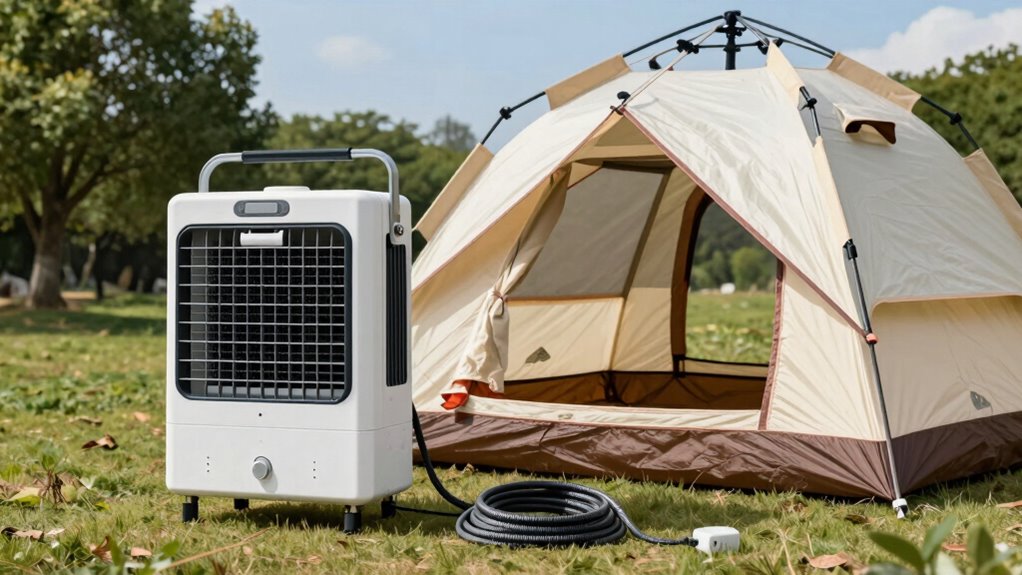

When setting up your portable evaporative cooler for tent camping, avoid common mistakes like using an unreliable power source or neglecting water quality. Guarantee your cooler is positioned in shade and on a stable surface, with proper water and power connections. Don’t forget to check water levels regularly and prevent leaks, and keep the cooler away from direct sunlight or moisture. Staying mindful of these tips helps your cooler work efficiently—continue for more expert setup advice.

Get audio and creator gear delivered free with Prime
- Fast, free delivery on millions of items
- Prime Video, Amazon Music and more included
- Member-only deals all year
Key Takeaways
- Ensure the cooler is placed in a shaded, well-ventilated area away from direct sunlight and moisture.
- Verify the power source matches the cooler’s voltage and wattage requirements for safe operation.
- Properly fill and seal the water tank, avoiding overfilling to prevent leaks or damage.
- Use outdoor-rated extension cords and connect hoses securely to prevent electrical hazards and leaks.
- Regularly check water levels and quality to maintain cooling efficiency and prevent clogging or damage.
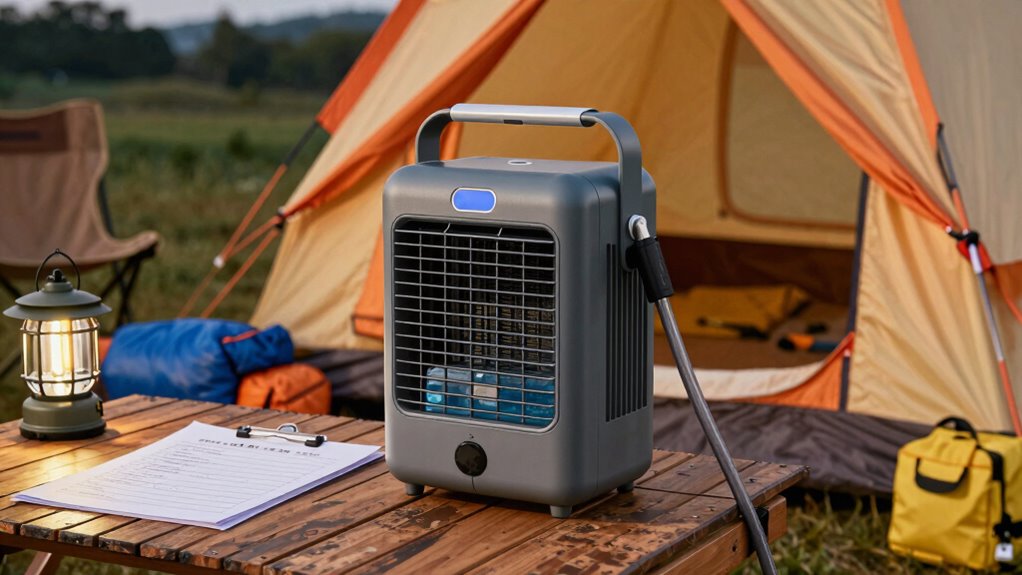
Setting up a portable evaporative cooler can make your tent camping experience much more comfortable, especially in hot weather. To guarantee it operates smoothly, you need to pay close attention to your power source and water supply. First, check that you have a reliable power source nearby. Many coolers run on standard electrical outlets, so if you’re camping in a remote location, consider whether you need a portable generator or an extension cord rated for outdoor use. Avoid using makeshift power setups that could cause electrical hazards or damage your cooler. Make sure the power supply matches the cooler’s requirements to prevent overloads or insufficient power, which could lead to malfunction or damage. Additionally, verify that your power source provides a stable and consistent supply to prevent interruptions during operation.
Next, focus on your water supply. Evaporative coolers require a steady and adequate water source to function effectively. Before setting up, fill the water tank according to the manufacturer’s instructions, and double-check that the tank is securely sealed. Many coolers have specific fill lines, so overfilling can cause leaks or spills, while underfilling can limit cooling efficiency. If you’re using a continuous water supply, ensure the hoses are connected tightly and free of leaks. It’s also smart to keep extra water bottles or containers nearby in case you need to top up during your trip. Don’t forget to check that the water source is clean, as impurities can clog the cooler’s components or reduce its lifespan.
Ensure your water source is clean, sealed, and properly connected for optimal cooler performance.
Avoid common mistakes like ignoring the power requirements or water levels. Running your cooler on an inadequate power source can cause it to shut down unexpectedly or create electrical safety issues. Similarly, neglecting to fill or maintain the water supply can lead to reduced cooling performance or damage over time. Always read the manufacturer’s instructions carefully to understand the specific needs of your cooler model. Additionally, don’t forget to position your cooler in a shaded, well-ventilated area, away from direct sunlight or moisture, which can impact its operation and longevity.
Properly setting up your evaporative cooler with attention to your power source and water supply can considerably improve your comfort while camping. By preparing these essentials in advance and avoiding shortcuts, you ensure your cooler functions efficiently and safely throughout your trip. This simple preparation allows you to enjoy a cooler, more pleasant tent environment, making your outdoor adventure more enjoyable and restful.
portable evaporative cooler for tent camping
As an affiliate, we earn on qualifying purchases.
As an affiliate, we earn on qualifying purchases.
Frequently Asked Questions
Can I Use Any Type of Tent With an Evaporative Cooler?
You can use most tent types with an evaporative cooler, but check the tent material—breathable fabrics like polyester work best to prevent condensation buildup. Make certain the cooler size fits comfortably inside your tent without obstructing airflow or entry points. Avoid overly thick or waterproof tents that might trap moisture. Properly positioning the cooler and selecting a tent with good ventilation ensures effective cooling and a comfortable camping experience.
How Long Does the Cooler’s Water Last During Camping?
On average, cooler water lasts 4 to 8 hours during camping, depending on the evaporation rate. Interestingly, in dry, hot conditions, the evaporation rate can double, reducing water lifespan considerably. To maximize cooler water lifespan, fill it completely, keep the fan on low, and guarantee proper ventilation. Always carry extra water, especially in high temperatures, so you stay comfortable without interruption.
Is It Safe to Run a Cooler Overnight in a Tent?
Yes, it’s generally safe to run a cooler overnight in a tent if you follow proper electrical safety and moisture control. Make sure it’s plugged into a grounded outlet and keep it away from water sources to prevent electrical hazards. Also, monitor humidity levels to avoid excess moisture, which can cause mold or damage your gear. Always read the cooler’s instructions and never leave it unattended for extended periods.
What Power Sources Are Compatible With Portable Coolers?
You can power portable coolers with solar panels or battery packs, making them great for camping. Solar panels are eco-friendly and work well if you have consistent sunlight, charging your battery packs during the day. Battery packs provide portable, reliable power for cooler operation overnight or in shaded areas. Just guarantee your power sources have enough capacity to run your cooler continuously without interruptions.
How Do I Prevent Water Leaks or Spills Inside My Tent?
Think of your tent as a delicate sailboat—water leaks can sink your comfort. To prevent spills, place your cooler on a waterproof tent’s sturdy surface, away from edges prone to leaks. make certain the cooler’s drain is secure, and avoid overfilling it. Keep it on a level, elevated spot to avoid water seeping into your tent’s fabric. This way, your cool oasis stays dry and inviting, no matter what.
outdoor evaporative cooler extension cord
As an affiliate, we earn on qualifying purchases.
As an affiliate, we earn on qualifying purchases.
Conclusion
Remember, setting up your portable evaporative cooler is like preparing for a grand adventure—details matter. Avoid common mistakes, stay vigilant, and you’ll enjoy cool comfort no matter how fierce the sun. Think of it as your personal oasis, much like a secret garden in a sun-drenched land. With a little care, you’ll be basking in invigorating relief, making your tent feel like a cool, shady retreat—your own little paradise amidst the wilderness.
camping water cooler with water tank
As an affiliate, we earn on qualifying purchases.
As an affiliate, we earn on qualifying purchases.
outdoor evaporative cooler accessories
As an affiliate, we earn on qualifying purchases.
As an affiliate, we earn on qualifying purchases.
Fall Picks
fall essentials
As an affiliate, we earn on qualifying purchases.