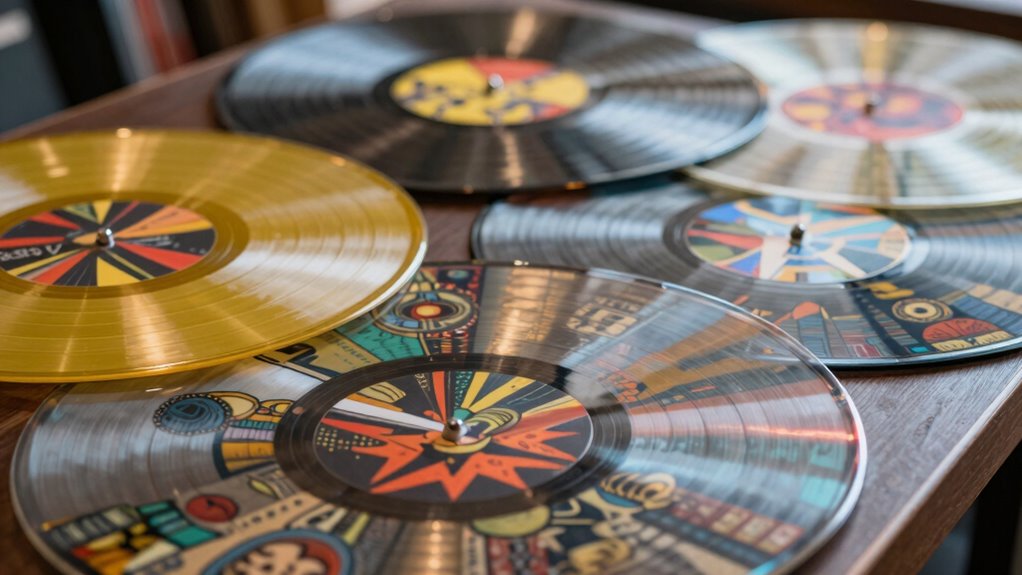

Picture discs grab your attention with vibrant images embedded in clear vinyl, making them eye-catching collectibles. They combine artwork with music, often commemorating special releases or iconic visuals. However, their layered construction can impact sound quality, sometimes resulting in less warmth or clarity compared to regular records. While they look stunning on display, they trade off some audio fidelity. Curious about how their design influences both appearance and sound? Keep exploring to discover more.

Get audio and creator gear delivered free — and shop member deals
- Fast, free delivery on millions of items
- Access to Prime Big Deal Days deals on October 6–7
- Prime Video, Amazon Music and more included
Key Takeaways
- The vibrant images are embedded between clear vinyl layers, making picture discs visually striking and collectible.
- The layered manufacturing process can introduce vibrations and affect sound fidelity compared to traditional records.
- Limited edition releases enhance their rarity and cultural value, often prioritizing visual appeal over optimal sound quality.
- The embedded images and additional layers may cause less warm, dynamic audio, leading to a different listening experience.
- Picture discs serve as both visual art and musical memorabilia, blending aesthetics with sound but sometimes sacrificing audio purity.
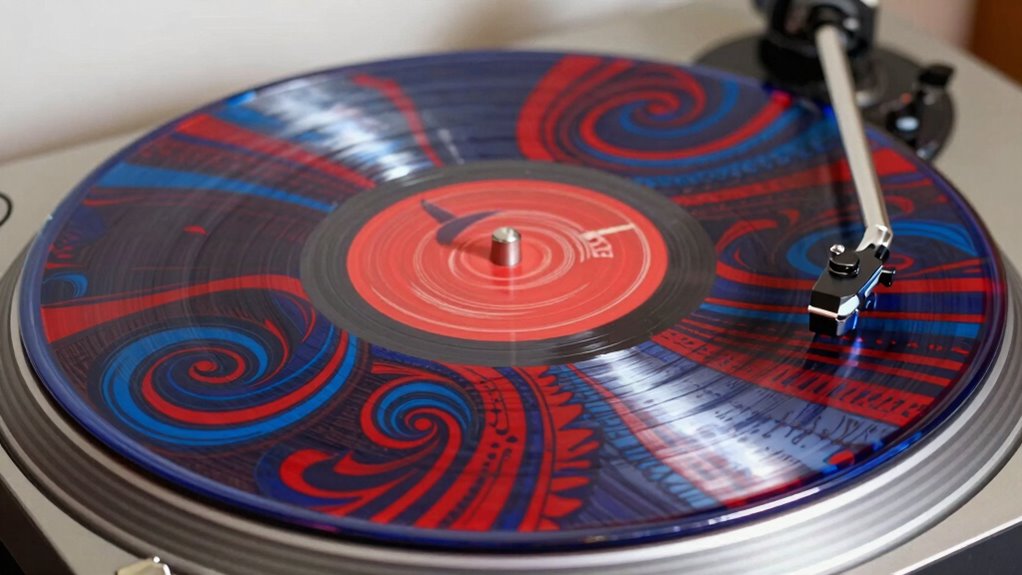
Have you ever wondered what makes picture discs stand out among other vinyl records? It’s all about their unique look, which combines vibrant images with the classic vinyl format. Unlike traditional records, picture discs feature a colorful printed image sandwiched between two clear vinyl layers. This eye-catching design instantly catches your attention, making them popular among collectors and music enthusiasts alike. The process behind creating these records, known as vinyl manufacturing, involves more than just printing a picture on a disc. It requires precise engineering to embed the image securely into the vinyl without compromising sound quality. That’s why picture discs have a distinct collector’s appeal—they’re not just about listening; they’re about owning a piece of art. For collectors, picture discs symbolize a blend of visual artistry and musical history, often commemorating special releases, albums, or iconic artwork. They’re limited editions, making them desirable and sometimes even valuable over time. The manufacturing process involves printing the image onto a flexible sheet, which is then carefully fused between two layers of clear vinyl. This layering process ensures the image is protected but can also influence the sound quality. Because of the added complexity, picture discs tend to produce a different listening experience compared to regular vinyl records. You might notice that their sound can sometimes be less warm or dynamic, partly due to the extra layers and the way the image affects the groove. Still, many collectors love them for their visual appeal and rarity. It’s a trade-off: you get a record that looks stunning and stands out on your shelf, but the audio might not always match the fidelity of standard pressings. Despite this, the allure remains strong. When you handle a picture disc, you’re holding a piece of art and history simultaneously. The vibrant imagery, often vividly printed and highly detailed, makes them perfect for display. They’re excellent conversation starters and add personality to any collection. Whether you’re a casual listener or a seasoned collector, picture discs offer a unique way to enjoy music visually. They remind you that music isn’t just sound; it’s also an expression of creativity, culture, and history. Additionally, the visual impact of picture discs often outweighs the subtle differences in sound quality, making them a bold and stylish way to celebrate your favorite music.
As an affiliate, we earn on qualifying purchases.
Frequently Asked Questions
How Do Picture Discs Affect the Longevity of Vinyl Records?
You might find that picture discs don’t last as long as traditional vinyl because their design can weaken the record’s structure. While they have great collecting appeal and look fantastic on display, the added visuals can sometimes cause wear or damage over time. Handling them carefully and storing them properly helps preserve their display quality and extends their longevity, so you can enjoy both their look and sound for years.
Are Picture Discs More Prone to Skipping or Damage?
You might worry that picture discs are more prone to skipping or damage. The truth is, due to their thinner, delicate design, they’re less durable than standard records. Handling precautions become essential—avoid dropping or scratching them, and keep them away from heat. Record durability takes a hit with rough handling, so treat your picture discs with care to prevent skipping and guarantee they last longer.
What Materials Are Used to Create the Images on Picture Discs?
You use a combination of photographic or printed images and artistic techniques to create the images on picture discs. Typically, a thin layer of printed paper or foil is applied to the vinyl, with protective coatings for durability. These materials are chosen for their ability to withstand handling and spinning, but they can be less durable over time. To guarantee longevity, manufacturers focus on material durability while maintaining vibrant visuals.
Do Picture Discs Require Special Playback Equipment?
You don’t need special playback equipment for picture discs, but their visual quality may vary depending on your player’s compatibility. Some turntables handle the thick, textured surface better, ensuring clearer sound and better image display. You might notice slight differences in sound quality compared to standard vinyl, and improper alignment can affect playback. To get the best experience, use a well-maintained turntable with proper stylus pressure for maximum visual quality and compatibility.
How Do Production Costs Influence the Price of Picture Discs?
Production costs considerably influence the price of picture discs due to their manufacturing complexity. You’ll find that creating these discs requires more expensive materials and precise, intricate processes, which drive up the cost impact. As a result, record labels and sellers often charge more for picture discs. The unique visuals and collectible appeal justify the higher price, but the complex production process is the main reason behind these cost differences.
limited edition picture disc albums
As an affiliate, we earn on qualifying purchases.
As an affiliate, we earn on qualifying purchases.
Conclusion
So, next time you see a picture disc, remember it’s more than just eye candy. Its unique design makes it stand out, but it might not deliver the same sound quality as traditional records. Do you really want style without substance, or is the visual appeal worth the potential sacrifice? Ultimately, it’s up to you. But knowing the trade-offs helps you appreciate these eye-catching collectibles even more. After all, isn’t it the experience that truly matters?
As an affiliate, we earn on qualifying purchases.
As an affiliate, we earn on qualifying purchases.
Halloween Picks
halloween
As an affiliate, we earn on qualifying purchases.