Mountain weather is highly unpredictable due to complex terrain, rapid shifts, and altitude effects, making forecast apps unreliable. These tools often rely on models that struggle with mountain conditions, leading to outdated or overly optimistic info. To stay safe at shows, check real-time data from mountain cameras, on-site observations, and monitor local signs like wind, clouds, and temperature changes. Keep exploring to learn how to better navigate these tricky conditions.
Key Takeaways
- Mountain terrain causes rapid weather shifts that models and apps often cannot accurately predict.
- Forecast apps rely on models with limited resolution, leading to outdated or overly optimistic weather info.
- Localized features like valleys and ridges obstruct satellite views, reducing forecast accuracy.
- Cross-verifying multiple sources and real-time observations helps identify discrepancies and improve safety.
- Personal observation and instincts are crucial for detecting sudden weather changes apps may miss.

Sound Town METIS Series Powered Subwoofer 2400 Watts 18", with Class-D Amplifier, 4-inch Voice Coil, High-Pass Filter (METIS-18PWG)
MASSIVE POWER: Powered by a built-in Class-D amplifier, the subwoofer handles 700 Watts RMS / 1400 Watts Program...
As an affiliate, we earn on qualifying purchases.
Why Mountain Weather Is So Unpredictable and How That Affects Your Safety
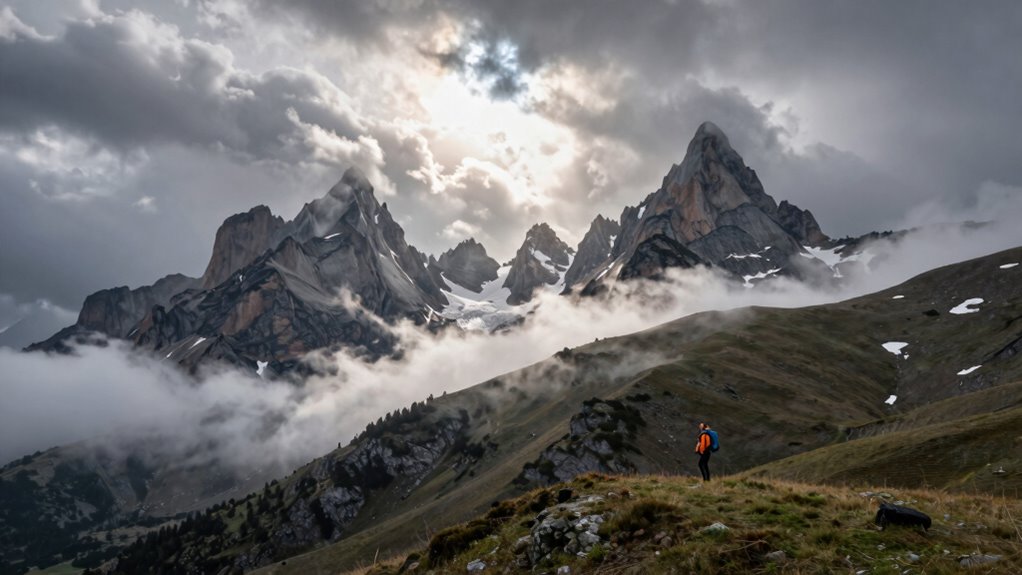
Mountain weather is notoriously unpredictable because the complex terrain causes rapid changes in temperature, wind, and precipitation. Altitude effects play a significant role, as higher elevations experience cooler temperatures and thinner air, which influence weather patterns. These altitude effects also promote cloud formation, often leading to sudden fog or storm clouds that can obscure visibility quickly. You might start your day with clear skies, only for a storm to roll in unexpectedly as clouds develop rapidly over mountain ridges. This dynamic environment makes it difficult to rely solely on forecasts or apps, increasing risks for hikers and event attendees alike. Being aware of how altitude effects and cloud formation interact helps you stay alert to changing conditions, essential for your safety in mountain environments. Additionally, weather variability in mountain regions can be influenced by local topography, making real-time observation and preparation crucial for safety.

ALTO TX12S 900W 12" Subwoofer, DSP-Enhanced Powered PA Speaker with 2" Voice Coil, Superior Bass, Easy Setup
Sonic Might for Your PA System - 900W subwoofer with 12-inch high-output woofer, 2-inch voice coil and ultra-efficient...
As an affiliate, we earn on qualifying purchases.
Why Forecast Apps Sometimes Fail in Mountain Environments
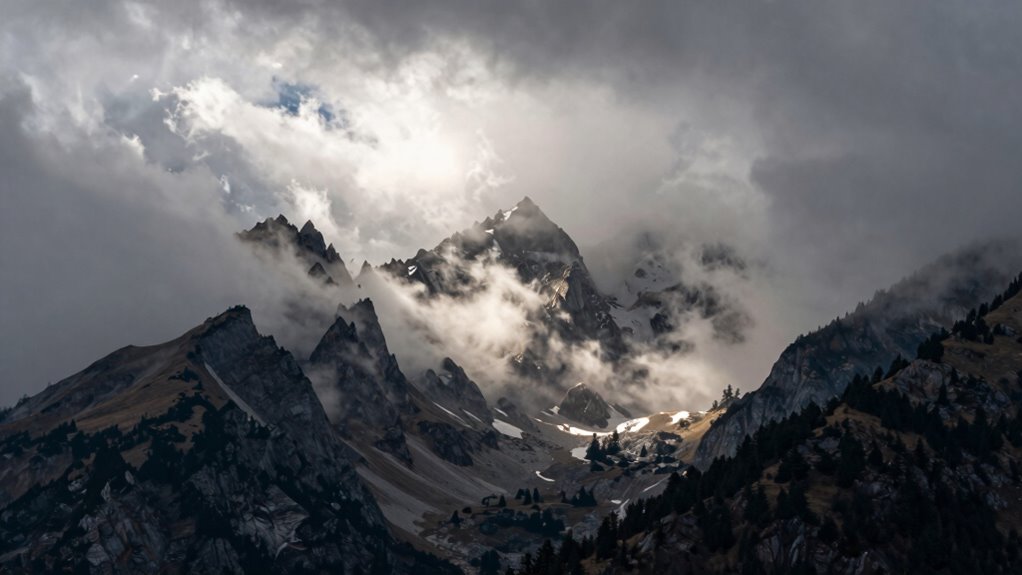
Forecast apps often struggle in mountain environments because they rely on models that can’t fully account for the terrain’s complexity. Mountains create rapid, localized weather changes that simple models can’t predict accurately. Satellite imagery helps by providing real-time observations, but it has limitations in mountainous areas due to obstructions like ridges and valleys. Climate models, which forecast long-term trends, often lack the resolution needed for precise mountain weather predictions. These models smooth out local variations, leading to errors in short-term forecasts. As a result, your app might show stable conditions when storms are brewing nearby or miss sudden temperature drops. Recognizing these gaps helps you understand why forecast apps sometimes fail in mountain environments and reinforces the importance of checking multiple sources. Additionally, understanding resolution limitations in weather models can improve your expectations for forecast accuracy in rugged terrain.

Edifier T5s Powered Active Subwoofer with 70W RMS, 8" Long-Throw Woofer, Deep Bass (35Hz) Speaker, Built-in Amp, Low Distortion, Phase Selector & Energy-Efficient for Home & Studio Audio, Black
[ Deep & Powerful 8-Inch Bass ]: Experience 35Hz deep bass with the T5s powered subwoofer, which features...
As an affiliate, we earn on qualifying purchases.
Essential Weather Factors to Check Before Attending a Mountain Show
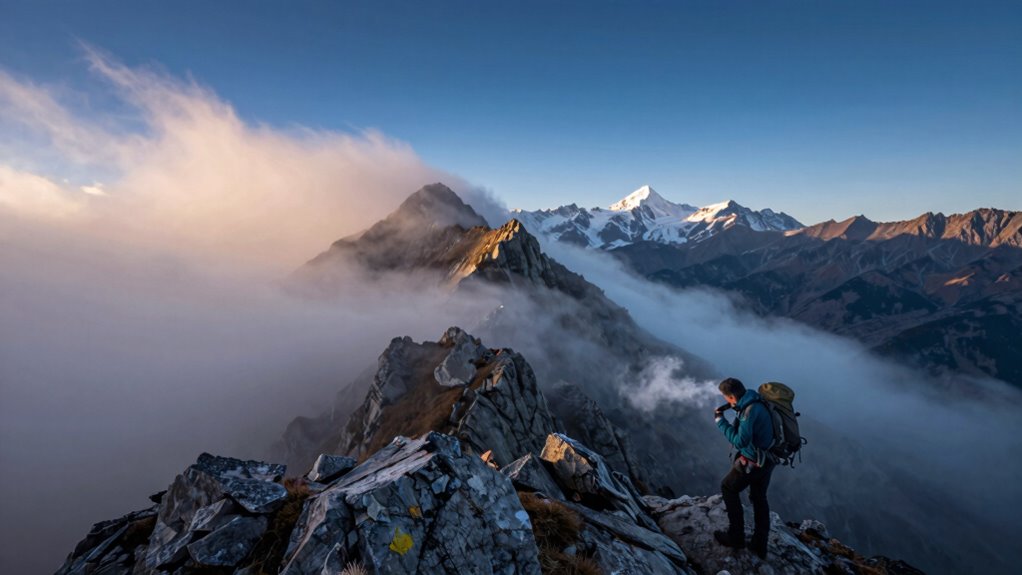
Before heading to a mountain show, it’s essential to check key weather factors that can impact your safety and enjoyment. Altitude considerations are crucial since weather conditions change rapidly with elevation, affecting temperature, air quality, and your physical response. Higher altitudes often mean colder temperatures and lower oxygen levels, which can cause altitude sickness if you’re not prepared. Wind speed is another vital factor; strong gusts can make conditions dangerous, especially on exposed terrain or ridges. Even moderate wind can decrease perceived temperature and increase the risk of losing balance or gear. Always verify current wind conditions and consider altitude effects to plan appropriately. Being aware of these weather factors ensures you’re better prepared for the mountain environment, helping you stay safe and comfortable during the show. Additionally, understanding how weather apps may sometimes provide inaccurate forecasts emphasizes the importance of checking multiple sources and observing actual conditions on-site.

Seismic Audio - T10Sub-Pair - Pair of 10 Inch Steel Frame Subwoofer Drivers - 200 Watts RMS Replacement Sub Woofer for PA, DJ, Band, Live Sound
Model #: T10Sub-Pair
As an affiliate, we earn on qualifying purchases.
How Terrain and Topography Influence Mountain Weather and Safety Risks
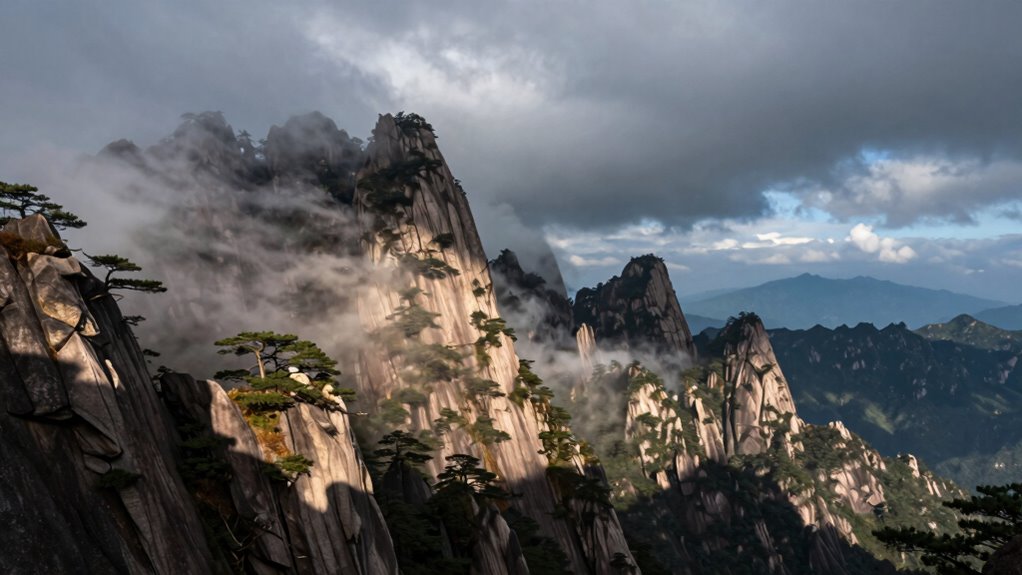
The shape and features of the terrain directly influence local weather patterns and can create unexpected safety risks. Valleys often trap fog, reducing visibility and increasing disorientation. Slope stability varies with terrain, risking landslides or falls. You must recognize these hazards to stay safe. Additionally, smart safety monitoring devices can help alert you to sudden changes in weather or terrain instability, enhancing your safety measures. | Terrain Feature | Safety Impact | |—————–|—————-| | Valleys with fog | Reduced visibility, disorientation | | Steep slopes | Increased risk of falls or landslides | | Narrow passes | Sudden weather changes, wind hazards | | Exposed ridges | Wind chill, exposure dangers | | Sheltered areas | Sudden fog or temperature drops | Understanding these terrain influences helps you anticipate risks, avoid accidents, and adapt your plans, especially when unpredictable valley fog or unstable slopes threaten safety.
How to Use Local Knowledge and Real-Time Observations to Stay Safe in the Mountains
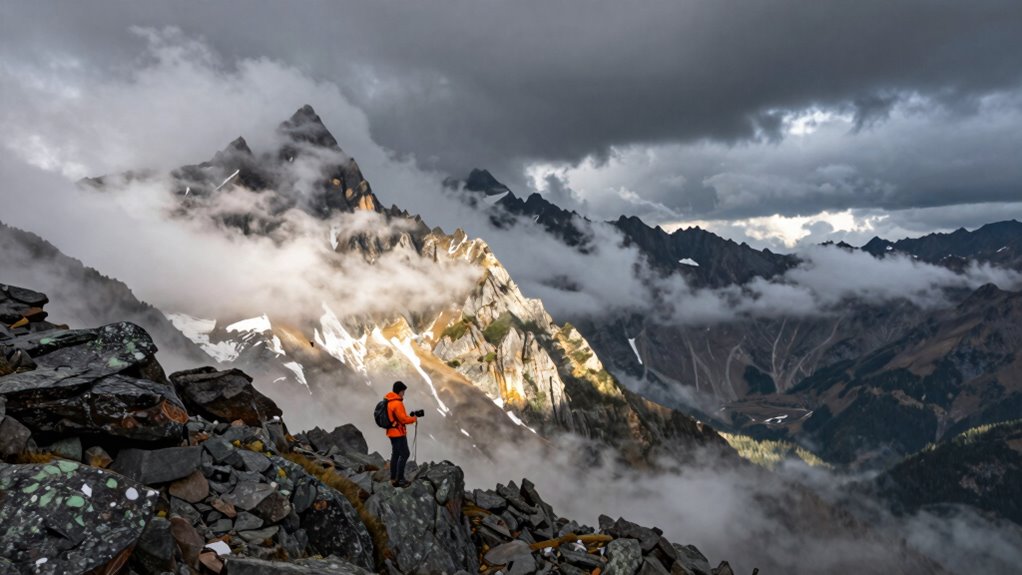
Using local knowledge and real-time observations is essential for staying safe in the mountains because conditions can change rapidly and vary greatly from place to place. Trust your experience and what you’ve learned about the area — terrain features, typical weather patterns, and safe routes. Keep an eye on real-time observations like cloud movements, wind shifts, and changing temperatures. These signs often reveal immediate weather developments that forecasts might miss or be outdated about. Talk to locals or fellow hikers who know the area well; they can provide insights that data can’t. Combining your knowledge with fresh observations helps you make smarter decisions on the spot, avoiding hazards like sudden storms or unstable terrain. Staying alert and adaptable is the key to mountain safety. Additionally, understanding the role of AI Ethicist Jobs in technological advancements can help develop better tools for weather prediction and safety alerts.
Practical Tips to Prepare for Unpredictable Mountain Weather
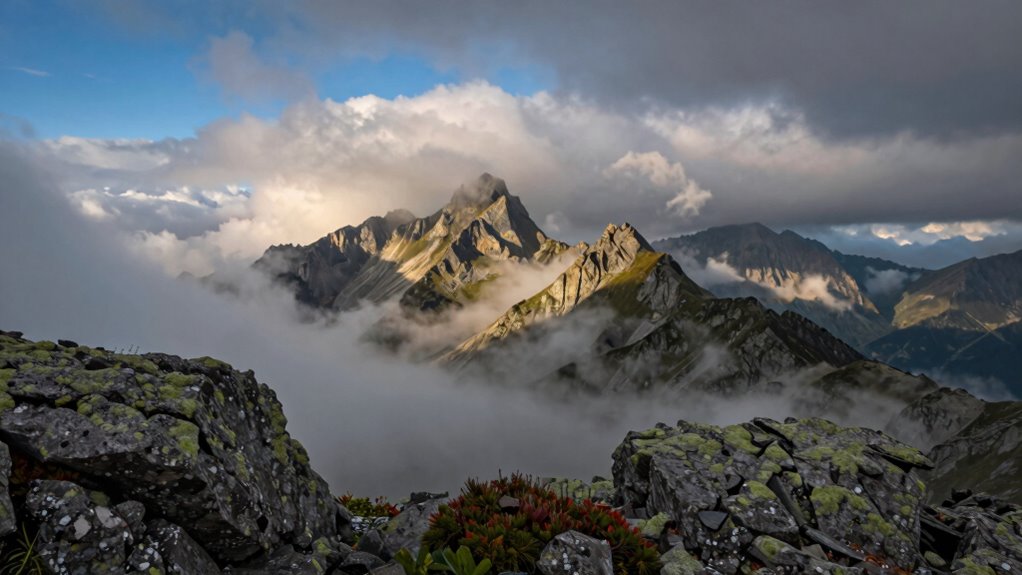
Preparing for unpredictable mountain weather requires you to pack smart and plan ahead. Bring layered clothing to adapt quickly to changing conditions, especially since wildflower blooms can signal shifting weather patterns. Check trail conditions before heading out, as rain or snow can make paths slippery or impassable. Pack essentials like a waterproof jacket, extra food, and a map or compass. Keep an eye on local weather updates, but don’t rely solely on forecasts—they often miss sudden changes. Carry a small first aid kit and emergency gear in case conditions worsen unexpectedly. Being prepared guarantees you can enjoy the wildflower blooms and scenic views without being caught off guard by sudden storms or trail hazards. Media literacy can help you interpret weather reports and social media updates more effectively.
Combining Tools and Good Judgment to Stay Safe During Mountain Events
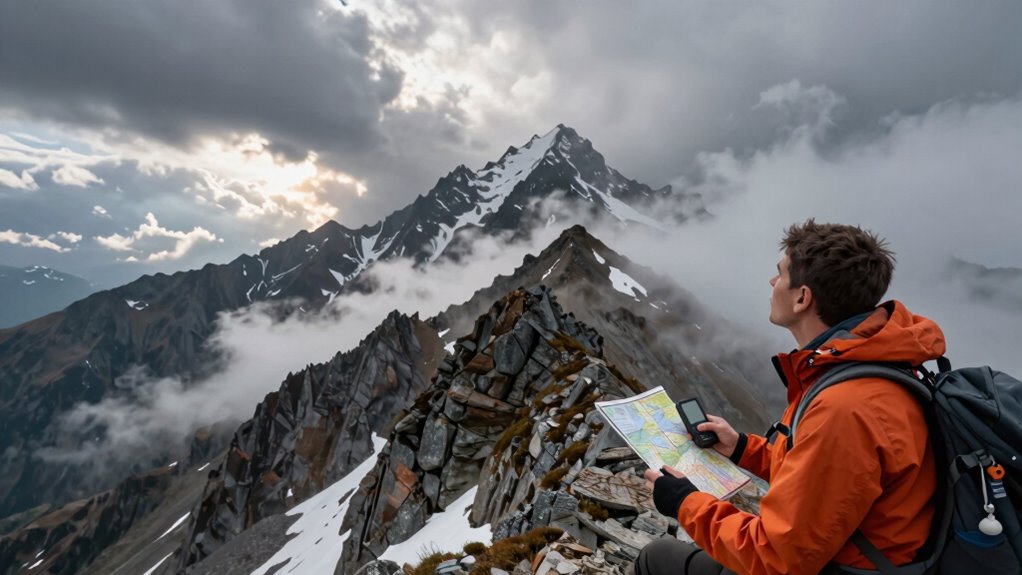
To stay safe during mountain events, you need to combine reliable tools with your instincts. Cross-check information from multiple sources to confirm weather conditions, and trust your gut when something feels off. This approach helps you make informed decisions quickly and avoid dangerous situations. Remember, understanding the why behind weather patterns can improve your judgment in unpredictable mountain environments.
Cross-Check Multiple Sources
Have you ever found yourself caught off guard by sudden weather changes during mountain events? To stay safe, you need to cross-verify multiple sources instead of relying on a single forecast. First, compare weather apps and websites, noting discrepancies in weather patterns and forecast accuracy. Second, listen to local radio or park updates—they often provide real-time insights not captured elsewhere. Third, talk to experienced guides or locals who understand the mountain’s nuances. Additionally, utilizing European cloud servers can improve the reliability of weather data by providing secure and energy-efficient processing of real-time information. By combining these sources, you get a clearer picture of upcoming conditions. Remember, forecast accuracy can vary, especially in complex mountain terrain. Cross-verify ensures you don’t fall victim to overly optimistic or outdated predictions, helping you make smarter decisions and stay safe during unpredictable mountain weather.
Trust Your Instincts
While technology provides valuable tools for evaluating mountain weather, trusting your instincts and good judgment are essential for staying safe. Always listen actively to your surroundings—changes in wind, temperature, or cloud movement can signal shifting conditions. If something feels off or unpredictable, don’t ignore that instinct; it’s often a vital warning. Combine your observations with weather data, but remember that tools can be wrong or outdated. Trust your gut when weather patterns suddenly change or when signals conflict. Staying alert and attentive helps you make quick decisions. Be aware of simple safety tips that can help you respond appropriately in changing conditions. Ultimately, your instincts, sharpened by experience, are your best safeguard in mountain environments. Use technology as a guide, but rely on your judgment to keep yourself safe.
Frequently Asked Questions
How Far Ahead Can Mountain Weather Forecasts Be Reliably Predicted?
You can usually rely on mountain weather forecasts for up to 24 to 48 hours ahead. Beyond that, prediction limitations increase, and forecast accuracy drops due to rapid weather changes in mountainous areas. Always check multiple sources and local updates before heading out. Keep in mind that mountain weather is unpredictable, so stay flexible and prepared for sudden shifts, even if forecasts look reliable initially.
What Are Common Signs of Sudden Weather Changes in Mountains?
Think of mountain weather as a ticking clock ready to strike. You’ll notice sudden changes through thickening cloud cover, which signals an incoming storm, and rapid temperature swings that chill or heat you unexpectedly. Watch for shifting wind patterns and darkening skies, as these signs often precede abrupt weather shifts. Staying alert to these cues helps you prepare before the mountain’s mood changes, keeping you safe amid unpredictable conditions.
How Do Microclimates Affect Mountain Weather Predictions?
Microclimates add to the microclimate complexity, making mountain weather predictions tricky. You need to know that localized weather variability can cause sudden changes, even if forecast apps show stable conditions. Always check multiple sources and look for on-the-ground reports or recent observations. Be prepared for unexpected shifts, especially in areas with diverse terrain, where small differences in elevation or aspect can drastically alter the weather.
Can Weather Apps Detect Localized Wind Gusts Accurately?
Weather apps struggle to detect localized wind gusts accurately because they often can’t account for small-scale factors like wind shear and temperature gradients. These conditions create sudden, intense gusts that vary over short distances, making them difficult for broad forecasts to predict precisely. You should check real-time reports and local observations, especially when microclimates influence wind behavior, rather than relying solely on app forecasts for safety.
What Equipment Should I Carry for Unexpected Mountain Weather Shifts?
You should carry extra clothing layers and emergency gear, even if the forecast looks clear. Mountain weather shifts quickly, and you might face rain, wind, or cold snaps unexpectedly. Pack a waterproof jacket, thermal layers, gloves, and a hat, plus a small emergency kit with a flashlight, first aid supplies, and a whistle. Being prepared guarantees you’re safe and comfortable, no matter how sudden the weather changes.
Conclusion
Just like a wild river that keeps changing course, mountain weather can surprise you at every turn. Trusting forecast apps alone is risky—you need to check local reports, observe the terrain, and stay alert. By combining technology with your own judgment and knowledge, you’ll navigate these unpredictable conditions more safely. Remember, staying aware and prepared is your best safeguard in the mountains, where weather can shift in an instant and catch you off guard.