If your records sound slower or faster than they should at 33 RPM, your turntable’s speed might not be accurately calibrated. Check for misalignment of the cartridge or worn stylus, which can affect tracking and speed consistency. Using a stroboscope or timing test can help verify the actual speed. Proper setup and maintenance are key to fixing this issue, and you’ll discover more ways to keep your turntable running smoothly as you explore further.

Get audio and creator gear delivered free with Prime
- Fast, free delivery on millions of items
- Prime Video, Amazon Music and more included
- Member-only deals all year
Key Takeaways
- Use a strobe disc or app to visually check if the platter’s speed matches 33 RPM.
- Play a test record with a known, accurate 33 RPM track to listen for speed inconsistencies.
- Observe if records sound slower or faster than they should, indicating possible speed issues.
- Inspect the turntable’s drive belt or motor for wear, slippage, or misalignment affecting speed.
- Ensure proper cartridge alignment and calibration, as misalignment can cause perceived speed inaccuracies.
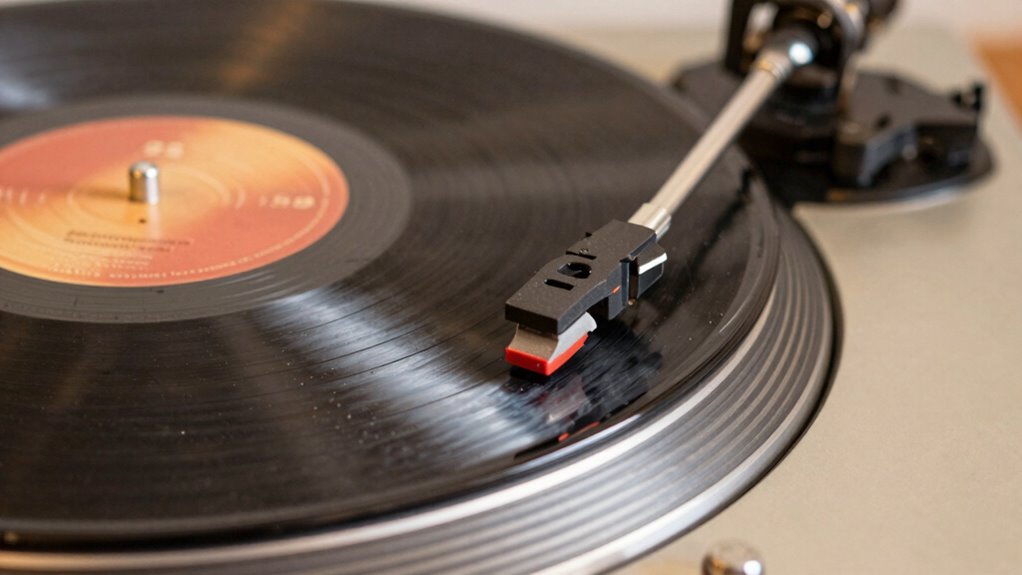
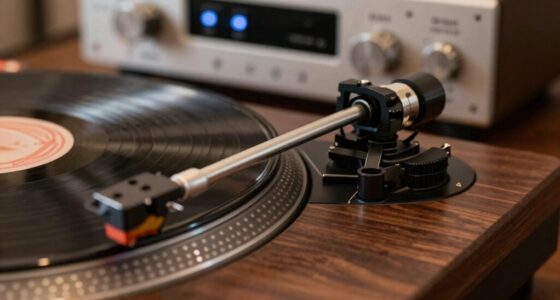
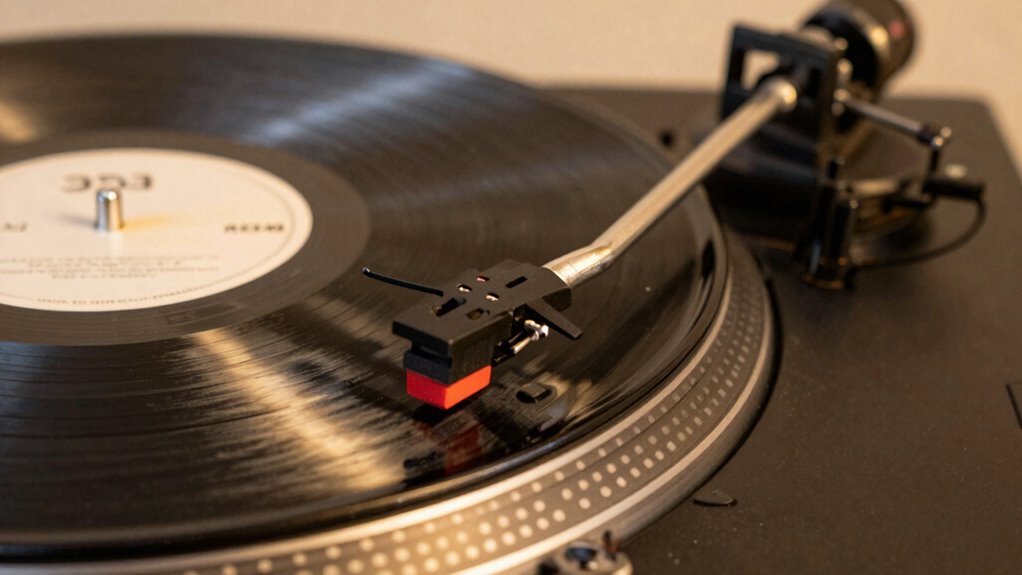
Have you ever noticed your turntable playing slightly faster or slower than it should? It’s a common issue that can throw off your listening experience, especially when you’re trying to enjoy your favorite records at the proper speed. One of the main causes of this problem is improper cartridge alignment. If your cartridge isn’t correctly aligned in the tonearm, it can cause inaccurate tracking of the record grooves, which directly impacts playback speed. Over time, even small misalignments can lead to significant speed variation, making your records sound off. Making sure proper cartridge alignment isn’t just about sound quality—it also helps maintain the longevity of your stylus and record. Misaligned cartridges can cause uneven stylus wear, which further exacerbates speed inconsistencies. A worn stylus not only distorts sound but can also lead to the stylus skipping or mistracking, both of which can make your records sound slower or faster than they are. Additionally, turntable calibration is essential for ensuring consistent playback and avoiding speed issues.
If you notice your records sound off, start by checking your cartridge alignment. Use a protractor or alignment gauge to make sure your cartridge sits perfectly in the tonearm. Correct alignment ensures the stylus tracks the record grooves accurately, which keeps playback speed consistent. Remember, even a slight misalignment can cause the stylus to wear unevenly, affecting sound quality and speed over time. Regularly inspecting and adjusting your cartridge alignment is an essential part of turntable maintenance, especially if you notice changes in playback speed or sound quality.
As an affiliate, we earn on qualifying purchases.
Frequently Asked Questions
Can a Damaged Belt Affect Turntable Speed Accuracy?
Yes, a damaged belt can affect your turntable’s speed accuracy. When the belt deteriorates, it slips or stretches, causing inconsistent rotation. Additionally, if the motor isn’t properly aligned, it worsens the problem by not maintaining steady speed. Check the belt for cracks or looseness and make sure the motor is aligned correctly. Replacing a worn belt and adjusting the motor can restore accurate speed and improve your listening experience.
How Does Temperature Influence Turntable Speed Calibration?
A stitch in time saves nine, and that’s true for turntable calibration. Temperature effects can alter your turntable’s speed accuracy, causing it to run faster or slower as temperatures fluctuate. Warm temperatures may loosen belts or components, leading to speed inconsistencies. To keep calibration accurate, avoid placing your turntable in direct sunlight or near heat sources, and regularly check and adjust the speed to guarantee ideal sound quality.
Are Some Vinyl Records More Prone to Speed Issues?
Some vinyl records are more prone to speed issues due to their quality and thickness. Thinner records or those with lower vinyl quality can warp or vibrate more, causing speed fluctuations. Heavier, well-pressed records tend to stay more stable at the correct speed. So, if you notice speed inconsistencies, check the record’s quality and thickness, as these factors can profoundly impact playback stability.
What Tools Are Best for Measuring Turntable RPM?
You want accurate RPM measurements, so get a stroboscope or digital tachometer—they’re your best bet. Use a stroboscope to see if the platter weight influences speed, and check stylus wear, which can cause subtle pitch issues. A digital tachometer gives quick, precise readings, helping you spot any deviations. Remember, keeping everything balanced and monitoring your stylus ensures your turntable stays in tune.
How Often Should I Calibrate My Turntable for Optimal Speed?
You should calibrate your turntable every few months or whenever you notice speed inconsistencies. Regular turntable maintenance, including calibration frequency, keeps your playback accurate. Use a strobe disc or a digital RPM app to check the speed, then adjust the pitch control or belt tension as needed. Consistent calibration ensures your records sound their best, preventing pitch issues and preserving your equipment’s longevity.
turntable cartridge alignment protractor
As an affiliate, we earn on qualifying purchases.
As an affiliate, we earn on qualifying purchases.
Conclusion
Remember, a watch keeps perfect time because it’s calibrated, and your turntable is no different. If your 33 RPM isn’t quite right, don’t ignore it—adjust it and check again. Sometimes, what seems like a problem is just a small tweak away from perfection. As the saying goes, “A stitch in time saves nine.” Taking quick action now guarantees your records sound their best, and you get to enjoy the true spirit of vinyl.
As an affiliate, we earn on qualifying purchases.
As an affiliate, we earn on qualifying purchases.
Halloween Picks
halloween
As an affiliate, we earn on qualifying purchases.