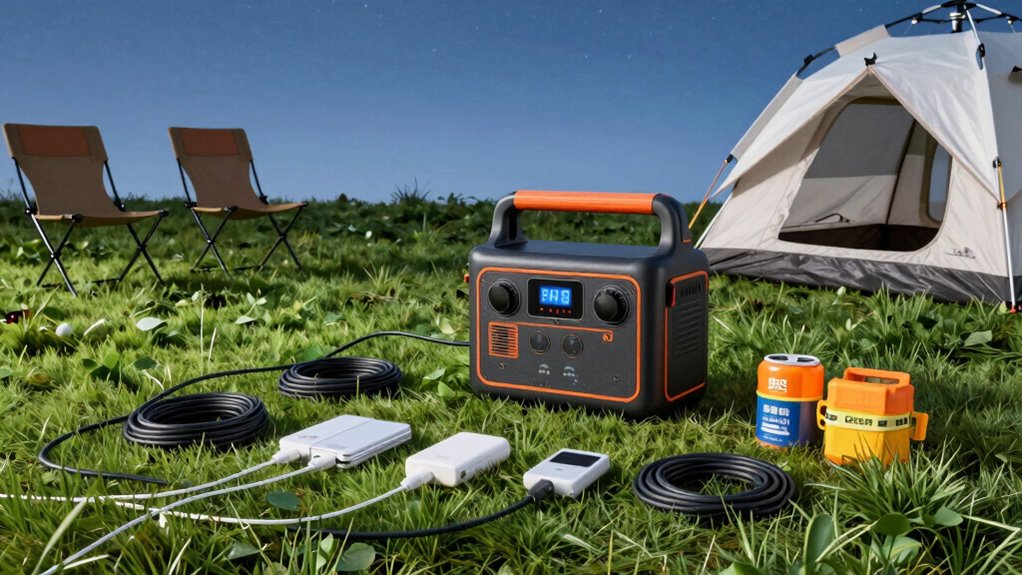

To set up your portable power station for camping and festivals, guarantee you don’t overload outlets or connect incompatible cables, which can cause safety hazards. Keep the unit in a cool, dry spot and away from moisture or extreme heat. Always verify generator compatibility and turn it on before connecting your power station. Organize cables and follow the proper sequence for connecting devices. Continuing with these tips will help you avoid common mistakes and maximize your power station’s safety and performance.

Get audio and creator gear delivered free — and shop member deals
- Fast, free delivery on millions of items
- Access to Prime Big Deal Days deals on October 6–7
- Prime Video, Amazon Music and more included
Key Takeaways
- Ensure the power station is placed on a flat, stable surface away from flammable materials and extreme temperatures.
- Verify all device connections are within the power station’s rated capacity to prevent overloads.
- Use proper cables and adapters, and avoid blocking ventilation openings to prevent overheating.
- Connect the generator first, then the power station, following a safe sequence to avoid power surges.
- Regularly inspect cables and the power station for wear or damage, replacing faulty components immediately.
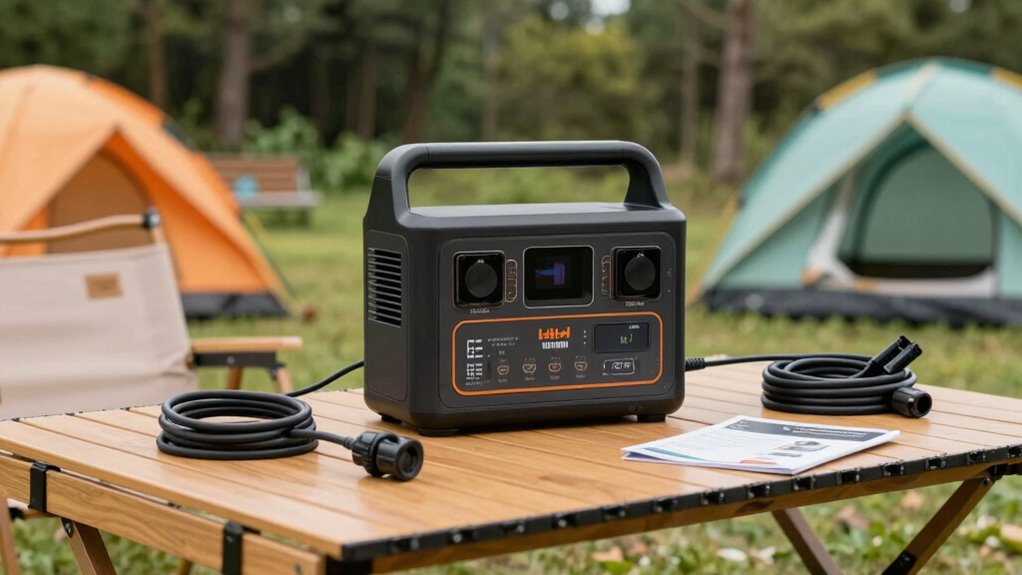
Setting up your portable power station correctly is vital to guarantee reliable energy during emergencies, outdoor adventures, or off-grid activities. One of the most important aspects is ensuring battery safety, which means handling your power station with care to prevent damage or hazards. Always read the manufacturer’s instructions and avoid overcharging the batteries, as this can lead to overheating or reduced lifespan. Keep the device in a cool, dry place and avoid exposing it to extreme temperatures or moisture. Proper ventilation is also essential; never block vents or airflow openings, as this can cause overheating or reduce performance. When connecting devices, make sure they are within the power station’s rated capacity to prevent overloads, which can damage the unit or pose safety risks. Using the correct charging cables and adapters is vital to avoid short circuits or sparks. Also, regularly inspect your power station and cables for signs of wear or damage—replacing faulty components immediately helps maintain safety and efficiency.
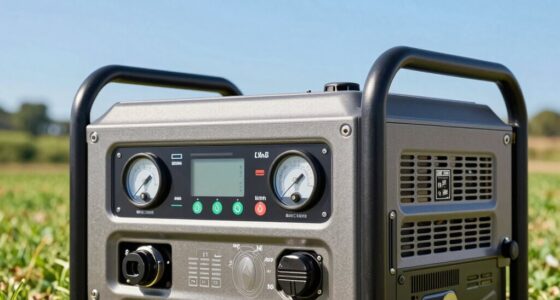
Another key factor in setup is generator compatibility. If you plan to connect your portable power station to a generator or use it alongside one, verify that they are compatible to avoid damaging either device. Not all generators produce clean or stable power, which can harm your power station’s internal components or reduce its lifespan. Check the specifications to confirm that the generator’s output matches the voltage and frequency recommended by the power station manufacturer. Using an inverter or surge protector can help safeguard your setup from power surges or fluctuations. When connecting the power station to a generator, ensure that the connection cables are rated for the expected load and that the generator is turned off during initial hookup. Always start the generator first, then connect it to the power station, and turn on the power station afterward. This sequence helps prevent sudden power surges that could damage either device.
Additionally, understanding the navigation and mapping features of your power station can help optimize placement and ensure safety during use, especially in unfamiliar outdoor environments. Setting up your portable power station properly also includes organizing cables and connectors beforehand, so you don’t fumble during critical moments. Keep your power station away from flammable materials, and ensure it’s placed on a flat, stable surface. Avoid using it in wet or rainy conditions unless it’s specifically designed for outdoor use with proper weatherproof features. By paying close attention to battery safety and confirming generator compatibility, you’ll prevent common mistakes that could compromise your setup. Taking these precautions guarantees your power station will serve you well, providing reliable energy whenever you need it most, whether camping in the wilderness or at a festival.
portable power station with inverter
As an affiliate, we earn on qualifying purchases.
As an affiliate, we earn on qualifying purchases.
Frequently Asked Questions
Can I Use My Portable Power Station While Charging?
Yes, you can use your portable power station while charging, but you should prioritize charging safety to prevent overheating or damage. Always check device compatibility to avoid overloading your power station. Some models may have specific instructions about simultaneous use and charging. To stay safe and maintain your equipment, follow the manufacturer’s guidelines closely, and avoid using high-power devices during charging to prevent issues.
How Long Does a Typical Power Station Battery Last?
Ever wonder how long your power station battery lasts? It depends on its battery capacity and what you’re powering. Typically, a portable power station can run devices for 4 to 12 hours, but high-demand gadgets drain it faster. Recharge time varies from 3 to 8 hours, depending on the station’s size and charger. Keep track of your usage and recharge schedule to make sure you’re never caught short off-grid.
Is It Safe to Charge Multiple Devices Simultaneously?
Yes, it’s generally safe to charge multiple devices simultaneously, but you should watch for device overheating and electrical overload. Avoid plugging in too many high-power devices at once, as this can cause the power station to overheat or trip the circuit. Always check the station’s maximum capacity and distribute your devices accordingly. If you notice overheating or flickering, unplug some devices immediately to prevent damage or safety hazards.
What Maintenance Is Required for the Power Station?
Think of your power station like a loyal companion needing care. You should regularly check the battery care, ensuring it’s not over-discharged or exposed to extreme temperatures. Follow storage tips by keeping it in a cool, dry place when not in use, and recharge periodically to maintain peak performance. Proper maintenance extends its lifespan, so treat it like a trusted friend, and it’ll power your adventures for years to come.
Can I Connect the Power Station to a Solar Panel?
Yes, you can connect your power station to a solar panel if it’s compatible. Check the solar panel compatibility, confirming it matches your station’s voltage and wattage requirements. Use the appropriate charging port types, like MC4 or Anderson connectors, to ensure a secure connection. Always verify your power station’s specifications and follow the manufacturer’s instructions for safe and efficient solar charging. This setup keeps your devices powered sustainably during camping or festivals.
As an affiliate, we earn on qualifying purchases.
Conclusion
Now that you’ve checked off the essentials and avoided common pitfalls, your portable power station is ready to keep your camping or festival experience bright and hassle-free. Imagine the glow of your devices against the night sky, a reliable battery backup in the midst of nature’s quiet. With your setup secure and mistakes behind you, you can focus on making memories—because when power is steady, adventure flows effortlessly.
As an affiliate, we earn on qualifying purchases.
portable generator compatible with power station
As an affiliate, we earn on qualifying purchases.
As an affiliate, we earn on qualifying purchases.
Fall Picks
fall essentials
As an affiliate, we earn on qualifying purchases.