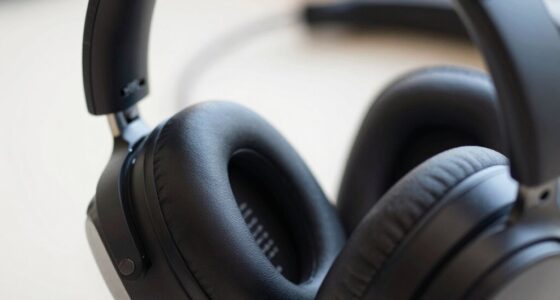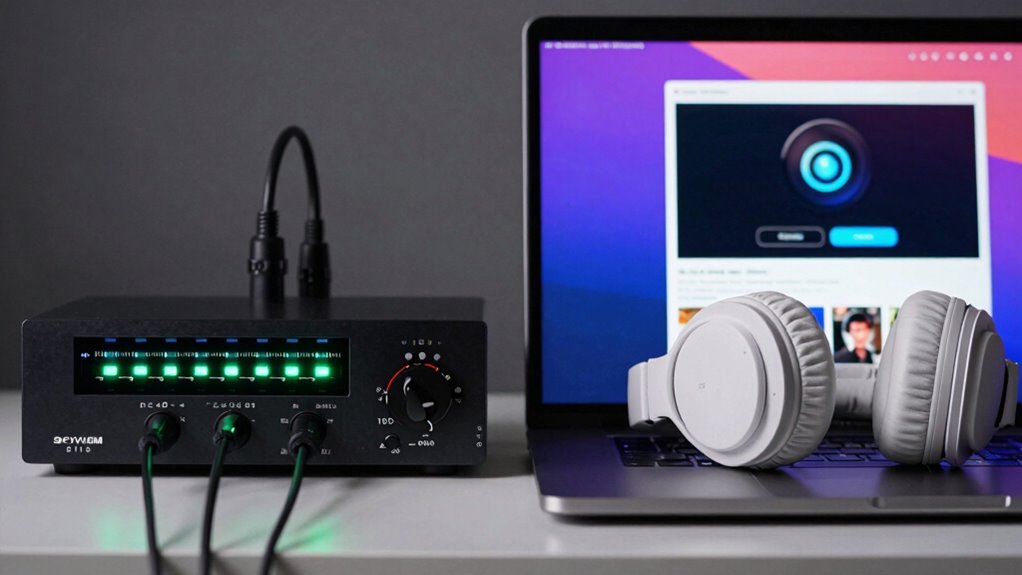

Lossless streaming keeps all the original sound data, offering the clearest, most detailed audio experience. High-quality streaming compresses files more than lossless but still provides excellent sound, suitable for most listeners. The key difference is that lossless preserves richer frequencies and dynamic range, making subtle details more noticeable. Many people can’t tell the difference without high-quality equipment. If you want to understand what really enhances your listening, there’s more to discover.
Key Takeaways
- Lossless streaming preserves all original sound data using formats like FLAC, ensuring no quality loss during playback.
- High-quality streaming often uses compressed formats with some data loss but still offers improved sound over standard streams.
- Lossless provides wider frequency response and dynamic range, capturing more audio detail than high-quality compressed formats.
- Higher bitrate in lossless streams doesn’t always mean better sound if source quality or codec efficiency is limited.
- The main difference lies in data size and sound fidelity; lossless offers superior audio but requires more bandwidth and storage.

HIFI WALKER H2 Hi-Res Bluetooth MP3 Player with 64GB MicroSD Card, Portable Lossless Digital Audio Player with ESS DAC, DSD FLAC Support, USB DAC, Line Out, Physical Controls, Supports up to 512GB
- High-Resolution Audio: ESS ES9018K2M DAC for detailed sound
- Supports High-Res Formats: DSD128, FLAC, WAV, APE, ALAC
- Bluetooth 5.2 Connectivity: Wireless streaming and receiving with aptX
As an affiliate, we earn on qualifying purchases.
As an affiliate, we earn on qualifying purchases.
What Are Lossless and High-Quality Streaming Formats?
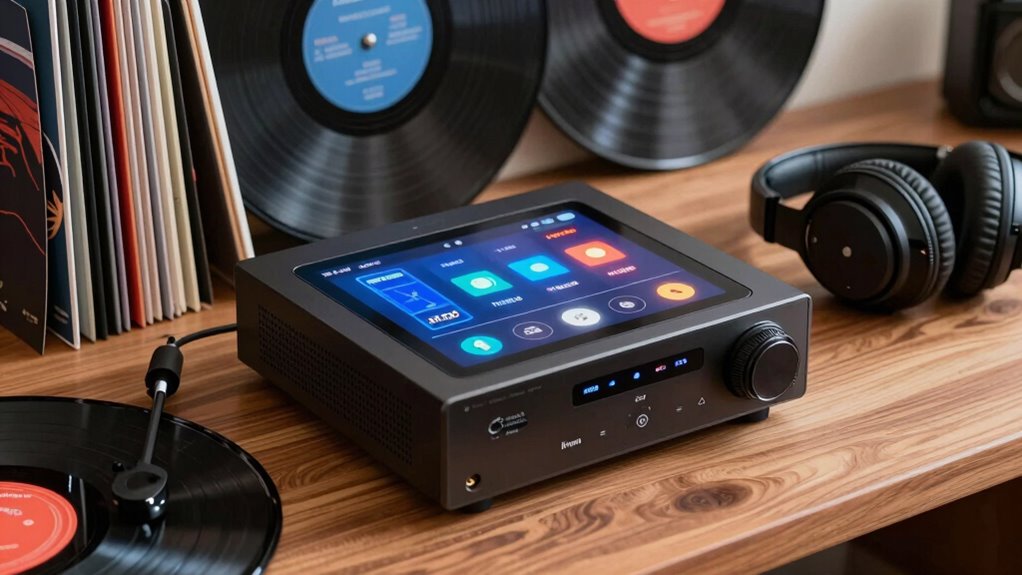
Lossless and high-quality streaming formats are designed to deliver better sound clarity than standard compressed audio. These formats use specific audio file formats that preserve more of the original sound data, resulting in richer, more detailed audio. Streaming technology supports these formats by efficiently transmitting larger, less compressed files without sacrificing quality. Lossless formats, like FLAC or ALAC, retain all audio data, ensuring no quality loss during playback. High-quality streaming often involves using advanced compression that balances sound fidelity with manageable file sizes. When you choose lossless or high-quality streaming, you’re prioritizing audio integrity, allowing you to experience music as close to the original recording as possible. This approach elevates your listening experience by emphasizing clarity and detail in every note. European cloud innovation supports these advancements by providing reliable, energy-efficient infrastructure that can handle large audio files with minimal environmental impact.
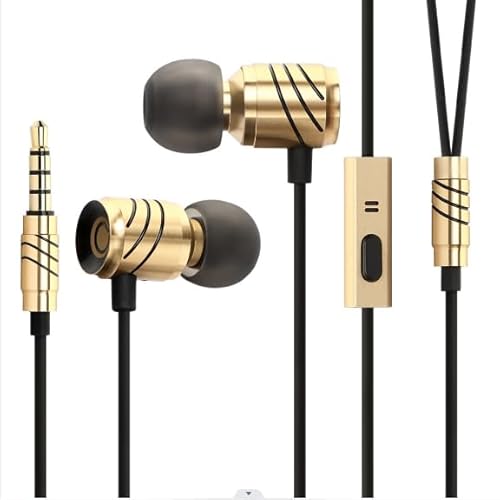
Headphones with High Fidelity Resolution, Wired Earbuds with Strong Bass and Noise Isolating
- High Fidelity Audio: Rich bass, midrange, and treble sound
As an affiliate, we earn on qualifying purchases.
As an affiliate, we earn on qualifying purchases.
How Do Lossless and Compressed Audio Differ in Sound Quality?
When listening to lossless versus compressed audio, you’ll notice differences in clarity and detail. Compression can reduce the richness of the frequency range and diminish dynamic contrast, affecting overall sound quality. Understanding these technical differences helps you choose the best option for your listening experience.
Compression Impact on Clarity
Compressed audio files reduce the amount of data needed to store sound, which often results in a noticeable difference in clarity compared to lossless formats. This compression can impact the dynamic range, making quiet sounds less distinct and loud sounds more compressed, reducing overall expressiveness. Additionally, compression may slightly limit the frequency response, especially at the extreme ends, causing some high or low notes to lose detail. As a result, you might notice that compressed audio feels less spacious and detailed, especially in complex musical passages. Lossless formats preserve the original dynamic range and frequency response, maintaining clarity and nuance. While compressed files save space and bandwidth, they trade off some of the subtle qualities that contribute to a truly immersive listening experience.
Frequency Range Differences
The way audio files handle the full spectrum of sound considerably impacts their perceived quality. Lossless audio preserves a wider frequency spectrum, capturing high and low frequencies that compressed formats often cut or diminish. This broader frequency range enhances audio fidelity, making music sound more natural and detailed. In contrast, compressed formats tend to filter out some of these higher and lower frequencies, reducing the richness of the sound. As a result, lossless files deliver a more accurate representation of the original recording, providing clearer highs and deeper lows. Additionally, spectral fidelity plays a crucial role in how authentic and immersive the listening experience feels. If you value authentic, full-spectrum sound, lossless streaming ensures you experience the complete frequency range, maintaining the integrity of the music’s original sound quality.
Dynamic Range Variations
Lossless audio typically offers a wider dynamic range, allowing you to hear subtle differences between soft and loud sounds more clearly. This expanded dynamic range enhances your overall audio fidelity, making music feel more lifelike and expressive. With lossless formats, quiet passages remain clear without losing detail, while loud sections don’t distort or clip. In contrast, compressed audio often reduces the dynamic range to save space, which can flatten the sound and diminish audio fidelity. This compression limits the contrast between soft and loud sounds, making music feel less vibrant and immersive. If you value nuanced details and a more authentic listening experience, lossless audio’s dynamic range provides a noticeable advantage over compressed formats.

BZINK USB C to 3.5mm Audio Adapter with CX31993+MAX97220 DAC Amplifier
- Studio-Grade Sound Quality: Dual U.S. chips for distortion-free audio
- Enhanced Sound Clarity: High-purity copper-silver wire cores
- Hi-Res Certified: Supports 32bit/384KHz high-definition audio
As an affiliate, we earn on qualifying purchases.
As an affiliate, we earn on qualifying purchases.
Which Streaming Platforms Support Lossless and High-Quality Audio?
Have you wondered which streaming platforms deliver the best audio quality? Several services support lossless and high-quality streaming, making it easier for you to enjoy premium sound. Platforms like Tidal and Qobuz prioritize music licensing agreements that allow them to offer FLAC or ALAC formats, ensuring lossless audio. Spotify and Apple Music also support high-quality streaming with their premium subscriptions, providing options for HiFi sound. When choosing a platform, consider your streaming subscriptions’ options, as higher-tier plans often include lossless audio capabilities. These services are committed to delivering better sound experiences by supporting advanced audio codecs and high bitrates. Additionally, understanding the importance of attention to detail in audio quality can help you make more informed choices. Ultimately, your choice depends on your priorities for audio fidelity and the flexibility of the streaming platform’s licensing agreements.

XbotGo Falcon All-in-One AI Action Camera, 4K Auto Tracking Sport Camera for Soccer, Basketball & Football, Dual-Lens Team Sports Recorder with Live Streaming, No Subscription Required (Edge Green)
- AI Auto Tracking: Tracks players and ball automatically
- 4K Dual-Lens Video: Captures crystal-clear 4K footage
- Live Streaming: Instant game streaming and sharing
As an affiliate, we earn on qualifying purchases.
As an affiliate, we earn on qualifying purchases.
Does a Higher Bitrate Always Mean Better Lossless Audio?
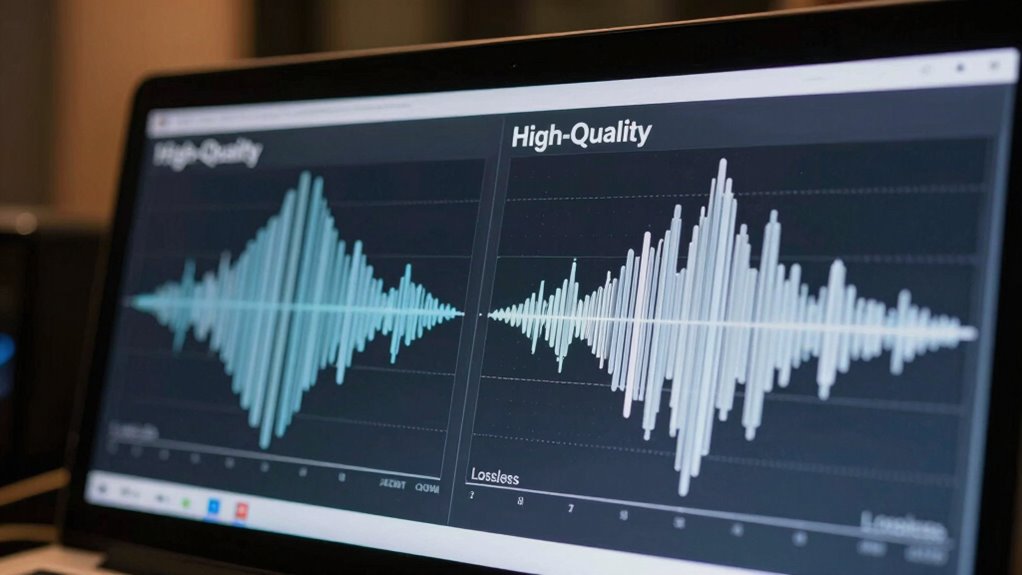
A higher bitrate often suggests better sound quality, but that’s not always the case with lossless audio. Compression efficiency can preserve clarity even at lower bitrates, meaning more isn’t necessarily better. Understanding how bitrate relates to sound quality helps you make smarter choices. For example, Free Floating can influence how audio is processed and perceived, affecting the overall listening experience.
Bitrate and Sound Quality
While increasing the bitrate often improves audio quality, it doesn’t always guarantee better lossless sound. A higher bitrate can enhance audio fidelity by capturing more detail, but other factors influence sound quality too. For example, your streaming bandwidth might limit the ability to stream these higher bitrates smoothly. If your connection isn’t fast enough, you’ll experience buffering or quality drops, negating the benefits of a higher bitrate. furthermore, beyond a certain point, increasing bitrate yields diminishing returns, especially if the original recording wasn’t high quality to begin with. So, while a higher bitrate can improve lossless audio, it’s not an absolute measure of sound quality. Your listening environment, equipment, and the source material play equally important roles.
Lossless Compression Efficiency
Higher bitrate doesn’t always translate to better lossless audio because compression efficiency varies depending on the codec and the source material. In audio encoding, data compression plays a key role in determining file size and sound quality. Some codecs are more efficient at compressing certain types of audio, meaning they preserve more detail at lower bitrates. For example, lossless formats like FLAC or ALAC use algorithms optimized for different audio signals, so increasing the bitrate doesn’t necessarily improve fidelity. Instead, efficiency depends on how well the codec can reduce data while maintaining audio integrity. Ultimately, higher bitrates won’t always yield noticeably better sound quality, especially if the codec already handles the source material effectively.
When Should You Choose Lossless Over High-Quality Streaming?
Choosing lossless over high-quality streaming makes sense when audio fidelity is your top priority, especially if you notice subtle details or nuances in your music that compressed formats might miss. Lossless formats preserve the full quality of recordings, allowing you to experience every instrument and vocal nuance. This preservation of audio quality is ideal if you value bitrate optimization for pure sound accuracy. Consider your listening environment and equipment; high-end headphones or speakers reveal more differences. Here’s a quick comparison:
| Aspect | Lossless | High-Quality Streaming |
|---|---|---|
| Bitrate Optimization | Higher, preserves detail | Lower, reduces data use |
| Audio Fidelity | Maximum, true sound reproduction | Slightly compressed sound |
| Suitability | Critical listening, audiophiles | Casual listening |
Choose lossless when you prioritize authentic sound and detailed audio fidelity above all.
How Do File Sizes and Data Usage Affect Streaming Quality?
File sizes and data usage play a significant role when streaming music, especially if you’re balancing sound quality with bandwidth limitations. Higher-quality audio, like lossless files, generally requires larger file sizes due to less data compression, which means more data is transmitted per second. Bitrate optimization becomes essential here, as increasing the bitrate improves sound clarity but also increases data consumption. Conversely, streaming at lower bitrates reduces data usage but may compromise audio fidelity. Data compression helps manage file sizes, making high-quality streaming more feasible without overwhelming your data plan. Understanding this balance allows you to choose settings that suit your internet speed and data limits while maintaining the desired listening quality. Ultimately, smarter data management guarantees a smoother streaming experience without sacrificing too much sound quality.
Can You Hear the Difference Between Lossless and High-Quality Audio?
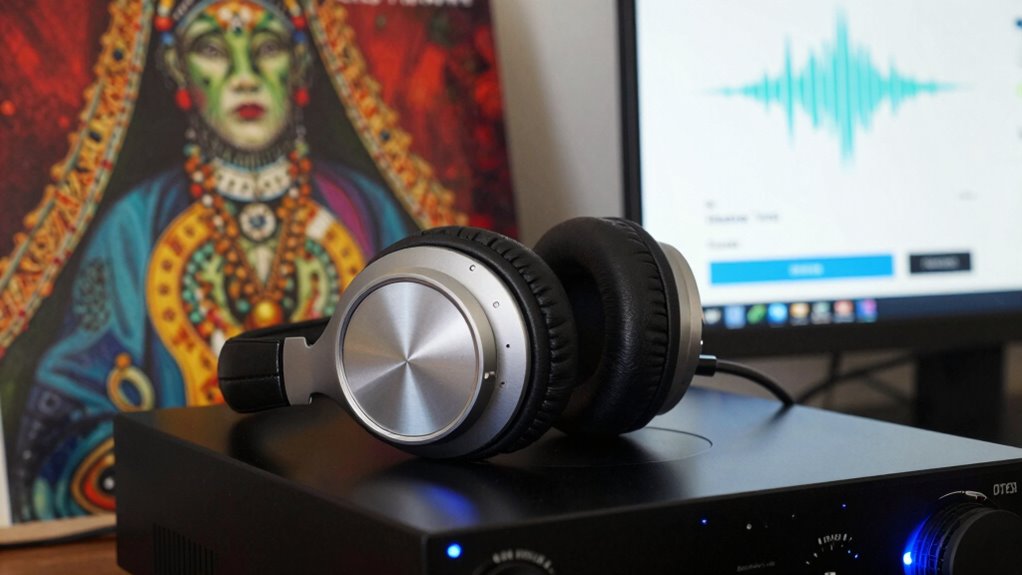
Is it possible to truly hear the difference between lossless and high-quality audio? For many, the answer depends on context. If you’re listening on quality headphones with excellent comfort, subtle nuances become clearer. Yet, some listeners struggle to distinguish a lossless track from a high-quality stream, especially amid vinyl nostalgia or background noise.
Consider this:
| Experience | Potential Perception |
|---|---|
| Vinyl nostalgia | Rich, warm sound, emotional connection |
| Headphone comfort | Clarity enhances subtle details |
| Quiet environment | Easier to detect differences |
| Noisy surroundings | Harder to discern subtle quality |
Ultimately, your ability to hear the difference hinges on your equipment and environment. If you’re not a trained ear, the distinction might be negligible.
What Factors Should You Consider When Choosing Streaming Quality?
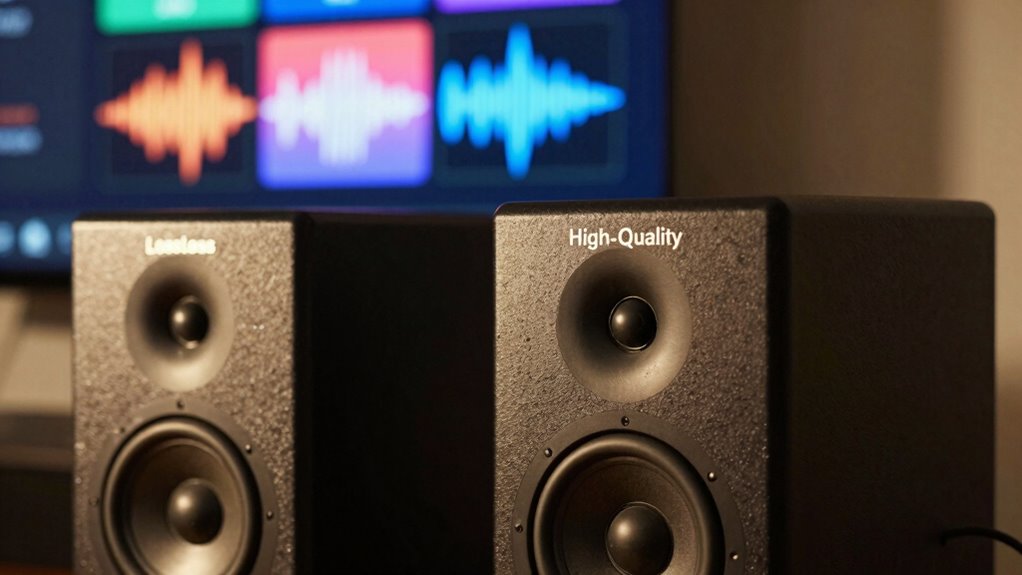
When selecting streaming quality, you need to balance your listening environment, equipment, and personal preferences. If you have high-quality audio equipment and a quiet, controlled listening environment, opting for lossless or higher-quality streams can maximize your experience. However, if your environment is noisy or your equipment is basic, the differences in streaming quality may be less noticeable. Consider your typical listening situations—commuting, relaxing at home, or working—and choose a setting that aligns with your needs. Bandwidth limitations also matter; higher-quality streams require faster internet. Ultimately, the best choice depends on how sensitive you are to audio nuances and the setup you use, ensuring that your streaming quality complements your environment and equipment for an ideal listening experience. Additionally, understanding the differences between streaming options can help you make more informed decisions tailored to your specific listening habits.
Frequently Asked Questions
How Does Equipment Quality Influence Perceived Audio Differences?
Your audio equipment quality considerably influences how you perceive audio differences. High-quality audio equipment delivers clearer, more detailed sound, making subtle nuances more noticeable. Your listening environment also plays a role; a quiet, well-treated space enhances these effects. Together, good equipment and an ideal environment allow you to experience the full depth and richness of lossless or high-quality streams, making the differences more apparent and enjoyable.
Are There Specific Genres That Benefit More From Lossless Streaming?
Surprisingly, classical and jazz genres benefit the most from lossless streaming, even if you think they don’t need it. Their intricate details and subtle nuances demand streaming consistency and higher fidelity. You might assume all genres sound the same, but your genre preferences can reveal how much you notice the difference. So, if you’re a true audiophile, you’ll enjoy the richer experience, especially with complex compositions.
Can Headphones or Speakers Impact the Ability to Distinguish Between Formats?
Headphones and speakers definitely impact your ability to tell lossless from high-quality streams. Upgrading your headphones can reveal more detail, making differences clearer, while ideal speaker placement enhances sound clarity and separation. If your gear isn’t high-end or isn’t set up properly, you might miss subtle nuances that distinguish formats. So, investing in better headphones and adjusting your speaker placement can greatly improve your listening experience and format differentiation.
Is Lossless Streaming Worth It for Casual or New Listeners?
Honestly, if you’re just a casual or new listener, lossless streaming might not be worth the extra hassle. Sure, the file format offers better quality, but your device’s storage size and sound system probably won’t reveal the difference. Plus, most casual listeners won’t notice the subtle nuances. So, save your bandwidth and storage; stick with high-quality or standard streams unless you’re an audiophile craving perfection.
How Does Ambient Noise Affect the Perception of High-Quality Audio?
Ambient noise can markedly impact how you perceive high-quality audio. When background distractions or ambient noise are present, they mask subtle details and nuances in the music, making it harder to appreciate the full richness of lossless or high-quality streams. To truly enjoy the sound, find a quiet environment or use noise-canceling headphones. Reducing ambient noise lets you experience the clarity and depth that high-quality audio offers.
Conclusion
Ultimately, understanding the difference between lossless and high-quality streaming can transform your listening experience from mere noise to pure sonic bliss. Whether you’re a casual listener or an audiophile, choosing the right format guarantees you’re not missing out on the full richness of your music. Don’t settle for less—your ears deserve the best. After all, settling for anything less is like watching a sunset in black and white when you could see it in full, breathtaking color.