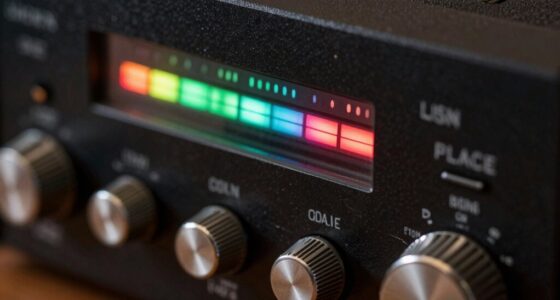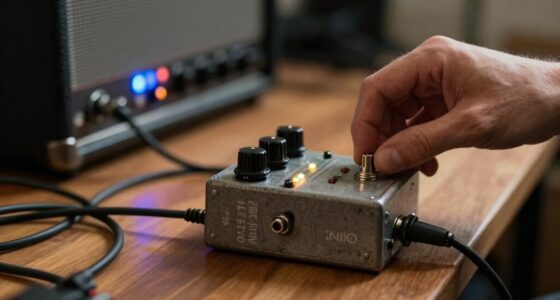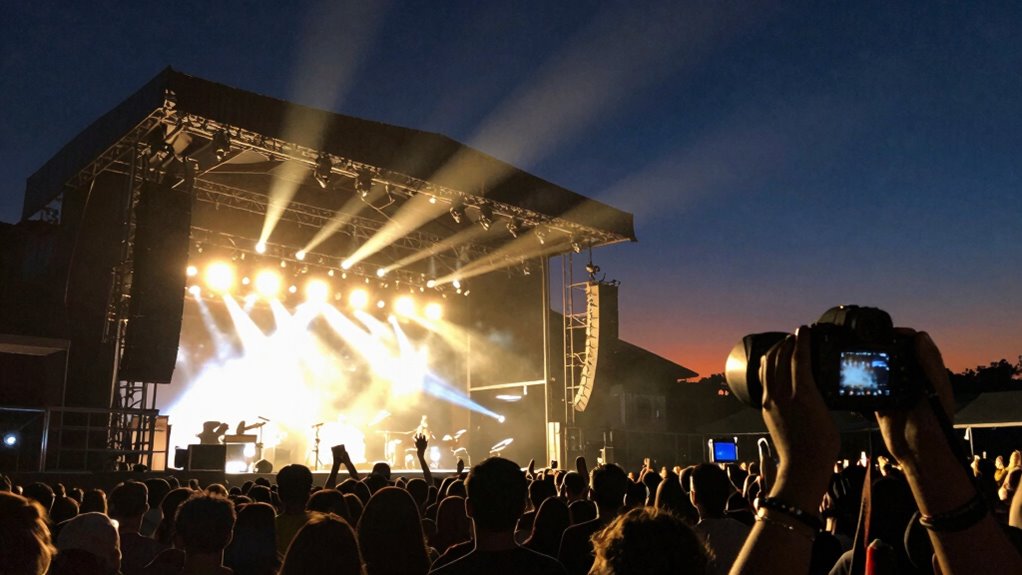

Dynamic range in live concerts refers to the contrast between soft whispers and loud peaks, like a delicate guitar solo versus a thunderous drum crescendo. It highlights the full spectrum of sound, making performances feel more authentic and emotional. Sound engineers carefully manage this range during shows to keep everything balanced and lively. If you want to understand how this shapes your concert experience and how it can improve your own recordings, keep exploring.
Key Takeaways
- Live concerts showcase dynamic range through subtle quiet passages and powerful loud sections, creating emotional contrast.
- Sound engineers use stage monitoring and equalization to preserve and emphasize the full dynamic spectrum.
- Proper microphone placement captures both soft nuances and loud peaks, maintaining natural dynamic variation.
- Audience reactions and live energy enhance the perception of dynamic range and emotional depth.
- Recording techniques aim to preserve live dynamic range, ensuring immersive and realistic playback of performances.
Concert Sound and Lighting Systems
As an affiliate, we earn on qualifying purchases.
As an affiliate, we earn on qualifying purchases.
What Is Dynamic Range in Live Music?
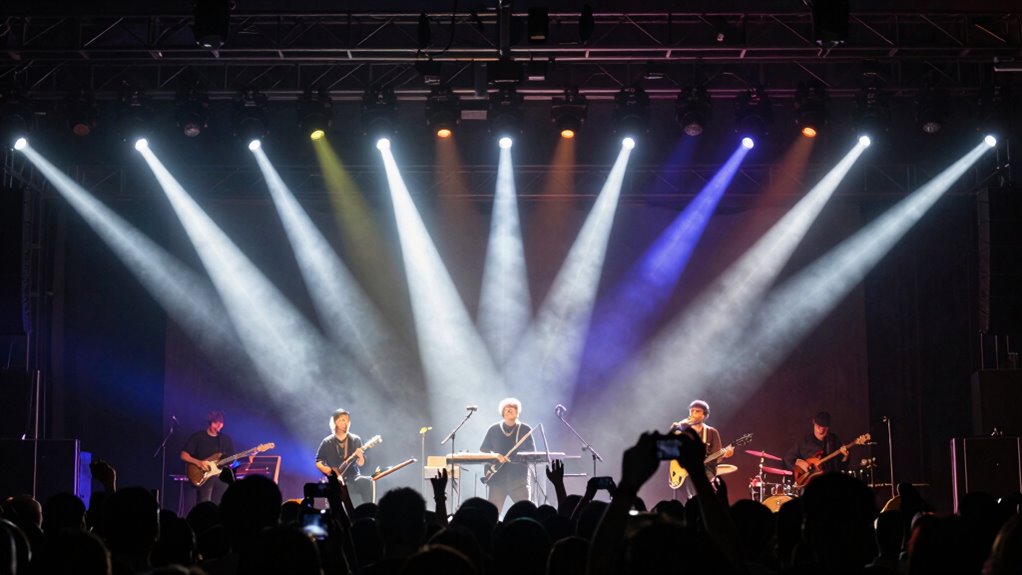
Have you ever noticed how some live music performances feel more powerful and expressive than others? That’s often due to how the sound is managed, particularly with music compression and loudness normalization. Dynamic range refers to the difference between the quietest and loudest parts of a performance. In live settings, sound engineers use compression to control peaks, preventing sudden loud bursts from overwhelming the audience. Loudness normalization helps balance overall volume, making softer moments clearer without losing intensity. When these tools are used skillfully, they preserve the natural ebb and flow of a performance, emphasizing emotional moments. This careful balancing makes live music feel more engaging and immersive, allowing you to experience the full spectrum of sound as the artist intended. Additionally, understanding audio technology can deepen your appreciation for how live sound is shaped to create a compelling listening experience.

FIFINE AmpliGame AM8 USB/XLR Dynamic Microphone for Gaming Streaming
- Natural Audio Clarity: 50Hz-16KHz frequency response for balanced sound
- Cardioid Dynamic Microphone: Rejects off-axis noise for clear vocals
- XLR Connection Upgrade: Connects to audio interface for versatile use
As an affiliate, we earn on qualifying purchases.
As an affiliate, we earn on qualifying purchases.
How Do Concerts Show Off Dynamic Range?
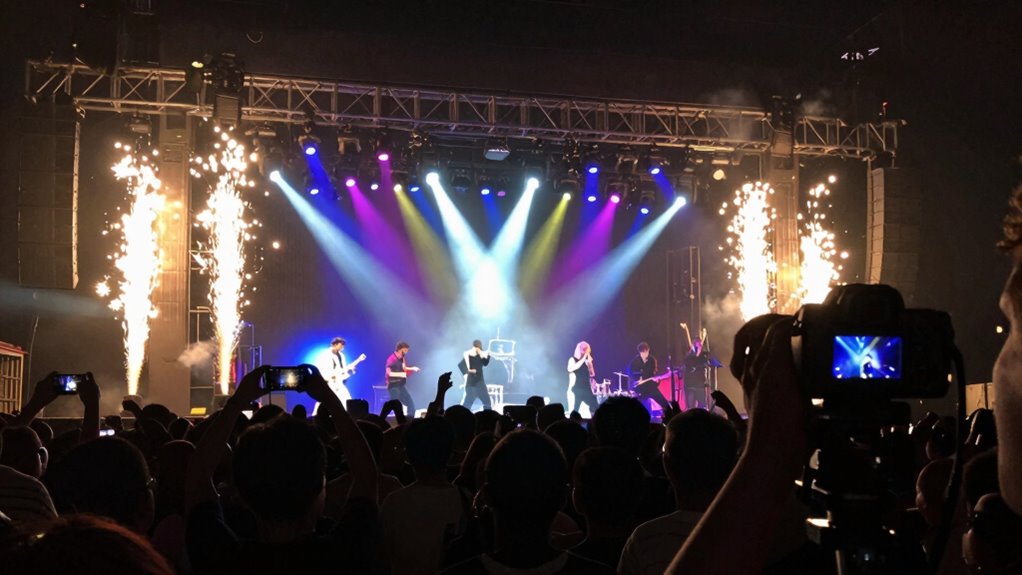
Ever wonder how live concerts make the dynamic range stand out? It all comes down to live mixing, where sound engineers skillfully adjust volume levels to highlight quiet passages and amplify powerful moments. This careful control creates a sense of contrast that captures your attention and makes the performance feel alive. Audience engagement also plays a role, as performers often use dynamics to evoke emotion and involve the crowd. For example, a soft, delicate verse can draw you in, while a loud chorus energizes the entire venue. These techniques showcase the full spectrum of sound, emphasizing the richness and depth that dynamic range offers. Proper sound system setup and calibration are essential for accurately reproducing those dynamic nuances. Ultimately, well-executed live mixing and strategic dynamics elevate the concert experience, making every moment more impactful.

MICNAUX Audio Compressor, Professional Dual-Channel Black Dynamic Processor with Noise Gate & Sidechain Insert for Studio, Live & Streaming – 1U Rackmount, XLR/TRS Inputs
- Dual-Channel Compression: Smooth, natural dynamics control for multiple sources
- Professional Connectivity: XLR and TRS inputs/outputs for seamless integration
- Enhanced Vocal Clarity: VCA circuitry boosts vocal warmth and detail
As an affiliate, we earn on qualifying purchases.
As an affiliate, we earn on qualifying purchases.
Why Does Dynamic Range Matter to Your Concert Experience?
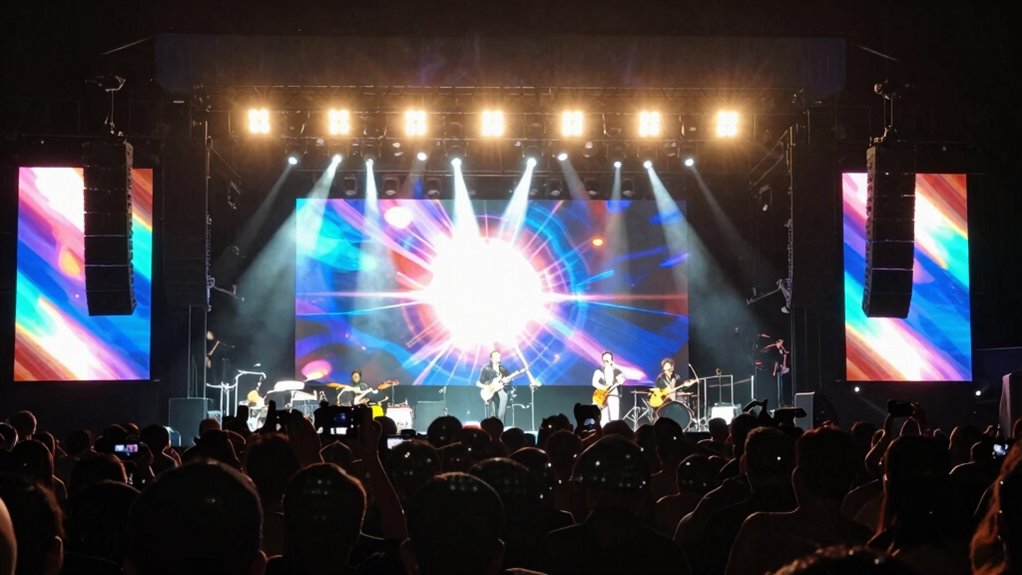
When dynamic range is preserved, your concert sounds clearer and more lifelike. It allows you to notice subtle details and musical nuances that might otherwise get lost. That’s why a good dynamic range makes the live experience more authentic and engaging. Understanding acoustic dynamics helps you appreciate how sound levels fluctuate during a performance, enhancing your overall perception.
Enhances Sound Clarity
Dynamic range plays a crucial role in delivering clear and detailed sound at concerts, allowing you to hear nuances that might otherwise be lost. When the sound system uses ideal compressor settings, it balances loud and soft passages, ensuring clarity without distortion. This clarity keeps you engaged, letting you pick out subtle guitar riffs or delicate vocals amid the chaos. Imagine:
- A singer’s breathy whisper clearly cutting through the mix.
- The gentle pluck of a bass string resonating with nuance.
- Sudden loud drums that hit sharply without overwhelming.
- Quiet background instruments that add depth and texture.
Effective dynamic range management ensures that every element of the performance is heard as intended, enhancing your overall concert experience.
Preserves Musical Nuance
Maintaining a wide dynamic range guarantees that the subtle differences in volume and intensity within a performance come through clearly. This preservation allows you to hear the intricate instrumental textures that define a piece’s emotional depth. When musicians vary their volume and attack, it creates a rich tapestry of sounds that keep you engaged and connected to the music. Without sufficient dynamic range, these nuances can be lost, making everything sound flat or monotonous. By capturing the full spectrum of sound, the concert experience becomes more authentic and emotionally compelling. You’ll notice the delicate interplay between instruments and the composer’s intended expression. Additionally, a broad dynamic range ensures that the audience experiences the full emotional impact intended by the performers. As a result, your engagement deepens, and you’re better able to appreciate the artistry behind every subtle shift in the performance.

PreSonus Eris 3.5 Powered Studio Monitors, Pair — 3.5” Active Near
- Studio-Quality Sound: Ideal for music, gaming, movies, streaming
- Powerful Amplification: 50W built-in amp delivers distortion-free sound
- Balanced Audio Range: 3.5” woofers and 1” silk-dome tweeters for clear highs and deep bass
As an affiliate, we earn on qualifying purchases.
As an affiliate, we earn on qualifying purchases.
How Do Sound Engineers Control Dynamic Range During Shows?
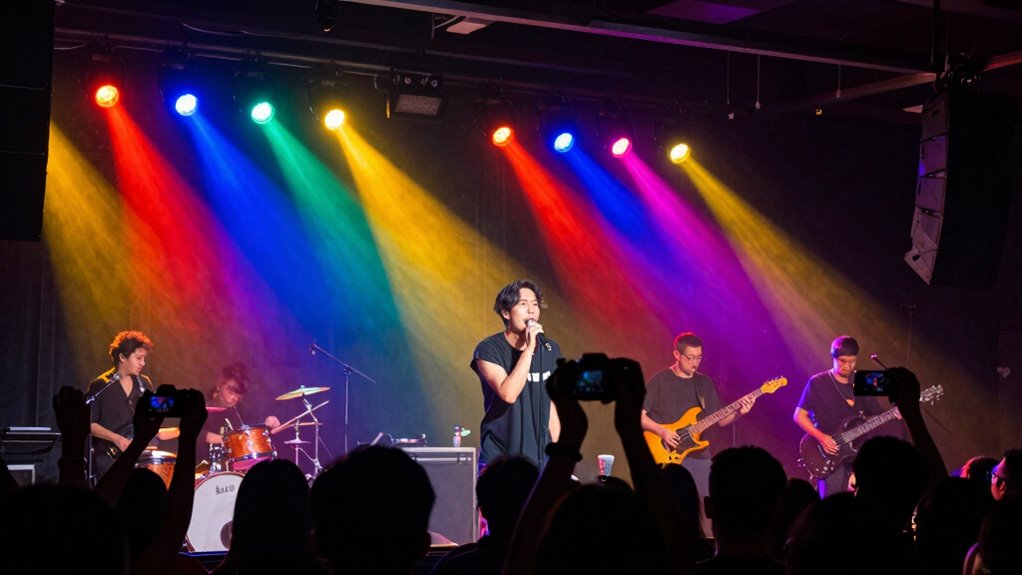
Sound engineers actively manage dynamic range during shows to guarantee that all the music and vocals come through clearly without distortion or excessive quietness. They use techniques like audio compression to tame loud passages and boost softer ones, maintaining a balanced sound. Stage monitoring plays a vital role, helping performers hear themselves clearly amidst the noise. To control dynamic range effectively, you might picture:
Sound engineers balance volume and clarity for a seamless live performance.
- Adjusting compressor settings to smooth out peaks and valleys in volume.
- Using stage monitors so artists stay in sync with the overall mix.
- Applying equalization to enhance clarity and separation.
- Setting appropriate gain levels to prevent distortion while keeping sound lively.
- Understanding dynamic range helps sound engineers make informed adjustments to achieve a consistent, dynamic experience that’s engaging for both performers and the audience.
What Can Live Concerts Teach Us About Recording Better Audio?
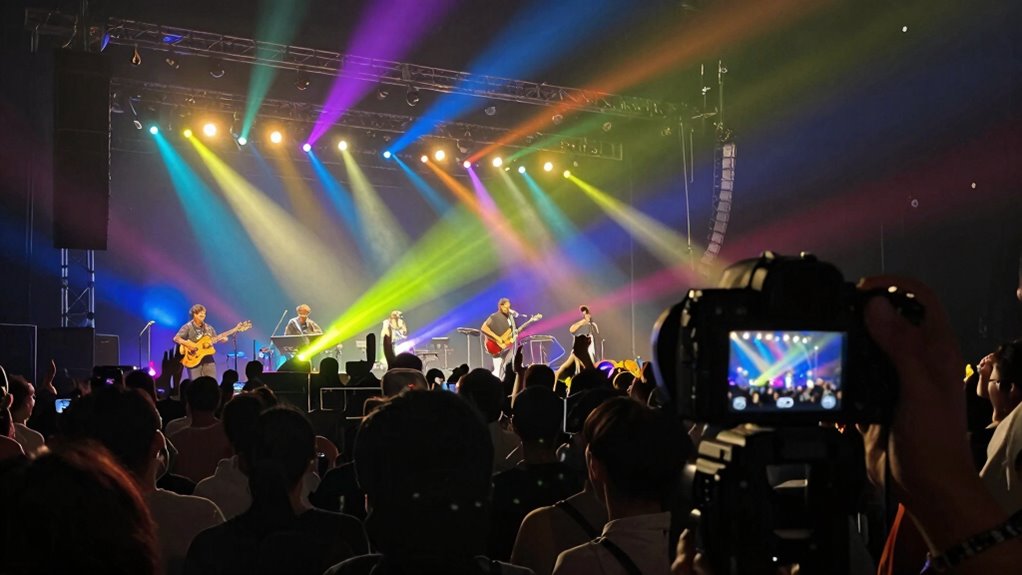
Live concerts offer valuable lessons for recording better audio by highlighting the importance of capturing the energy and nuances of a performance in real time. Microphone placement plays a crucial role in this, as it determines how well you can pick up the natural sound and dynamics of the performance. Proper positioning allows you to capture the full range of instruments and vocals while minimizing unwanted noise. Additionally, understanding audience impact is essential; the audience’s reactions add depth and emotion to the recording. By observing how sound engineers position mics to balance the live experience with clarity, you learn how to enhance your recordings’ dynamic range. Ultimately, good microphone placement and capturing the audience’s energy help you create recordings that feel alive and immersive. Incorporating outage preparedness strategies can also ensure your recording setup remains reliable during unexpected disruptions, maintaining your ability to capture those spontaneous moments.
How Can You Improve Dynamic Range in Your Own Audio Recordings?
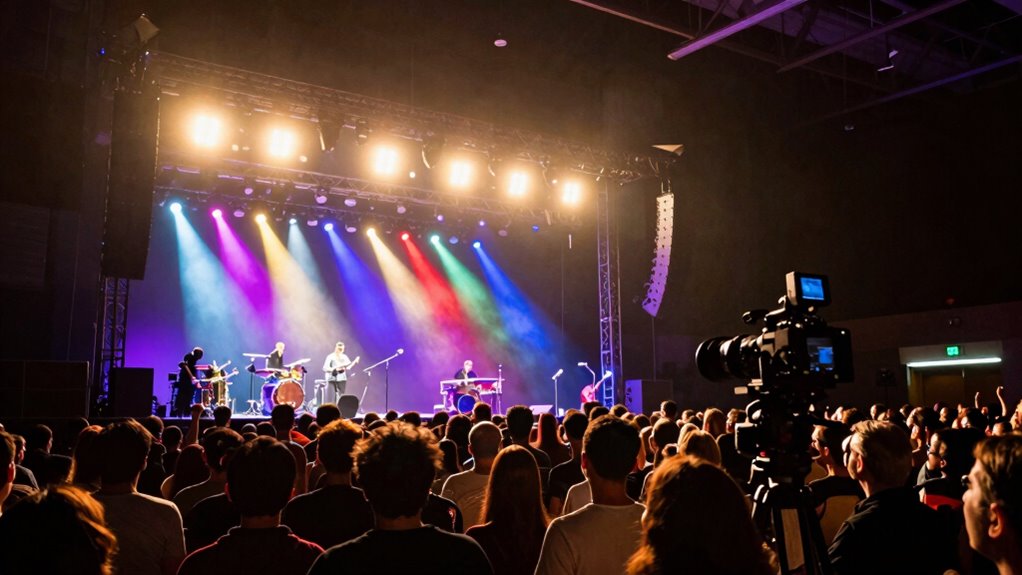
To improve the dynamic range in your recordings, focus on capturing both the quietest and loudest parts without distortion or loss of detail. Proper microphone placement helps you pick up subtle nuances and prevent clipping during louder moments. Experiment with positioning to find the sweet spot that balances clarity and depth. Room acoustics also play a pivotal role—use sound absorption or diffusion to minimize reflections that can muddy your recordings. Here are some tips to visualize your setup:
Optimize your recordings by carefully positioning mics and controlling room acoustics for a richer, clearer sound.
- Place microphones close to the source for detail.
- Adjust positioning to capture the full dynamic spectrum.
- Use acoustic panels to control room reflections.
- Record at appropriate levels to avoid distortion and noise.
- Understanding microphone placement can make a significant difference in achieving optimal dynamic range.
Frequently Asked Questions
How Does Dynamic Range Impact Audience Emotional Engagement During Concerts?
Dynamic range greatly influences your emotional engagement during concerts by shaping audience reactions and emotional intensity. When the music has a wide dynamic range, you experience moments of quiet intimacy and powerful crescendos, heightening your emotional response. This contrast keeps you more involved, making the performance feel more alive and compelling. As a result, your reactions become more intense, and the overall emotional impact of the concert deepens, creating a memorable experience.
Can Dynamic Range Vary Between Different Music Genres Live?
Yes, dynamic range can vary between different music genres live. You’ll notice that genres like classical or jazz often feature broad, genre-specific dynamics, creating emotional depth and musical diversity. In contrast, genres like electronic dance music tend to have more compressed dynamic ranges for sustained energy. This variation influences how you experience the performance, making each genre’s live presentation unique and tailored to its expressive style.
What Are Common Challenges in Capturing Dynamic Range During Live Recordings?
Like catching lightning in a bottle, capturing dynamic range in live recordings is tricky. You often face challenges with audio compression, which can squash the natural variations, and microphone placement, which can miss subtle shifts in volume. Properly managing these factors guarantees you preserve the true energy of the performance. Using precise microphone positioning and avoiding excessive compression helps you record a more authentic, lively sound.
How Do Venue Acoustics Influence the Perceived Dynamic Range?
Venue acoustics greatly influence how you perceive dynamic range. Acoustic reflections can cause sound to bounce around, making quiet moments seem louder and loud parts feel overwhelming. Sound absorption, on the other hand, helps control these reflections, balancing the sound and preserving the true dynamic range. When you’re in a venue with poor absorption, you might miss subtle details, while good acoustics enhance clarity and maintain the intended contrast between soft and loud sounds.
Are There Technological Limitations to Achieving Ideal Dynamic Range in Live Sound?
Technological limitations can limit your desired dynamic range. You might encounter issues like audio compression, which compresses loud sounds, reducing contrast. Microphone sensitivity can also restrict capturing subtle soft sounds or loud peaks accurately. These tools help balance sound but can’t perfectly replicate natural dynamics. As a result, achieving an ideal dynamic range remains a challenge, requiring careful calibration to avoid distortion and preserve the music’s emotional impact.
Conclusion
Just like a masterful painter uses every shade to create depth, understanding dynamic range lets you truly appreciate the nuances of live music. When you grasp how sound engineers craft those breathtaking moments, you’ll hear concerts—and recordings—with fresh ears. Remember, harnessing dynamic range is your secret weapon for richer, more immersive audio. So next time you’re at a show or listening to a track, channel your inner Beethoven and savor every vibrant detail.