


When a surprise weather alert occurs during your show, stay calm and prioritize safety by calmly informing the audience using your venue’s communication system. Guide everyone to designated shelter areas or interior spaces, following your emergency plan closely. Keep messages clear and concise, avoiding panic. Continuously monitor weather updates from reliable sources and update your team immediately. If you’re interested in more detailed strategies, you’ll find essential tips to manage these situations effectively as you continue.

Get audio and creator gear delivered free with Prime
- Fast, free delivery on millions of items
- Prime Video, Amazon Music and more included
- Member-only deals all year
Key Takeaways
- Immediately activate the venue’s emergency communication plan, using PA systems or messaging tools to alert the audience calmly.
- Direct guests to designated shelter areas or interior spaces, avoiding elevators and ensuring safe movement.
- Provide clear, concise instructions and reassurance to prevent panic and maintain crowd control.
- Continuously monitor weather updates from reliable sources and update staff and audience promptly.
- After the alert passes, assess safety, document the incident, and review procedures to improve future responses.
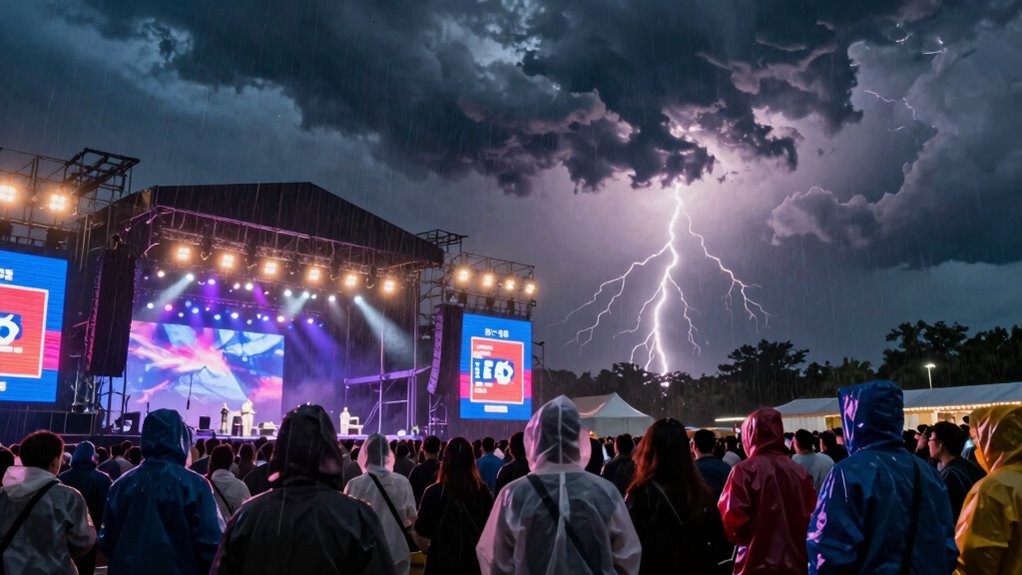
Unexpected weather alerts can catch you off guard during a show, but knowing how to respond quickly is essential for everyone’s safety. When a sudden weather warning appears, your immediate priority should be to guarantee audience safety by following established emergency protocols. These protocols are designed to minimize chaos and guide you through the steps needed to protect both guests and staff. Staying calm and organized allows you to manage the situation effectively, preventing panic and confusion.
The first step is to have a clear communication plan in place. Use the venue’s PA system or designated communication tools to alert the audience calmly but decisively. Let them know that a weather alert has been issued and that you’re taking steps to guarantee their safety. Avoid alarming language; instead, focus on providing clear instructions and reassurance. This helps keep the crowd calm and cooperative, which is critical during unexpected weather events. Keep your message concise and repeat it if necessary, so everyone understands what to do next.
Next, activate your emergency protocols. This might involve directing the audience to designated shelter areas, such as interior rooms or underground spaces, if available. If your venue has a specific plan for weather emergencies, follow it closely. Make sure all staff members are aware of their roles and responsibilities, whether it’s guiding guests, managing entrances, or monitoring weather updates. Coordination is key; the faster everyone works together, the safer the crowd remains. Use visual cues and signage if needed to guide movement, and avoid using elevators if there’s a risk of power failure or structural issues. Incorporating emergency communication tools can further enhance response efficiency.
Throughout this process, stay updated on the latest weather information via reliable sources like weather apps, alert systems, or official broadcasts. Communicate any new developments to your team immediately, so everyone remains informed and prepared to adapt. Remember, the goal is not only to respond but to do so efficiently, maintaining a focus on the safety and well-being of your audience at all times. After the storm passes or the alert is lifted, conduct a quick assessment to check for any hazards or damages before resuming normal activities. Document the incident for future review and improvement of your emergency protocols.
Handling surprise weather alerts requires quick thinking, clear communication, and adherence to emergency protocols. By prioritizing audience safety and staying calm under pressure, you can navigate these unexpected events effectively and protect everyone involved.
venue emergency communication system
As an affiliate, we earn on qualifying purchases.
As an affiliate, we earn on qualifying purchases.
Frequently Asked Questions
How Do I Notify the Audience Quickly About Weather Alerts?
You should immediately use the venue’s public address system or loudspeakers to alert your audience about weather alerts. Keep your message clear and concise, informing them of the situation and any necessary actions. Engage your audience with calm, authoritative communication to maintain their trust. Always have an emergency preparedness plan in place beforehand, so you can quickly coordinate with staff and guarantee everyone’s safety during unexpected weather events.
What Equipment Is Best for Weather Alert Communication?
You should use a reliable PA system with clear, loud speakers to communicate weather alerts quickly. Incorporate weather safety equipment like portable weather radios and alert systems that connect to emergency preparedness protocols. This guarantees your audience receives timely updates, minimizing risks during sudden weather changes. Prioritize equipment that offers instant alerts and clear audio, so you can effectively manage the situation and keep everyone safe during emergencies.
How Can I Stay Calm During Unexpected Weather Disruptions?
When unexpected weather disruptions occur, stay calm by focusing on your mental resilience. Take deep breaths, maintain a steady voice, and reassure your audience to keep engagement high. Remember, your calm demeanor helps manage the situation effectively. By staying composed, you demonstrate leadership and keep your audience informed and engaged, turning a potential panic into a display of professionalism and confidence.
What Legal Considerations Exist When Issuing Weather Alerts?
When issuing weather alerts, you must guarantee legal compliance by following local regulations and guidelines. Consider liability considerations carefully; providing accurate, timely information helps protect you from potential legal claims. Always verify weather data from trusted sources, clearly communicate the alert’s severity, and document your actions. Doing so demonstrates responsible management and minimizes legal risks, ensuring you meet both safety standards and legal obligations during unexpected weather situations.
How Should I Coordinate With Emergency Services During a Show?
You should establish clear emergency communication protocols with local emergency services before the show. Make sure they’re aware of your event details and can provide timely updates. During the event, coordinate closely to guarantee crowd safety, sharing information quickly if weather alerts or other emergencies occur. Regularly test your communication systems and designate a point person to liaise with emergency responders, ensuring a swift, organized response that prioritizes everyone’s safety.
public address system for emergencies
As an affiliate, we earn on qualifying purchases.
As an affiliate, we earn on qualifying purchases.
Conclusion
Remember, staying calm and prepared is key when surprise weather alerts hit during your show. Keep your team informed and follow your safety plan without hesitation. After all, isn’t being ready the best way to turn an unexpected storm into a smooth recovery? By staying proactive and composed, you ensure everyone’s safety and keep your event running as seamlessly as possible. Weather surprises may be unavoidable, but your response can make all the difference.
weather alert notification tools
As an affiliate, we earn on qualifying purchases.
As an affiliate, we earn on qualifying purchases.
As an affiliate, we earn on qualifying purchases.
Halloween Picks
halloween
As an affiliate, we earn on qualifying purchases.