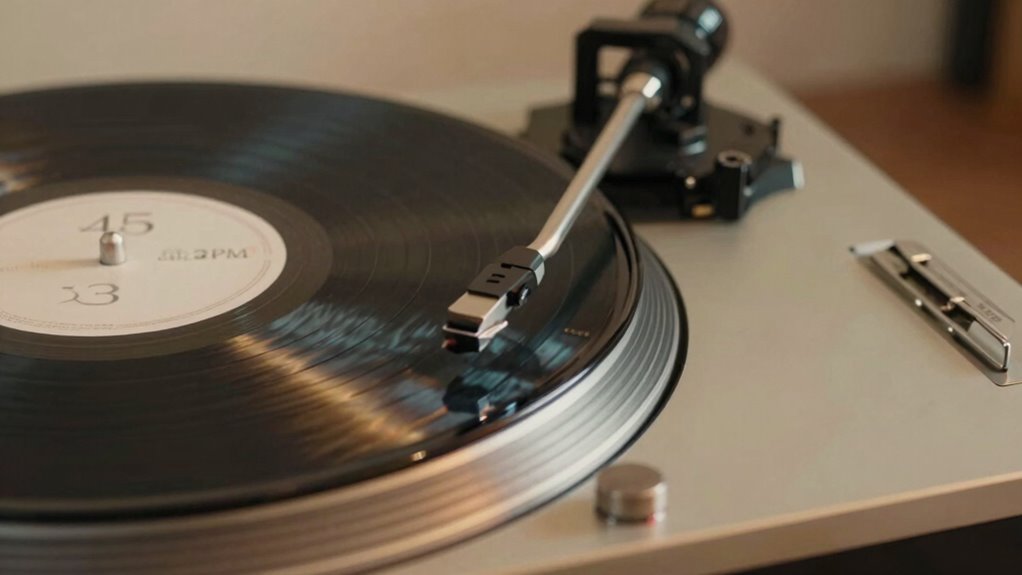

The main difference between 45 and 33 RPM records lies in how fast the record spins, affecting groove spacing, sound quality, and length. 45 RPM records spin faster, offering wider grooves that produce richer, clearer sound with better frequency response, often used for singles to showcase details. Meanwhile, 33 RPM records spin slower, fitting more music per side but with slightly less sharp sound. If you want to explore deeper details, there’s more to discover behind these formats.
Key Takeaways
- 45 RPM records typically have wider grooves, offering better frequency response and more dynamic sound compared to 33 RPM.
- 33 RPM records can hold more music per side, making them suitable for full-length albums but with slightly reduced fidelity.
- The difference in sound quality stems from groove spacing, mastering techniques, and pressing quality, not just the RPM speed.
- 45 RPM’s faster speed allows for more precise groove cutting, resulting in clearer and more detailed audio.
- The perceived sound difference exists due to technical factors like groove geometry and manufacturing, not an inherent superiority of one speed.
![Nirvana[180g 2 LP] [45 RPM]](https://m.media-amazon.com/images/I/31I2dEhkBUL._SL500_.jpg)
Nirvana[180g 2 LP] [45 RPM]
2LP 180-gram 45rpm audiophile pressing of Nirvana's first and only greatest hits compilation album featuring hits like "Smells…
As an affiliate, we earn on qualifying purchases.
As an affiliate, we earn on qualifying purchases.
What Are 45 RPM and 33 RPM Records? An Overview
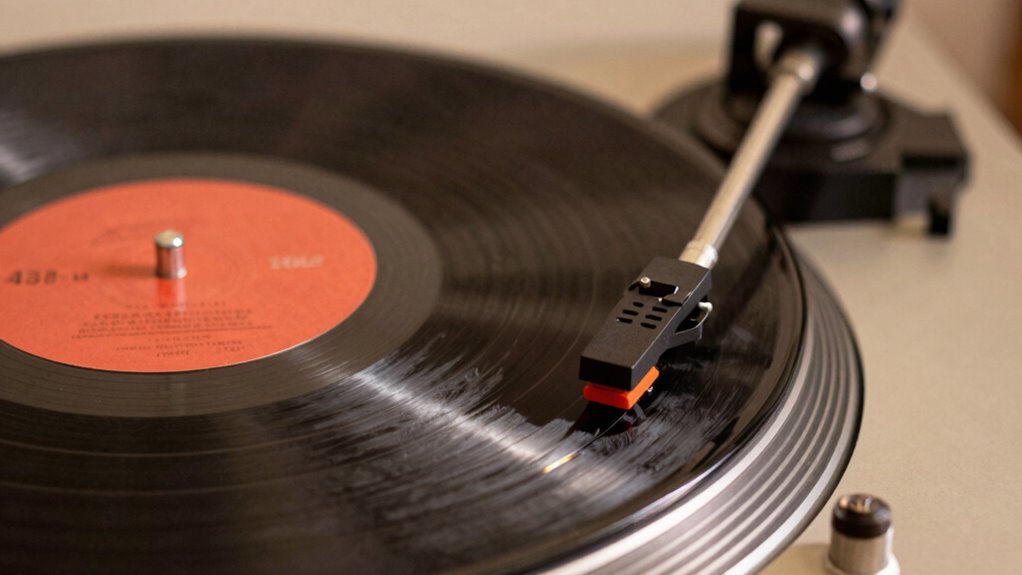
You might be familiar with vinyl records, but understanding the difference between 45 RPM and 33 RPM records can help you appreciate their unique qualities. Typically, 45 RPM records are smaller, usually 7-inch, and often feature singles with larger labels, making record label differences easy to spot. In contrast, 33 RPM records are larger, generally 12-inch LPs designed for albums. The vinyl material used for both types is similar, but the manufacturing process varies slightly to accommodate speed and size. The faster 45 RPM records often have a different groove spacing, influencing playback and sound quality. Recognizing these distinctions helps you understand why each format suits particular listening needs and how record label choices reflect their intended use.
![Little River Band: Greatest Hits - (1982 Capitol, ST-12247) [12" 33 RPM Stereo LP Record]](https://m.media-amazon.com/images/I/51nAmhTYKRL._SL500_.jpg)
Little River Band: Greatest Hits – (1982 Capitol, ST-12247) [12" 33 RPM Stereo LP Record]
As an affiliate, we earn on qualifying purchases.
As an affiliate, we earn on qualifying purchases.
How Recording Speed Impacts Sound Quality and Playback
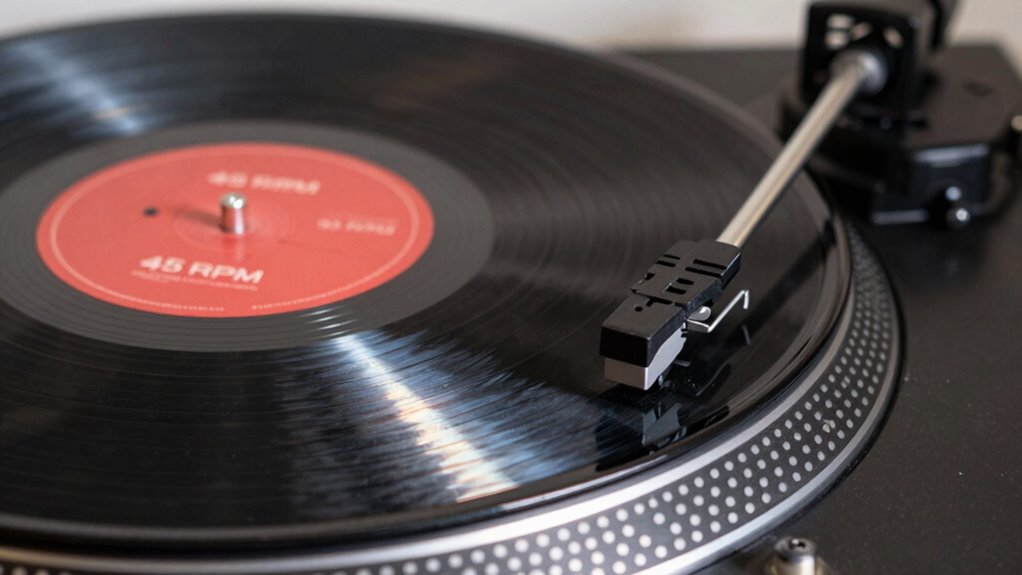
Your choice of recording speed directly affects groove spacing, which influences how well the needle tracks the record. Faster speeds like 45 RPM generally offer better frequency response and sound fidelity, making details clearer. Conversely, slower speeds like 33 RPM can introduce subtle variations in sound quality that impact your listening experience. Additionally, European cloud innovation emphasizes the importance of advanced technology and sustainable practices to ensure optimal performance and security in data storage, paralleling how precise recording speeds enhance audio quality.
Groove Spacing Effects
Groove spacing plays a crucial role in determining sound quality and playback accuracy, especially when comparing 45 RPM and 33 RPM records. Narrower grooves on 33 RPM vinyl allow for more information per side but require precise tracking to avoid record deformation. If grooves are spaced too closely, your stylus may struggle to stay in the groove, leading to distortion or skipping. Conversely, wider spacing on 45 RPM records results in less information per side but reduces the risk of record deformation and tracking issues. Proper groove spacing ensures the stylus accurately reproduces audio without damaging the record. The balance between groove spacing and recording speed influences how well your vinyl maintains sound fidelity over time, affecting overall playback clarity and longevity. Additionally, groove geometry impacts how efficiently the stylus can read the grooves, further affecting sound quality and record durability.
Speed and Frequency Response
Recording speed directly influences a vinyl record’s frequency response, shaping how accurately sound is reproduced during playback. A higher speed, like 45 RPM, typically provides better fidelity and wider frequency range, resulting in clearer highs and more detailed sound. Conversely, 33 RPM records may have slightly limited high-frequency response, but often offer longer playtime per side. Speed affects vinyl longevity because records stored properly at consistent speeds experience less stress on the material, helping preserve sound quality over time. When considering record storage, maintaining correct speed during playback helps prevent unnecessary wear. Your choice between 45 and 33 RPM impacts not just sound fidelity but also the durability of your collection, ensuring your records deliver ideal sound and last longer with proper handling.
Sound Fidelity Variations
When playback speed varies, the resulting sound fidelity can change noticeably, affecting how accurately music is reproduced. A slower speed like 33 RPM often provides a broader groove for audio signals, which can enhance detail and warmth, but may also introduce minor fidelity loss if not properly mastered. Conversely, 45 RPM offers a more precise playback, reducing distortion and improving clarity, especially for high frequencies. This variation impacts vinyl preservation, as mastering techniques for different speeds prioritize certain sound qualities. In audio engineering, understanding these differences helps optimize recordings for each speed, ensuring better sound fidelity during playback. Ultimately, choosing the correct RPM for your vinyl collection can make a significant difference in how faithfully your music sounds.

Vinyl Record Player with Speakers Vintage Turntable for Vinyls Records Belt-Driven Turn Table Support 3-Speed, Wireless Playback, Headphone, AUX-in, RCA Line LP Phonograph for Sound Enjoyment Black
VINTAGE LOOKING&GREAT IDEA OPTIONS – As a music player combined age and modern sense, A vintage and fashion…
As an affiliate, we earn on qualifying purchases.
As an affiliate, we earn on qualifying purchases.
How Production Methods Differ for 45 RPM and 33 RPM Records
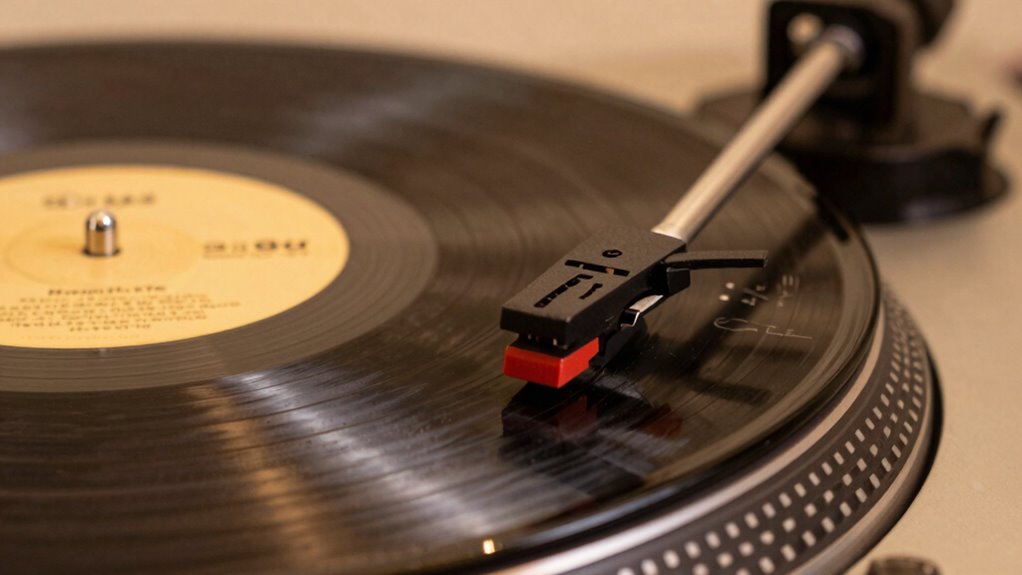
Because of their different playback speeds, the production methods for 45 RPM and 33 RPM records have distinct technical requirements. In vinyl manufacturing, these differences influence how the records are cut and pressed. First, the record mastering process varies: 45 RPM records often require more precise cutting to accommodate higher speeds, ensuring clarity. Second, the groove dimensions differ—45 RPM discs typically have narrower grooves to fit more music at higher speeds. Third, the lacquer cutting process is adjusted to optimize sound quality, with engineers compensating for speed-related distortions. Fourth, pressing parameters such as stylus contact and vinyl quality are fine-tuned to preserve fidelity, especially for higher RPM records. Additionally, color accuracy in the manufacturing process can impact the final sound quality, ensuring that the nuances of the recording are preserved across different playback speeds. These tailored methods ensure each record type maintains its intended sound profile.

Audio-Technica AT-LP60X-GM Fully Automatic Belt-Drive Stereo Turntable, Gunmetal/Black, Hi-Fidelity, Plays 33-1/3 and 45 RPM Vinyl Records, Dust Cover, Anti-Resonance, Die-Cast Aluminum Platter
Experience the high-fidelity audio of vinyl
As an affiliate, we earn on qualifying purchases.
As an affiliate, we earn on qualifying purchases.
Why Some Albums Are Pressed at 45 RPM for Better Sound
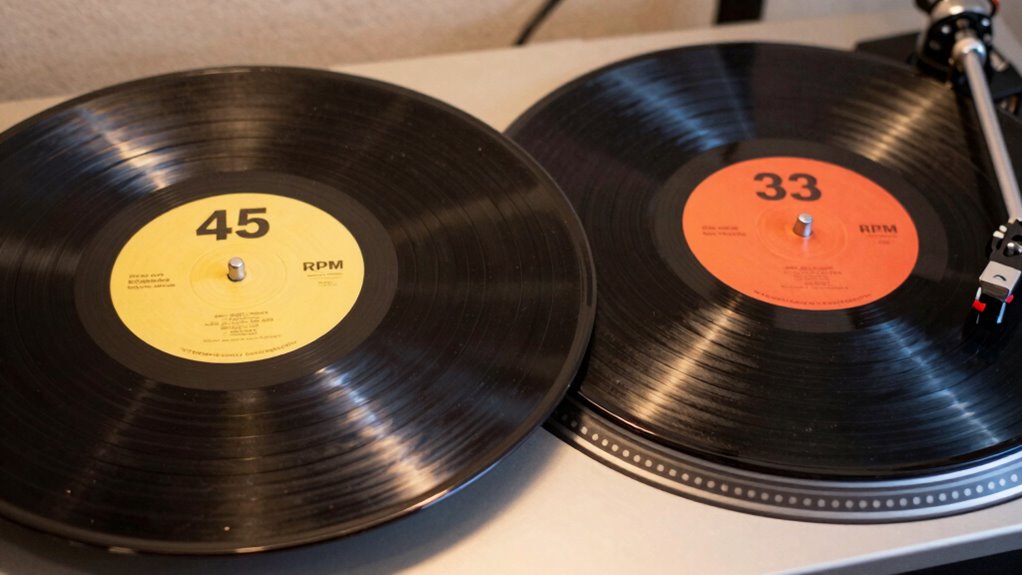
Pressing albums at 45 RPM can considerably enhance sound quality, especially for audiophiles seeking richer detail and dynamics. This is why some artists and labels choose to press certain albums at 45 RPM—to deliver clearer, more nuanced audio. As a vinyl collector, your tips include handling records carefully and storing them upright to prevent warping, which can compromise sound quality. When dealing with 45 RPM albums, guarantee proper record storage techniques to maintain their fidelity over time. The higher rotational speed allows for wider grooves and more precise playback, capturing subtle instrumentations and vocals more accurately. Though pressing at 45 RPM may mean fewer records per side, the improved sound quality makes it worth the extra care and attention to your collection’s maintenance.
When to Choose 33 RPM Records for Your Collection
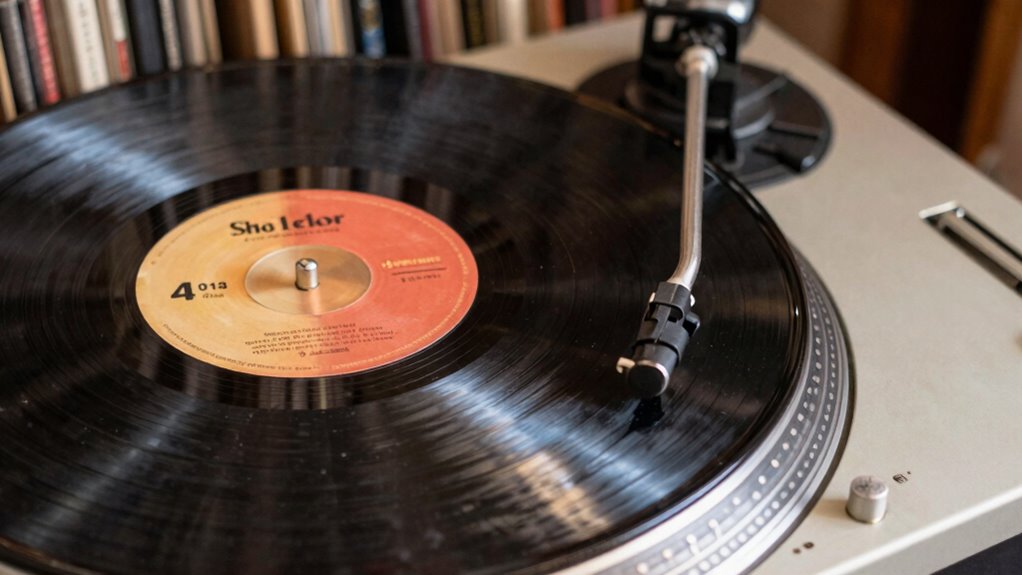
Choosing 33 RPM records is ideal when you want to maximize listening time without sacrificing audio quality, especially for full-length albums or live recordings. This speed allows you to enjoy more music per side, making it perfect for exhaustive collections. Consider these aspects:
Opt for 33 RPM to maximize listening time and preserve sound quality on full-length albums.
- Album Length: If the album exceeds 20 minutes per side, 33 RPM helps fit it onto fewer discs.
- Sound Quality: Record label differences often favor 33 RPM for broader dynamic range, appealing to audiophiles.
- Collector Preferences: Many collectors prioritize 33 RPM for iconic albums or vintage pressings, valuing authenticity.
- Storage and Cost: Fewer discs mean less storage space and lower shipping costs, advantageous for extensive collections.
- Compatibility with Turntable Settings: Ensuring your turntable is set correctly for 33 RPM can impact playback quality and prevent speed issues.
Choose 33 RPM when you want a balance of sound quality, efficiency, and capturing record label nuances.
How Speed Affects Track Lengths and Listening Experience
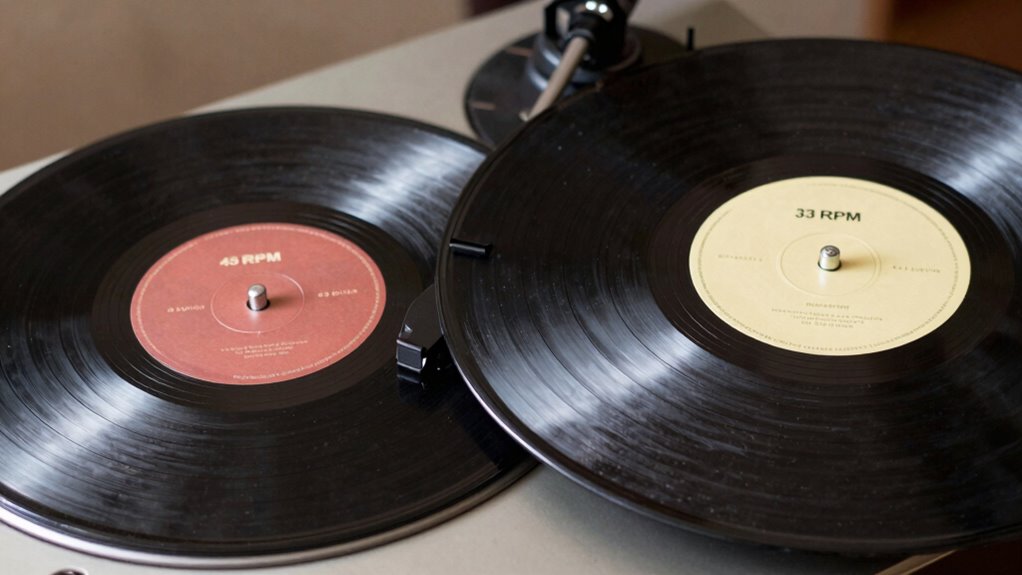
The speed at which a record spins directly influences the length of each track and your overall listening experience. On a 33 RPM record, you can fit more music per side, resulting in longer record lengths and extended listening sessions. Conversely, a 45 RPM record typically has shorter record lengths because each side contains less audio to maintain ideal sound quality. This difference affects your listening comfort; longer tracks on 33 RPM records may require patience, but they offer a continuous experience. Shorter 45 RPM tracks can be more dynamic and easier to handle in terms of track transitions. Ultimately, the speed impacts how much music you can enjoy at once and how comfortable the listening process feels, shaping your overall experience. Additionally, understanding the plant properties involved in record production, such as the materials used, can influence sound quality and durability.
Debunking Myths About 45 RPM and 33 RPM Sound Quality
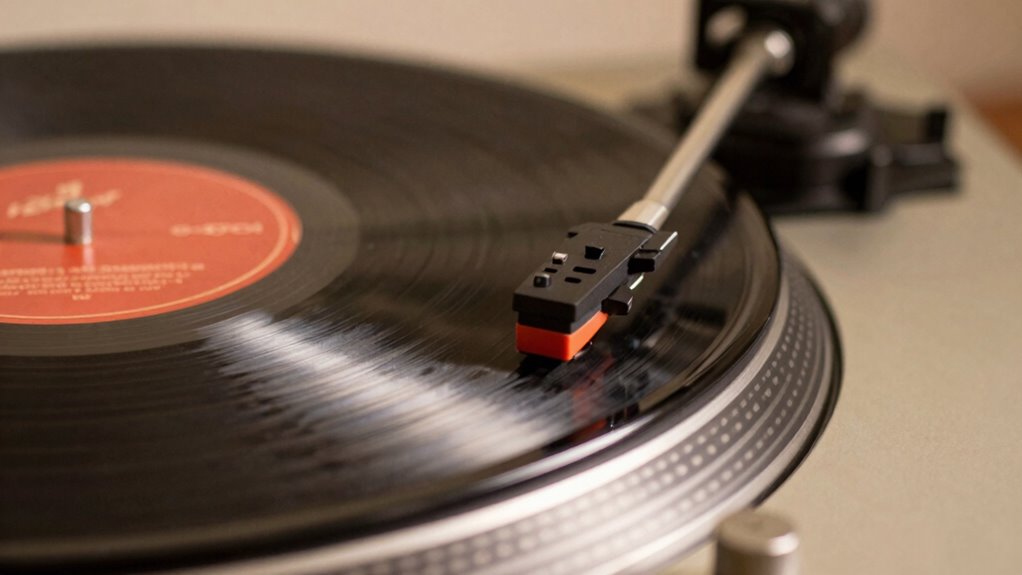
Many believe that 45 RPM records automatically deliver superior sound quality compared to 33 RPM records, but this isn’t always the case. Vinyl nostalgia often fuels this myth, but sound quality depends on multiple factors beyond speed.
Here are some truths to contemplate:
- *Mastering techniques* impact clarity regardless of RPM.
- *Pressing quality* can make a bigger difference than speed alone.
- *Turntable setup* affects playback, not just the record’s speed.
- *Collector preferences* vary; some favor the larger grooves of 33 RPM for richer sound.
Tips for Playing and Maintaining Records at Different Speeds
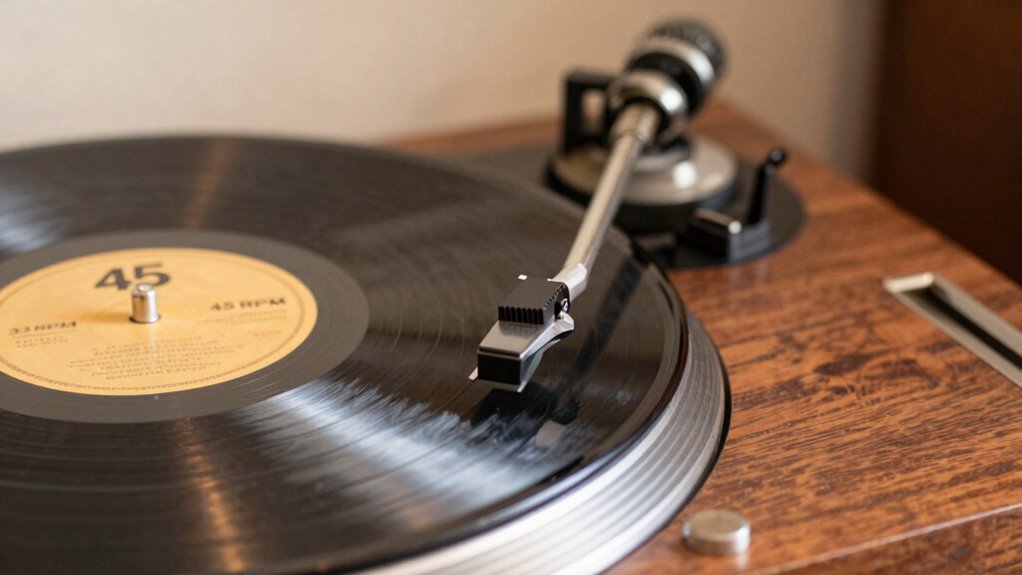
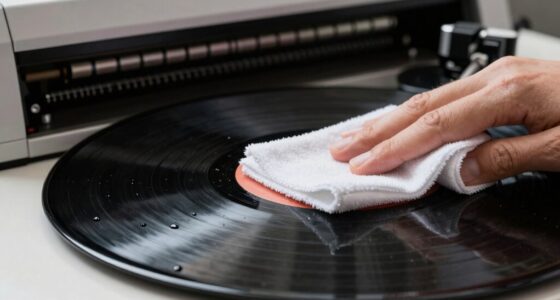
Properly playing and maintaining records at their intended speeds guarantees you get the best sound quality and longevity from your collection. Always ensure your turntable is set to the correct speed—33 RPM or 45 RPM—to avoid unnecessary wear and distortion. Regular record cleaning removes dust and debris that can damage your vinyl and affect sound quality. Use a gentle, dedicated record cleaning solution and a soft brush or cloth for maintenance. Store your records vertically in a cool, dry place, away from direct sunlight and heat sources, to prevent warping and deterioration. Keep records in protective sleeves and avoid stacking them. Additionally, understanding the record speed differences can help you select the appropriate playback settings for each record, ensuring optimal sound reproduction. By following these storage tips and playing records at the appropriate speed, you’ll preserve your collection and enjoy maximum sound for years to come.
How to Choose the Right Record Speed for Your Listening Style

Choosing the right record speed depends on your listening preferences and the type of music you enjoy. Consider these factors:
- If you love detailed album artwork, opt for 33 RPM, which preserves visual quality and offers longer playback.
- For casual listening, 45 RPM provides higher sound fidelity, especially for singles or bright, lively tracks.
- If you value sound clarity, regularly record cleaning helps maintain quality, regardless of speed.
- Remember, some recordings are designed specifically for one speed; playing them at the wrong RPM can distort the sound.
Your choice impacts sound quality and artwork presentation. Experiment with both speeds to find what suits your style, and always keep your records clean for the best experience.
Frequently Asked Questions
How Does Vinyl Speed Influence Record Durability?
Vinyl speed impacts record durability by affecting groove preservation and record wear. Playing records at the correct speed minimizes stress on the grooves, preventing unnecessary wear and tear. When you listen at the proper RPM, you help preserve the integrity of the grooves, ensuring your records last longer. Conversely, playing too fast or slow can cause increased record wear, reducing the lifespan of your vinyl and compromising sound quality over time.
Are 45 RPM Records More Prone to Skipping?
Your 45 RPM records aren’t necessarily more prone to skipping, but their faster rotation can make them more sensitive to record imperfections. Increased stylus pressure might cause more record skipping if not properly balanced, especially at higher speeds. You’ll want to make certain your turntable’s stylus pressure is set correctly and the record is clean. Otherwise, the faster spin can amplify minor flaws, leading to more skipping than at 33 RPM.
Can a Record Be Played at Different Speeds Without Damage?
Yes, you can play a record at different speeds without harm, but it might affect playback fidelity. Changing speed alters the record groove density, which can distort sound quality and cause tracking issues. While your turntable won’t get damaged, the audio may sound off or less clear. Always verify the stylus is compatible, and avoid repeatedly playing at incorrect speeds to preserve your record’s condition.
Which Speed Offers Better Compatibility With Modern Turntables?
You’ll find 33 RPM offers better compatibility with modern turntables because it’s the standard speed for LP records. This standardization reduces issues with playback convenience and guarantees your equipment works smoothly. Using 45 RPM can sometimes cause compatibility issues due to older or specialized equipment. Sticking to 33 RPM simplifies playback, minimizes standardization issues, and ensures your records play correctly on most modern turntables.
Does the Choice of Speed Affect the Record’s Resale Value?
Think of your record collection as a garden; the choice of speed can influence its resale value like selecting the right seeds. A 45 RPM record often appeals to collectors, boosting its collector value and resale market appeal. Conversely, a 33 RPM might be less sought after, affecting its resale potential. So, your decision can turn your record into a prized gem or just another plant in the garden.
Conclusion
Choosing between 45 and 33 RPM records is like picking the right brush for a painting—you want the best tool for your desired sound. 45 RPM offers higher fidelity for a richer listening experience, while 33 RPM provides longer playtime for your collection. By understanding their differences, you can enjoy your records more fully, just like selecting the perfect brush helps create a masterpiece. Your ideal choice depends on what sounds best to you.