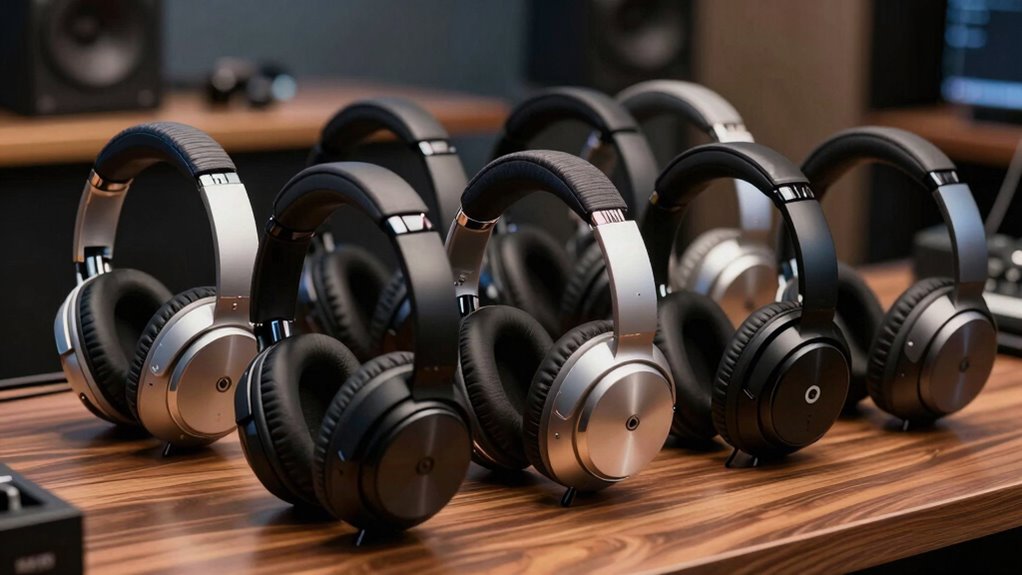
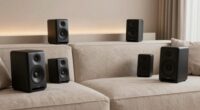
For high-end headphones with a wide soundstage, my best overall pick is the Focal Clear MG, which pairs an open-back design with a premium wired listening focus. The Sennheiser HD 490 PRO is a strong alternative for listeners who want an open presentation suited to both music and studio work, while the Focal Bathys MG brings wireless convenience and active noise cancellation. The key tradeoff is that open-back models usually suit quiet rooms better, while closed listening and noise cancellation can limit the sense of space. Fit, recording quality, and your audio source also affect whether a headphone sounds expansive or merely distant. Read on for the full comparison and help matching each pick to your listening habits.

Get audio and creator gear delivered free with Prime
- Fast, free delivery on millions of items
- Prime Video, Amazon Music and more included
- Member-only deals all year
Complete the kit


Key Takeaways
- The Focal Clear MG leads this group for a premium wired, open-back listening setup; its role is distinct from the Bathys MG, which prioritizes wireless use and noise cancellation.
- The HD 490 PRO is the most studio-oriented choice; it offers a practical alternative to the Clear MG for listeners balancing spacious playback with work duties.
- The Audeze LCD-X is the specialist pick for professional listening; its over-ear planar design and included carry case suit focused sessions, though its professional emphasis may be more than a casual listener needs.
- The HD 660S 2 and HD 600 are not interchangeable budget stand-ins; both are open-back wired Sennheisers, but buyers should choose between their respective tuning and intended listening preferences rather than expecting either to mimic a premium Focal presentation.
- Wide soundstage does not mean the same thing as accurate imaging or deep bass; the best match depends on whether you value spatial separation, studio utility, mobility, or a quiet-room listening experience most.
| Focal Bathys MG Bluetooth ANC Headphones with Magnesium Drivers – Chestnut |  | Best for Wide Soundstage on the Go | Driver type: Dynamic driver | Bluetooth: Version 5.2 | Battery life: 30 hours | VIEW ON AMAZON | See Our Full Breakdown |
| Sennheiser HD 660S 2 Open-Back Audiophile Headphones |  | Best Overall for Immersive Open-Back Listening | Design: Open-back | Driver size: 42 mm | Impedance: 300 ohms | VIEW ON AMAZON | See Our Full Breakdown |
| Audeze LCD-X Over-Ear Open Back Professional Headphones with Carry Case and Adapters |  | Best for Planar Detail and Studio Reference | Driver type: Planar magnetic | Driver size: 106 mm | Impedance: 20 ohms | VIEW ON AMAZON | See Our Full Breakdown |
| Sennheiser HD 600 Audiophile Open-Back Dynamic Wired Headphones |  | Best for Natural Imaging and Critical Listening | Design: Open-back, over-ear | Impedance: 300 ohms | Frequency response: 12–39,000 Hz | VIEW ON AMAZON | See Our Full Breakdown |
| HD 490 PRO Open-Back Professional Headphone |  | Best for Studio Mixing and Adjustable Comfort | Model: HD 490 PRO | Design: Open-back, over-ear | Frequency response: 5–36,000 Hz | VIEW ON AMAZON | See Our Full Breakdown |
| Focal Clear MG Wired Open-Back High-Fidelity Over-Ear Headphones |  | Best for Detailed, Spacious Listening | Driver type: Dynamic | Driver material: Magnesium | Design: Open-back, over-ear | VIEW ON AMAZON | See Our Full Breakdown |
| high end headphones for wide soundstage | Impedance | Design | Frequency response | Driver type |
|---|---|---|---|---|
| Focal Bathys MG Bluetooth ANC | 80 ohms | — | — | Dynamic driver |
| Sennheiser HD 660S 2 Open-Back | 300 ohms | Open-back | — | — |
| Audeze LCD-X Over-Ear Open Bac | 20 ohms | — | 12 Hz–20 kHz, extended to 50 kHz | Planar magnetic |
| Sennheiser HD 600 Audiophile O | 300 ohms | Open-back, over-ear | 12–39,000 Hz | — |
| HD 490 PRO Open-Back Professio | — | Open-back, over-ear | 5–36,000 Hz | — |
| Focal Clear MG Wired Open-Back | 55 ohms | Open-back, over-ear | 28 kHz (as listed) | Dynamic |
More Details on Our Top Picks
Focal Bathys MG Bluetooth ANC Headphones with Magnesium Drivers – Chestnut
The Bathys MG is the lineup’s mobile pick: wireless playback and active noise cancelling let you keep listening when open-back models such as the Sennheiser HD 660S 2 would leak sound and admit outside noise. Its magnesium drivers are described as delivering natural, detailed sound, while ANC helps preserve focus in less-than-quiet settings. That makes it the practical choice here for immersive listening away from home, rather than a dedicated reference headphone for a quiet studio.
The tradeoff is that its closed, noise-cancelling use case differs from the spacious, airier presentation sought from open-back designs. It is also relatively heavy at 12.32 ounces, and the supplied data does not specify a soundstage measurement, so I would choose it for wireless versatility and detail rather than assume it creates the widest stage in this group. It is not water resistant, either.
Pros:- Magnesium dynamic drivers are described as producing natural, detailed audio.
- Active noise cancelling supports listening in noisy surroundings.
- More than 30 hours of stated battery life suits longer trips.
- Premium leather, metal, and microfiber materials with a comfortable design.
Cons:- At 12.32 ounces, it is relatively heavy for extended portable wear.
- Not water resistant.
- Its wireless, ANC-focused design is less suited to buyers seeking an open-back soundstage for quiet-room listening.
Best for: Listeners who want detailed wireless sound and noise cancelling for commutes, travel, or shared spaces.
Not ideal for: Home listeners prioritizing the open, speaker-like presentation of wired open-back headphones, or anyone needing water resistance.
- Driver type:Dynamic driver
- Bluetooth:Version 5.2
- Battery life:30 hours
- Impedance:80 ohms
- Wireless range:15 meters
- Weight:12.32 ounces
- Materials:Leather, metal, and microfiber
- Color:Chestnut
Our verdict“Choose the Bathys MG if you want detailed, noise-cancelling wireless listening, and favor the HD 660S 2 if open-back spaciousness matters more.”
Sennheiser HD 660S 2 Open-Back Audiophile Headphones
The HD 660S 2 earns my all-around open-back pick by pairing a spacious presentation with the detailed highs and deep bass described in its product information. That balance makes it a versatile fit for music, gaming, and professional listening rather than a narrow specialist. Its open-back design gives sound room to breathe, a clear contrast with the closed, ANC-equipped Focal Bathys MG, which is the more practical option when outside noise needs blocking.
This Sennheiser is still a home-listening choice: the wired connection limits mobility, and its 300-ohm impedance can call for a capable amplifier. It also leaks sound and offers little isolation, so it is a poor match for shared offices or quiet public spaces. Compared with the HD 600, the HD 660S 2 is presented with deeper bass as well as precise highs, while both prioritize open-back listening over convenience.
Pros:- Open-back construction supports a spacious presentation for music and gaming.
- Described as combining precise highs with deep bass.
- Comfortable design is suited to extended listening sessions.
- Includes detachable 6.3 mm and 4.4 mm cables.
Cons:- The 300-ohm impedance may require a powerful amplifier.
- Wired-only listening restricts portability.
- Open-back cups leak sound and provide little noise isolation.
Best for: Home listeners and gamers who want an open, spacious presentation, detailed highs, and bass depth, and have suitable wired audio gear.
Not ideal for: Commuters, shared-room listeners, or buyers without an amplifier or source suited to 300-ohm headphones.
- Design:Open-back
- Driver size:42 mm
- Impedance:300 ohms
- Weight:0.3 kg
- Cables:Detachable 6.3 mm and 4.4 mm
- Model number:700240
- Warranty:2 years
Our verdict“Pick the HD 660S 2 for versatile, spacious home listening if you can accommodate its wired, high-impedance design.”
Audeze LCD-X Over-Ear Open Back Professional Headphones with Carry Case and Adapters
The Audeze LCD-X is the specialist choice here for buyers drawn to planar magnetic drivers and reference-oriented listening. Its large 106 mm planar drivers and stated frequency response extending to 50 kHz set it apart from the dynamic-driver HD 600 and HD 660S 2. For engineers and audiophiles who want an open-back tool for scrutinizing recordings, that different driver approach is the main reason to choose it—not a promise that it will soundstage wider for every listener.
Compared with the more general-purpose HD 660S 2, the LCD-X is positioned more squarely for professional work and includes a carry case plus several connection adapters. Its 20-ohm impedance is lower on paper than the Sennheisers’ 300 ohms, though the supplied information still recommends a good amplifier for best performance. The key compromise is practical: weight is not specified, and a reference-focused, open-back design is less convenient for casual portable listening.
Pros:- Planar magnetic drivers are designed for accurate sound reproduction.
- 106 mm driver size distinguishes it from the smaller-driver Sennheiser models listed here.
- Includes a carry case and 4-pin XLR, 6.3 mm, and 3.5 mm connection options.
- Open-back construction suits focused listening in a quiet space.
Cons:- Open-back design does not provide noise isolation and can leak sound.
- Weight is not specified, making fit and portability harder to judge.
- The supplied description recommends a good amplifier for optimal performance.
Best for: Recording engineers and detail-focused audiophiles seeking planar magnetic open-back headphones for studio or home reference listening.
Not ideal for: Casual listeners looking for a lightweight travel headphone, sound isolation, or a clearly documented weight before buying.
- Driver type:Planar magnetic
- Driver size:106 mm
- Impedance:20 ohms
- Frequency response:12 Hz–20 kHz, extended to 50 kHz
- Efficiency:103 dB/1 mW
- Connectivity:Wired, detachable cable, 3.5 mm jack
- Included accessories:Carry case, 4-pin XLR cable, 6.3 mm and 3.5 mm adapters
- Ear pad material:Leather; leather-free option also available
Our verdict“Choose the LCD-X for planar, reference-oriented listening and supplied connection options, not for isolation or easy travel.”
Sennheiser HD 600 Audiophile Open-Back Dynamic Wired Headphones
The HD 600 is the pick for listeners who value natural spatial imaging and a transparent presentation over added convenience. Its open-back design creates an airy listening experience, while the stated 12–39,000 Hz frequency response and 0.1% THD figures give reference-minded buyers useful technical context. Compared with the HD 660S 2, the HD 600 is described more directly around natural sound and imaging, while the 660S 2 is also characterized by deep bass and precise highs.
This is a wired headphone for a quiet room, not an all-purpose portable model. The 300-ohm impedance can make a suitable amplifier important, and the open cups neither block surrounding sound nor keep playback private. At 260 g, its listed weight is more concrete than the LCD-X’s unspecified figure, but that does not make it a travel-first choice. I would shortlist it for focused listening, mastering, and listeners who prize believable placement over wireless features.
Pros:- Open-back design is intended to support natural spatial imaging.
- Lightweight 260 g design with plush ear pads is suited to long sessions.
- Detachable Kevlar-reinforced OFC copper cable supports replacement.
- Frequency response and THD are specified for reference-minded buyers.
Cons:- The 300-ohm impedance may require a suitable amplifier.
- Open-back construction leaks sound and offers limited noise isolation.
- Wired operation is less convenient for travel than the wireless Bathys MG.
Best for: Home audiophiles and studio listeners who prioritize natural imaging and transparent sound and can use an appropriate amplifier.
Not ideal for: People listening near others, commuting, or seeking a wireless headphone with strong isolation.
- Design:Open-back, over-ear
- Impedance:300 ohms
- Frequency response:12–39,000 Hz
- THD:0.1%
- Weight:260 g
- Cable:Detachable Kevlar-reinforced OFC copper
- Magnet system:Neodymium ferrous
- Warranty:2 years
Our verdict“Choose the HD 600 for natural, open-back imaging in a quiet listening space, and skip it if you need isolation or wireless use.”
HD 490 PRO Open-Back Professional Headphone
The HD 490 PRO makes the most sense for producers who need a wide, natural stage as a practical mixing aid. Its open-back construction is explicitly described as supporting a wide soundstage and precise reproduction, while switchable, washable ear pads let users adapt the fit and replace worn parts. That studio focus gives it a different role from the HD 600, which is framed around natural imaging and critical listening rather than interchangeable pads and mixing tools.
The included 1.8 m cable and dearVR MIX-SE plugin access add production-oriented utility, but neither makes this a travel headphone: it remains wired and open-backed, so it leaks sound and provides no meaningful isolation. The product data does not list impedance or weight, leaving two useful compatibility and comfort details unanswered. I would choose it over the HD 660S 2 when pad flexibility and mixing features matter more than a general-purpose music-and-gaming brief.
Pros:- Open-back design is described as producing a wide, natural soundstage.
- Switchable, washable, replaceable ear pads support fit adjustment and upkeep.
- Includes a 1.8 m cable and access to the dearVR MIX-SE plugin.
- Designed for accurate reproduction during production work.
Cons:- Open-back cups leak sound and are poorly suited to noisy environments.
- Wired-only connectivity limits use away from a listening or studio setup.
- The supplied specifications do not state impedance or weight.
Best for: Producers and mix engineers who want an open-back stage, replaceable ear pads, and included mixing software access.
Not ideal for: Commuters, listeners in noisy shared spaces, or buyers who require wireless playback or published impedance and weight figures.
- Model:HD 490 PRO
- Design:Open-back, over-ear
- Frequency response:5–36,000 Hz
- Cable length:1.8 m
- Connector:3.5 mm with 6.5 mm jack adapter
- Ear pads:Switchable, washable, and replaceable
- Model number:700286
- Warranty:2 years
Our verdict“Pick the HD 490 PRO for studio mixing when its replaceable pads and production extras matter more than wireless convenience.”
Focal Clear MG Wired Open-Back High-Fidelity Over-Ear Headphones
The Clear MG earns its place for listeners who want an open, spacious presentation without giving up fine detail. Its magnesium dynamic drivers and open-back design support a wide-feeling soundstage, while the reported clarity in the high frequencies can help separate instruments and subtle recording details. Compared with the Sennheiser HD 600, this Focal is the more premium-built option, with leather, microfiber, and aluminum; the HD 600 may suit buyers who favor a simpler, less costly-feeling setup. The tradeoff is practical: the Clear MG is wired and open-backed, so sound leaks in and out, and its weight may become tiring during long sessions. I’d choose it for focused home listening, not commuting or casual use where portability matters more.
Pros:- Open-back construction gives music a spacious presentation
- Detailed high frequencies help reveal subtle elements in recordings
- Leather, microfiber, and aluminum deliver a premium finish
- Designed for comfortable extended listening
Cons:- Heavier build may cause fatigue during long sessions
- Open-back design leaks sound and offers little isolation
- Wired connection limits use on the move
Best for: Home listeners seeking a spacious, detail-rich presentation and premium materials for a dedicated wired setup.
Not ideal for: Commuters, shared-room listeners, and anyone who needs wireless convenience, isolation, or a lightweight headphone for long sessions.
- Driver type:Dynamic
- Driver material:Magnesium
- Design:Open-back, over-ear
- Impedance:55 ohms
- Frequency response:28 kHz (as listed)
- Connectivity:Wired, 3.5 mm jack
- Enclosure materials:Aluminum and leather
- Water resistance:Not water resistant
Our verdict“Choose the Clear MG for premium, spacious home listening with detailed highs, but skip it if you need isolation or easy portability.”

How We Picked
I ranked these headphones around the promise of a spacious, convincing presentation, while weighing the compromises buyers face when pursuing it. I considered open-back versus wireless ANC design, likely listening context, professional versatility, and how each model’s stated role fits a buyer seeking high-end spatial presentation. I also looked at practical factors such as portability, included accessories, and whether a headphone seems aimed at everyday listening or focused work.
The Focal Clear MG ranks first as the clearest match for a premium wired, open-back use case. The HD 490 PRO follows for its work-friendly role, while the Audeze LCD-X earns a specialist position rather than a universal one. The Bathys MG ranks as the flexible travel option, not the widest-sounding choice in every setting; the HD 660S 2 and HD 600 round out the list for buyers prioritizing Sennheiser’s open-back approach and a more straightforward listening setup. This order reflects fit for the stated use, not a claim that every listener will hear the same stage.
| high end headphones for wide soundstage | Driver type | Design |
|---|---|---|
| Focal Bathys MG Bluetooth ANC | Dynamic driver | — |
| Sennheiser HD 660S 2 Open-Back | — | Open-back |
| Audeze LCD-X Over-Ear Open Bac | Planar magnetic | — |
| Sennheiser HD 600 Audiophile O | — | Open-back, over-ear |
| HD 490 PRO Open-Back Professio | — | Open-back, over-ear |
| Focal Clear MG Wired Open-Back | Dynamic | Open-back, over-ear |
Factors to Consider When Choosing High End Headphones For Wide Soundstage
A wide presentation depends on more than a headphone’s reputation. I’d start by matching the design to your room, then weigh spatial character against comfort, source quality, and daily practicality. These broader factors can prevent paying for a feature that does not suit how you listen.
Choose Open-Back Versus Wireless for Your Listening Space
Open-back headphones let air and sound pass through the ear cups, which can support a less enclosed impression, but they also leak audio and provide little isolation. That makes them a better fit for a quiet home or studio than an office, commute, or shared room. Wireless ANC models such as the Bathys MG solve a different problem: controlling outside noise and removing cable dependence. A common mistake is expecting noise cancellation and a spacious open-back presentation to serve the same purpose. If you need one headphone for travel and quiet-room listening, decide which setting matters more before choosing a compromise.
Separate Soundstage Width From Imaging and Recording Quality
A headphone can sound broad without placing each instrument precisely, and strong left-right separation does not guarantee a natural sense of distance. The recording itself matters: close-miked or heavily compressed material may sound crowded even through an expansive headphone. Compare familiar tracks with clearly recorded instruments and ambience, rather than judging from one dramatic demo. Avoid assuming that a higher-end model will make every recording sound wide; it may reveal the limits of a mix instead. If you value pinpoint placement for editing or competitive listening, treat imaging as a separate priority from width.
Match the Headphone to Your Audio Source
Before buying, check whether your device can connect to the headphone and provide the listening level and control you want. Wired open-back models call for a compatible output, while wireless headphones simplify connection but may rely on their own electronics and supported features. A dedicated amplifier is not automatically necessary; the need depends on the headphone, the source, and your listening level. Buyers sometimes spend on amplification before confirming that their existing source is inadequate. Set aside time to check connectors, adapters, and any device limitations so your setup is ready on arrival.
Treat Comfort as Part of Spatial Performance
Wide soundstage is of little use if clamp force, weight, or pad pressure limits listening time. Over-ear fit and seal can also affect tonal balance, especially when glasses or hair interrupt contact around the ear. Heavier headphones may suit shorter focused sessions but feel less convenient across a full workday. Do not judge comfort from materials or product photos alone; head shape and personal sensitivity vary. Check the return policy and replacement-pad availability before buying, particularly if you plan to use the headphones for long sessions.
Pay More for the Difference You Can Actually Use
Premium construction and specialized drivers can appeal to dedicated listeners, but a higher tier does not guarantee a wider stage for every person or every recording. Pay extra when the model also meets a clear need, such as professional use, a particular wired listening setup, or the portability of ANC. If you mainly listen casually, comfort and a suitable connection may matter more than a small spatial distinction. Another common mistake is choosing the most expensive option because “high-end” sounds like a single performance category. Identify the specific improvement you want before treating premium features as a reason to upgrade.
Plan for Isolation, Leakage, and Care
Open-back designs let nearby people hear your music and let room noise reach you, so they are not a discreet solution for shared spaces. Their exposed construction also calls for sensible storage and regular care of pads and cables. A carry case can help protect a headphone during transport, but it does not make an open-back model suitable for noisy travel. Wireless ANC designs are generally more practical when isolation and mobility are priorities, though they bring charging and battery considerations. Pick the environment first, then weigh maintenance and portability against the spatial presentation you want.
Frequently Asked Questions
Are open-back headphones always better for a wide soundstage?
Open-back construction often creates a less sealed-in presentation, which is why several picks here use it. It does not guarantee a wider or more convincing stage: tuning, fit, recording, and personal hearing all matter. Open designs also leak sound and admit room noise, so they may disappoint outside a quiet space. If you need isolation, an ANC model may be the more useful choice even if its presentation feels less open. Match the design to where you listen before treating openness as a performance shortcut.
Can I use these headphones with a laptop or phone without buying an amplifier?
That depends on the exact model, your device’s output, and the volume you prefer. Check the connection type and included adapters, then test your current setup if you can before adding equipment. An amplifier may offer more control in some systems, but it is not a mandatory purchase just because a headphone is described as high-end. Wireless options avoid a wired source connection for everyday listening, though their feature set and battery needs differ. Put the headphone first on your budget list and add source gear only to solve a demonstrated limitation.
Which matters more for spacious listening: a headphone or the recording?
Both matter, and the recording can place a firm limit on what you hear. A mix with distinct instrument placement and room ambience gives headphones more spatial information to reproduce than a dense, compressed track. A headphone that reveals separation can also make crowded production easier to notice, not automatically more enjoyable. Try several familiar recordings before deciding that a model lacks width. This is especially useful when comparing headphones with different tuning or professional aims.
Is a wide soundstage useful for mixing or mastering?
It can help you hear placement and separation, but width alone is not a reliable basis for mix decisions. Professional work also depends on tonal accuracy, consistent fit, and checking how the mix translates to speakers and other headphones. The HD 490 PRO and LCD-X have more explicitly work-oriented roles in this group, while the Clear MG is the leading premium listening pick. Even with a studio-focused model, use reference tracks and multiple playback systems. Choose based on your workflow rather than assuming that a spacious presentation makes a headphone a complete monitoring solution.
Should I choose the Focal Bathys MG if I want both travel use and a wide presentation?
The Bathys MG makes the most sense when wireless listening and active noise cancellation are part of the brief. It is the only pick here centered on that mobile convenience, while the Clear MG and other open-back wired options better match quiet-room listening. A single headphone rarely provides the same isolation and open-air feel in every setting. Think about how often you travel, whether you need to avoid disturbing others, and how much time you spend listening at home. If spacious wired listening is your main priority, choose around that use rather than buying ANC as a substitute for open-back design.
Conclusion
For most buyers focused on a high-end, wide-stage wired experience, I’d start with the Focal Clear MG as the best overall pick. The HD 490 PRO is my best value-oriented choice for listeners who want a more work-ready open-back option, while the Audeze LCD-X is the best premium specialist for professional listening priorities. Beginners who want a straightforward wired open-back entry point can compare the Sennheiser HD 600 and HD 660S 2, choosing by fit and preferred sound rather than assuming either is the widest. For travel, wireless listening, and ANC, the Focal Bathys MG is the specific-use pick. Choose by setting first: quiet-room listeners have the strongest reason to favor open-back models, while mobile listeners should put isolation and convenience ahead of maximum openness.
Fall Picks
fall essentials
As an affiliate, we earn on qualifying purchases.