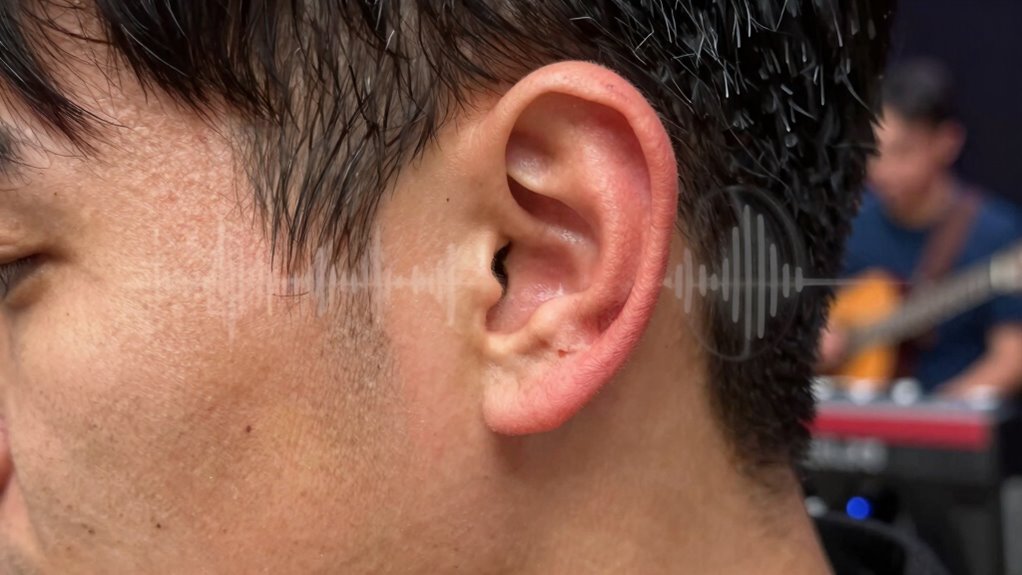

Ear fatigue from loud, prolonged listening causes your ears to become overstimulated, making music sound distorted, muffled, and less enjoyable. When you listen at high volumes or for too long, tiny hair cells in your inner ear get overstimulated and temporarily lose function. To protect your hearing, keep volume below 60% and limit listening sessions to about an hour, with breaks in between. Continue exploring how to pace yourself for better sound clarity and ear health.

Get audio and creator gear delivered free with Prime
- Fast, free delivery on millions of items
- Prime Video, Amazon Music and more included
- Member-only deals all year
Key Takeaways
- Ear fatigue from prolonged listening dulls sound clarity and causes music to sound muffled or distorted.
- High volume overstimulates inner ear hair cells, temporarily impairing their ability to transmit signals accurately.
- Extended listening sessions increase ear fatigue, leading to reduced sound quality and discomfort.
- Taking regular breaks and limiting listening time helps ears recover and maintain sound clarity.
- Using moderate volume and noise-canceling devices protects hearing health and preserves optimal sound quality.
Listening to music can be a great way to relax or energize your day, but it also poses risks to your hearing if you’re not careful. One common issue many people overlook is ear fatigue, which happens when your ears get tired from prolonged exposure to sound. When you listen at high volume levels or for extended periods, your ears can become overwhelmed, leading to a deterioration in sound clarity. This is why it’s essential to pay attention to both volume levels and listening duration to protect your hearing and ensure your music sounds its best.
Listening at high volume and for too long can cause ear fatigue and reduce sound clarity.
If you crank up the volume, you might notice that music starts to sound distorted or muffled after a while. That’s ear fatigue kicking in. When your ears are exposed to loud sounds for too long, the tiny hair cells in your inner ear become overstimulated and can temporarily lose their ability to transmit signals accurately. As a result, music may seem less clear, with details getting lost or sounds becoming harsh. To prevent this, keep the volume at a moderate level—ideally below 60% of your device’s maximum—and avoid increasing it just to hear more detail. Remember, louder isn’t always better, and protecting your hearing now means enjoying music in the long run.
Listening duration is equally important. Even if you listen at a reasonable volume, extended listening sessions can lead to ear fatigue. The longer you expose your ears to sound, the more fatigued they become, which can cause a decline in sound quality and increase discomfort. To avoid this, try to limit your listening sessions to around 60 minutes at a time, and give your ears a break for at least 5-10 minutes before resuming. This helps your ears recover and prevents the buildup of fatigue that can make music sound worse over time.
Pacing yourself is key. You don’t have to stop listening altogether, but mindful listening habits help maintain sound clarity and protect your hearing. Use noise-canceling headphones or earbuds to block out external noise, so you don’t feel the need to turn up the volume excessively. Keep an eye on how long you’ve been listening and set timers if needed. Additionally, understanding your hearing health, including how prolonged exposure impacts your ears, can further guide your listening habits. By moderating your volume levels and listening duration, you’ll reduce ear fatigue, helping your music sound better and your hearing stay healthy. Ultimately, caring for your ears lets you enjoy your favorite tunes without sacrificing their quality or your long-term hearing health.
As an affiliate, we earn on qualifying purchases.
Frequently Asked Questions
Can Ear Fatigue Happen From Listening to Music at Low Volumes?
Yes, ear fatigue can happen from listening to music at low volumes. Even with moderate volume levels, your ears can become tired if you listen for long periods or have irregular listening habits. Consistently exposing your ears to sound, regardless of volume, can lead to fatigue. To prevent this, take regular breaks, limit listening time, and vary your listening habits to protect your hearing health.
How Quickly Does Ear Fatigue Typically Develop During Music Listening?
Ever wonder how quickly ear fatigue sets in? It can develop surprisingly fast, often within 30 minutes of continuous listening. Your ears start showing fatigue symptoms like muffled sound or ringing, especially if you listen for extended durations without breaks. Listening duration plays a key role—longer sessions increase the risk. To protect your hearing, take regular breaks and limit your listening time.
Are Certain Genres More Likely to Cause Ear Fatigue Than Others?
Certain genres are more likely to cause ear fatigue because they often feature higher volumes, intense bass, or rapid changes, which can strain your ears. If you have genre preferences like loud rock or electronic music, limit your listening duration to avoid fatigue. Taking breaks and adjusting volume levels helps protect your hearing, ensuring you enjoy your favorite music without discomfort or long-term damage.
Does Ear Fatigue Affect Hearing Permanently or Temporarily?
Ear fatigue generally causes temporary damage, meaning your hearing loss or discomfort is reversible. You might notice muffled sounds or ringing, but these effects usually fade after you rest your ears. However, if you ignore these signs and keep exposing your ears to loud music, it can lead to permanent damage. To prevent this, take breaks, lower the volume, and listen at safe levels, ensuring your hearing stays healthy long-term.
Can Ear Fatigue Impact the Enjoyment of Live Music Events?
Ironically, ear fatigue can spoil your enjoyment at live music events more than you’d think. When your listening environment becomes overwhelming, your ears tire quickly, dulling the emotional impact of the music. Instead of feeling immersed, you might find yourself distracted or longing for quieter moments. This fatigue chips away at your ability to fully connect with the performance, turning what should be a thrilling experience into a frustrating one.
As an affiliate, we earn on qualifying purchases.
Conclusion
Think of your ears like a delicate instrument—if you play it too loudly or for too long, it tires and tunes get off. I once ignored my own advice during a concert, and afterward, everything sounded muffled and flat. Protecting your hearing is like giving your favorite song a break; it guarantees your music stays vibrant and clear. So, pace yourself, and your ears will thank you with crisp, lively sound every time.
As an affiliate, we earn on qualifying purchases.
As an affiliate, we earn on qualifying purchases.
Fall Picks
fall essentials
As an affiliate, we earn on qualifying purchases.