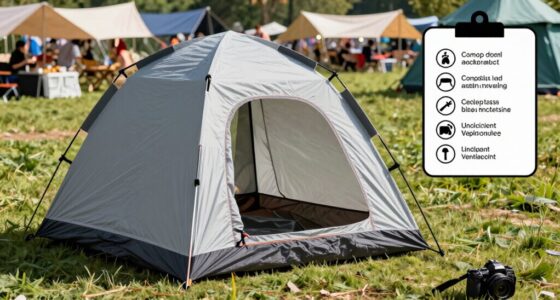
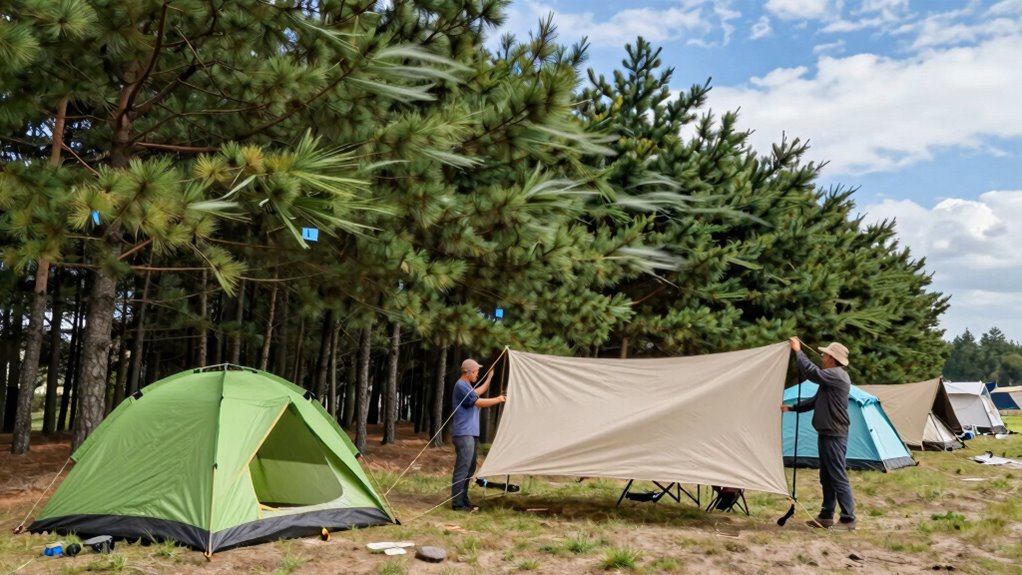

To prevent your gear from flying away in windy campgrounds, choose a sheltered spot near natural windbreaks like trees or rocks. Use sturdy stakes driven at a 45-degree angle and add extra guy lines secured with rocks or heavy objects. Position tents with the narrow side facing into the wind and keep lines taut but not tight. Bury stakes deeper or weigh down your gear for added stability. Keep these tips in mind, and you’ll find even windier conditions easier to manage.

Get audio and creator gear delivered free with Prime
- Fast, free delivery on millions of items
- Prime Video, Amazon Music and more included
- Member-only deals all year
Key Takeaways
- Select sheltered sites near natural windbreaks like trees or rocks to reduce wind impact.
- Use high-quality, heavy-duty stakes driven at a 45-degree angle away from the tent for better anchoring.
- Attach multiple guy lines to reinforced points and secure them with rocks or heavy objects for added stability.
- Position tents with the narrow side facing into the wind and orient multiple shelters to block gusts.
- Regularly check, tighten, and bury stakes deeper or add weight to ensure all lines remain taut and secure.
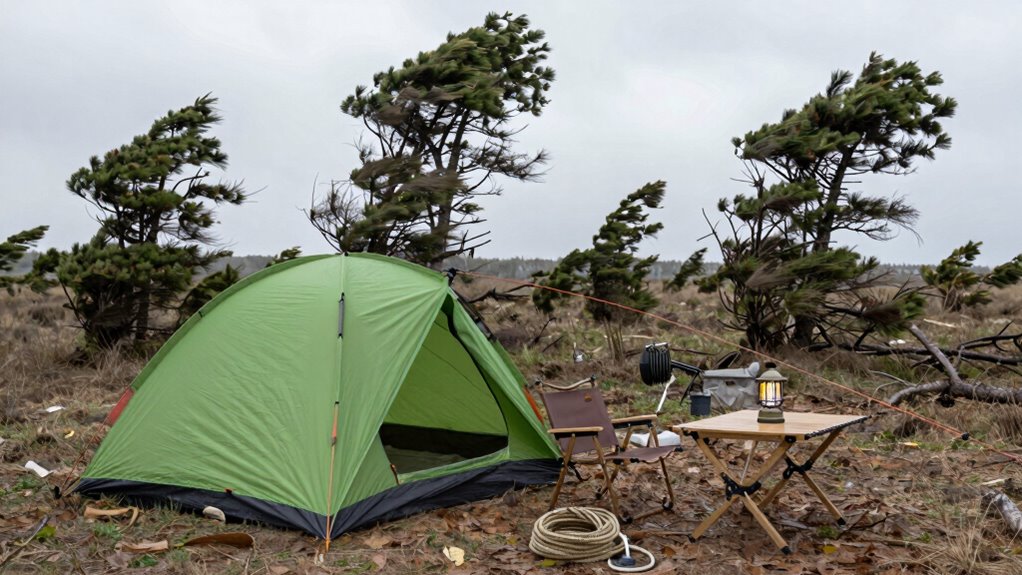
If you’re looking for a camping spot where the wind truly makes its presence known, Windy Campgrounds is the place to be. The gusts can be relentless, and if you don’t prepare properly, your gear and tent could end up flying across the site. To keep everything secure, you need to master tent anchoring and shelter positioning. These two steps are essential for a safe, comfortable camping experience in such exposed conditions.
Start with tent anchoring. You’ll want to choose sturdy stakes designed for the ground type at Windy Campgrounds—whether it’s hard-packed dirt or loose gravel. Use high-quality stakes and drive them in at a 45-degree angle away from the tent. This creates better resistance against strong gusts. To increase stability, consider using additional guy lines. Attach these lines to the tent’s reinforced points and anchor them securely to the ground. If the wind is particularly fierce, bury the stakes deeper or add weight to the guy lines by tying them to rocks or heavy objects. You can also opt for heavy-duty stakes or screw-in anchors that grip the soil more effectively. When setting up, double-check each stake and line, ensuring everything is taut but not overly tight. Loose lines can cause the tent to shift, while overly tight ones might stress the fabric and poles.
Shelter positioning is equally critical. Position your tent in a way that minimizes wind impact. Look for natural windbreaks such as clusters of trees, large rocks, or terrain dips. Avoid setting up on exposed ridges or hilltops, where wind speeds are higher. If you’re stuck with an open area, orient your tent so that the narrowest side faces into the wind. This reduces the surface area exposed to gusts and lessens the chance of wind-driven movement. When possible, set up multiple shelters close together, creating a barrier that can divert some of the wind’s force. Additionally, consider the overall layout of your campsite. Keep heavier gear and communal setups on the windward side, so they act as shields for tents and delicate items. Incorporating proper anchoring techniques can significantly improve your setup’s stability against strong winds.
heavy-duty tent stakes for windy conditions
As an affiliate, we earn on qualifying purchases.
As an affiliate, we earn on qualifying purchases.
Frequently Asked Questions
What Are the Best Types of Tents for Windy Conditions?
For windy conditions, choose a tent made from durable, ripstop nylon or polyester with a sturdy frame, like aluminum poles. Look for tents with low-profile designs and good ventilation features, such as adjustable vents, to prevent flapping. Make certain the tent has reinforced stakes and guy lines, and set it up properly by anchoring tightly. This combination keeps your gear secure and your shelter stable in gusty weather.
How Can I Secure Lightweight Camping Gear Effectively?
To secure lightweight camping gear, you should use tent anchors to keep everything in place. Opt for stakes or guy lines that are appropriate for windy conditions. Keep gear weight in mind; heavier items can act as anchors, so place them strategically. Attach your lighter gear to stable points and double-check all fastenings. This way, your gear stays put, even in gusty winds, ensuring a safe and enjoyable camping experience.
Are There Specific Stakes Recommended for Windy Terrains?
You should use heavy-duty stakes or those designed for windy conditions, such as screw or spiral stakes, which grip better in tough soil. Opt for stake material options like steel or aluminum for durability. Confirm your tent anchor points are secure, and drive stakes fully into the ground at a 45-degree angle. This combination keeps your gear anchored, providing stability and preventing it from flying away in strong winds.
How Do Weather Forecasts Help in Planning for Wind?
You might think weather forecasts aren’t precise enough, but they’re actually essential for planning. By checking weather prediction and wind speed forecasts, you can determine how strong the wind will be, so you can adjust your setup. Knowing upcoming wind conditions helps you choose the right stakes, tie-downs, and tent placement. This proactive approach keeps your gear secure and makes your camping trip much more enjoyable and stress-free.
What Safety Precautions Should I Take During High Winds?
During high winds, prioritize wind safety by securing all loose items and avoiding tall, fragile structures. Use sturdy stakes and guy lines to prevent wind damage prevention, and set up your tent and gear in sheltered areas. Keep a close eye on weather updates, and be ready to pack up if conditions worsen. Always stay alert, maintain a safe distance from potential flying debris, and follow campground safety guidelines.
screw-in ground anchors for tents
As an affiliate, we earn on qualifying purchases.
As an affiliate, we earn on qualifying purchases.
Conclusion
Next time you camp in a windy spot, remember to secure your gear tightly. For example, imagine setting up your tent on a gusty night—by staking it down well and using guy lines, you keep it stable. If you also weigh down lightweight items with rocks or stakes, you prevent them from flying away. With these simple tips, you’ll enjoy your camping trip without worrying about your stuff taking flight in the wind.
As an affiliate, we earn on qualifying purchases.
tent anchoring kit for high winds
As an affiliate, we earn on qualifying purchases.
As an affiliate, we earn on qualifying purchases.
Halloween Picks
halloween
As an affiliate, we earn on qualifying purchases.