
To keep your sleeping setup warm when temps drop suddenly, layer your sleeping bag with an insulated pad underneath and add an extra ground barrier like foam or an inflatable pad. Wrap your bag with a bivy sack or thermal blanket to reflect heat and block wind. Make sure your clothing and bedding stay dry, as moisture reduces insulation. Use a snug-fitting sleeping bag for better warmth. Keep these tips in mind and you’ll discover even more ways to stay cozy.
Key Takeaways
- Add multiple insulating layers, such as thermal blankets or bivy sacks, around your sleeping bag to reflect heat inward.
- Place foam or inflatable insulating pads under your sleeping system to prevent ground heat loss.
- Ensure your sleeping bag fits snugly without compressing insulation, trapping more warmth.
- Keep all clothing and bedding dry to maintain optimal insulation and prevent heat loss.
- Use external layers like thermal blankets or bivies for severe cold to reflect body heat and block wind.
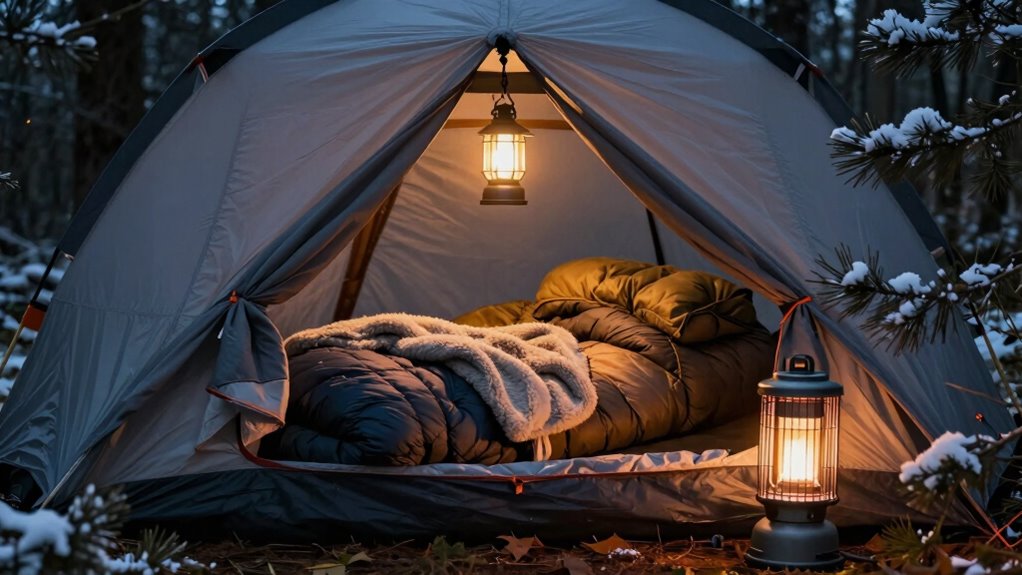
As temperatures drop, staying warm while sleeping outdoors or in unheated spaces becomes a top priority. When the cold sneaks in unexpectedly, your goal is to maximize warmth without sacrificing comfort or safety. One of the most effective ways to do this is through insulation layering. Layering insulation means stacking different materials that trap heat and prevent cold air from reaching you. Start with a good thermal sleeping bag designed for low temperatures, which acts as your primary barrier against the cold. These thermal sleeping bags are specifically built with insulation in mind, using materials like down or synthetic fibers that retain heat even when damp. They’re a reliable foundation, but to boost their effectiveness, you should add layers of insulation outside the bag.
Layer your sleeping system with insulated bags and pads for maximum warmth in cold conditions.
Using an insulating pad beneath you is essential. It prevents heat loss through the ground, which can be significant when sleeping on cold surfaces. Foam pads or inflatable sleeping pads with high R-values provide excellent insulation. For extra warmth, you can add a closed-cell foam pad under your inflatable pad, creating multiple layers that trap warm air and block cold from seeping upward. Combining these layers forms a solid insulation layering system that keeps your body heat close and minimizes heat transfer to the cold ground.
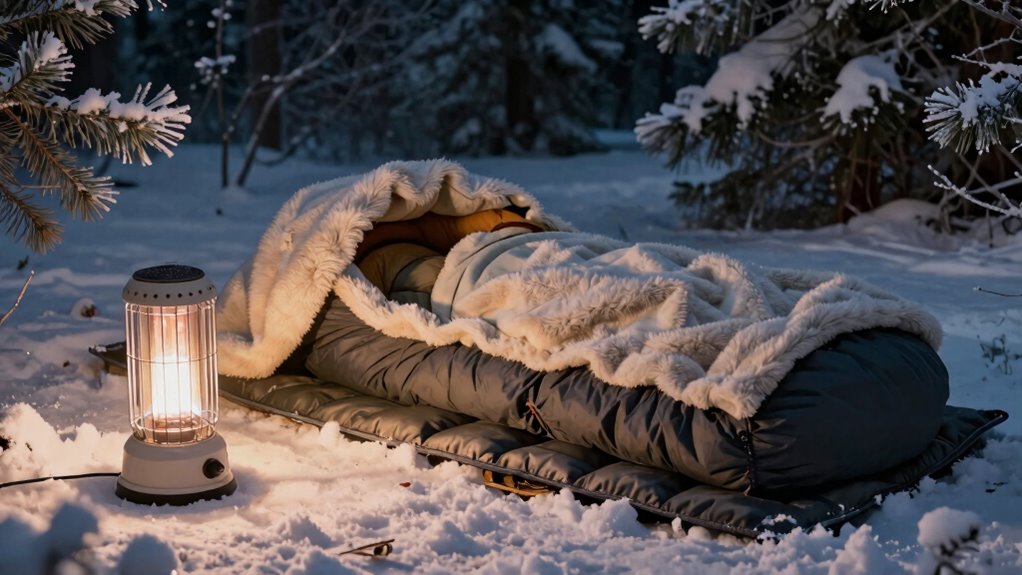
When temperatures are especially severe, consider wrapping your thermal sleeping bag with an additional outer layer, such as a bivy sack or a specialized thermal blanket. These are designed to reflect your body heat back inward and shield against wind and moisture, which can drastically reduce warmth. The key is to create a sealed environment where heat can’t escape easily.
If you’re using a thermal sleeping bag, ensure it fits well—loose bags allow more cold air to enter, while snug-fitting ones trap more heat. If you’re layering, make sure each piece fits comfortably without compressing the insulation, as compressed fibers lose their ability to insulate effectively. Always check that your clothing and bedding are dry, since dampness can sap warmth quickly, regardless of insulation quality.

MEREZA 0 Degree Winter Sleeping Bag for Adults Kids with Pillow, Cold Weather Sleeping Bag for 4 Season Camping Hiking Backpacking Sleeping Bags for Big and Tall
- Spacious Design: Fits campers up to 7 feet tall
- Temperature Range: Keeps you warm at 40℉
- Ventilation Feature: Separate zipper for foot ventilation
As an affiliate, we earn on qualifying purchases.
As an affiliate, we earn on qualifying purchases.
Frequently Asked Questions
What Are the Best Materials for Insulating Sleeping Bags?
You should choose sleeping bags made with thermal fabrics like down or synthetic fill, as they provide excellent insulation layers. Down offers superior warmth-to-weight ratio, while synthetic insulates well even when wet. Look for bags with advanced insulation layers that trap heat effectively. Combining these materials guarantees you stay warm in cold conditions, even if temperatures drop suddenly. Always check the insulation type to match your specific outdoor environment.
How Do I Prevent Condensation Inside My Tent?
To prevent condensation inside your tent, you should prioritize good ventilation tips and moisture control. Keep a vent open or crack a window to allow moist air to escape, especially during humid nights. Avoid cooking or boiling water inside the tent, as it adds moisture. Use a tarp or groundsheet to reduce ground dampness, and choose a well-ventilated tent with breathable fabric to minimize condensation buildup.
Can I Use Electric Blankets Safely Outdoors?
Imagine wrapping yourself in a cozy cloud—electric blankets can bring that comfort outdoors, but safety comes first. You shouldn’t use them directly outside, as they’re designed for indoor use and pose risks like electric shock or fire. Instead, explore outdoor heating options like portable heaters or heated blankets specifically made for outdoor use. Prioritize electric blanket safety, and always follow manufacturer instructions to stay warm and safe under the open sky.
What Are Quick Fixes for Sudden Temperature Drops?
When temperatures drop suddenly, you should add layered clothing to trap heat and stay warm. Use hand warmers in your pockets or near your body to provide quick heat boosts. These simple fixes help you stay comfortable in cold conditions. Keep moving if possible, and avoid prolonged exposure to cold air. Combining layered clothing with hand warmers offers an effective, immediate way to combat sudden temperature drops.
How Do I Choose the Right Sleeping Pad for Warmth?
To choose the right sleeping pad for warmth, focus on sleeping pad selection based on insulation. Opt for insulated pad types like foam or air pads with reflective coatings, which trap heat effectively. Consider your sleeping environment and temperature ratings, and prioritize pads with higher R-values for colder conditions. Your goal is to find a pad that provides enough insulation to prevent heat loss and keep you warm throughout the night.

OGERY Sleeping Pad for Camping, R-Value 9.0 Insulated Sleeping Pad
- Insulation for Cold Conditions: R-Value 9.0 with multi-layer reflective insulation
- Thick Support for Comfort: 4.7-inch air cell construction
- Lightweight and Compact: Ultralight design for easy carrying
As an affiliate, we earn on qualifying purchases.
As an affiliate, we earn on qualifying purchases.
Conclusion
When the cold sneaks in like an unwelcome guest, remember, you hold the power to keep your sanctuary warm. Wrap yourself in cozy layers, pile on extra blankets, and let your sleeping setup be a fortress against the chill. Embrace these simple tricks as your armor, turning your sleeping space into a warm haven amid the frosty night. Stay snug, stay safe, and let comfort be your guiding star through the coldest hours.

Zmoon Emergency Sleeping Bags 2 Pack Portable Waterproof Thermal Bivy Sacks
- MYLAR FOIL MATERIAL: Waterproof camping thermal sleeping bags…
- 78"L x 47"W SIZE: Expand sized at 78"L x…
- COMPACT and LIGHTWEIGHT: This ther-mal sleeping bag kept…
As an affiliate, we earn on qualifying purchases.
As an affiliate, we earn on qualifying purchases.

Camping Mat Insulated Sleeping Pad 78.7" x 59" Tent Floor Thermal Blanket
- Waterproof Outdoor Mat: Double-sided aluminum foil with EPE interior
- Thermal Insulation: Protects sleeping bag from cold ground
- Multi-purpose Use: Suitable as tent mat or thermal blanket
As an affiliate, we earn on qualifying purchases.
As an affiliate, we earn on qualifying purchases.