
To make your food last longer in a cooler, position ice packs at the top to create a cold barrier, as cold air sinks and promotes even cooling. Keep perishables like meats and dairy in direct contact with ice, while fruits and vegetables stay in slightly warmer zones. Minimize opening the cooler and fill empty spaces with ice to prevent temperature fluctuations. Mastering these simple steps can considerably extend freshness—if you want to know more, there’s more to discover!

Get audio and creator gear delivered free — and shop member deals
- Fast, free delivery on millions of items
- Access to Prime Big Deal Days deals on October 6–7
- Prime Video, Amazon Music and more included
Key Takeaways
- Place ice packs at the top to create a cold barrier and promote even cooling throughout the cooler.
- Pre-chill the cooler and fill empty spaces with ice to minimize temperature fluctuations.
- Keep the lid closed as much as possible to retain cold air and prevent spoilage.
- Arrange perishables in direct contact with ice packs, especially meats and dairy, for maximum cold retention.
- Regularly monitor and reposition ice packs during use to maintain consistent temperatures.
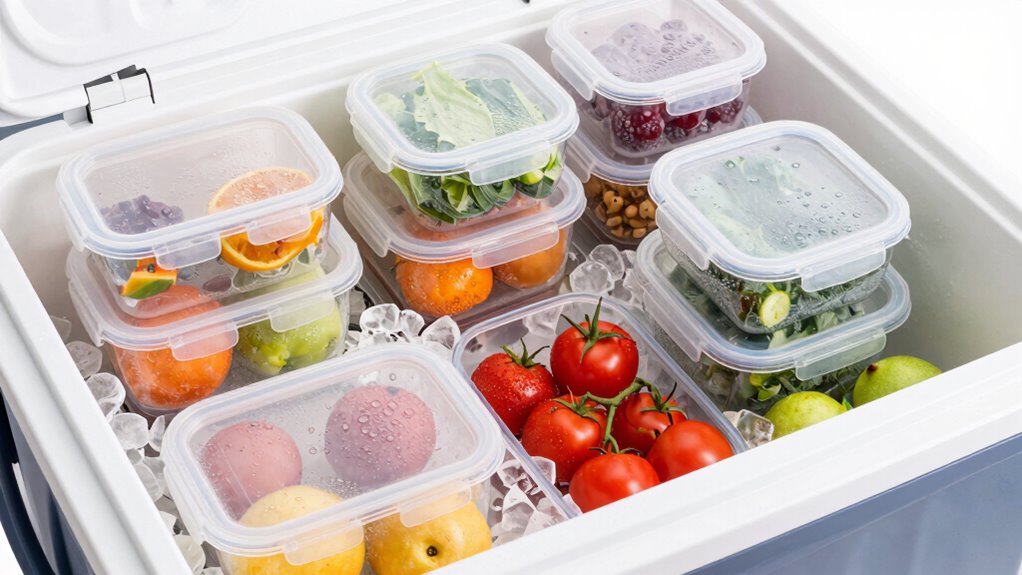
Keeping your food fresh and safe often comes down to proper cooler management, and there’s a simple trick that can make a big difference. It all starts with how you position the ice packs inside your cooler. Placing the ice packs at the top of the cooler helps create a cold barrier that keeps the entire interior chilled evenly. This method ensures that the cold air sinks downward, maintaining a consistent temperature throughout. When the ice packs are strategically positioned near the top, your perishable items stay colder longer, reducing the chance of spoilage.
Temperature regulation is key to extending the lifespan of your food, especially during long trips or outdoor adventures. To optimize this, you want to minimize temperature fluctuations inside the cooler. Proper ice pack placement is essential for this. Keep the packs in direct contact with the items you want to keep cold the longest, like meats or dairy products. For fruits and vegetables that are more sensitive to cold, place them in a separate, slightly warmer zone, perhaps closer to the cooler’s middle or bottom. This separation prevents overexposure to cold temperatures that could cause spoilage or freezer burn. Understanding how cooler insulation works can further help you maximize the efficiency of your cooler setup.
Another tip for effective temperature regulation is to pre-chill your cooler before loading it. Fill it with ice or cold packs a few hours before you pack your food. This step ensures the interior is already cold, so your perishables don’t have to work harder to stay fresh. When loading your cooler, try to fill empty spaces with additional ice or insulation. The less air space inside, the less temperature fluctuation you’ll experience, keeping your food at a stable, safe temperature for longer periods. Additionally, understanding how ice packs work can help you optimize their placement for better cooling efficiency. Ensuring proper cooler sealing and insulation also plays a significant role in maintaining consistent temperatures. Recognizing the importance of temperature regulation can help you make smarter choices about cooler management.
Throughout your trip, monitor the cooler’s temperature if possible. Keeping the lid closed as much as you can minimizes cold air loss, and regularly checking the ice pack placement can help you make adjustments if the temperature begins to rise. When you notice the ice melting, replace or reposition the packs to maintain an even chill. This proactive approach helps prevent hot spots that can lead to spoilage, ensuring your food remains fresh and safe well beyond expectations.
In short, by paying attention to ice pack placement and focusing on steady temperature regulation, you can significantly extend the freshness of your food. Small adjustments in how you organize your cooler make a big difference, helping you enjoy your meals longer and avoid unnecessary waste.
As an affiliate, we earn on qualifying purchases.
Frequently Asked Questions
Does This Trick Work for All Types of Food?
This trick works well for many types of food, especially perishable items like dairy, meats, and leftovers, enhancing food preservation through effective cooling techniques. However, it may not be suitable for all foods, such as certain fruits or vegetables that prefer specific humidity levels. Always consider the ideal storage conditions for each food type, and adjust your cooling techniques accordingly to maximize freshness and prevent spoilage.
How Often Should I Check the Cooler’s Temperature?
You should check your cooler’s temperature daily to make certain proper temperature calibration and prevent spoilage. Regular checks help you maintain a consistent temperature, ideally around 40°F (4°C), which is key for safety. Keep an eye on humidity control too, as it affects food freshness. Use a reliable thermometer and adjust settings as needed to prevent bacteria growth, guaranteeing your food stays fresh longer.
Can I Use This Method in a Regular Refrigerator?
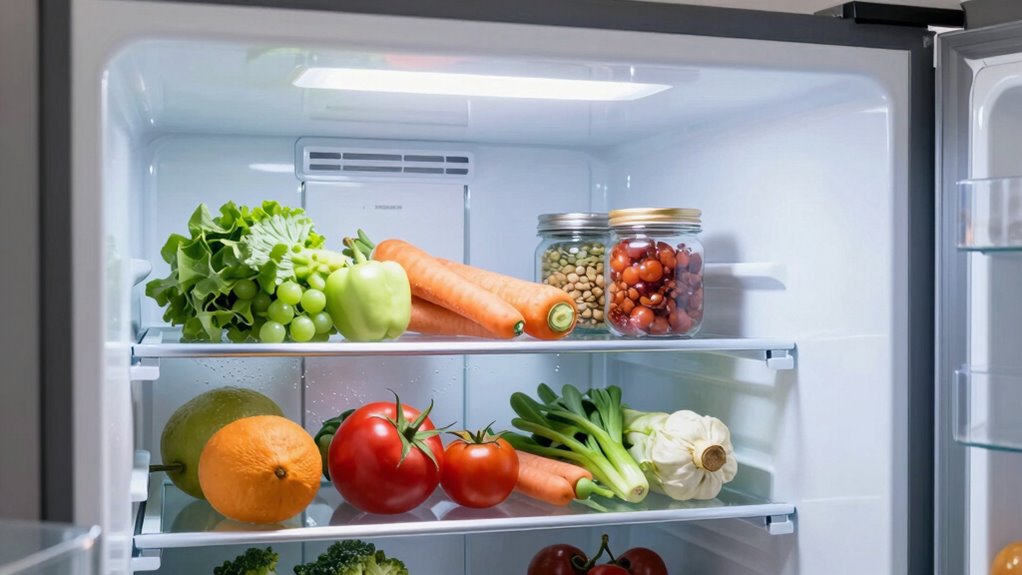
Yes, you can use this method in a regular refrigerator. Proper temperature regulation is key to effective food preservation, so keep your fridge at around 37-40°F (3-4°C). Use a thermometer to monitor the temperature regularly, and organize your food to allow cold air to circulate. This simple trick helps extend freshness and prevents spoilage, ensuring your food stays safe and lasts longer.
What Are Common Mistakes to Avoid?
You might worry about ruining your food, but avoiding common mistakes is simple. Keep an eye on temperature control, ensuring your fridge isn’t too cold or warm, which can spoil food faster. Don’t forget moisture balance—too much moisture causes mold, while too little dries food out. Regularly check seals and vents, and store foods properly. These steps help maintain freshness, reduce waste, and keep your food safe longer.
Is This Safe for Storing Leftovers Overnight?
Storing leftovers overnight can be safe if you follow proper food safety guidelines and maintain temperature regulation. Make sure to refrigerate leftovers within two hours of cooking, ideally at or below 40°F (4°C). Use airtight containers, and avoid leaving food out at room temperature. Proper temperature control prevents bacteria growth, ensuring your leftovers stay safe to eat the next day and beyond.
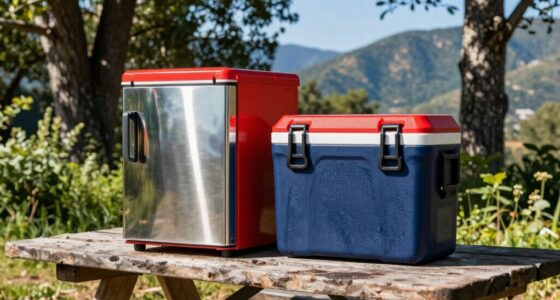
large cooler with temperature control
As an affiliate, we earn on qualifying purchases.
As an affiliate, we earn on qualifying purchases.
Conclusion
By mastering cooler management, you keep your food fresher longer, your ingredients safer longer, and your meals tastier longer. You control the temperature, control the freshness, and control the quality. You prevent spoilage, extend shelf life, and save money. You become the master of your meals, the guardian of your groceries, and the hero of your kitchen. With this simple trick, you don’t just store food—you preserve flavor, protect health, and enjoy peace of mind, longer than you ever thought possible.
As an affiliate, we earn on qualifying purchases.
As an affiliate, we earn on qualifying purchases.
Fall Picks
fall essentials
As an affiliate, we earn on qualifying purchases.