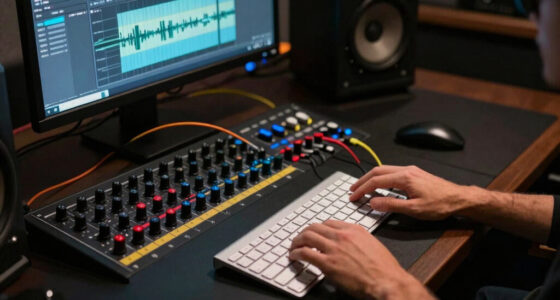
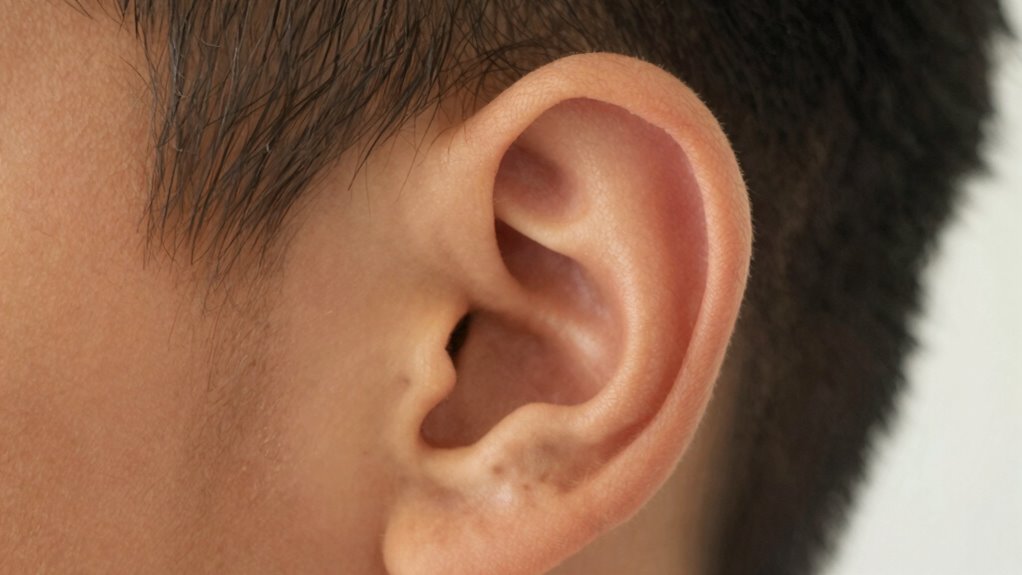

To hear separation without confusing it with brightness, focus on identifying harmonic differences and spatial cues instead of just loudness or tonal quality. Pay attention to the unique overtones of each sound and how they differ in pitch. Also, observe how sounds are positioned in space, noting differences in timing and level between your ears. These strategies help you distinguish true separation more clearly. Keep exploring to uncover even more effective listening techniques.

Get audio and creator gear delivered free with Prime
- Fast, free delivery on millions of items
- Prime Video, Amazon Music and more included
- Member-only deals all year
Key Takeaways
- Focus on harmonic content and overtones to differentiate sounds beyond their perceived brightness.
- Use spatial cues like interaural time and level differences to identify sound source locations.
- Practice active listening by isolating individual sounds in complex audio environments.
- Pay attention to the unique tonal fingerprint (harmonic contrast) of each sound.
- Reduce reliance on loudness or brightness cues, instead emphasizing pitch and spatial positioning.
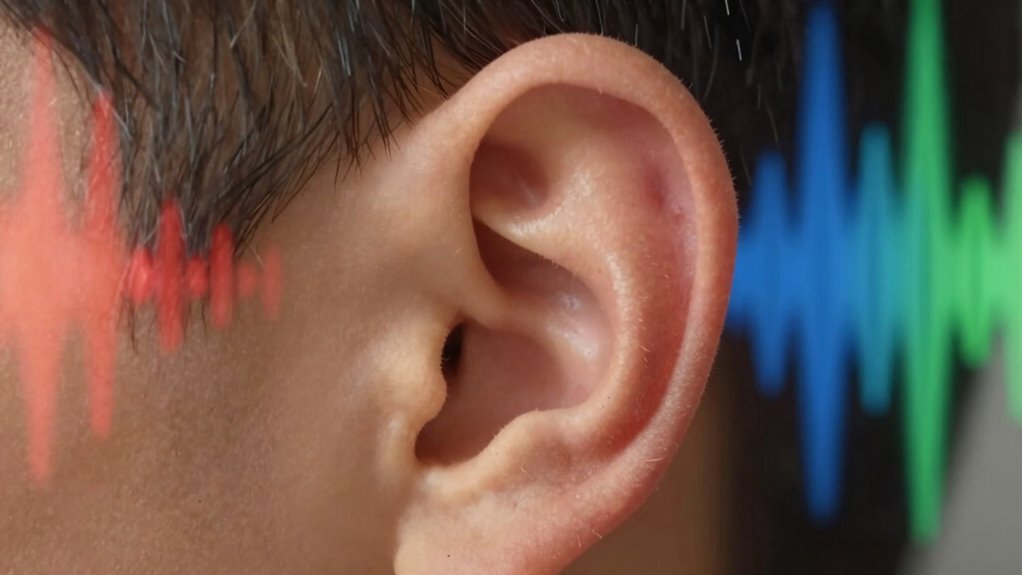
Understanding separation in sound can be tricky, especially when brightness colors your perception. When you listen, your brain uses various cues to distinguish different sources, but sometimes brightness—whether from tone or timbre—can make it seem like sounds are separated when they’re not. To truly hear the difference, you need to focus on harmonic contrast and spatial cues. These elements help your ears and brain work together to parse sounds accurately, avoiding confusion with brightness.
Focus on harmonic contrast and spatial cues to accurately perceive sound separation beyond brightness and tone.
Harmonic contrast is key to perceiving separation. Think of it as the unique tonal fingerprint of each sound source. When two sounds have distinct harmonic structures, your brain recognizes them as separate because their overtones and fundamental frequencies differ. For example, a guitar and a piano might both produce similar notes, but their harmonic content varies. By paying attention to these differences, you can differentiate sounds without being tricked by brightness, which often emphasizes loudness or tonal brightness rather than harmonic content.
Spatial cues are equally vital. They involve the subtle differences in how sound reaches each ear, allowing you to perceive where sounds originate in space. These cues include interaural time differences (ITD) and interaural level differences (ILD). When a sound source is on your right, it reaches your right ear slightly earlier and louder than your left ear. Your brain processes these cues to create a mental map of the soundscape. Focusing on these spatial cues helps you separate sounds based on their location rather than their brightness or loudness, which can be misleading. Additionally, understanding how spatial perception influences sound separation can improve your listening accuracy.
To sharpen your ability to discern separation, practice listening actively. Close your eyes and focus on individual sounds within a complex mix. Try to identify their harmonic qualities and where they are coming from. Notice how harmonic contrast can make certain sounds stand out even if they’re not the loudest or brightest. At the same time, pay attention to the spatial cues, imagining the source’s position in space. Over time, this practice trains your ears to distinguish true separation from mere brightness or tonal emphasis.
In essence, understanding the distinction between harmonic contrast and spatial cues allows you to hear sounds more accurately. When you stop relying solely on brightness as a cue, you open yourself to a more precise perception of the soundscape—one rooted in the actual harmonic structure and spatial positioning of each source. This helps you enjoy a richer, clearer listening experience free from the confusion that brightness alone can cause.
high fidelity headphones with spatial cues
As an affiliate, we earn on qualifying purchases.
As an affiliate, we earn on qualifying purchases.
Frequently Asked Questions
How Does Brain Processing Affect Sound Separation Perception?
Your brain’s neural mechanisms and auditory pathways work together to help you distinguish sounds, even in complex environments. When you hear a separation, these pathways process different sound features like pitch and location, allowing you to focus on specific sources. Your auditory system filters out background noise, enabling you to perceive clarity. This intricate processing prevents confusion between separation and brightness, ensuring you accurately interpret the soundscape around you.
Can Hearing Loss Impact the Ability to Distinguish Separation?
Hearing loss can make distinguishing separation tougher, especially in background noise. Imagine trying to tune into a radio station with static; your ability to pick out specific frequencies diminishes. When your hearing declines, your frequency discrimination weakens, making it harder to separate sounds. This means you might struggle to focus on a conversation in a crowded room, confusing background noise with individual sounds. Your brain’s ability to parse auditory details diminishes, affecting sound separation.
What Role Does Musical Training Play in Auditory Separation Skills?
Musical training markedly enhances your auditory separation skills by sharpening your ability to distinguish different sounds. When you undergo musical training, it improves your auditory skills, making it easier to isolate individual instruments or voices within complex soundscapes. This training trains your brain to better analyze and interpret sound frequencies, helping you differentiate between separation and brightness. As a result, you become more adept at perceiving nuanced auditory cues in everyday listening environments.
Are There Specific Environments That Improve Auditory Separation Perception?
Certain environments, like spaces with optimized acoustic design, enhance your ability to perceive auditory separation. In settings with controlled background noise, your ears can better distinguish individual sounds without confusion. Avoid noisy, echo-prone areas which make it harder to focus. Well-designed acoustics help you isolate sounds more effectively, sharpening your auditory perception. By choosing environments that minimize background noise and maximize sound clarity, you improve your ability to perceive separation accurately.
How Does Age Influence the Ability to Hear Separation Clearly?
Age-related decline can make it harder for you to hear separation clearly, especially in complex environments. Developmental differences mean younger individuals often have sharper auditory skills, while older adults might struggle more. As you age, your ability to distinguish sounds independently diminishes, so paying attention to auditory cues becomes more challenging. Regular hearing checkups, auditory training, and minimizing background noise can help improve your perception of sound separation over time.
As an affiliate, we earn on qualifying purchases.
Conclusion
Remember, understanding separation without mistaking it for brightness takes practice. Trust your ears, focus on the subtle differences, and don’t rush the process. As the saying goes, “Haste makes waste,” so take your time to develop your sense of hearing. By staying patient and attentive, you’ll sharpen your perception and enjoy a clearer, more accurate sound experience. Keep listening closely, and soon you’ll distinguish separation from brightness with confidence.
earphones with harmonic separation
As an affiliate, we earn on qualifying purchases.
As an affiliate, we earn on qualifying purchases.
audio test tracks for sound separation
As an affiliate, we earn on qualifying purchases.
As an affiliate, we earn on qualifying purchases.
Fall Picks
fall essentials
As an affiliate, we earn on qualifying purchases.