

To stay comfortable from opener to encore, follow the layer rule: use moisture-wicking base layers, add insulating mid-layers, and finish with protective outer layers. Adjust these layers based on activity, weather, and body signals—adding or removing as needed. Proper fit and fabric choices are key to effective insulation and moisture control. Mastering these principles helps you adapt seamlessly throughout your day, ensuring continuous comfort until the final curtain call. Curious how to get it just right?
Key Takeaways
- Use a three-layer system: moisture-wicking base, insulating mid-layer, and protective outer shell for adaptable comfort.
- Ensure each layer fits snugly without constricting movement to optimize moisture management and warmth.
- Adjust layers based on activity level and weather signals, adding or removing as needed for consistent comfort.
- Choose fabrics that dry quickly, breathe well, and manage moisture to prevent chills and overheating.
- Prioritize practicality and style by coordinating layers for easy, quick modifications from start to finish.
What Is the Layer Rule and Why Is It Important?

The layer rule is a simple yet essential guideline for dressing comfortably and effectively. It emphasizes wearing multiple layers, each serving a specific purpose. Insulation layers trap body heat to keep you warm, especially in cold conditions. Moisture management is equally important; your outer layers should wick sweat away from your skin to prevent chills and discomfort. By layering properly, you create a system that adapts to changing weather and activity levels. Each layer works together, ensuring warmth, dryness, and comfort without overheating. Understanding the layer rule helps you stay prepared, whether you’re outdoors or in variable environments. Recognizing the importance of layering techniques ensures you maximize comfort and functionality, making sure you’re ready for whatever the day throws your way.
How to Build a Comfortable and Functional Base Layer
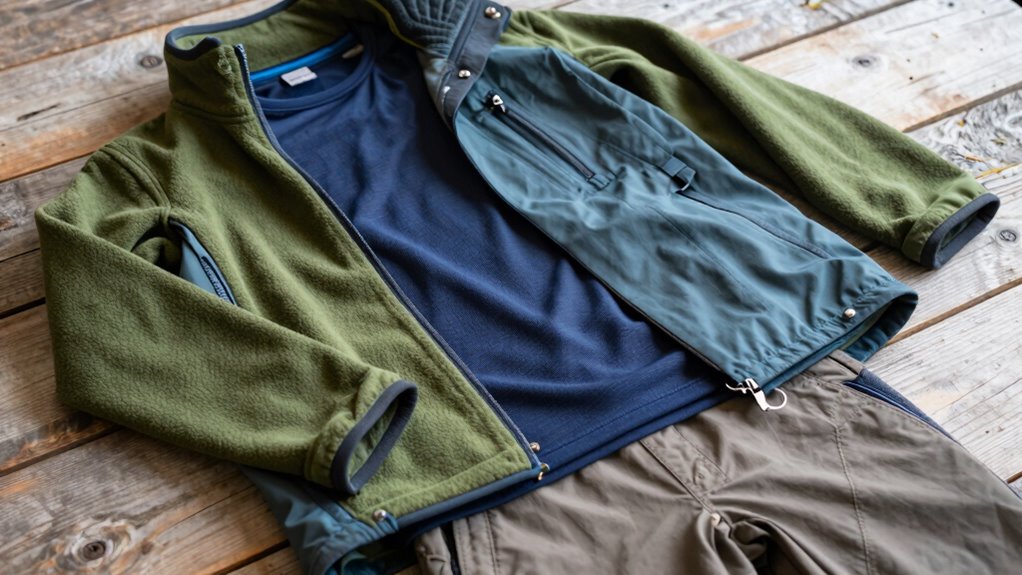
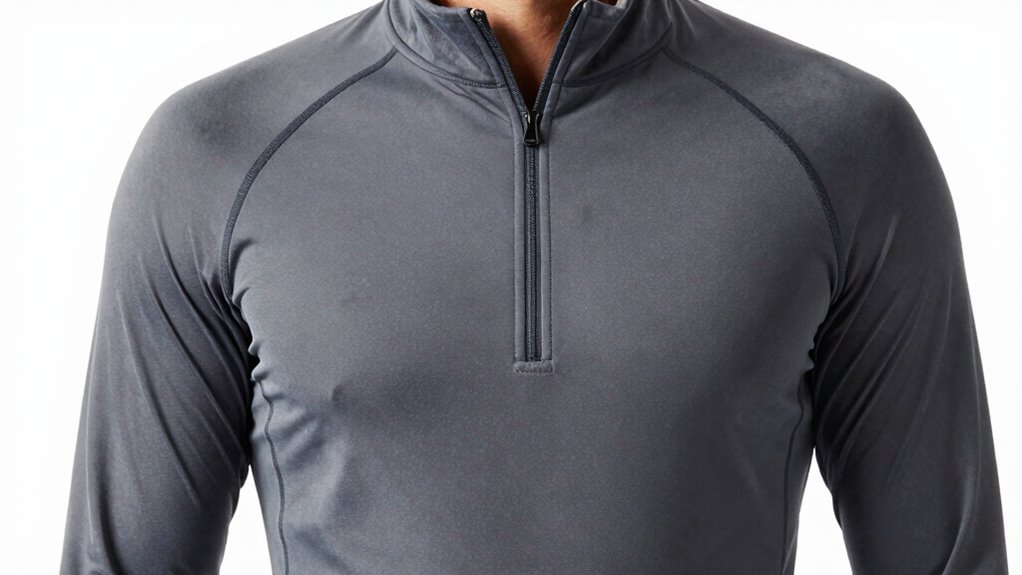
Choosing the right material is key to making your base layer comfortable and effective. You want fabrics that wick moisture and regulate temperature without chafing. Make sure the fit is snug but not tight, so you stay warm and unrestricted all day long. For added performance, look for moisture-wicking fabrics that dry quickly and keep you comfortable during intense activity.
Material Matters Most
Since your base layer directly contacts your skin, selecting the right material is essential for comfort and performance. You want fabrics that offer durability, moisture-wicking, and breathability. Natural fibers like merino wool are durable and manage odors well, while synthetic options like polyester dry quickly. Consider color coordination to match your wardrobe or gear, ensuring your base layer looks good under layers or outerwear. The right fabric can prevent chafing, regulate temperature, and last through many adventures. Choosing the appropriate fabric type ensures your base layer performs optimally in various conditions. Here’s a quick comparison:
| Material | Fabric Durability | Color Coordination |
|---|---|---|
| Merino Wool | High | Easy to match |
| Polyester | Very high | Wide options |
| Nylon | Moderate | Limited shades |
| Silk | Low | Elegant, fewer choices |
Proper Fit Ensures Comfort
A well-fitting base layer feels comfortable against your skin and moves with you during activity. Fits matter because even the slightest tightness or looseness can cause discomfort or chafing. Focus on choosing a size that contours your body without restricting movement or creating pressure points. A snug but not constrictive fit ensures moisture wicks away efficiently and maintains insulation. Remember, a proper fit enhances your overall comfort and performance. If your base layer is too tight, it can limit circulation; if too loose, it won’t insulate properly or stay in place. Prioritize comfort focus when selecting your gear—an ideal fit is key to building a functional, comfortable foundation for any outdoor adventure.
Choosing the Right Mid-Layer for Different Temperatures
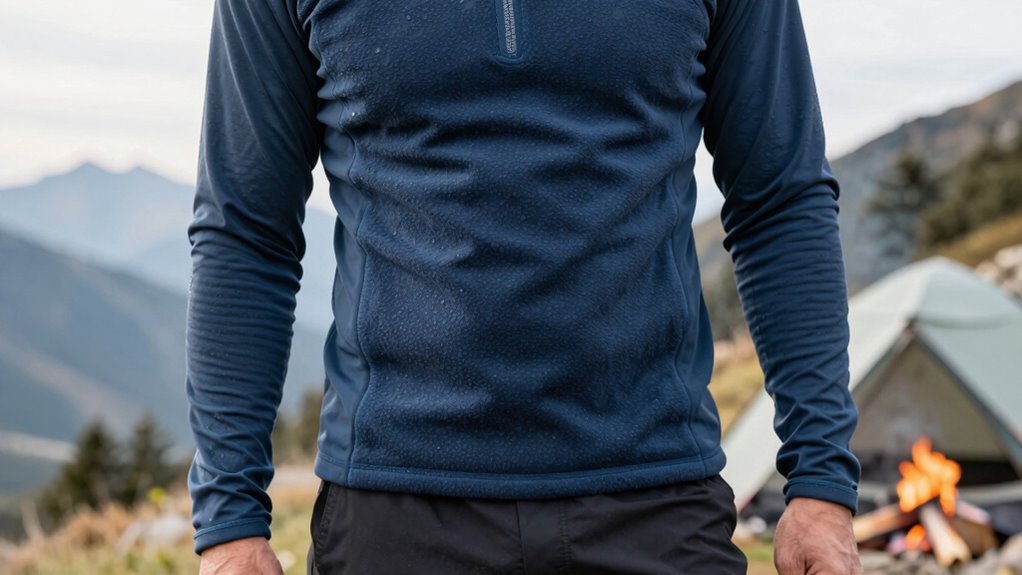
Choosing the right mid-layer depends on the material, activity, and temperature you’ll face. You’ll want versatile options that can adapt as conditions change, so layering becomes essential. By understanding these factors, you can stay comfortable no matter the weather. Incorporating proper safety gear into your layering strategy ensures both comfort and protection during outdoor activities.
Material Matters Most
Have you ever wondered how the right mid-layer can make or break your comfort in varying temperatures? The key is fabric selection. For chilly conditions, opt for insulating materials like fleece or wool, which trap heat effectively. When temperatures rise, choose lightweight, breathable fabrics such as merino wool or synthetic blends that wick moisture and prevent overheating. Your layering techniques also depend on fabric choice—knowing how different materials perform helps you adapt quickly. A mid-layer made from a versatile fabric can serve well across a range of conditions, reducing the need for multiple pieces. Selecting the right fabric guarantees your mid-layer provides consistent comfort, whether you’re facing a brisk morning or a warm afternoon. Additionally, understanding fabric performance can help you choose materials that offer optimal breathability and insulation in any environment. Material truly matters most in maintaining the perfect balance.
Layering for Versatility
To stay comfortable across varying temperatures, selecting the right mid-layer is essential. Your base layer keeps moisture away from your skin, so choose a lightweight, breathable fabric for milder weather. When temperatures drop, opt for a mid layer that offers insulation without adding bulk. Fleece or down-lined options trap heat effectively, making them versatile choices. For unpredictable conditions, layer a thinner mid layer over a moisture-wicking base, then add an outer shell if needed. This combination allows you to adapt quickly—removing or adding layers as your activity level or weather changes. The key is to balance warmth and breathability, ensuring your mid layer complements your base layer without overheating or feeling restricted. Recovery devices can be a helpful addition to your layering strategy, especially after intense activity. Versatile layering keeps you comfortable from start to finish.
Temperature and Activity
When selecting a mid-layer, consider both the temperature and your activity level to stay comfortable. Insulation techniques vary depending on these factors; for colder conditions, choose thicker, insulating fabrics like fleece or down. For milder temperatures, lightweight options provide enough warmth without overheating. Your activity level influences your choice: high-intensity activities generate more body heat, so opt for breathable materials that promote moisture control to wick sweat away and prevent dampness. For lower-intensity pursuits, thicker insulation helps maintain warmth. Remember, moisture control is key—no matter the temperature, a moisture-wicking mid-layer keeps you dry and comfortable. Adjust your insulation techniques accordingly to balance warmth and breathability, ensuring you stay comfortable from start to finish.
Picking Outer Layers That Protect and Breathe
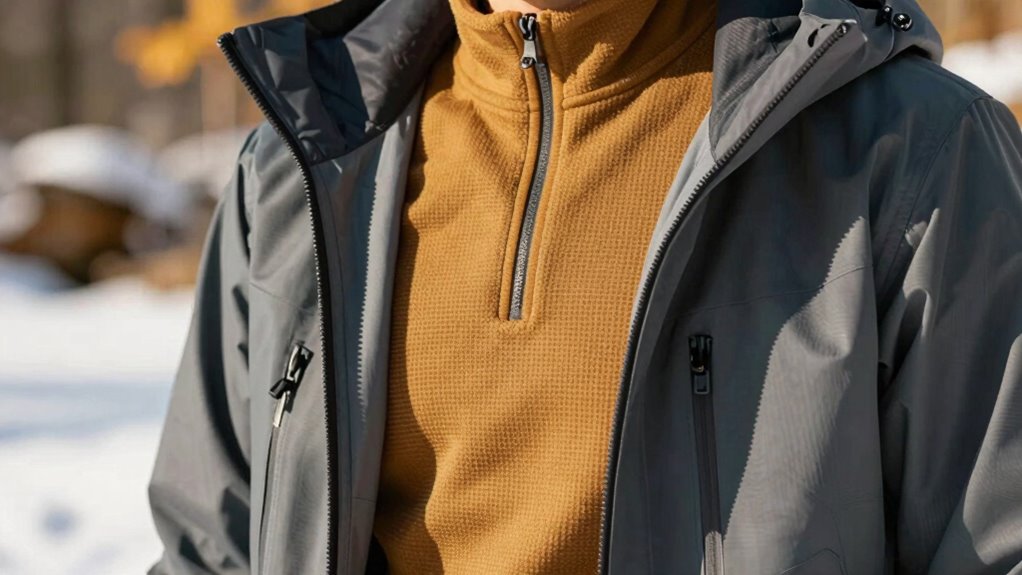
Choosing the right outer layer is essential for staying comfortable, especially when you need protection from the elements. Your goal is to find a piece that balances insulation strategies with moisture management. Look for outer layers made from waterproof or water-resistant materials to keep rain or snow out, while still allowing sweat to escape. Breathability is key, so your outer layer shouldn’t trap moisture inside, which can lead to feeling damp and chilled. Consider fabrics like Gore-Tex or similar breathable membranes that provide protection without sacrificing ventilation. Selecting an outer layer that manages moisture effectively helps you stay dry and comfortable during active pursuits. Additionally, sustainable material choices can reduce your environmental footprint while maintaining performance. Remember, a well-chosen outer shell works with your inner layers to optimize insulation and moisture control, keeping you comfortable from start to finish.
How to Adjust Your Layers for Activity and Weather Changes

Adapting your layers as activity levels and weather conditions change is key to maintaining comfort. Many layering myths suggest sticking to a fixed system, but seasonal variations demand flexibility. When you’re active, your body generates heat, so you can remove a layer or switch to lighter fabrics to prevent overheating. Conversely, during lower activity or colder weather, add an insulating layer to stay warm. Pay attention to your body’s signals rather than rigid rules—if you start feeling sweaty or chilled, adjust accordingly. Remember, no single layering approach suits every situation. By listening to your body and understanding seasonal variations, you’ll stay comfortable from start to finish, regardless of how the weather or your activity level shifts. Incorporating layering techniques that consider both activity and climate changes will help you pack smarter and travel more comfortably.
Practical Tips for Dressing in Layers for Outdoor Activities
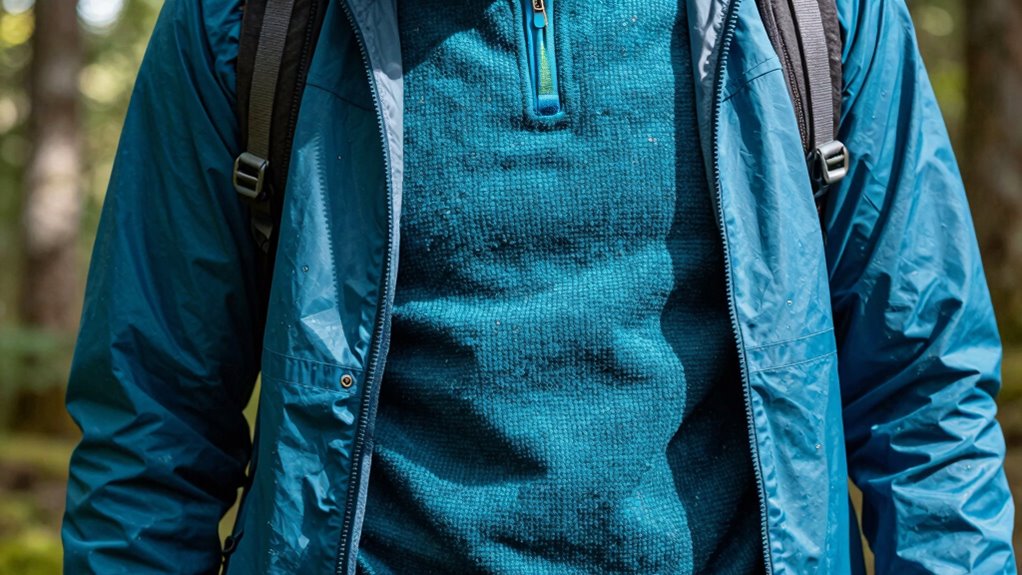
Dressing in layers for outdoor activities requires practical strategies to stay comfortable and prepared. Start with a moisture-wicking base layer to keep sweat away from your skin, then add an insulating layer like fleece or down for warmth. Top it with a waterproof shell to protect against wind and rain. Pay attention to fashion trends by choosing layers in colors that coordinate well, making your outfit look intentional and stylish. Mixing neutral tones with bold accents can boost your confidence and keep your look modern. Adjust your layers as needed; lighter colors reflect heat, while darker shades absorb it. Keep your layering system simple but flexible, so you can easily adapt to changing weather and activity levels without sacrificing comfort or style. Understanding layering techniques can help optimize your comfort and safety during outdoor adventures.
Common Layering Mistakes to Avoid
One common layering mistake is wearing bulky or ill-fitting clothes that restrict movement and create unnecessary bulk. Many people fall for layering myths, believing more layers always mean better warmth, but that’s not true if the layers aren’t suited to your activity. It’s easy to confuse fashion with function, choosing stylish pieces that look good but don’t provide proper insulation or moisture management. Avoiding these mistakes means prioritizing fit and material over trendiness. Over-layering can trap sweat and cause discomfort, while under-layering leaves you vulnerable to the elements. Remember, the goal is to stay comfortable and mobile, so choose your layers wisely—focusing on their performance rather than just appearance. Proper layering enhances comfort without sacrificing style or freedom of movement. Using the right clothing materials ensures your layers work together effectively to regulate temperature and moisture.
How to Dress in Layers for Travel and Commuting

When preparing for travel or your daily commute, layering wisely can make a significant difference in comfort and practicality. Start with a moisture-wicking base layer to keep you dry and comfortable. Add a versatile middle layer, like a sweater or fleece, for insulation. Choose outer layers that can handle weather changes, such as a lightweight waterproof jacket. Pay attention to accessory coordination—select scarves, hats, or gloves that complement your outfit for easy adjustment. Color matching is key; sticking to neutral tones with pops of color makes it easier to mix and match layers quickly. This approach guarantees you stay comfortable regardless of temperature shifts and helps you look put-together without overpacking. Proper layering makes your commute smoother and more adaptable.
Why Body Temperature Matters When Layering
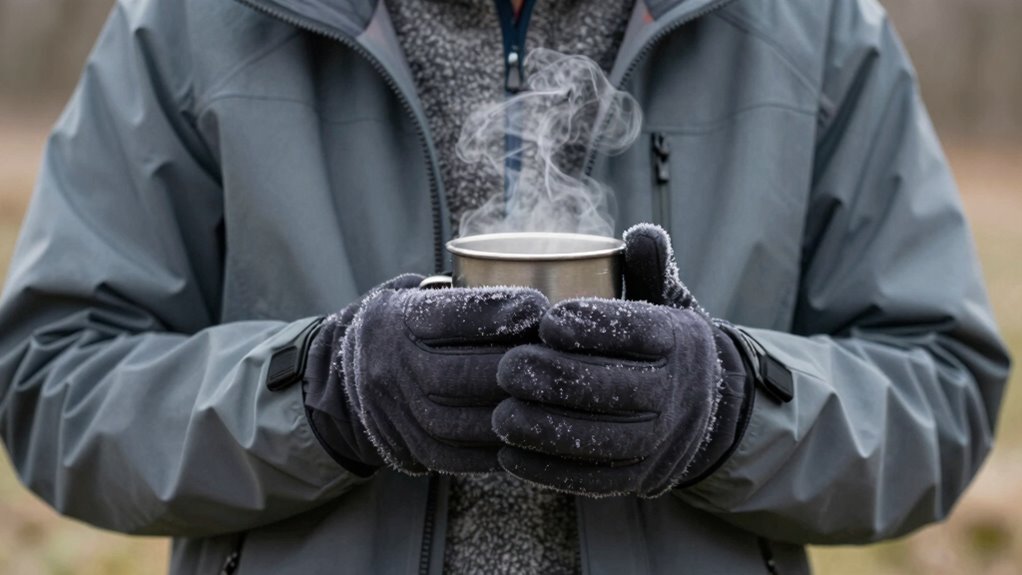
Understanding your body temperature is essential for effective layering because it directly influences how you feel throughout your day. When your body regulates temperature well, you experience greater layering comfort and fewer temperature swings. If you’re too warm or cold, it’s a sign your layers aren’t working effectively. To optimize body temperature regulation, consider your activity level, environment, and clothing choices. Use this table to help determine your needs:
| Activity Level | Environment | Layering Strategy |
|---|---|---|
| Resting | Indoor | Light base layer, breathable fabrics |
| Active | Cold outdoor | Insulation, moisture-wicking layers |
| Sedentary | Warm outdoor | Minimal layers, vented outer layer |
| Intense activity | Variable | Quick-drying, adjustable layers |
| Resting after activity | Cold outdoor | Warm layers, heat-retaining fabrics |
Quick Ways to Add or Remove Layers During the Day
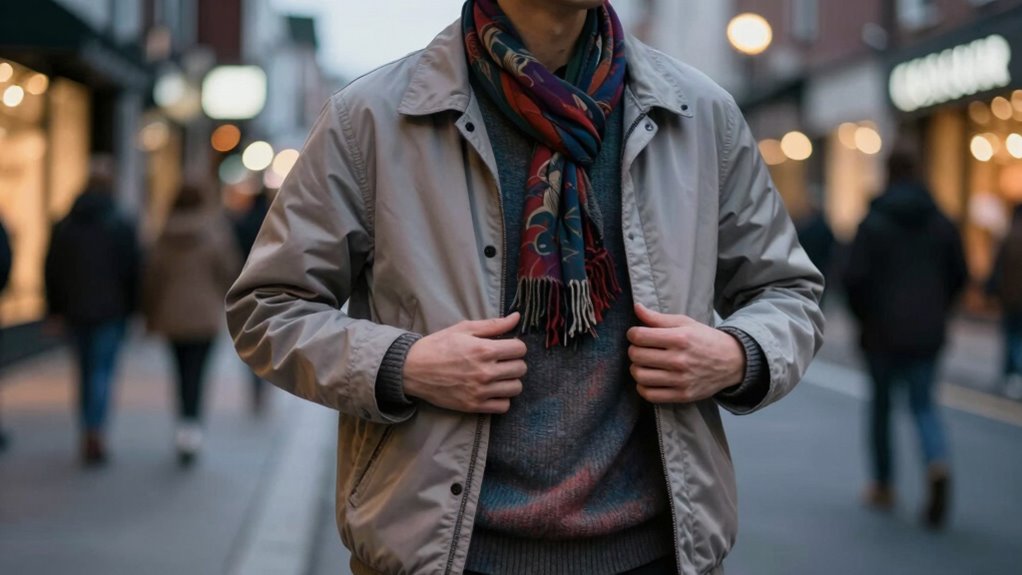
You can quickly adjust your layers with easy fasteners or by unzipping armholes, making changes on the go. Keep layering essentials handy so you’re always prepared for shifting temperatures. These simple tricks help you stay comfortable without wasting time or effort.
Easy Layer Fasteners
Quick and easy fasteners make adjusting your layers throughout the day simple and efficient. With various fastener types like zippers, snaps, hooks, and Velcro, you can quickly add or remove layers without hassle. Layering accessories such as clip-on scarves, magnetic closures, or toggle buttons also streamline the process, allowing you to adapt your outfit smoothly. Choosing fasteners that are durable yet simple to operate ensures you won’t waste time fumbling in a hurry. For example, a jacket with a sturdy zipper or a vest with snap buttons can be taken off or put on with minimal effort. These quick-access options keep you comfortable and prepared, whether you’re switching from indoors to outdoors or layering for changing weather conditions.
Adjusting With Armholes
When the weather changes unexpectedly, adjusting your layers through the armholes offers a fast and effective solution. The armhole fit plays a vital role in making quick adjustments comfortable and seamless. If you feel too warm, simply slip out of a layer through the armhole, reducing bulk without removing the entire garment. Conversely, if you need extra coverage, an easy armhole adjustment allows you to add a layer without fuss. Pay attention to the armhole’s size and shape—too tight can restrict movement, while too loose might cause bunching. By mastering armhole fit, you can effortlessly adapt your layers during the day, ensuring you stay comfortable no matter how the weather shifts. This simple technique keeps you prepared and confident from opener to encore.
Layering Essentials Handy
Adjusting layers throughout the day becomes straightforward once you know a few simple techniques. Keep fabric blends in mind; lightweight wool, cotton, and synthetic mixes make it easy to add or shed layers without discomfort. To quickly adapt to changing temperatures, choose pieces that can be layered or removed effortlessly, like cardigans or vests. Color coordination also helps—select neutral tones that match your base outfit, so removing a layer doesn’t ruin your look. Keep accessories like scarves or thin jackets handy—they’re easy to slip on or off as needed. By planning your layers with versatile fabric blends and thoughtful color choices, you can stay comfortable and stylish all day long, whether you’re moving from a chilly morning to a warm afternoon or heading into evening.
Frequently Asked Questions
How Do I Choose Eco-Friendly Layering Options?
To choose eco-friendly layering options, look for sustainable fabrics like organic cotton, hemp, or recycled polyester. Prioritize brands that focus on ethical manufacturing practices, ensuring fair labor conditions and minimal environmental impact. You can also check labels for certifications like Fair Trade or GOTS. By selecting these options, you support sustainability and reduce your carbon footprint, making your wardrobe both comfortable and environmentally responsible from opener to encore.
What Are the Best Materials for Sensitive Skin?
Sensitive skin seeks soothing, soft fabrics that prevent irritation. Look for natural materials like cotton, bamboo, and silk, known for their gentle, breathable qualities. These fabrics minimize skin irritation and reduce discomfort, making them ideal for fabric sensitivity. Avoid synthetic fibers that can cause itching and rash. Choosing these skin-friendly fabrics helps you stay comfortable, confident, and cared for, from your first layer to your final layer of the day.
How Do Layering Techniques Vary Across Different Outdoor Sports?
In outdoor sports, layering techniques vary based on activity intensity and conditions. You’ll start with a moisture management base layer to wick sweat away, keeping you dry. Add an insulating layer with fabric insulation to trap warmth during cold weather. Top it with a weather-resistant shell for protection against wind or rain. Adjust layers as needed, making sure each layer works together to keep you comfortable and dry throughout your activity.
Can Layering Help Prevent Hypothermia in Extreme Cold?
Layering can definitely help prevent hypothermia in extreme cold. You need thermal insulation to keep your body heat in, and moisture management to stay dry. Using an insulating base layer, a moisture-wicking mid-layer, and a waterproof outer layer creates a system that traps heat and pushes sweat away. This combination guarantees you stay warm and dry, reducing the risk of hypothermia even in harsh conditions.
What Are Innovative Layering Trends for Urban Commuting?
You’ll love these urban layering trends—they turn cold commutes into cozy adventures. Think ultra-slim thermal underwear that feels like a secret weapon and stylish sweater vests that transform your look instantly, making you feel like a fashion ninja. Innovative materials wick away sweat and block wind, while clever layering allows you to shed or add pieces effortlessly. Embrace these trends, and your commute becomes a stylish, snug escape from the city chill!
Conclusion
Mastering the layer rule transforms your comfort from a mere flicker to an unstoppable blaze. When you select and adjust your layers smartly, you’ll stay perfectly cozy no matter what the weather throws at you. Think of your wardrobe as a fortress, ready to adapt instantly—no more sweat or shivers. With this approach, you’ll feel unstoppable, conquering every day with confidence and comfort that’s as reliable as the sunrise.