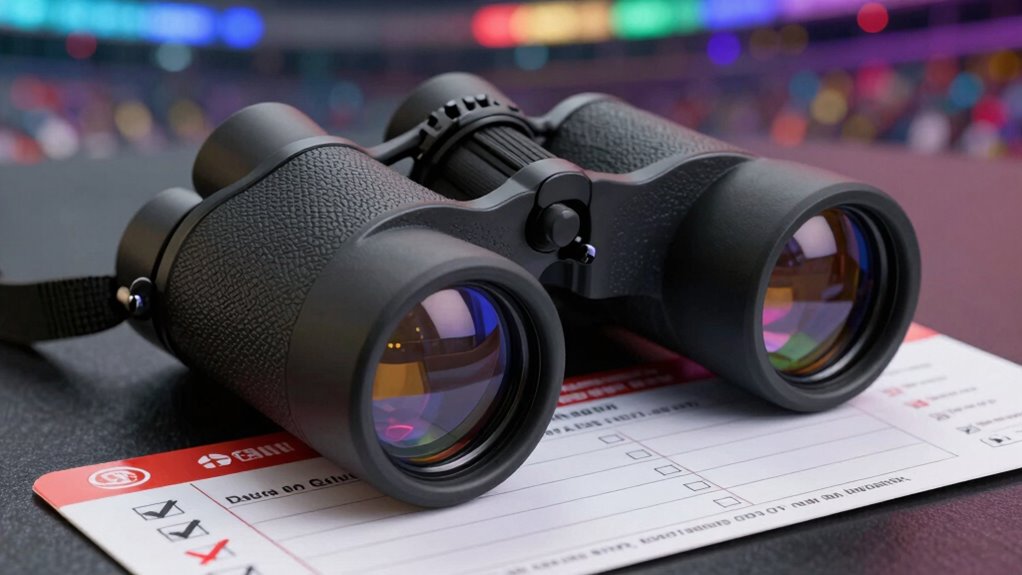

To avoid common mistakes with your image-stabilized binoculars at stadium concerts, start by checking if your binoculars are compatible with your tripod or mount before the event. Adjust the eye relief settings for comfort and clarity, and test everything at home to guarantee stability. Properly securing the binoculars and making these adjustments prevents shaky images and eye fatigue. If you keep these tips in mind, you’ll enjoy clearer views—discover more tips to enhance your experience.
Key Takeaways
- Confirm binocular and tripod compatibility beforehand to ensure secure attachment and prevent shaky images.
- Test the entire setup at home, including mounting and eye relief adjustments, for stability and comfort.
- Adjust eye relief settings properly to avoid eye strain and ensure a complete, clear field of view.
- Use adjustable eyecups or diopters to customize focus and prevent discomfort during extended viewing.
- Perform final checks at the event to verify secure mounting, proper focus, and comfortable eye positioning.
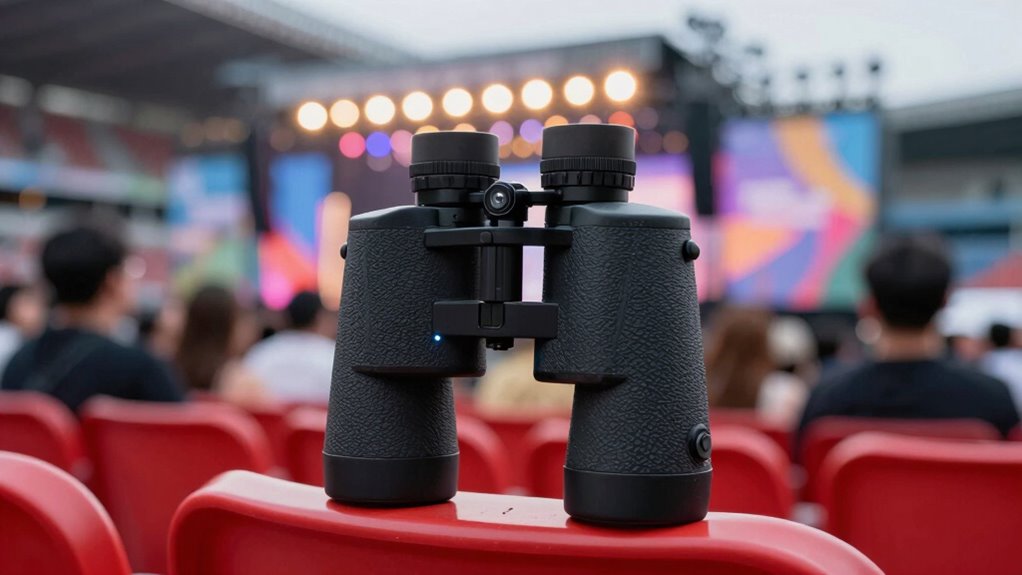
Attending stadium concerts offers an incredible experience, but getting the best view requires proper equipment setup—especially when using image-stabilized binoculars. One common mistake is overlooking tripod compatibility. Many binoculars are designed to be mounted for stability, but not all models fit every tripod. Before you head to the concert, double-check that your binoculars are compatible with your tripod or monopod. Using an incompatible mount can lead to shaky images or even damage your equipment. Ensuring compatibility means you can securely attach your binoculars, reducing hand fatigue and improving image steadiness during long viewing sessions. If your binoculars lack a tripod adapter, consider investing in an appropriate mount or a model with built-in compatibility. Proper setup allows you to enjoy stable, crisp views without constantly holding the binoculars, which is especially beneficial during extended periods of use. Additionally, verifying tripod compatibility beforehand can prevent last-minute frustrations and ensure a smooth setup process.
Another critical aspect often overlooked is eye relief adjustments. When using image-stabilized binoculars, it’s tempting to focus solely on image stabilization, but neglecting eye relief can diminish your viewing experience. Eye relief refers to the distance you can hold your eyes from the eyepiece while still seeing the entire field of view. If you don’t adjust this properly, you might find yourself straining or missing parts of the scene. Many binoculars come with adjustable eyecups or diopter settings to fine-tune eye relief. Take the time to adjust these settings before the concert begins. Proper eye relief ensures comfort, clarity, and an ideal, immersive viewing experience. It also helps prevent eye fatigue during prolonged use, making it easier to stay engaged with the concert.
Failing to set up these elements correctly can result in a less-than-ideal experience. For instance, if your tripod isn’t compatible, your binoculars may wobble or slip, leading to frustrating moments trying to re-stabilize the view. Similarly, neglecting eye relief adjustments might cause you to miss parts of the performance or strain your eyes over time. Both issues are simple to fix with a little preparation. Before leaving home, test your binoculars with your tripod and make all necessary eye relief adjustments. This proactive approach ensures you’re ready for a seamless, comfortable experience during the concert, allowing you to focus on enjoying the music and atmosphere rather than battling equipment issues. Proper setup is key to making the most of your stadium concert experience with image-stabilized binoculars.
Frequently Asked Questions
How Do I Choose the Best Image Stabilization Technology?
To choose the best image stabilization technology, consider how well it minimizes shake during handheld use, especially at high optical zoom levels. Look for models with advanced stabilization features like gyro sensors for smoother images. Also, check the battery life, since more sophisticated stabilization can drain power faster. Balance these factors to find binoculars that offer steady viewing without sacrificing battery longevity, ensuring you enjoy concerts without frustration.
Can I Use My Binoculars for Other Outdoor Activities?
Yes, you can definitely use your binoculars for other outdoor activities like birdwatching and hiking. Just make certain they’re lightweight and durable enough for rugged conditions. Binoculars for birdwatching help you spot distant birds clearly, while binoculars for hiking make it easier to enjoy scenic views. Make sure to choose models with good image stabilization and waterproof features, so you get the best experience during all your outdoor adventures.
What Maintenance Is Required for Image-Stabilized Binoculars?
Think of your binoculars as a finely tuned instrument that needs regular care. You should check the battery life regularly and replace batteries as needed to keep the stabilization system humming. Gently clean the lenses with a soft cloth to make certain of crystal-clear views. Avoid harsh chemicals, and store them in a dry, safe place. Proper maintenance keeps your binoculars performing like new, capturing every moment with steady clarity.
Are There Specific Brands Recommended for Stadium Concerts?
You should consider brand recommendations like Canon, Nikon, and Zeiss for reliable image-stabilized binoculars. If you’re on a budget, brands like Bushnell or Vanguard offer solid options without breaking the bank. Look for models with good image stabilization, comfortable grip, and clear optics. Research reviews and specs to match your needs, ensuring you get the best performance for stadium concerts. Avoid cheap brands that may compromise quality.
How Do Weather Conditions Affect Binocular Performance?
Weather impact can substantially affect your binoculars’ performance, especially in foggy conditions. Moisture and fog can cause internal fogging or reduce clarity, making it harder to see details. To minimize this, choose binoculars with waterproof and fog-proof features, and keep them stored in a dry, protective case. Be aware of changing weather and wipe lenses gently with a soft cloth if condensation appears, ensuring clear, steady viewing during the concert.
Conclusion
Remember, setting up your image-stabilized binoculars is like tuning a fine instrument—precision matters. Avoid common mistakes, double-check your settings, and you’ll enjoy the concert’s energy without the shakiness. Think of it as capturing a moment like a photographer’s steady hand, preserving every detail. When you get it right, you’ll feel the thrill of the performance crystal clear, as if you’re right there in the front row, experiencing every beat with perfect clarity.