
To guarantee smooth communication at your festival, start by selecting the right frequencies for your environment and verifying all radios are compatible. Obtain necessary licenses and stay compliant with local regulations. Keep backups of fully charged batteries and monitor power levels constantly. Test the radios thoroughly beforehand, confirm team members understand how to operate them properly, and avoid overcrowded channels to prevent interference. For a detailed guide on avoiding these common pitfalls, continue exploring further tips.
Key Takeaways
- Select appropriate, legal frequencies based on environment and ensure all radios are set to compatible channels.
- Obtain necessary licenses and stay updated on local radio regulations to avoid legal issues.
- Charge extra batteries and monitor power levels to prevent communication failures during the event.
- Conduct thorough pre-event testing of radios, channels, and range to identify and fix potential issues.
- Train staff on proper radio protocols and verify configurations for optimal performance and clear communication.
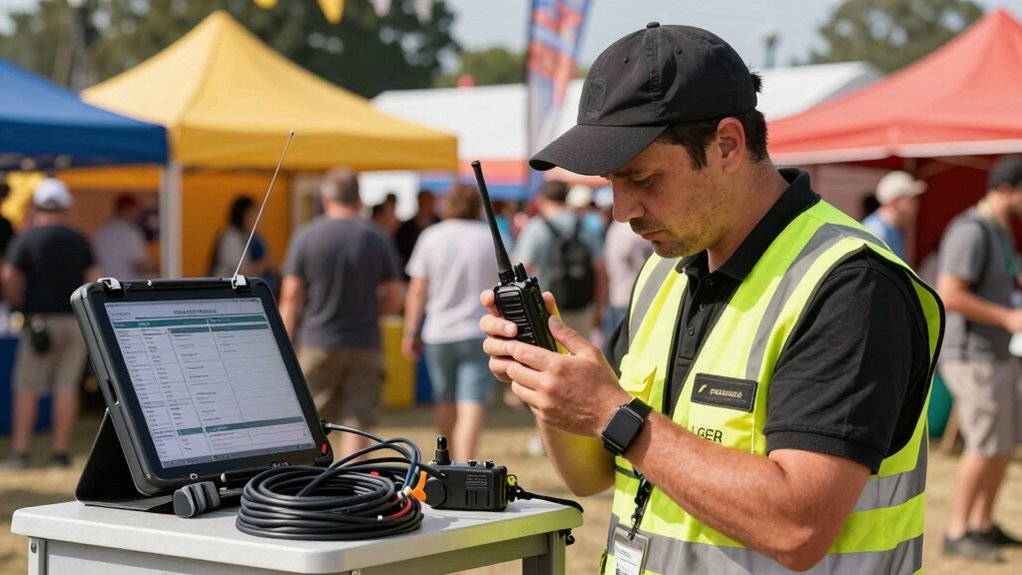
Setting up long-range two-way radios can markedly improve communication in remote or expansive areas, but it requires careful planning to guarantee peak performance. One of the most critical steps is selecting the right radio frequency. You need to choose a frequency that’s suitable for your festival environment, ensuring it’s legal and free from interference. For instance, UHF frequencies are generally better for crowded or indoor settings because they penetrate buildings and obstacles more effectively. Conversely, VHF frequencies might be better for open outdoor spaces with fewer obstructions. Before finalizing your choice, check local regulations to secure any necessary licenses and avoid risking interference with other radio users. Proper frequency selection helps prevent communication breakdowns and maintains a clear line of contact during the event. Additionally, understanding radio frequency regulations can help ensure you stay compliant and avoid fines or operational issues.
Another often overlooked aspect is battery management. Long shifts and heavy usage mean your radios need reliable power sources. It’s wise to have extra batteries on hand, fully charged, and ready to swap out as needed. Regularly check the battery levels during setup to avoid unexpected outages. Consider using high-capacity rechargeable batteries or power banks compatible with your radios to extend their operational time. Proper battery management also involves educating your team about conserving power—encourage practices like turning radios off when not in use or choosing low-power settings when possible. This way, your team maintains continuous communication without sudden drops in power that could jeopardize coordination.
Frequently Asked Questions
How Often Should Radio Batteries Be Replaced During Festivals?
You should substitute your radio batteries when their lifespan starts to decline, typically every 1 to 2 days during festivals. To avoid disruptions, establish a replacement schedule based on initial testing, and carry spare batteries. Regularly check battery levels throughout the event to ensure consistent performance. This proactive approach helps prevent unexpected power loss and keeps your communication lines clear and reliable during busy festival days.
Can Radios Be Used Across Different Festival Zones Seamlessly?
You can use radios across different festival zones seamlessly by ensuring proper frequency coordination and interference mitigation. When you set up your radios with distinct, non-overlapping channels, you prevent cross-zone interference, making communication smooth. It’s a coincidence that well-planned frequency management enhances coverage and clarity, allowing staff to move freely between zones without losing contact. Always verify your radio channels and conduct interference checks beforehand for flawless, continuous communication.
What Are the Legal Requirements for Radio Frequency Licenses?
You need to make certain your radios comply with licensing regulations and obtain the proper licenses before operating. Check the specific frequency allocation rules in your region, as different areas have strict regulations to avoid interference. Failing to follow licensing regulations can result in hefty fines or equipment confiscation. Always verify with local authorities or communication agencies to secure the necessary licenses and avoid legal issues during your festival.
How Do Weather Conditions Affect Radio Performance?
Weather impact can turn your radio signals into fleeting whispers, causing significant signal degradation. Rain, fog, and thunderstorms act like invisible barriers, scattering and absorbing signals, which weakens communication. Snow and high humidity also dampen performance, making your radios less reliable when you need them most. To stay connected, consider weather-resistant equipment and plan for potential disruptions, ensuring your festival’s communication remains clear despite nature’s unpredictable mood swings.
Are Specialized Accessories Needed for Festival Radio Setups?
Yes, you should consider specialized accessories for festival radio setups. Make certain antenna compatibility to get ideal range and signal clarity, especially in crowded environments. Also, check accessory compatibility with your radios, like headsets or additional batteries, to avoid connection issues. Using the right accessories tailored to your radio model helps prevent performance problems, guaranteeing smooth communication during your festival. Always verify compatibility before purchase to avoid any last-minute setbacks.
Conclusion
By following this setup checklist, you guarantee clear communication, enhance safety, and prevent disruptions. Double-check connections, test channels, and review procedures to avoid common mistakes. Stay organized, stay prepared, and stay connected—because successful festivals depend on your attention to detail. Remember, a well-prepared setup leads to smooth operations, smooth operations lead to happy attendees, and happy attendees lead to unforgettable experiences. Keep these steps in mind, and your festival will run seamlessly from start to finish.