When choosing long-range two-way radios, focus on battery life and frequency range, as these impact how long you can communicate and how far your signals will reach. A higher mAh rating means longer use, while VHF offers better coverage in open spaces and UHF handles obstacles better in urban areas. Understanding these core specs helps guarantee reliable performance. Continue to explore the details, and you’ll uncover even more ways to select the best radio for your needs.
Key Takeaways
- Battery capacity (mAh) directly affects how long the radio can operate without recharging.
- Frequency range (VHF/UHF) determines coverage distance and environment suitability.
- Power output (wattage) and antenna quality influence transmission clarity and effective range.
- Regulatory considerations and licensing are essential for legal and proper use of certain frequency bands.
- Focus on core specs like battery life and frequency range, while ignoring less impactful features for long-distance needs.
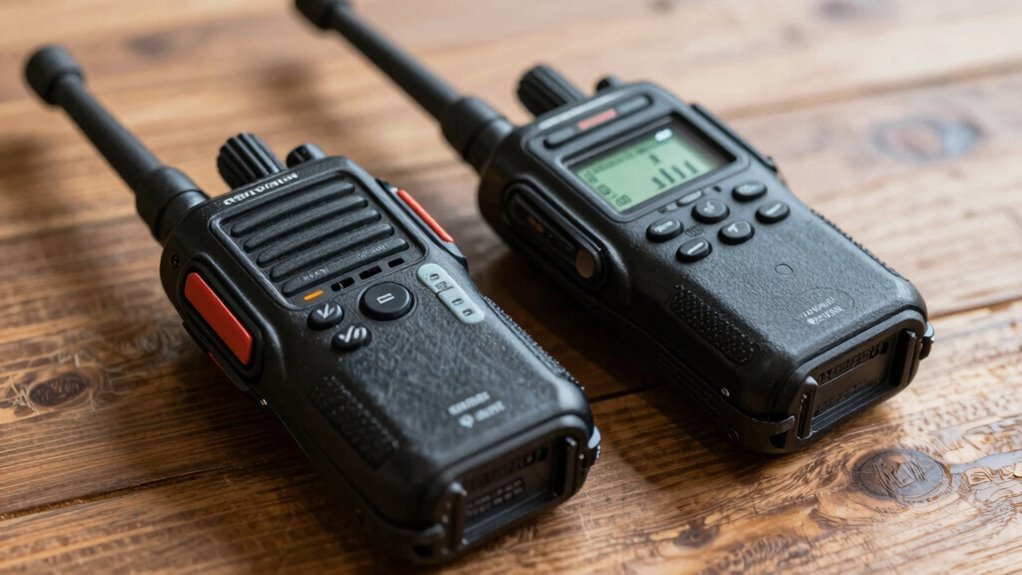
Long-range two-way radios are essential communication tools that enable you to stay connected over vast distances without relying on cellular networks. When you’re selecting a radio, two key specifications to consider are battery life and frequency range. These features directly impact how effectively you can communicate, how long your device lasts in the field, and the overall performance of your radios.
Battery life is crucial because it determines how long you can operate your radio without needing a recharge or replacement. If you’re working in remote areas or on long shifts, a radio with a long-lasting battery can be a game-changer. Look for models with higher mAh ratings or those that support multiple battery packs. Some radios also feature power-saving modes that extend battery life, so consider these options if you expect extended use. Remember, even the most advanced radio won’t be useful if its battery dies mid-mission, so prioritize models with reliable, long-lasting power sources.
Frequency range is another critical spec that influences your radio’s performance. It defines the spectrum over which the device can transmit and receive signals. Longer frequency ranges typically mean better coverage, especially in open areas, allowing you to communicate across greater distances. Different radios operate within various frequency bands, such as VHF (Very High Frequency) or UHF (Ultra High Frequency). VHF radios tend to perform better over long distances in open landscapes, while UHF radios excel in urban environments with lots of obstacles. Knowing your typical operating environment helps you choose the right frequency range, ensuring you get clear, consistent communication.
Additionally, understanding radio regulations and licensing requirements for certain frequency bands is important to ensure legal compliance and avoid potential issues. Knowing your operating environment and the typical range needs will help you select a device that performs reliably in real-world conditions. Remember, the maximum range advertised by manufacturers is often under ideal conditions, like clear line-of-sight, so real-world distances might be shorter. Don’t be swayed solely by the maximum range; instead, focus on your actual needs and environment when selecting a radio.
Other specs, like wattage and antenna quality, also impact performance but are secondary to battery life and frequency range when it comes to core functionality. Prioritize these two features to ensure your radio meets your operational demands. A well-chosen device with the right battery life and frequency range will provide dependable, long-distance communication, giving you confidence and peace of mind during your activities.
Frequently Asked Questions
How Do Weather Conditions Affect Radio Performance?
Weather impact can greatly affect your radio performance. Rain, snow, and fog can weaken signals, reducing range and clarity. Extreme temperatures may impact environmental durability, causing components to wear out faster. Wind can cause interference or physical damage, while humidity can lead to corrosion over time. To guarantee reliable communication, choose radios with good environmental durability and consider weather-resistant features for tough conditions.
What Is the Battery Life Expectancy for These Radios?
Think of your radio’s battery like a marathon runner—endurance depends on power management. Typically, you can expect around 8 to 12 hours of battery longevity with regular use. Factors like usage intensity, features enabled, and environmental conditions influence this. To maximize life, turn off unused functions and optimize power settings. Proper care and efficient power management make certain your radio stays energized through long shifts or outdoor adventures.
Are Long-Range Radios Suitable for Urban Environments?
Yes, long-range radios work well in urban environments, but urban interference can influence their performance. You’ll notice that signal penetration varies depending on building materials and obstacles, so choose models with higher wattage for better coverage. Keep in mind, though, that dense city layouts may limit your range. Selecting a radio with strong signal penetration helps ensure reliable communication amid interference and obstacles.
Can These Radios Be Used Internationally?
Yes, these radios can be used internationally for cross-border communication, but you need to verify local regulations first. Different countries have specific licensing requirements and frequency restrictions, so make sure your radio supports the necessary channels and complies with international standards. Using a compatible, FCC- or CE-approved model makes international use more straightforward, helping you stay connected across borders without legal issues.
What Accessories Are Compatible With These Radios?
Surprised? Your long-range radio isn’t just a miracle device; it’s compatible with a range of accessories, including rugged radio cases that defend it from the elements and headsets for hands-free communication. You’ll want to check specific models for headset compatibility to guarantee clear audio. So, yes, you can personalize your radio setup, making it more versatile and durable—perfect for whatever adventures or work scenarios you throw at it.
Conclusion
Understanding the specs of long-range two-way radios can feel overwhelming, but remember, not all details matter equally. Focus on the features that truly enhance your communication needs. Some might believe that higher specs always mean better performance, but in reality, practical needs often matter more. Trust your judgment, and don’t get caught up in specs that won’t impact your experience. With the right knowledge, you’ll choose a radio that keeps you connected when it counts most.