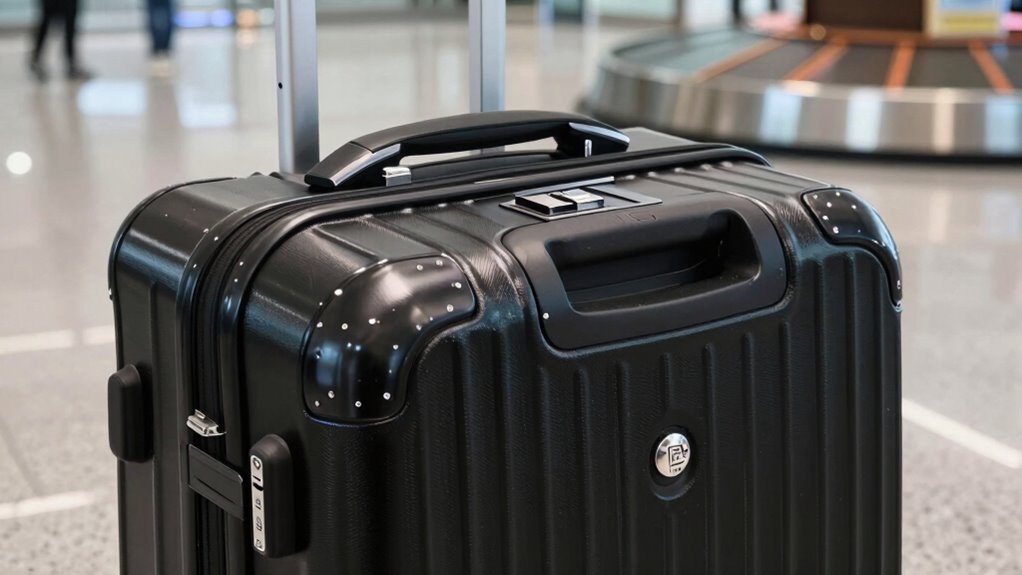

When choosing a premium carry-on suitcase, focus on size, weight, and durability—these are the specs that truly impact your travel experience. Make sure it fits airline size limits, isn’t too heavy when packed, and is made from sturdy materials like polycarbonate or aluminum. Security features like TSA locks add peace of mind, and mobility options, such as four-wheel spinners, boost convenience. For details on key specs you can skip, keep exploring to find what really matters.
Key Takeaways
- Focus on size, weight, and material to ensure compliance with airline carry-on restrictions and durability.
- Prioritize security features like TSA-approved locks for safe and hassle-free international travel.
- Check expandable features if extra space might be needed, but verify size limits when expanded.
- Opt for four-wheel spinner mobility for better maneuverability in busy airports.
- Ignore aesthetic details if they compromise essential specs like durability, security, or weight.
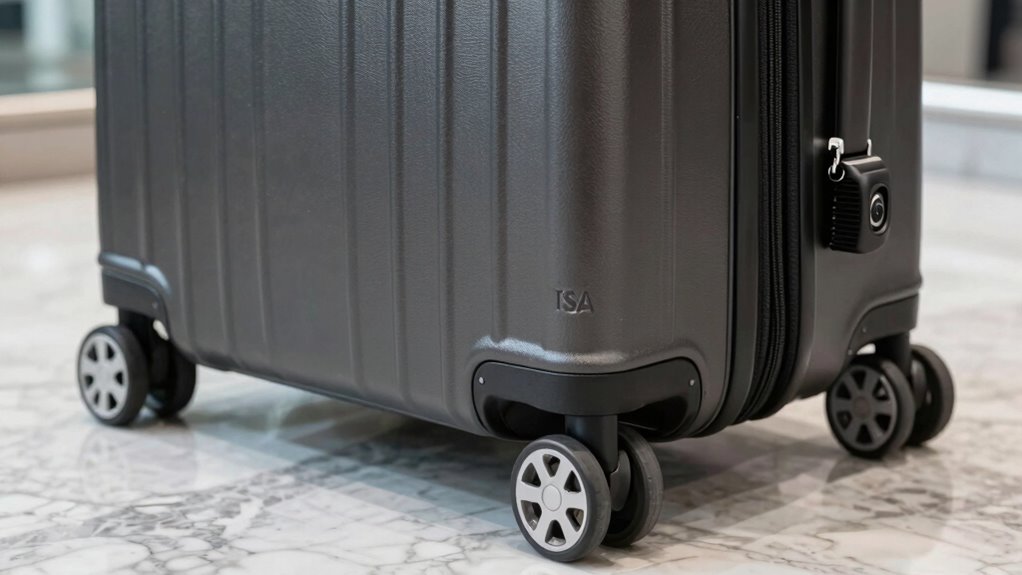
When choosing a carry-on suitcase, understanding its specifications is vital to guarantee it meets airline requirements and suits your travel needs. One of the first features to consider is whether the suitcase has expandable features. An expandable carry-on provides extra room when you need it, which is perfect for those who tend to bring back souvenirs or pack more items than initially planned. However, keep in mind that some airlines have strict size limits for carry-ons, so if you’re planning to expand, double-check the maximum dimensions allowed. An expandable feature can be a real advantage, giving you flexibility without sacrificing compliance. It’s also wise to look for a suitcase that has a sturdy zipper or a reliable locking mechanism to prevent accidental openings during transit.
Another key component to consider is the TSA lock. This lock allows TSA agents to open and inspect your luggage without damaging it, which is essential for international travel. Not all carry-ons come with a TSA lock, so if security is a priority, opt for one equipped with this feature. It offers peace of mind, knowing that your belongings are secured but accessible to authorized personnel. Be sure the lock is easy to operate but secure enough to deter theft. Some TSA locks are built into the suitcase’s zipper pulls, while others are integrated into a combination lock mechanism—choose whatever suits your preference and comfort level.
Size and weight are also fundamental specifications. Your carry-on should fit comfortably in the overhead compartment and meet airline size restrictions—typically around 22 x 14 x 9 inches, including wheels and handles. Lightweight materials like polycarbonate or aluminum can help reduce overall weight, making it easier to lift and maneuver through crowded airports. Durability is equally important; look for features like reinforced corners, sturdy handles, and high-quality zippers to withstand the rigors of travel. Additionally, understanding the importance of projector contrast ratio can help you select luggage with better structural integrity and visibility in different lighting conditions.
Finally, consider the overall design and mobility features. Four-wheel spinners offer greater maneuverability, especially in tight spaces, while two-wheel models might be more durable and easier to control on uneven surfaces. The handle system should extend smoothly and lock securely at different heights. By paying attention to these specs—expandability, TSA lock, size, weight, and mobility—you’ll select a carry-on that not only complies with regulations but also enhances your travel experience with convenience and security.
Frequently Asked Questions
What Is the Ideal Weight for a Carry-On Suitcase?
You should aim for a carry-on suitcase that weighs around 4 to 6 pounds, so it doesn’t add unnecessary bulk or weight to your packing. This allows you to maximize your travel accessories and packing strategies without exceeding airline weight limits. Keep your suitcase lightweight, and you’ll find it easier to navigate airports and stay within restrictions, making your travel experience smoother and more efficient.
How Durable Are Different Suitcase Materials?
Different suitcase materials vary in durability. Hard-shell polycarbonate offers excellent impact resistance and flexibility, making it a top choice for durability. Aluminum cases provide superior strength but can be heavier and prone to dents. Soft-shell fabrics like ballistic nylon or polyester excel in lightweight flexibility and resistance to tears. When considering material comparison, durability factors such as material strength, impact resistance, and flexibility help you choose a suitcase that withstands rough handling.
Do Expandability Features Compromise Suitcase Strength?
You’ll find that expandability features do involve some trade-offs, but they’re often minimal. Studies show that lightweight, flexible materials like polycarbonate maintain strength even with added capacity. Material flexibility allows for expansion without substantially compromising durability, especially if designed with sturdy zippers and reinforced seams. So, while expanding might slightly reduce strength, quality construction ensures your suitcase remains resilient, and you gain extra packing space without major compromises.
What Are the Best Lock Types for Security?
You should choose TSA-approved locks for ideal security and airport compliance. These locks allow TSA agents to open and inspect your luggage without damage. Biometric locks are also a great option, offering quick access through fingerprint recognition. Both types provide peace of mind during travel, ensuring your belongings stay secure. Opt for these lock types to balance convenience and security, making your travel experience smoother and safer.
How Do Wheel Types Affect Maneuverability?
Did you know that spinner wheels can reduce suitcase weight by up to 15%? You’ll notice that spinner wheels and rubber tires greatly enhance maneuverability. Spinner wheels rotate 360 degrees, allowing effortless steering, especially in tight spaces. Rubber tires absorb shocks and provide smoother rides on uneven surfaces. So, choosing a suitcase with spinner wheels and durable rubber tires makes steering airports, sidewalks, and cobblestone streets much easier and less stressful for you.
Conclusion
When choosing a carry-on, paying attention to the right specs can make your travel smoother. While some features seem tempting, others might just be a whisper of unnecessary fuss. Focus on what truly matters—durability, size, and ease of maneuvering—and let the rest gently fade into the background. With the right suitcase, you’ll glide through airports with confidence, turning travel hassles into effortless journeys. After all, the best luggage feels like an extension of your own ease.