When choosing premium walking shoes, focus on orthotic compatibility, waterproof materials, and support features like cushioned insoles and good arch support. These elements help prevent discomfort and injuries, especially on uneven terrain or in bad weather. Durability, grip, and lightweight design also matter, but flashy styles or minor features can often be overlooked. To make certain your feet stay healthy and comfortable, consider these key specs; the details behind each can reveal what truly improves your walk.
Key Takeaways
- Prioritize orthotic compatibility with removable insoles and wide interiors for proper support and comfort.
- Look for waterproof materials like Gore-Tex or treated leather to stay dry in all weather conditions.
- Ensure cushioned insoles, arch support, and a flexible, durable outsole to enhance comfort and stability during walks.
- Focus on lightweight, breathable shoes with good grip and terrain suitability to prevent fatigue and injuries.
- Balance essential features with overall comfort and support, and consider design elements that promote foot health.
Are you wondering what to look for in the perfect walking shoes? Finding the right pair isn’t just about style or brand; it’s about the features that support your feet and keep you comfortable mile after mile. One of the most important specs to consider is orthotic compatibility. If you wear orthotics, you’ll want shoes that can accommodate them without sacrificing fit or comfort. Look for shoes with removable insoles or a wide enough interior to fit your custom inserts. This guarantees your orthotics can work effectively, providing the support and alignment your feet need. Not all shoes are created equal in this regard, so checking the design for orthotic compatibility can make all the difference in preventing discomfort or injury during extended walks. Additionally, selecting shoes with proper ventilation can help manage moisture and prevent fungal issues, especially in humid conditions.
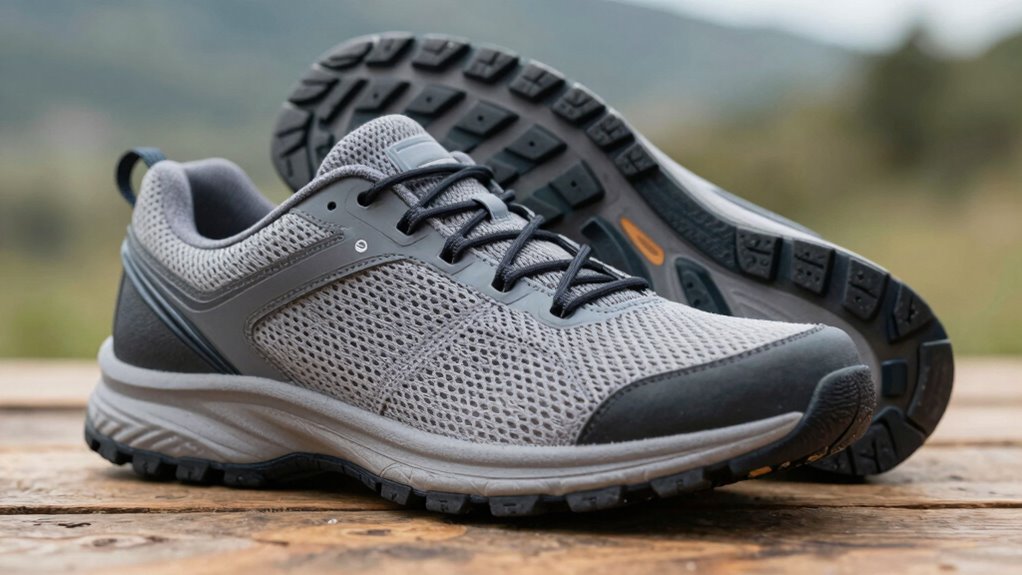
Another key feature to consider is waterproof materials. If you enjoy walking in all weather conditions or live in a region with frequent rain, waterproof shoes are essential. Shoes made from waterproof materials like Gore-Tex or treated leather prevent water from seeping in, helping to keep your feet dry and comfortable. This not only boosts your walking experience but also protects your feet from blisters, cold, and fungal infections caused by dampness. Waterproof shoes are especially beneficial for outdoor walks, trail adventures, or any situation where moisture is unavoidable. Keep in mind that some waterproof materials can be less breathable, so balance your need for dryness with ventilation to avoid sweaty, uncomfortable feet.
Waterproof shoes keep your feet dry and comfortable in all weather conditions.
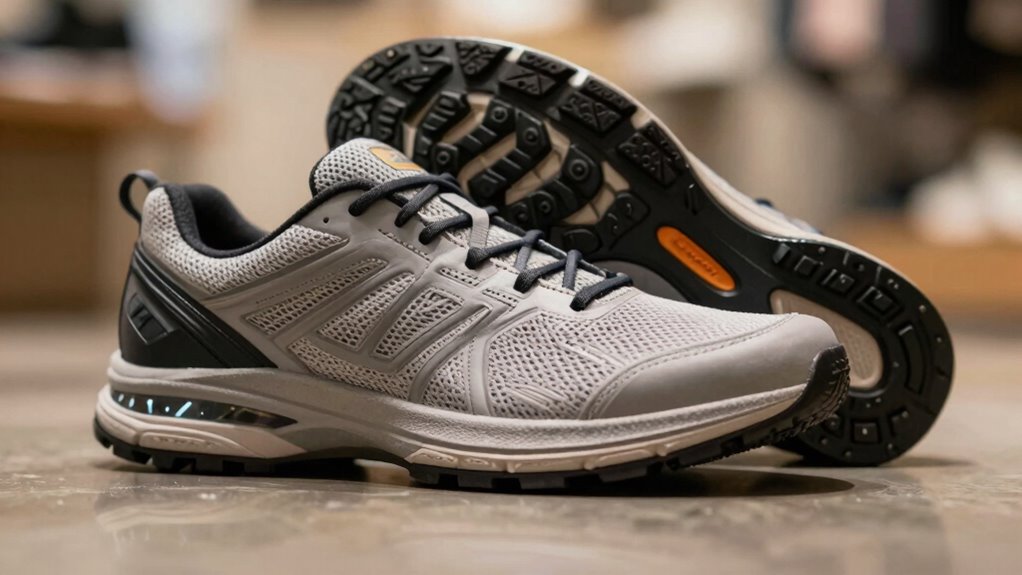
Beyond orthotic compatibility and waterproof features, pay attention to other specs that impact performance. For example, look for cushioned insoles that offer shock absorption, especially if you walk on hard surfaces. Good arch support can help prevent fatigue and overuse injuries. The outsole’s grip and durability are also vital, especially if you’ll be walking on uneven terrain. Lightweight construction matters too—walking shoes shouldn’t weigh you down or cause fatigue after hours on your feet. Flexibility in the forefoot allows natural movement, making walking feel effortless. However, avoid overly stiff shoes, which can restrict your gait or cause blisters.
Ultimately, the perfect walking shoe combines essential features like orthotic compatibility and waterproof materials with other tailored specs that suit your walking habits. Don’t just settle for a stylish pair; prioritize comfort, support, and durability. When you choose shoes with the right specs, you’re investing in your foot health and making each step more enjoyable, no matter the conditions. Remember, the best walking shoes aren’t just about looking good—they’re about feeling good and supporting your active lifestyle every step of the way. Maintaining proper ventilation and sanitation is also key to prolonging the lifespan of your footwear and ensuring foot health over time.
Frequently Asked Questions
How Do I Choose the Right Walking Shoe Size?
To select the appropriate walking shoe size, start with accurate shoe fitting by measuring your foot size regularly. Use a size measurement tool or visit a professional to guarantee precision. When trying on shoes, make sure there’s about a thumb’s width of space at the toe and that the shoes fit snugly around your heel. Remember, sizes can vary between brands, so always double-check measurements before buying.
Are Expensive Shoes Always Better for Walking?
Not necessarily. While expensive shoes often have better brand reputation and material durability, that doesn’t guarantee they’re better for walking. Focus on comfort, fit, and proper support instead. Cheaper options can suffice if they meet your needs, but investing in high-quality shoes can pay off in durability and comfort over time. Ultimately, choose shoes that fit well and support your walking style, regardless of price.
What Are the Signs My Shoes Need Replacement?
When your shoes show signs like worn-out heel cushioning and diminished arch support, it’s time to replace them. If you notice uneven wear, increased discomfort, or persistent aches after walking, those are clear signals. Shoes should provide proper heel cushioning and arch support to keep your feet comfortable and supported. Don’t ignore these signs; your feet deserve fresh, supportive shoes to prevent pain and injury.
How Do Walking Shoes Help Prevent Injuries?
Walking shoes help prevent injuries by providing proper arch support and cushioning technology, which reduce strain on your feet and joints. When your shoes support your arches, you lessen the risk of pain and overuse injuries. The cushioning absorbs impact, protecting your knees and hips during each step. Wearing shoes with these features guarantees a comfortable, stable walk, decreasing the chance of blisters, sprains, or stress fractures.
Can I Wear Walking Shoes for Running?
You can wear walking shoes for short runs or light jogging, but they’re not ideal for marathon training or trail running. Walking shoes lack the cushioning, support, and flexibility needed for running’s impact and varied terrain. For extended runs or trail adventures, investing in proper running shoes guarantees better performance and injury prevention. Stick to shoes designed for running to keep your feet comfortable and protected during intense activities.
Conclusion
Now that you know which walking shoe specs truly matter, you’re equipped to pick the perfect pair. Remember, not every feature is a deal-breaker—sometimes, it’s about finding what feels right for you. Think of specs as a map; some details guide you, while others are just scenery. Trust your instincts, focus on what enhances your walk, and step confidently forward—because the best shoe is the one that makes every stride feel like a breeze.