
Venue security screening slows you down mainly because of procedures like bag checks, metal detectors, and credential verification, all designed to prevent dangerous items from entering. Larger bags take longer to inspect, and additional searches or questions can add to wait times. While these measures may cause delays, they’re essential for everyone’s safety. Want to understand more about how security works and why it’s necessary? Keep exploring to discover the full picture.
Key Takeaways
- Thorough bag and personal item checks ensure prohibited items are detected, which can extend the screening process.
- Security personnel need time to verify credentials and inspect each attendee, adding to delays.
- Metal detectors and scanners may trigger false alarms, requiring additional searches and slowing entry.
- Peak times increase congestion, making security procedures take longer to process all attendees efficiently.
- Additional questions or searches by security staff can cause further hold-ups during the screening process.
Have you ever wondered how event organizers keep venues safe for everyone? One of the main methods they use is a thorough security screening process. This process is designed to prevent dangerous items from entering the venue while guaranteeing a smooth flow of attendees. It involves multiple layers, but two key components are access control and baggage checks. These steps are essential, yet they often slow you down, and understanding why can make the experience less frustrating.
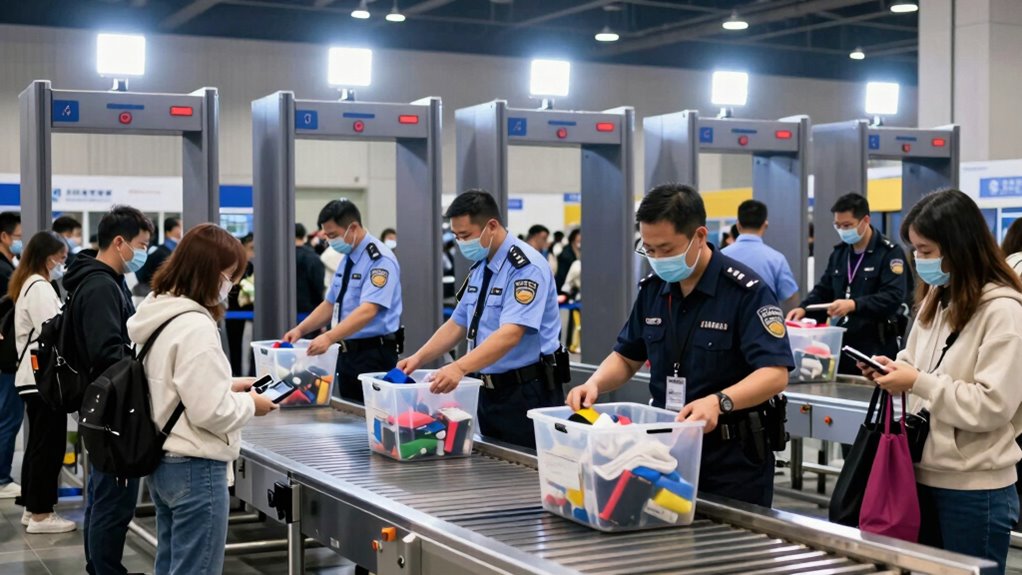
Access control is the first line of defense. When you arrive, you’ll typically need to show your ticket or identification to security personnel. They verify your credentials and check that you’re authorized to enter the venue. This process helps prevent unauthorized access and guarantees only ticket holders pass through. Sometimes, you might encounter metal detectors or scanners that detect prohibited items. Security staff might also ask you to open your bags or pockets for visual inspection. While these measures are *crucial* for safety, they require time and can create lines, especially during peak entry times. The goal is to be thorough without causing unnecessary delays, but it inevitably adds a few minutes to your wait.
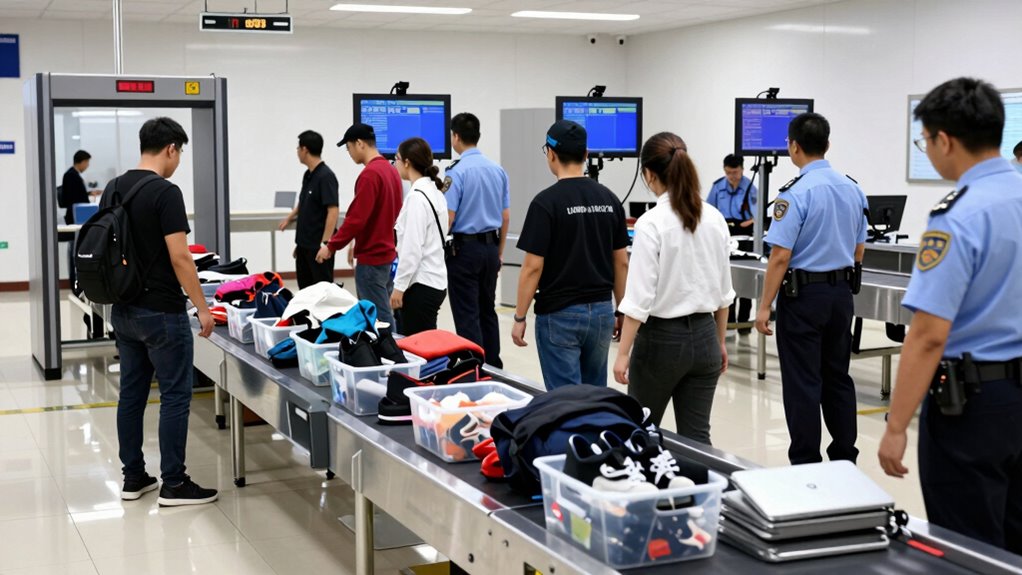
Baggage checks are another *vital* part of security screening. Attendees are often asked to place their bags on conveyor belts or in designated containers for inspection. Security personnel look for weapons, illegal substances, or other prohibited items. This process can be time-consuming, especially if many people arrive simultaneously. Larger bags or backpacks take longer to inspect, and sometimes security officers need to ask you questions or perform additional searches if they spot something suspicious. While these checks may seem like an inconvenience, they’re *crucial* for maintaining a safe environment. They’re designed to catch potential threats before they reach the event space.
Both access control and baggage checks are necessary to prevent threats and guarantee everyone’s safety, but they inherently add time to your entry process. The key to a better experience is patience and understanding. Security teams aim to balance thoroughness with efficiency, but some delays are unavoidable. Knowing that these procedures are in place to protect you can help you stay calm and cooperative. Remember, arriving early can give you extra time to get through security without rushing. In the end, these measures are what keep the event safe and enjoyable for all attendees.
Frequently Asked Questions
What Are the Most Common Items Banned at Venues?
You’ll find that prohibited items like large bags, weapons, and outside food or drinks often get banned at venues. Security also bans substances like illegal drugs or banned substances, which can cause delays during screening. To speed things up, avoid bringing these items, as they can slow you down and lead to confiscation. Always check the venue’s specific list of banned substances and prohibited items before heading out.
How Can I Expedite the Security Screening Process?
To speed up the security screening process, arrive early and stay informed about pre screening procedures. You can expedite your way through by packing only permitted items and organizing your belongings for quick inspection. Passenger education is key—familiarize yourself with banned items and screening steps. By being prepared and attentive, you’ll reduce delays, making the process smoother for yourself and fellow attendees.
Are There Different Screening Procedures for VIPS?
Did you know VIPs often experience 30% faster screening? Yes, there are different procedures for VIP access, including special screening lines and dedicated personnel. These procedures aim to expedite the process and offer a more seamless experience. If you’re a VIP, you’ll likely go through a tailored security check, which minimizes delays and ensures your safety without the usual hassle.
What Technology Is Used in Modern Security Screenings?
Modern security screenings use advanced technology like metal detectors and baggage scanners to speed up the process. Metal detectors quickly identify concealed metal objects, while baggage scanners, such as X-ray machines, reveal contents inside bags. These tools help you pass through security efficiently, reducing delays. By relying on this technology, security teams can thoroughly screen everyone without causing unnecessary hold-ups, ensuring a smoother experience for you.
How Do Venues Handle Emergency Situations During Screening?
Think of the screening as a fortress gate, ready to open swiftly in emergencies. When needed, your venue activates evacuation protocols, guiding everyone out calmly and efficiently. Staff are trained like seasoned guards, knowing exactly how to respond and coordinate. They quickly implement emergency plans, ensuring safety without chaos. This preparedness keeps you protected, allowing a smooth and controlled exit during critical situations.
Conclusion
Understanding what slows down security screening helps you navigate the process smoothly. Think of it as a busy highway—sometimes, traffic slows due to a few bottlenecks, but knowing where they are makes the journey easier. By being prepared, keeping your items organized, and following instructions, you can breeze through like a swift river carving its path. Remember, these measures are in place to keep everyone safe, so a little patience goes a long way.