


The vital bathroom line safety rule that everyone learns too late is to maintain respectful distance from the person in front of you, ensuring privacy and reducing the risk of accidents or germ spread. Rushing or crowding increases falling and touching surfaces carelessly. Staying calm, giving enough space, and being aware of your surroundings can protect you and others. If you want to discover more safety tips, the key points you should know are right ahead.
Key Takeaways
- Maintain a respectful distance from the person in front to prevent accidental contact and privacy breaches.
- Avoid pushing or rushing, as this increases fall and injury risks in crowded bathroom lines.
- Keep hands to yourself and limit gestures to reduce discomfort and potential conflicts.
- Be alert to wet floors or spills to prevent slips and falls while waiting.
- Practice patience and courtesy to reduce anxiety and improve safety for everyone in line.

Sckee Camping Toilet, Portable Toilet for Adults, Portable Travel Folding Toilet with Lid and Paper Holder, Compact Potty for Car, Camp Toilet Portable Toilet for Camping, Hiking,Truck, RV, Beach
🏕️ Heavy-Duty ABS Construction for Rugged Adventures: Made of durable ABS plastic material, this toilet supports up to...
As an affiliate, we earn on qualifying purchases.
Why Bathroom Lines Can Be Risky: And How Safety Rules Help
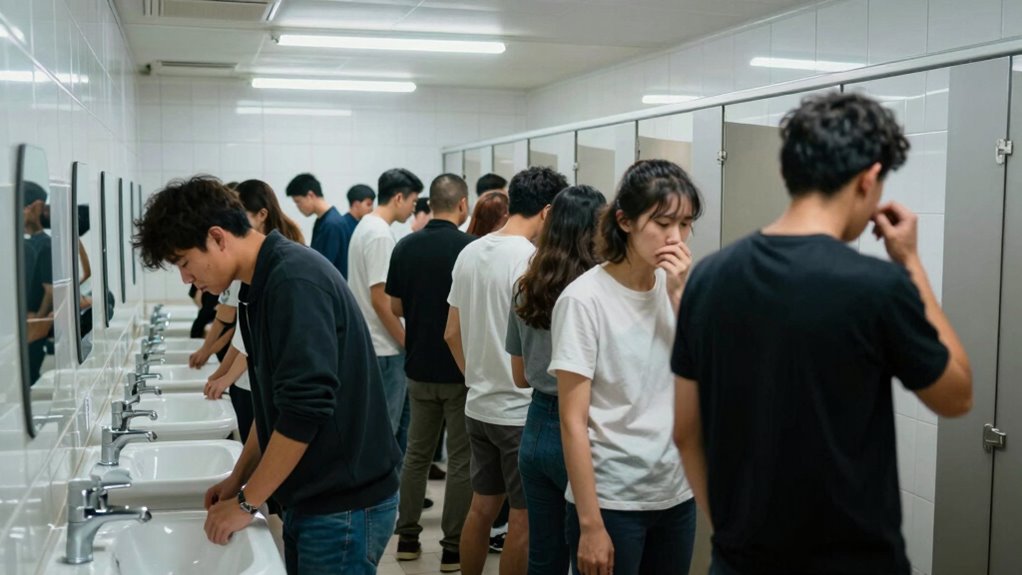
Bathroom lines can be risky because crowded conditions increase the chance of accidents or injuries. When you’re waiting in line, privacy concerns may arise, making you uncomfortable or hesitant to speak up about issues. Overcrowded spaces also challenge proper hygiene practices, as shared surfaces and limited access to soap and water can spread germs easily. Rushing to avoid long waits might lead you to skip handwashing or touch surfaces carelessly, heightening health risks. Additionally, the lack of personal space can cause accidental bumps or slips. Safety rules help mitigate these risks by encouraging orderly behavior, respecting privacy, and promoting good hygiene. Being aware of these dangers ensures you stay alert and prepared, reducing the chance of injuries and maintaining cleanliness in crowded bathroom lines. Implementing crowd management strategies can further enhance safety and comfort for all users.

TRIPTIPS Upgrade Retractable Portable Toilet Travel Toilet Adjustable Height Camping Toilet Portable Potty for Adults Kids, Foldable Portable Toilet for Camping/Car
【HEIGHT ADJUSTABLE】Are you looking for a portable toilet that cater to everyone's needs at all times? TRIPTIPS retractable...
As an affiliate, we earn on qualifying purchases.
The One Bathroom Line Safety Rule You Need to Know

To stay safe while waiting in line, the most important rule to remember is to maintain a respectful distance from the person in front of you. This minimizes privacy concerns and reduces the chance of accidental contact, which can spread germs and compromise hygiene practices. Keep your hands to yourself and avoid unnecessary gestures that invade personal space. To emphasize, here’s a quick comparison:
| Respectful Distance | Privacy & Hygiene Impact |
|---|---|
| Keeps germs away | Protects personal info |
| Prevents accidental contact | Maintains comfort |
| Promotes safety | Supports hygiene habits |
Additionally, maintaining an appropriate contrast ratio can help create a comfortable environment by ensuring adequate lighting and visibility, which is especially important in shared spaces like bathrooms.

HHuanwfer In-car Portable Toilet Collapsible Potty, Emergency Toilet, Temporary Potty For Outdoor Camping, Road Trips, Traffic Jams, Boating And Fishing
Material: Strictly selected PP material, comfortable, stable and durable. Maximum weight 300lb
As an affiliate, we earn on qualifying purchases.
How to Wait Safely in Bathroom Lines
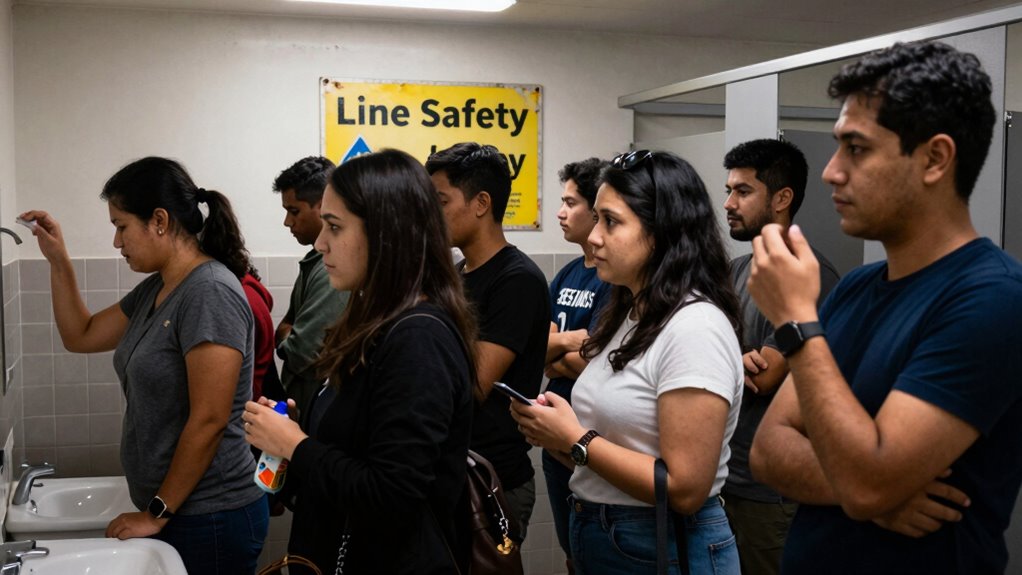
When waiting in bathroom lines, staying alert and respectful helps guarantee everyone’s safety and comfort. Practice good public etiquette by maintaining personal space and avoiding unnecessary contact. Be aware of line psychology—understanding how others behave can help you stay patient and calm. Don’t cut or push ahead; instead, focus on your surroundings and wait your turn politely. Keep conversations brief and courteous if speaking, and avoid loud noises or disruptive behavior. Recognize that others may be anxious or in a hurry, so remain calm and considerate. Being mindful of line behavior can help prevent conflicts and accidents. By respecting social norms and being mindful of line dynamics, you create a safer environment for everyone. Patience and awareness are key to steering through bathroom lines without incident.

TRIPTIPS 2025 New Upgrade Retractable Portable Toilet Foldable with Soft Cushion Height Adjustable Travel Toilet for Car Camping Toilet Porta Potty for Adults and Kids, Portable Toilet for Camping
【MORE COMFORTABLE】 TRIPTIPS portable toilet is designed with a soft and comfortable PU cushion, ensuring a pleasant experience...
As an affiliate, we earn on qualifying purchases.
Common Mistakes That Increase Your Risk in Bathroom Lines
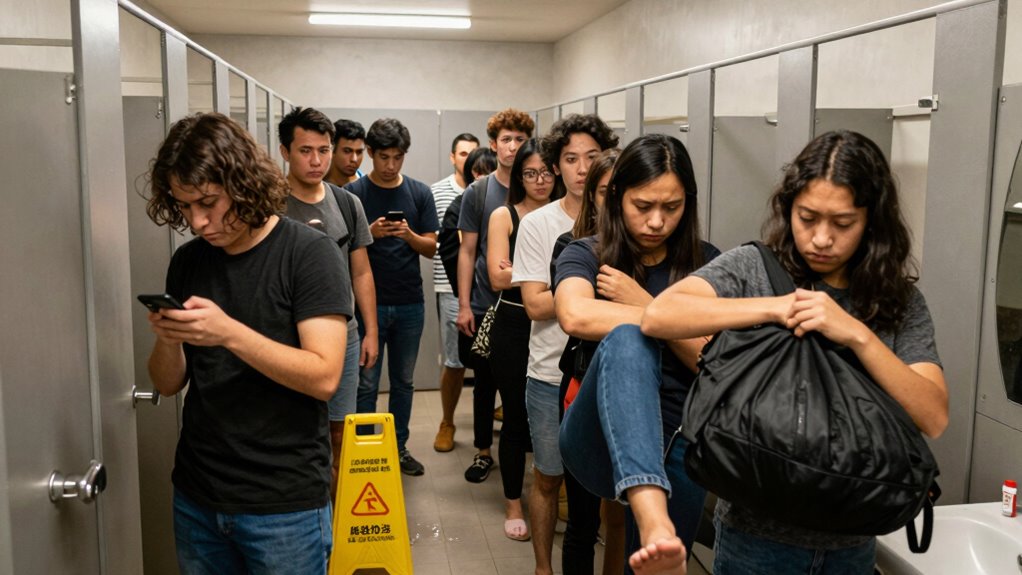
Many common mistakes in bathroom lines can put your safety at risk, often without you realizing it. One mistake is ignoring slip hazards, like wet floors or spilled liquids, which can cause falls or injuries. Rushing or standing in crowded spaces increases the chance of slipping or bumping into others. Additionally, neglecting privacy concerns can lead to uncomfortable or unsafe situations. For example, standing too close to others or not paying attention to personal space can cause embarrassment or unwanted contact. You might also be tempted to lean on walls or fixtures for support, but if they’re wet or unstable, that can be dangerous. Recognizing these mistakes helps you stay alert and avoid unnecessary risks, ensuring a safer experience in bathroom lines. Using load‑planning tools can help you better prepare and minimize time spent in crowded situations.
Top Tips to Stay Safe When Waiting in Bathroom Lines
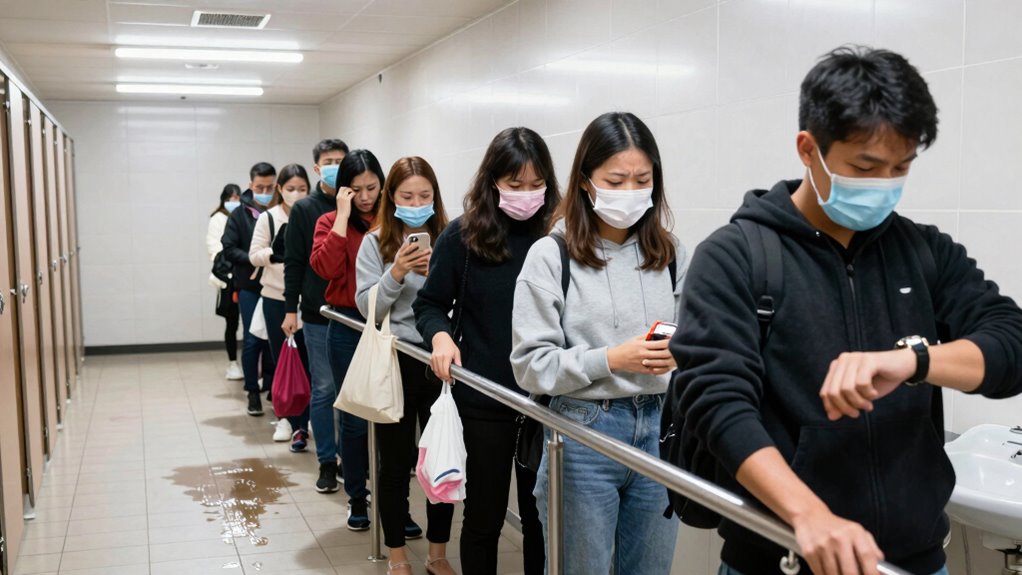
Staying safe in bathroom lines requires being proactive and aware of your surroundings. Practicing good restroom etiquette helps keep everyone comfortable and safe. To protect your personal hygiene and avoid accidents, consider these tips:
- Keep a respectful distance from others to prevent accidental contact.
- Avoid touching shared surfaces unnecessarily; use a paper towel or your elbow.
- Stay alert for any suspicious behavior or hazards around you.
- Wash your hands thoroughly and dry them properly before leaving, reducing germ spread.
- Remember that maintaining a calm and organized environment can reduce stress and prevent chaos during busy times in shared spaces.
Frequently Asked Questions
What Are the Legal Implications of Bathroom Line Accidents?
If you’re involved in a bathroom line accident, you could face liability concerns and legal consequences, especially if someone gets injured. You might be held responsible if negligence or unsafe conditions contributed to the incident. It’s essential to understand your rights and responsibilities to avoid legal trouble. Staying proactive about safety and following proper procedures can help protect you from potential lawsuits or liability issues in such situations.
How Do Age and Mobility Affect Bathroom Line Safety?
Age and mobility are the keys that unlock bathroom line safety. When you face age-related hazards and mobility challenges, you’re more vulnerable to slips, falls, or delays in emergencies. You may need accessible features like grab bars or priority access to stay safe. Recognizing these factors helps you plan better, ensuring you’re not caught off guard when waiting in line, and your safety remains a steady anchor amid the chaos.
Are There Specific Safety Rules for Children in Bathroom Lines?
Yes, there are safety rules for children in bathroom lines. You should always supervise your child closely, especially when they’re near mobility aids or in crowded areas. Keep them close, hold their hand if needed, and teach them to stay calm and aware of their surroundings. Make sure they understand the importance of staying in designated safe zones and avoid rushing or pushing in line to prevent accidents.
What Equipment Can Improve Safety in Long Bathroom Lines?
You can improve safety in long bathroom lines by using queue barriers to organize the flow and prevent crowding. Additionally, placing anti-slip mats on the bathroom floor reduces the risk of slips and falls, especially when floors are wet. These simple equipment additions help keep children and adults safe, ensuring the line remains orderly and accident-free. Properly managed lines create a safer environment for everyone involved.
How Can Establishments Better Enforce Bathroom Line Safety Rules?
Like a wise old owl overseeing the forest, you can enforce bathroom line safety rules through vigilant queue management and clear signage visibility. Regularly monitor lines to prevent overcrowding, and place eye-catching signs reminding patrons of safety protocols. Train staff to gently enforce rules and communicate expectations. By actively supervising and making safety information prominent, you create a safer environment, reducing risks and ensuring everyone feels secure while waiting.
Conclusion
Next time you find yourself in a bathroom line, remember this safety rule—it’s like spotting a hidden sign in a busy street. By staying alert and following simple tips, you can avoid accidents, just like accidentally catching a glimpse of a safety net amid chaos. Sometimes, safety isn’t obvious until you need it most. So, stay aware, stay safe, and let that quiet moment in line remind you that a little caution can prevent a lot of trouble.