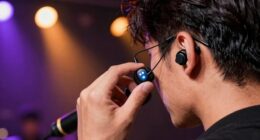
To keep your hearing protection clean, wipe it gently with a soft, damp cloth after each use, especially in dusty or dirty environments. Regularly check for damage and replace worn parts like filters or pads. Avoid soaking the gear or using harsh chemicals, and make certain it’s thoroughly dried before storage. Proper cleaning prevents dirt and wax buildup, maintains effectiveness, and extends its lifespan. Keep your gear in top shape—more tips can help you make this routine even easier.
Key Takeaways
- Clean hearing protection after each use, especially in dusty or dirty environments, to prevent dirt and bacteria buildup.
- Use a soft, damp, lint-free cloth and mild soap solution to wipe surfaces gently; avoid soaking or harsh chemicals.
- Regularly inspect gear for cracks, tears, or deformities and replace damaged items immediately.
- Remove and clean or replace filters and pads as recommended by the manufacturer to maintain protection quality.
- Store hearing protection in a clean, dry place and perform routine maintenance to prolong its lifespan.
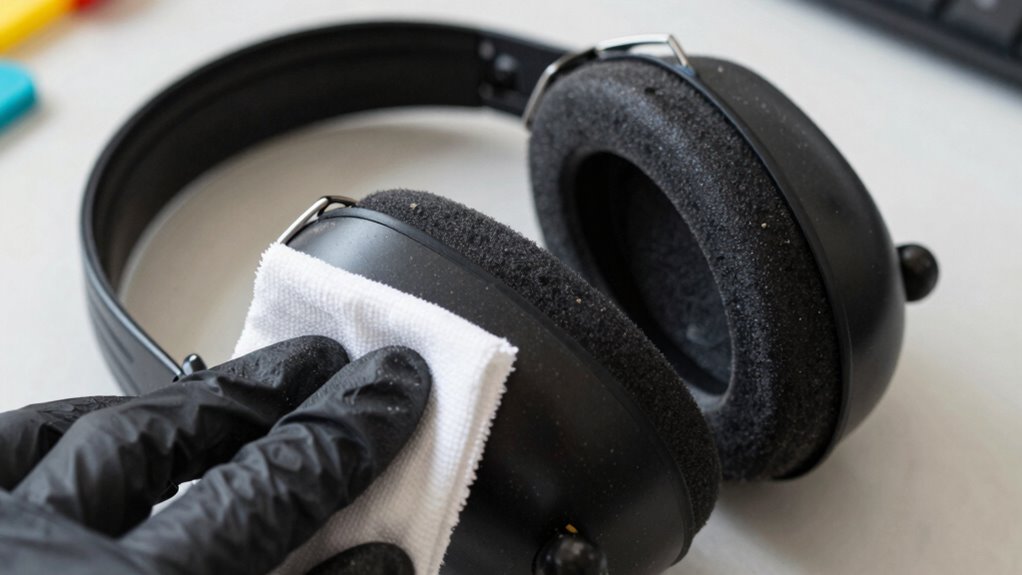
Keeping your hearing protection clean is fundamental to guarantee it works effectively and remains safe to use. Dirt, earwax removal, and bacteria can build up over time, diminishing the protective qualities of your gear and potentially causing infections. To keep your hearing protection in ideal condition, you need to pay attention to its cleaning frequency and method. Regular cleaning not only preserves its functionality but also ensures your health and safety aren’t compromised.
When it comes to earwax removal, it’s essential to be gentle. Earwax naturally accumulates in your ear canal and may transfer onto your hearing protection, especially if you frequently insert earplugs or earmuffs. If you notice a wax buildup on your device, clean it promptly. The key is to avoid aggressive scrubbing or using harsh chemicals that could damage the material. Instead, use a soft cloth or a damp, lint-free cloth to wipe down the surface. For stubborn wax or debris, a mild soap solution can be effective. Just make sure to thoroughly rinse and dry the device afterward.
The cleaning frequency depends on how often you use your hearing protection and in what environment. If you work in a dusty or dirty environment, you’ll need to clean your gear more often—perhaps after each use. In cleaner environments or for occasional use, cleaning every few days or weekly might suffice. Regular maintenance prevents dirt and wax from embedding deep into the material, which can be harder to remove over time. Additionally, understanding proper cleaning techniques for different materials can help preserve the integrity of your gear.
When cleaning, avoid soaking your hearing protection in water or cleaning solutions that aren’t recommended by the manufacturer. Excess moisture can damage certain materials, especially foam or electronic components. Instead, focus on surface cleaning, ensuring you reach all crevices where dirt might hide. For earmuffs with foam padding, avoid getting them overly wet, as this can degrade the material and reduce comfort. If your hearing protection has removable filters or pads, take them out and clean or replace them regularly according to the manufacturer’s instructions.
In addition to cleaning, inspect your hearing protection frequently for signs of wear or damage. Cracks, tears, or deformities can compromise its protective qualities. Replace damaged gear promptly to maintain safety. Keeping your hearing protection clean isn’t just about appearance; it’s a critical step in ensuring it continues to shield your ears effectively. Regular, careful cleaning combined with proper storage will extend the life of your equipment and keep your hearing safe for years to come.
Frequently Asked Questions
Can I Use Household Cleaners on My Hearing Protection?
You shouldn’t use household cleaners on your hearing protection because they can damage the material and compromise disinfectant safety. Many household cleaners contain harsh chemicals that may degrade the earplugs or earmuffs, reducing their effectiveness. Instead, opt for mild soap and water or manufacturer-recommended cleaning solutions. This guarantees your hearing protection stays clean, safe, and effective without risking damage or unsafe residues.
How Often Should I Replace My Hearing Protection?
You should replace your hearing protection at least once every 6 to 12 months, depending on how often you use it. Follow the replacement schedule and consider lifespan considerations, such as signs of wear, cracks, or reduced comfort. Regularly inspecting your earplugs or earmuffs guarantees they maintain proper protection and hygiene. If you notice any damage or diminished effectiveness, replace them sooner to keep your hearing safe.
Are There Specific Disinfectants for Cleaning Earplugs?
Imagine you’re preparing to protect your hearing during a noisy workday. You can use disinfectant options like alcohol wipes or a mild soap solution to clean earplugs effectively. These cleaning solutions help eliminate bacteria and dirt. Avoid harsh chemicals that could damage the material. Regularly disinfect your earplugs with appropriate cleaning solutions to keep them hygienic, safe, and in good condition, ensuring ideal hearing protection every time.
Can Dirty Hearing Protection Cause Ear Infections?
Dirty hearing protection can lead to ear infections because bacteria and fungi thrive on unclean surfaces. If you neglect proper hygiene practices, earwax buildup and dirt can transfer into your ear canal, increasing infection risk. Regularly cleaning your earplugs with appropriate disinfectants helps prevent bacteria growth, ensuring your ears stay healthy. Prioritize hygiene practices to keep your hearing protection clean and reduce the chance of ear infections.
Is It Safe to Wash Electronic Hearing Protectors?
Yes, it’s safe to wash electronic hearing protectors, but you should do it carefully. Moisture buildup from improper cleaning can damage the device and reduce its lifespan. Use a damp cloth or mild soap, avoiding submerging the electronics entirely. Make certain you dry the device thoroughly before use. Proper cleaning helps prevent ear infections and keeps your hearing protectors functioning effectively, extending their longevity.
Conclusion
Remember, clean hearing protection keeps your ears healthy, but dirty gear can lead to infections and discomfort. While you might think neglecting cleaning is harmless, it’s a small step that makes a big difference. Protecting your hearing isn’t just about wearing gear—it’s about maintaining it. So, stay vigilant, clean your protection regularly, and enjoy clear hearing for years to come. After all, what’s more important than safeguarding your most valuable sense?