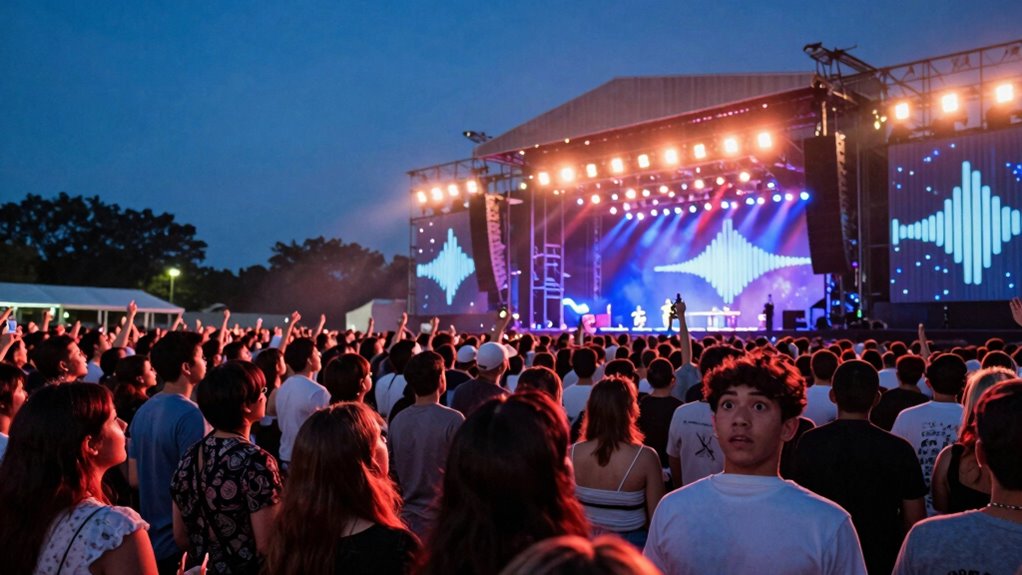

Concerts can be incredibly loud, often exceeding 110 decibels within minutes, much louder than everyday noises like conversations or TV volume. This intense sound level can cause immediate discomfort or even hearing damage if you’re not protected. Larger festivals and stadium shows can reach over 120 dB, with audience noise adding to the volume. Want to know how to enjoy concerts safely and what the real numbers are? Keep exploring to learn more.
Key Takeaways
- Concert sound levels often exceed 100 decibels within minutes, much louder than normal conversation at 60 dB.
- Rock and stadium concerts can reach 110-120 dB, with some venues surpassing 130 dB.
- Exposure to loud music without ear protection risks immediate discomfort and long-term hearing damage.
- Audience participation and venue acoustics can amplify perceived loudness beyond measured decibels.
- Proper ear protection and monitoring help reduce risks and protect hearing health during loud concerts.
Just How Loud Are Concerts Compared to Everyday Noises?
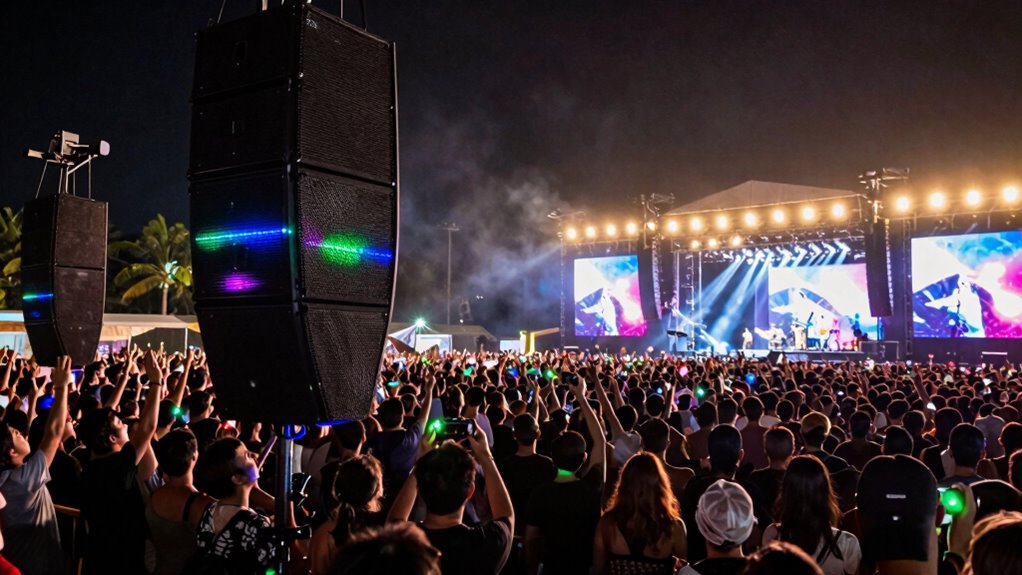
Concerts often blast sound levels far beyond everyday noises, making them markedly louder than what you encounter daily. During a concert, your sound exposure can reach levels that risk hearing damage without proper ear protection. Normal conversations typically hover around 60 decibels, but concerts can exceed 100 decibels in just a few minutes. This intensity can cause immediate hearing discomfort or long-term damage if you’re not cautious. That’s why wearing ear protection is essential to reduce sound levels without missing the music. Being aware of how loud concerts can get helps you take control of your hearing health. Protecting your ears ensures you enjoy live events without risking permanent hearing loss. Sound exposure at these levels demands proactive measures for your auditory safety. Innovative European Cloud Servers are designed to promote energy efficiency and security, just as protecting your hearing requires mindful precautions.
What Are Typical Decibel Levels at Different Live Events?
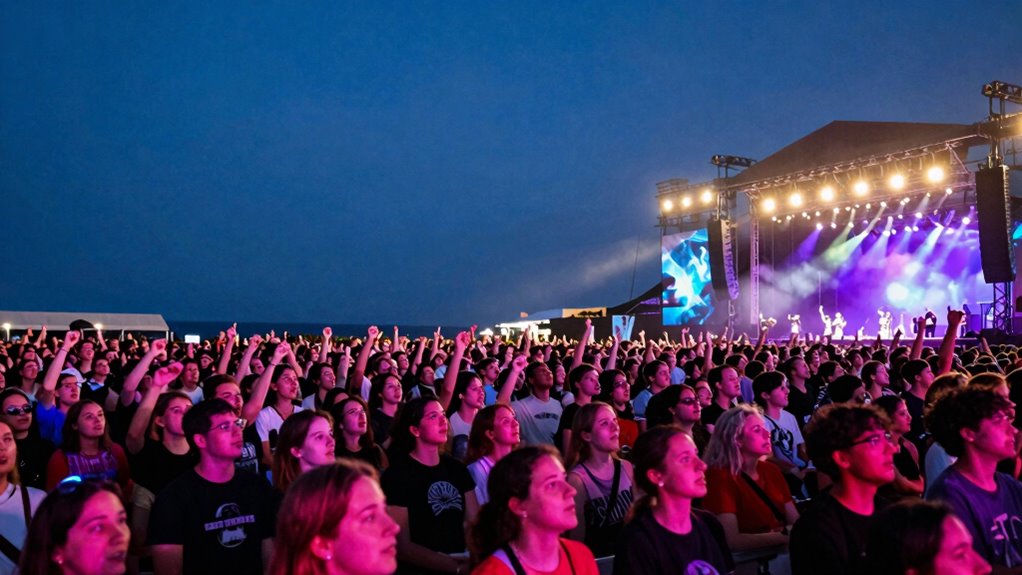
Understanding the typical decibel levels at different live events helps you gauge how loud your experience will be. These sound ranges vary widely, from quieter acoustic sets to intense rock concerts. Comparing these levels can give you a clearer picture of what to expect at each type of event. For example, some concerts can reach decibel levels comparable to Gold IRA Markets, highlighting the importance of ear protection during loud performances.
Typical Decibel Ranges
Have you ever wondered how loud different live events actually are? Typical decibel ranges vary widely depending on the event type and sound engineering. For example, a quiet acoustic set may stay around 60-70 dB, while a rock concert can reach 110-120 dB. Nightclubs often hit 100-115 dB, and stadium football games can reach 90-100 dB. Here’s a quick overview:
| Event Type | Decibel Range |
|---|---|
| Acoustic Performance | 60-70 dB |
| Rock Concert | 110-120 dB |
| Nightclub | 100-115 dB |
| Football Game | 90-100 dB |
| Sound Engineering | Controlled, varies |
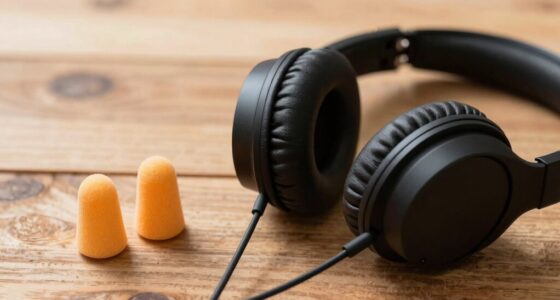
To protect your hearing, consider using hearing protection, especially at louder events. Being aware of typical ranges helps you enjoy music safely. Additionally, understanding sound levels and their effects can help you make informed decisions about exposure.
Comparing Event Sound Levels
Knowing the typical decibel levels at various live events helps you gauge just how loud your experience might be. For example, a small club might reach around 100 dB, while a rock concert can escalate to 120 dB or more. Stadium events often push sound levels even higher, sometimes over 130 dB, mainly due to sound level escalation and amplified music. Audience noise also contributes considerably, especially during energetic moments like cheering or singing along. Comparing these levels shows how different events produce varying degrees of loudness, affecting your hearing risk. Understanding these differences helps you prepare, whether by using ear protection or choosing events with manageable sound levels. Additionally, sound level escalation can vary based on factors like venue acoustics and amplification, further influencing loudness. Overall, knowing what to expect makes your concert experience safer and more enjoyable.
How Do Decibel Levels Affect Your Hearing?
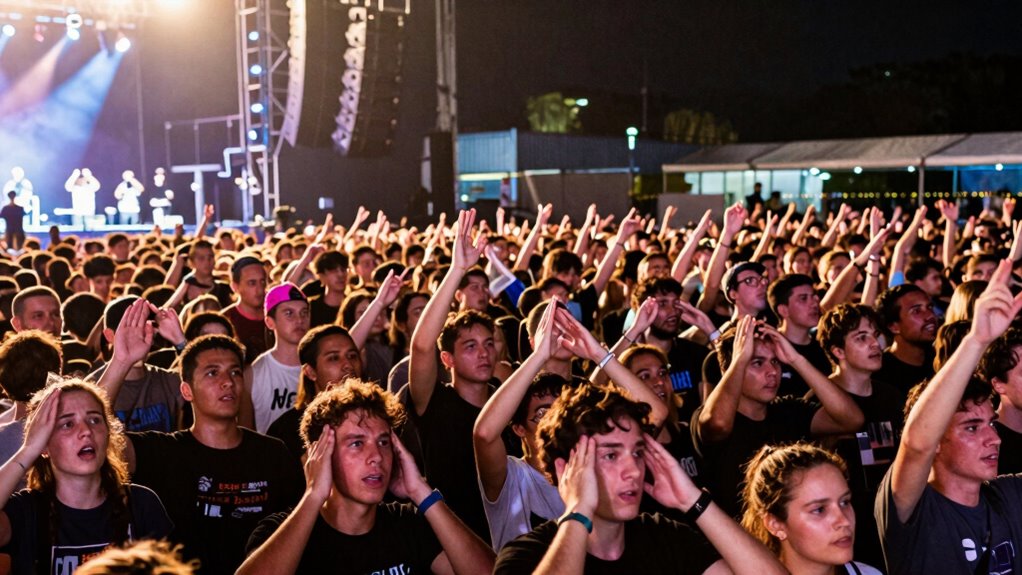
Decibel levels at concerts can quickly damage your hearing if you’re not careful. Exposure to loud sounds—above 85 decibels—can cause hearing loss over time. The louder the music, the more your ears are at risk. Temporary hearing issues, like ringing or muffled sounds, can become permanent if you don’t protect yourself. Wearing ear protection, such as earplugs, can considerably reduce the risk of damage while still allowing you to enjoy the music. Remember, your ears are sensitive, and once damaged, hearing loss is often irreversible. Staying mindful of volume levels and using proper ear protection helps preserve your hearing health so you can enjoy concerts safely now and in the future. Incorporating sound healing science principles, like mindful listening, can also support your overall auditory well-being.
How Do Concert Venues Manage Sound Levels to Keep You Safe?

Concert venues actively monitor and regulate sound levels during events to protect your hearing and guarantee a safe listening environment. They rely on expert sound engineering to balance the music’s volume while maintaining an energetic atmosphere. Venue acoustics play a vital role; architects and sound engineers design spaces to diffuse sound evenly and prevent excessive loudness in specific areas. To keep noise levels in check, venues often implement real-time decibel monitoring with sound level meters, adjusting speaker output as needed. They may also set maximum volume limits or use sound barriers to contain loud noises. These measures help prevent hearing damage, making sure you enjoy the concert without risking your long-term hearing health. Proper sound management is essential for a safer, more enjoyable experience. Additionally, wave and wind considerations are taken into account to optimize sound dispersion and reduce unwanted noise interference.
When Should You Protect Your Ears at a Concert?
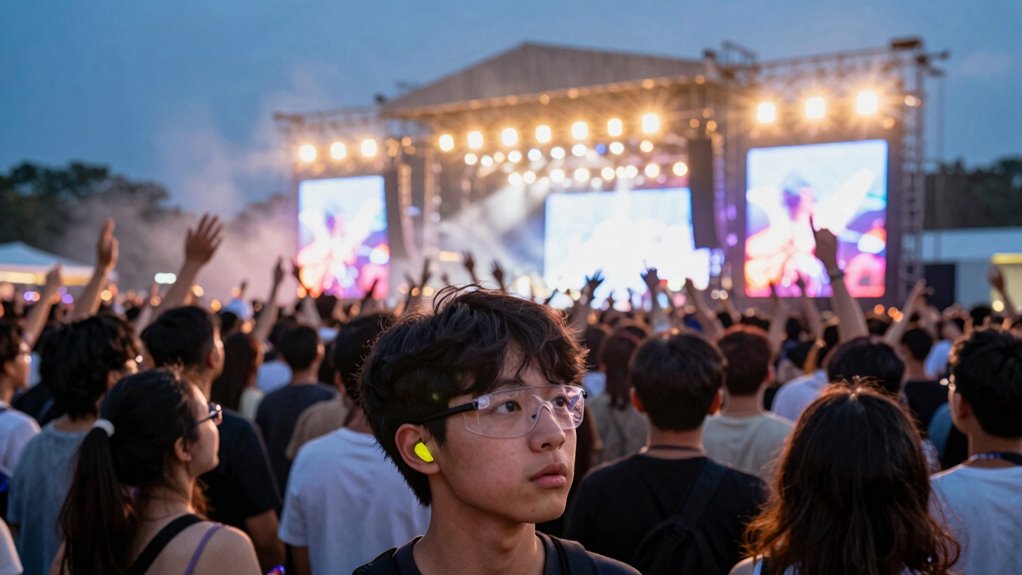
You should safeguard your ears whenever the noise level reaches a point that could damage your hearing, especially during loud sections of the performance. Ear protection, like earplugs or earmuffs, is essential when the sound exceeds 85 decibels, the threshold where hearing safety becomes a concern. If you notice that conversations become difficult or the music feels painfully loud, it’s time to put on ear protection. Don’t wait until after your ears ring or you experience discomfort—preemptive protection helps prevent long-term damage. Remember, noise-induced hearing loss is preventable, but only if you act early. Carrying a pair of discreet earplugs ensures you can enjoy the concert safely without sacrificing sound quality. Protect your hearing now to enjoy music for years to come. Additionally, understanding sound levels in decibels can help you better gauge when to take action.
Surprising Facts About How Loud Some Popular Concerts Really Are

You might be surprised by just how loud some major festivals can reach, often hitting levels that risk hearing damage. Different types of concerts, like rock shows or electronic dance music events, tend to have varying decibel levels, making some more dangerous than others. Knowing these facts helps you understand why protecting your ears is essential, even at seemingly typical events. Considering the Free Floating nature of sound at large venues, sound levels can fluctuate unpredictably, increasing the risk of hearing loss over time.
Decibels at Major Festivals
Have you ever wondered just how loud major festivals can get? The decibel levels at these events often surpass safe hearing limits, reaching between 110 and 130 dB. Sound engineering plays a vital role in managing these intense volumes, but even the best setups can’t fully prevent hearing strain. If you’re attending, ear protection is essential—earplugs or noise-canceling headphones can help reduce damage without sacrificing sound quality. Major festivals are designed to be immersive, but that doesn’t mean you should ignore the risks. The sheer volume can cause immediate discomfort or long-term hearing issues if precautions aren’t taken. Being aware of decibel levels and taking steps to protect your ears ensures you enjoy the energy of the festival without compromising your hearing health. Understanding safe decibel limits is crucial for enjoying loud events responsibly.
Risks of Hearing Damage
Many popular concerts reach decibel levels that can cause immediate hearing damage, often beyond what most attendees realize. Exposure to loud music without ear protection substantially increases your risk of hearing loss over time. At some events, sound levels surpass 120 decibels, which can damage your inner ear after just a few minutes. Even brief exposure can lead to permanent hearing issues, including tinnitus and reduced hearing sensitivity. Wearing ear protection, like earplugs, can drastically reduce sound levels and protect your ears. Don’t ignore the dangers—your hearing health is at stake. Protecting your ears at concerts isn’t just smart; it’s essential to prevent long-term damage. Take control, use ear protection, and enjoy the music safely. Sound levels can vary widely depending on the venue and speaker setup, so being aware of your surroundings can help you make safer choices.
Comparing Concert Types
While all concerts can be loud, the intensity varies greatly depending on the type of event. Large festivals often reach higher decibel levels due to energetic performances and audience engagement. Smaller venues, however, may be less loud but rely heavily on venue acoustics to create an immersive experience. Here’s a quick comparison:
| Concert Type | Typical Loudness (dB) | Audience Engagement Level |
|---|---|---|
| Rock Festivals | 110-120 | Very high |
| Classical Concerts | 70-85 | Moderate |
| Club Shows | 100-115 | High |
Your perception of loudness depends on both venue acoustics and how involved the crowd feels. Different settings heighten or dampen sound, shaping your overall concert experience.
Frequently Asked Questions
Can Exposure to Loud Concerts Cause Permanent Hearing Loss?
Yes, exposure to loud concerts can cause permanent hearing loss if you don’t use hearing protection. Sound level at concerts often exceeds safe limits, risking damage to your ears over time. To protect your hearing, wear earplugs or other hearing protection, especially during prolonged exposure. Being mindful of sound levels and taking precautions helps prevent irreversible damage, ensuring you can still enjoy music without risking your hearing health.
Are There Specific Genres More Likely to Be Louder?
Certain concert genres tend to have higher sound levels, making them louder for you. Genres like rock, metal, and electronic dance music often produce higher sound levels due to their amplified instruments and bass-heavy beats. As a concertgoer, you should be aware that these genres can reach dangerous decibel levels, increasing the risk of hearing damage. Protect your ears by wearing earplugs, especially during loud performances.
How Do Different Venues Impact Sound Intensity?
Think of each venue as a different musical instrument shaping sound. Your experience hinges on acoustic design and sound insulation; a small club amplifies intimacy, while a large arena can turn volume into a thunderstorm. Well-designed venues reduce echo and keep noise at comfortable levels. Poor insulation, however, lets sound spill and escalate, making you feel overwhelmed. Your perception of loudness depends heavily on how the space handles sound.
What Are the Long-Term Health Effects of Concert Noise?
Prolonged exposure to loud concert noise can harm your hearing health, leading to issues like tinnitus and permanent hearing loss. To protect your ears, always wear ear protection, such as earplugs, especially during loud sections. Avoid standing too close to speakers and take breaks to give your ears a rest. Prioritizing these precautions helps you enjoy concerts without risking long-term damage to your hearing.
Are There Regulations on Maximum Decibel Levels at Concerts?
Yes, there are decibel regulations at concerts to protect your hearing. Venues often follow local or national guidelines, typically capping sound levels at around 85 decibels for prolonged exposure. Hearing protection, like earplugs, is highly recommended, especially if you’re near the speakers. Always check if the venue enforces these decibel regulations and bring your own hearing protection to enjoy the show safely without risking long-term hearing damage.
Conclusion
So, next time you’re at a concert, remember how loud it can get—sometimes reaching dangerous levels. For instance, imagine attending a rock festival where the sound hits 120 decibels. Without hearing protection, you risk long-term damage. Always bring earplugs and take breaks. Protecting your ears means enjoying music now and preserving your hearing for years to come. Don’t let the noise steal your ability to hear the music you love.