When filming in public, always respect others’ space by keeping a respectful distance and choosing angles that don’t block views. Stay aware of your surroundings and adjust your position when needed so you don’t obstruct anyone’s line of sight. Use longer lenses for close-up shots while maintaining proper space, and ask permission when filming individuals. Practicing these simple filming etiquettes creates a respectful environment—continue exploring to learn more about capturing clips considerately.
Key Takeaways
- Maintain a respectful distance from subjects to avoid intrusion and ensure comfort.
- Choose angles that do not obstruct others’ view or block sightlines.
- Be aware of your surroundings and adjust positioning to prevent blocking people’s view.
- Use longer lenses to capture close-up shots without moving closer or disrupting the scene.
- Ask for permission when filming individuals to demonstrate courtesy and respect.

When you’re filming in public or private spaces, practicing good etiquette isn’t just polite—it’s essential for maintaining a respectful environment. One of the key aspects to contemplate is how you choose your camera angles. You want to capture your subject clearly, but you also need to be mindful of the people around you. Avoid shooting from angles that intrude on others’ personal space or block their view. For example, shooting from a low or high angle can sometimes be distracting or invasive if it’s not done thoughtfully. Instead, aim for angles that respect the surroundings and the people within them. This shows you’re considerate of others’ experience and helps prevent your footage from becoming a nuisance.
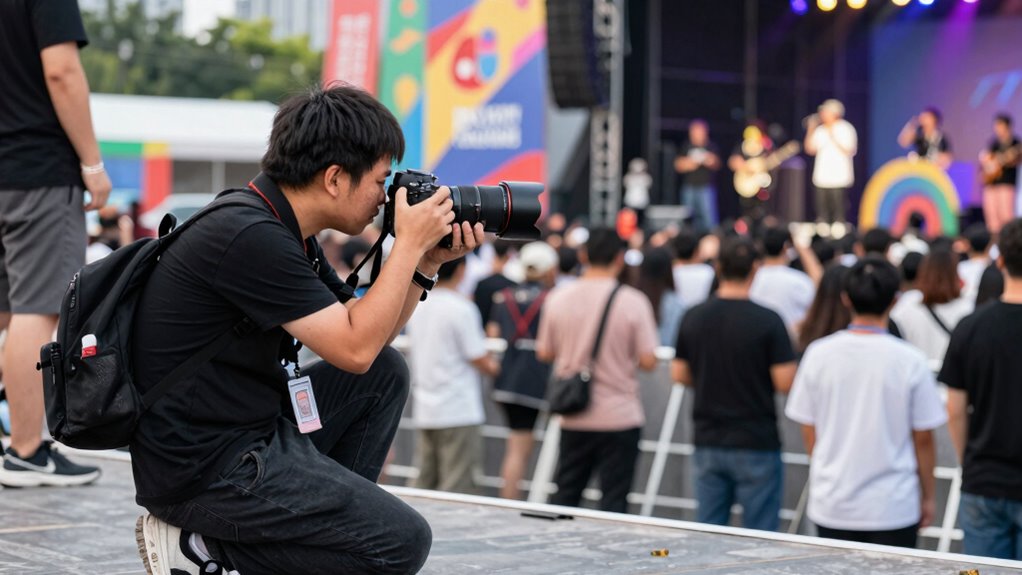
Maintaining a respectful distance is equally important. You don’t want to stand too close, making others feel uncomfortable or invaded. Keep enough space so people don’t feel crowded or watched without permission. This respectful distance varies depending on the setting, but generally, staying a few feet back from your subject is a good rule of thumb. If you’re filming a public event, stay aware of how close others are and adjust accordingly. The closer you get, the more likely you are to disturb or block someone’s view. If you’re filming a person, ask for permission beforehand when appropriate, and always keep a reasonable distance to avoid making them feel scrutinized.
Being aware of your surroundings helps you anticipate when your camera might accidentally block someone’s view. If you notice someone trying to see past you, adjust your position or angle to avoid obstructing their line of sight. Using a longer lens can help you maintain a respectful distance while still capturing close-up shots. When you’re aware of how your camera angles and distance impact others, you create a more harmonious environment. This approach not only shows respect but also enhances the quality of your footage, as your shots will feel more natural and less invasive. Additionally, understanding the importance of respectful filming can help foster positive interactions with those around you.
Frequently Asked Questions
Can I Film in Private Venues Without Permission?
You generally can’t film in private venues without permission, as privacy concerns and consent requirements are essential. The venue owner or organizer has the right to set rules, and filming without approval might violate privacy rights or legal regulations. Always ask for permission beforehand, respect any restrictions, and be aware that filming without consent could lead to legal issues or being asked to stop. Respecting privacy ensures smooth filming experiences.
What Equipment Minimizes Obstruction for Others?
To minimize obstruction, choose compact camera angles and lightweight equipment choices. Use small, unobtrusive devices like handheld gimbals or slim smartphones with wide-angle lenses. Position your camera off to the side or at a higher angle, avoiding blocking the main view. By selecting equipment that’s easy to move and set up discreetly, you guarantee your filming doesn’t interfere with others’ experience while still capturing great clips.
How Should I Handle Filming During Crowded Events?
When filming during crowded events, you should prioritize spectator awareness and follow proper filming etiquette. Move to less congested areas if possible, and avoid blocking the view of others. Keep your device steady and avoid excessive movement, so you don’t distract or disrupt the crowd. Always be considerate, ask for permission if needed, and stay mindful of your surroundings. Your respectful approach enhances everyone’s experience while capturing great clips.
Are There Specific Rules for Drone Filming in Public Spaces?
Yes, there are specific rules for drone filming in public spaces. You need to follow airspace regulations, which vary by location, and make certain you have the proper drone licensing if required. Always check local laws before flying, avoid restricted zones like airports or government buildings, and maintain visual line of sight. Respect people’s privacy and avoid flying over crowds without permission to ensure safe, legal drone filming.
What Are the Legal Implications of Filming in Public?
When filming in public, you need to be aware of privacy concerns and consent requirements. Legally, you can generally record in public spaces, but you shouldn’t invade someone’s privacy or record them in private situations without permission. Always respect people’s rights, avoid capturing sensitive activities, and be cautious of local laws. If unsure, seek consent to avoid potential legal issues related to privacy violations.
Conclusion
Remember, mastering filming etiquette isn’t just about being polite—it’s about wielding your camera like a wand of disruption, carefully avoiding the sacred sightlines of others. After all, who wouldn’t want their precious moment to be overshadowed by someone’s shaky footage or intrusive zoom? So go ahead, film away—just don’t forget that in this grand theater of life, sometimes the best shot is the one you *don’t* take. Happy filming, at everyone’s expense.