To handle smoking or vaping nearby without starting drama, stay calm and communicate politely. Respectfully ask the person if they can smoke elsewhere, explaining how it affects your health or comfort without sounding confrontational. Set clear boundaries and stick to them calmly if they continue. Focus on maintaining your peace, and if needed, walk away or seek support. Keeping responses kind and consistent helps maintain harmony—keep going to learn more ways to manage this smoothly.
Key Takeaways
- Politely and calmly ask others to smoke or vape elsewhere, emphasizing your health and comfort.
- Set clear personal boundaries and communicate them assertively without hostility.
- Stay calm and centered, using respectful language to prevent escalation during interactions.
- Recognize when to walk away or seek support if boundaries are ignored or conflict arises.
- Practice patience and consistency in addressing the issue to foster understanding and maintain peace.
Why Handling Smoking or Vaping Matters to You

Handling smoking or vaping nearby is important because secondhand smoke and vapor can harm your health. Exposure can lead to respiratory issues, worsen allergies, and increase the risk of heart disease. Protecting yourself from these health implications is essential for your well-being. Additionally, considering your personal preferences plays a role; if you prefer a smoke-free environment, addressing the situation helps create a comfortable space for you. Recognizing that you have the right to prioritize your health and comfort encourages you to manage the situation calmly and assertively. Being proactive about managing nearby smoking or vaping ensures you maintain a healthier environment and respect your boundaries. Understanding how contrast ratio affects image quality can also inform your expectations for visual clarity in your environment, emphasizing the importance of a healthy space. Your health and comfort should always come first in these situations.
Recognize When Someone Is Smoking or Vaping Near You
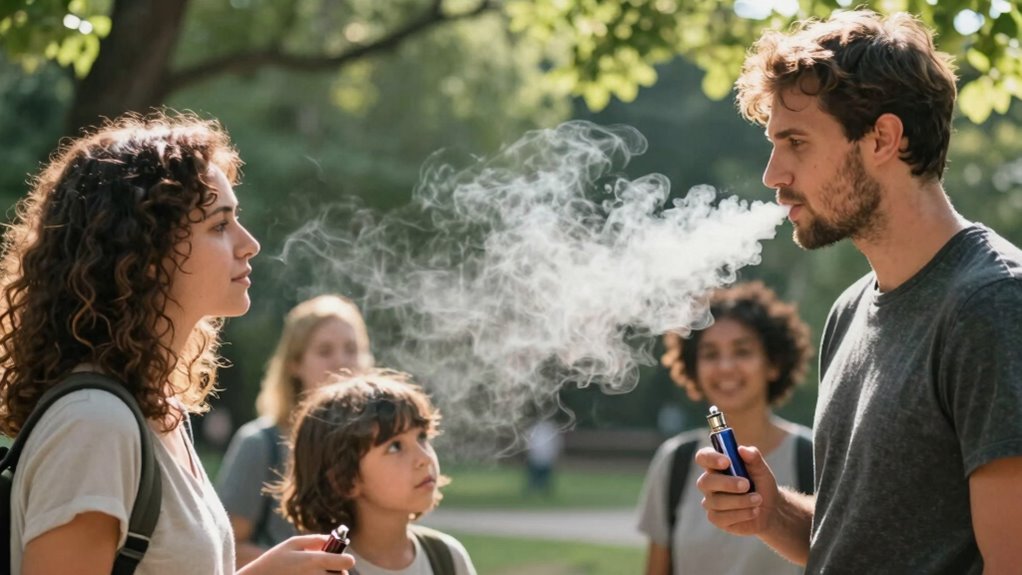
You can often tell if someone is smoking or vaping nearby by watching for visual cues like someone holding a device or exhaling visible smoke or vapor. Additionally, a sudden change in odor can signal that someone nearby is using tobacco or e-cigarettes. Paying attention to these signs helps you respond quickly and appropriately. Being aware of smoking and vaping regulations in your area can also guide you on how to handle the situation properly.
Recognize Visual Cues
Recognizing visual cues is key to identifying when someone nearby is smoking or vaping. Look for social signals like the hand-to-mouth motion, the presence of a device, or the puffing action. You might notice smoke or vapor escaping from their lips or the way they hold a cigarette or vape pen. Pay attention to body language—people often turn slightly away or hold a device discreetly. Clothing or accessories, such as a cigarette pack or vape case, can also be clues. These visual cues help you stay aware of someone’s activity without relying on smell alone. Being observant allows you to respond calmly and confidently, helping you handle the situation smoothly and avoid unnecessary conflict. Recognizing Free Floating cues can also help you understand the context of the activity and decide the best way to approach the situation.
Notice Odor Changes
Changes in odor can be a strong indicator that someone nearby is smoking or vaping, especially if you’re paying close attention. Your sense of scent sensitivity allows you to detect subtle odor detection cues that might not be obvious visually. Pay attention to sudden changes in the air’s smell—an unusual smoky or sweet scent could signal someone’s vaping or smoking. Even if the person is trying to mask the odor, persistent or distinct scent changes are often noticeable. Trust your nose; it can alert you to activity before others realize it. Recognizing these odor shifts helps you decide how to address the situation calmly and assertively, avoiding unnecessary drama while maintaining your comfort and boundaries. Being aware of air quality factors can also help you better understand environmental influences on odor detection.
Decide How Comfortable You Are and Set Personal Boundaries

Deciding how comfortable you are with smoking and vaping nearby is a crucial step in setting personal boundaries. You need to assess your personal limits and identify your comfort zones. Are you okay with occasional vaping, or do you prefer to avoid it entirely? Understanding your feelings helps you communicate clearly and confidently. Setting boundaries might mean choosing to stay away from areas where smoking or vaping occurs or politely requesting that others respect your space. Remember, your comfort is valid, and establishing these boundaries is about protecting your well-being. Be honest with yourself about what feels right, and don’t hesitate to enforce those limits. Clear boundaries help prevent misunderstandings and keep interactions respectful. Recognizing how smoking and vaping may impact your health can further inform your boundaries and ensure your well-being.
What Should I Say When Someone Is Smoking Nearby?

What’s the best way to respond when someone is smoking nearby? Maintaining good manners and respecting boundaries is key. Start by politely acknowledging the situation with a simple, friendly comment, like “Excuse me, do you mind if I ask you to smoke elsewhere?” This shows you’re respecting their smoking etiquette while expressing your discomfort. If vaping is involved, you might say, “I appreciate your vaping, but I’m sensitive to the vapor.” Keep your tone calm and respectful to avoid conflict. Remember, most people aren’t aware of how their smoking or vaping affects others. Being aware of smoking etiquette can help guide your approach. By calmly communicating your boundaries, you encourage understanding without creating drama, and you promote a respectful environment for everyone involved.
How to Politely Ask Someone to Stop Vaping or Smoking

When asking someone to stop vaping or smoking, use respectful language and stay calm. Timing matters—choose a moment when you’re both relaxed. Explaining your personal reasons can help them understand your perspective without feeling offended. Incorporating modern kitchen technology concepts like clear communication and considerate timing can make the request more effective.
Use Respectful Language
If someone nearby is vaping or smoking and it bothers you, approaching them politely can make a difference. Using respectful language shows you value their feelings and helps maintain social etiquette. Remember, peer influence can be powerful, so a calm, respectful tone encourages understanding rather than defensiveness. Avoid blaming or harsh words; instead, focus on how their actions affect you personally. For example, say, “Excuse me, I’d appreciate it if you could smoke elsewhere,” rather than being confrontational. This approach keeps the conversation friendly and non-accusatory. Respectful language fosters cooperation and reduces tension, making it easier for everyone to feel comfortable. Staying polite and considerate helps prevent drama and encourages positive interactions. Incorporating smart home technology like air quality monitors can also alert you to pollutants, creating a healthier environment without direct confrontation.
Choose Calm Timing
Choosing the right moment to ask someone to stop vaping or smoking can make your request more effective. Mindful communication and boundary setting are key. Look for a calm, private moment when emotions are low. Avoid asking in the middle of a puff or when tensions run high. Instead, consider these moments:
- When the person is relaxed and receptive.
- After a shared positive experience.
- When you’re both focused on a task or conversation.
- Once you’ve gathered your thoughts and feel confident.
- Recognizing how your sleep environment can be affected helps you better understand the importance of maintaining a comfortable space.
Timing shows respect and helps prevent drama. It signals that your boundary setting is about maintaining comfort, not confrontation. By choosing calm timing, you create space for respectful dialogue and a better chance for understanding.
Explain Personal Reasons
Expressing your personal reasons for asking someone to stop vaping or smoking can make your request more genuine and understandable. Sharing your personal motivation shows that your concern isn’t just about rules but about your emotional well-being. For example, you might say, “I’m sensitive to smoke because it triggers my allergies,” or “Vaping nearby affects my ability to breathe comfortably.” When you explain how their actions impact you personally, it helps them see your perspective without feeling accused. Keep your tone calm and honest, emphasizing that your request is about maintaining your emotional well-being rather than criticizing their choices. This approach fosters understanding and makes it easier for them to respect your space. Additionally, understanding air quality considerations can help you communicate the importance of a smoke-free environment for your health.
How to Stay Calm and Respond Peacefully in Close Situations

When you find yourself in a close situation where someone is smoking or vaping nearby, staying calm is essential to avoid escalating tensions. Practice mindful awareness to stay grounded, recognizing your feelings without reacting impulsively. Focus on emotional regulation by taking slow breaths and maintaining composure. To respond peacefully:
- Remain respectful, avoiding blame or anger.
- Use a calm tone if you choose to speak up.
- Redirect your attention to your surroundings, not the smoke.
- Practice deep breathing to center yourself and reduce stress.
When to Walk Away or Seek Support

Knowing when to walk away or seek support is crucial for maintaining your well-being in uncomfortable situations. If your personal space is being invaded or your emotional boundaries are crossed, it’s a clear sign you should step back. When conversations or behaviors around smoking or vaping become too intense or disrespectful, don’t hesitate to remove yourself from the scene. Sometimes, distance is the best way to protect your mental health. If you feel overwhelmed or unsafe, reaching out to a trusted friend, family member, or support system can provide reassurance and guidance. Trust your instincts—if something feels off or continues to disturb your peace, walking away or seeking support is the responsible choice to preserve your emotional boundaries and overall well-being.
Long-Term Strategies for Maintaining Peaceful Boundaries

Maintaining peaceful boundaries over the long term requires intentional effort and consistent communication. To resist peer influence and support habit change, stay firm yet compassionate. Focus on these strategies:
Long-term boundaries need consistent effort, compassion, and clear communication to support lasting habit change.
- Clearly articulate your boundaries and revisit them regularly.
- Model the behavior you want to see, demonstrating your commitment.
- Stay connected with others who respect your choices, creating a supportive environment.
- Practice patience, understanding that habit change takes time and setbacks are normal.
Frequently Asked Questions
Can I Legally Ask Someone to Stop Smoking Near Me?
Yes, you can legally ask someone to stop smoking near you. Your legal rights are protected by smoking regulations in many areas that prohibit smoking in certain public or shared spaces. Politely explain how their smoking affects you, and ask them to respect the rules. If they refuse, you may need to involve authorities or property management to enforce the regulations, ensuring your comfort and safety.
How Do I Handle Repeated Smoking/Vaping Incidents?
Did you know that 85% of people prefer smoke-free environments? When faced with repeated smoking or vaping incidents, stick to smoke etiquette by politely refusing and calmly reminding them of your boundaries. Clearly express your discomfort and ask them to respect your space. If they persist, calmly escalate your responses or seek support from authorities if needed. Staying polite yet firm helps prevent drama and maintains your comfort.
What Are Effective Non-Verbal Cues to Indicate Discomfort?
You can use body language like stepping back or turning away to show discomfort. Facial expressions, such as frowning or raising your eyebrows, also signal your feelings without words. Maintain eye contact briefly to communicate concern, but avoid aggressive gestures. These non-verbal cues help express your discomfort clearly, encouraging others to respect your boundaries without creating conflict. Stay calm and consistent in your gestures to effectively convey your message.
How Can I Support Others Affected by Secondhand Smoke?
Supporting others affected by secondhand smoke starts with speaking softly and standing strongly. You can support allergy sufferers by showing sympathy and suggesting smoke-free zones, advocating smoke-free policies to protect everyone’s health. Offer comfort by listening and encouraging them to voice their concerns. By being brave and respectful, you help create a cleaner, healthier environment, making it easier for everyone to breathe freely without feeling bullied or backed into a corner.
Are There Community Resources for Smoke-Free Environments?
Yes, you can find community resources that promote smoke-free environments through local programs and organizations. These community programs often offer support, education, and advocacy for implementing and enforcing smoke-free policies in public spaces. By participating in or advocating for these initiatives, you help create healthier environments, reduce secondhand smoke exposure, and foster a culture that prioritizes public health. Reach out to local health departments or community centers to get involved.
Conclusion
By setting clear boundaries and staying calm, you can handle smoking or vaping nearby without stirring the pot. Remember, you’re the captain of your ship—navigate with confidence and kindness. If things get heated, don’t hesitate to walk away like a wise owl retreating into the night. Peace is worth the effort, and with these tips, you’ll keep your surroundings as harmonious as a well-tuned lute in a medieval hall.