
To spot dehydration versus overheating in a crowd, look for telltale signs. Dehydration often causes dry mouth, intense thirst, dark urine, and little urination, with skin that feels dry and cool. Overheating usually presents with heavy sweating, dizziness, headache, rapid heartbeat, and core temperatures above 100.4°F, alongside pale or clammy skin. Paying close attention to these clues helps you respond appropriately—stay tuned to learn how to manage them effectively.
Key Takeaways
- Look for dry mouth, intense thirst, and dark urine indicating dehydration; excessive sweating with cool, clammy skin suggests overheating.
- Dehydration often presents with reduced urination and dry skin, while overheating shows pale, sweaty skin and elevated core temperature.
- Symptoms like dizziness and confusion can appear in both; dehydration causes dry mouth and concentrated urine, overheating causes body temperature rise.
- Overheating is marked by core temperature above 100.4°F (38°C) and muscle cramps; dehydration may occur without temperature change.
- Monitoring skin condition, hydration signs, and core temperature helps differentiate between dehydration and overheating in a crowd.
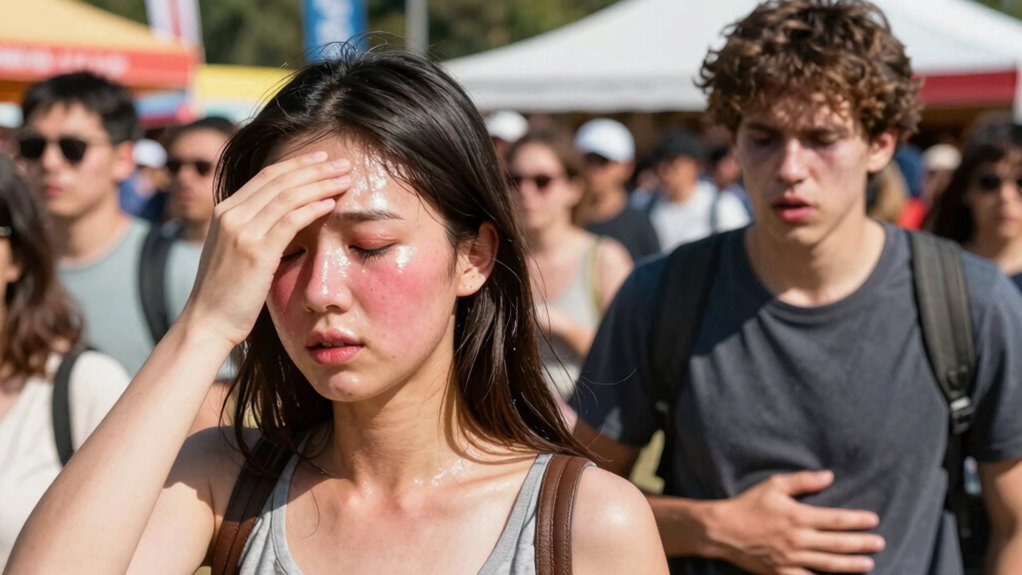
Are you unsure whether you’re experiencing dehydration or overheating during hot weather or intense activity? Recognizing the difference can be tricky, especially when symptoms overlap. When your body is pushed to its limits, you’ll notice signs that point toward either dehydration or heat exhaustion, and understanding these clues can help you respond quickly and appropriately.
One key indicator to watch for is electrolyte imbalance. Electrolytes like sodium, potassium, and chloride are essential for maintaining fluid balance and muscle function. When you sweat excessively in the heat, you lose these indispensable minerals, which can lead to dehydration and electrolyte imbalance. Symptoms of heat exhaustion often include heavy sweating, weakness, and muscle cramps—clear signs that your body is struggling to regulate its temperature and fluid levels. These signs are essential because they show that your body’s cooling mechanisms are overwhelmed, and you might need to rehydrate with electrolyte-rich fluids to restore balance.
Electrolyte loss from sweating signals dehydration and heat exhaustion risk.
Heat exhaustion symptoms can also include dizziness, nausea, headache, and a rapid heartbeat. You might feel faint or have difficulty concentrating, which signals that your body is under stress from overheating. If these symptoms surface, it’s a warning that your core temperature is rising, and you need to cool down immediately. Unlike dehydration alone, heat exhaustion involves the body’s failure to manage heat effectively, often accompanied by visible signs like pale or clammy skin and a core temperature above 100.4°F (38°C).
Dehydration, on the other hand, primarily manifests through dry mouth, thirst, dark-colored urine, and decreased urination. Your skin may feel dry and cool, and you could experience feelings of confusion or irritability. While dehydration can lead to heat exhaustion if left untreated, it’s important to note that dehydration can also occur without overheating—especially in dry, hot environments or if you’re not drinking enough fluids during physical activity. Recognizing these subtleties helps you determine whether you need to hydrate more or cool down to prevent further health issues.
In crowded settings, it’s easy to overlook these symptoms until they become severe. Pay attention to how your body feels: Are you excessively sweaty yet still feeling weak and dizzy? Or are you parched with dry skin and little urine output? Both signals are essential, but their combination can indicate whether dehydration, overheating, or both are affecting you. Promptly drinking fluids with electrolytes, finding shade, and cooling your skin can make a significant difference. Knowing these signs empowers you to act swiftly, preventing escalation into more serious conditions like heat stroke.
Being aware of your hydration status and recognizing early symptoms of dehydration or overheating can significantly improve your response time and reduce the risk of complications.
Frequently Asked Questions
Can Dehydration Occur Without Feeling Thirsty?
Yes, dehydration can happen without feeling thirsty, a condition called silent dehydration. You might not notice the thirst sensation, especially if you’re busy or distracted. It’s important to stay hydrated regularly because your body can lose fluids without obvious signs. Keep sipping water throughout the day, even if you don’t feel thirsty, to prevent silent dehydration and stay safe in a crowd.
What Are the Long-Term Effects of Overheating?
Prolonged overheating can lead to serious issues like heat exhaustion and electrolyte imbalance, which might cause persistent fatigue, dizziness, or muscle cramps. If ignored, these conditions could develop into more severe health problems, such as kidney stress or heat stroke. You might experience ongoing weakness or heart irregularities. To avoid long-term consequences, stay hydrated, cool down, and seek medical help if symptoms persist or worsen.
How Quickly Can Dehydration Become Life-Threatening?
Dehydration can become life-threatening within just a few hours if your electrolyte balance is severely disrupted. You might start feeling dizzy, weak, or confused quickly. To prevent this, use hydration strategies like drinking water with electrolytes and taking regular sips, especially during physical activity or heat exposure. Recognizing early signs and maintaining proper hydration helps you avoid serious complications and stay safe in hot environments.
Are Children More Vulnerable to Dehydration or Overheating?
Children are more vulnerable to dehydration because their higher metabolism and smaller body size mean they need more hydration relative to their weight. They also struggle to regulate body temperature, making overheating a risk too. You should monitor their hydration needs closely, especially during hot weather or physical activity, to prevent both dehydration and overheating. Recognizing early signs helps ensure you address their needs promptly and keep them safe.
What Are the Best Ways to Prevent Dehydration in Crowds?
To prevent dehydration in crowds, you should implement hydration strategies like encouraging regular fluid intake and providing accessible water stations. Follow fluid intake guidelines to ensure everyone stays properly hydrated, regardless of activity level or weather. Keep an eye on participants, reminding them to sip fluids frequently. Even if they don’t feel thirsty, consistent hydration helps prevent dehydration and keeps everyone safe during active or hot days.
Conclusion
Knowing the difference between dehydration and overheating can save lives. For example, if someone is sweating heavily but feels dizzy and irritable, they might be dehydrated. Conversely, if they’re flushed, heavily sweating, and confused, overheating could be the culprit. Stay alert at crowded events, offer water, and watch for warning signs. By recognizing these clues early, you can help someone get the right treatment quickly and prevent serious health issues.