To make certain your hearing protection fits properly, try the simple whistle test. Wear your earplugs or muffs and listen for any whistling or loud sounds nearby. If you hear those, your seal isn’t tight enough, and your ears aren’t fully protected. Many people skip this step, risking noise leakage. If you want to learn more about effective fitting techniques and ensure maximum safety, keep going—there’s useful guidance ahead.
Key Takeaways
- The whistle test is a quick way to verify if hearing protection is properly sealed.
- Hearing a whistle or loud sound indicates insufficient fit and reduced noise reduction.
- Many people skip this simple test, risking ineffective hearing protection.
- Regularly performing the whistle test ensures your earplugs or muffs are correctly fitted.
- Proper fit with the whistle test helps prevent noise leakage and potential ear damage.
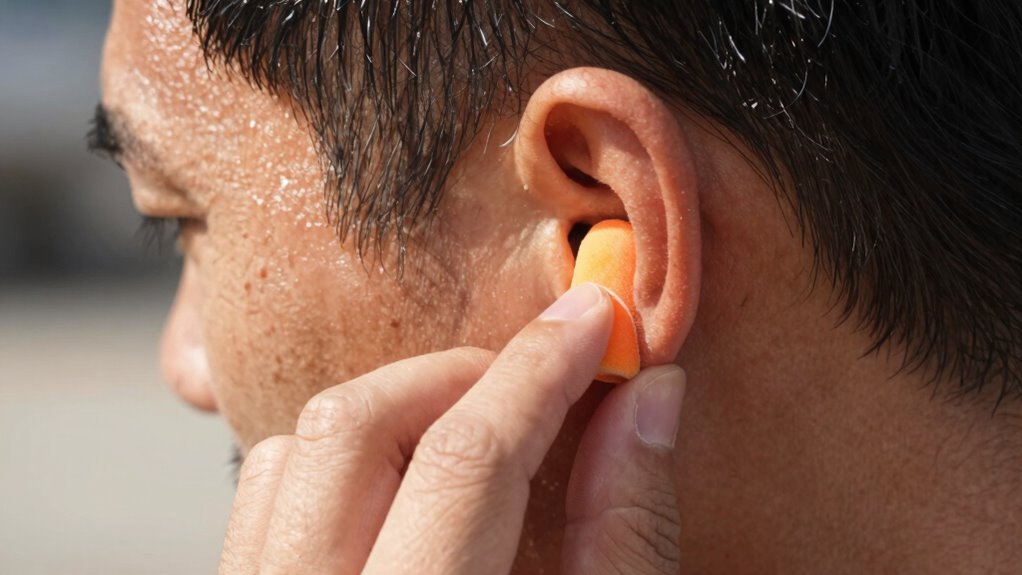
Have you ever wondered if your hearing protection fits properly? Many people overlook this essential step, assuming that just wearing earmuffs or earplugs is enough. But a poor fit can seriously compromise noise reduction, leaving your ears vulnerable to damage. The key is understanding how your ear canal interacts with your hearing protection. When properly fitted, earplugs or earmuffs create a seal that blocks out loud sounds effectively. If the fit isn’t snug or if gaps exist, noise can sneak in, rendering your efforts useless. That’s why it’s crucial to perform a simple test to check your hearing protection’s fit, rather than just assuming it’s working.
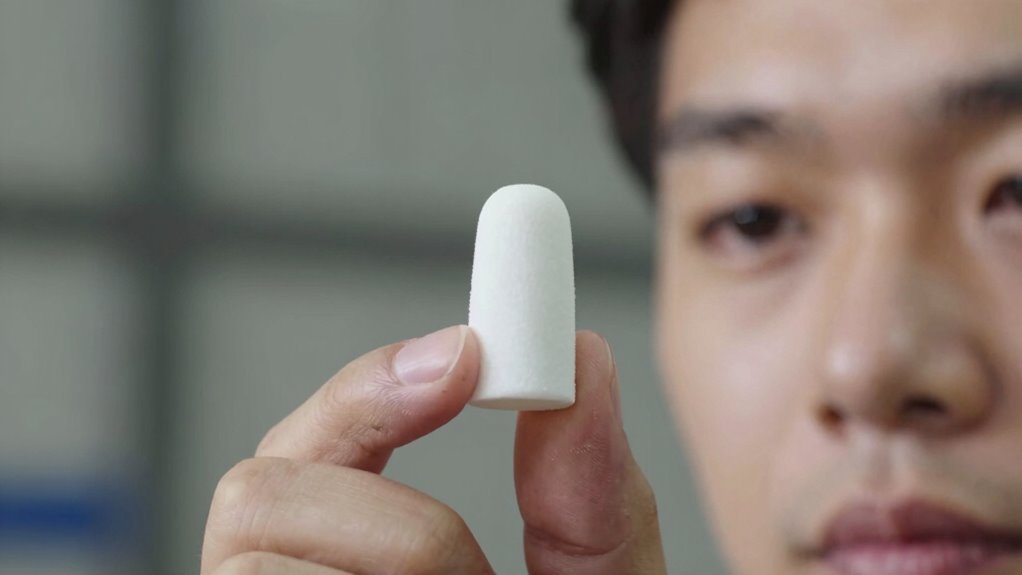
The first step is to examine how your ear canal interacts with the earplugs. For foam earplugs, you should compress them tightly, insert them deep enough so they sit comfortably, then hold them in place for a few seconds as they expand. If they’re not inserted correctly or don’t expand fully, the seal won’t be tight enough, reducing noise reduction. For reusable silicone or rubber earplugs, ensure they’re molded to fit your ear canal’s shape. You want them to sit flush without causing discomfort, but still form a tight enough seal to block out noise. Ear muffs should be positioned snugly over your ears, covering the entire ear without gaps. Adjust the headband so it’s firm but comfortable.
A simple test to verify your hearing protection’s fit is the “whistle test.” While wearing your earplugs or ear muffs, try to hear a whistling sound or a loud, steady noise. If you can still hear it clearly, your hearing protection isn’t providing sufficient noise reduction. Another way is to ask someone to produce a loud sound near you; if you can still perceive it, your ear protection isn’t sealing properly. Proper fitting ensures your ear canal is fully sealed, which is essential because the noise reduction capability of your hearing protection depends on this seal. Additionally, using appropriate fitting techniques can significantly improve the effectiveness of your hearing protection. Gaps or improper insertion greatly decrease its effectiveness, leaving your ears exposed to harmful noise levels.
Frequently Asked Questions
How Often Should I Replace My Hearing Protection?
You should replace your hearing protection whenever its earplug lifespan or hearing protection durability diminishes. Typically, foam earplugs should be replaced after one or two uses, while reusable ones last longer but need regular inspection. If you notice tears, loss of shape, or reduced comfort, it’s time to replace them. Proper maintenance guarantees maximum protection, so check your gear often and replace it promptly to keep your hearing safe.
Can Wearing Hearing Protection Affect Speech Understanding?
Wearing hearing protection can act like a double-edged sword—while it shields your ears, it might also muffle speech clarity, making conversations feel like trying to hear through a thick fog. Noise interference decreases, but sometimes your ability to understand speech drops too. To stay safe without losing your voice’s clarity, choose well-fitted ear protection and consider communication methods like hand signals or radios in noisy environments.
Are There Different Fit Tests for Custom vs. Disposable Earplugs?
Yes, there are different fit tests for custom and disposable earplugs. With custom fit earplugs, you typically perform a comfort and seal test, making certain they fit snugly without discomfort. For disposable fit earplugs, a simple insertion check is common—making sure they expand properly and block out noise effectively. Always follow the manufacturer’s instructions to guarantee proper fit and maximum protection for both types.
What’s the Best Way to Clean Reusable Hearing Protectors?
To clean reusable hearing protectors, you should use gentle cleaning techniques like mild soap and warm water, avoiding harsh chemicals. Rinse thoroughly and let them air dry completely before storage. Store them in a clean, dry container to prevent dirt and damage. Regular cleaning and proper storage extend their lifespan, ensuring effective noise protection and hygiene every time you wear them.
How Do I Know if My Hearing Protection Is Certified?
Think of certification standards as the gold seal on your hearing protection. To know if your device is certified, check for labels or markings indicating it meets recognized standards like ANSI or CSA. Fit verification is essential—if your protectors don’t seal properly, they can’t do their job. Always follow manufacturer instructions, and if you’re unsure, consult with a professional to guarantee your hearing protection is certified and fits correctly.
Conclusion
So, next time you’re fumbling with those earplugs, remember: a quick fit check could save your hearing—or at least make you look like you care. It’s almost amusing how we trust the packaging over our own ears, isn’t it? Don’t be that person. Take the second to verify your protection. After all, hearing loss isn’t exactly a fashion statement—unless your idea of style is the sound of silence forever.