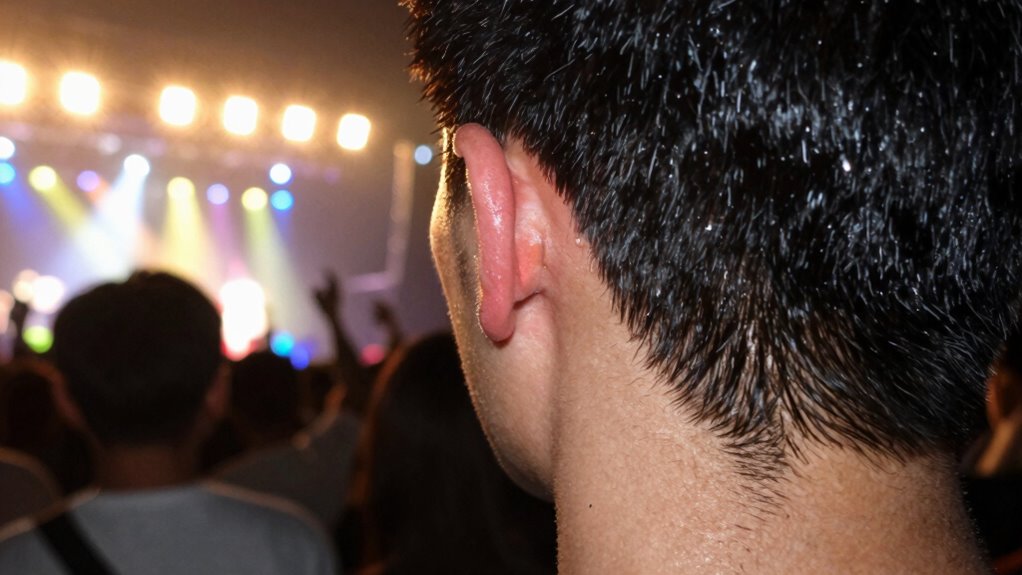
After a loud show, your ears feel full because the intense sounds cause pressure to build up in your middle ear, making it feel like they’re blocked. This happens when your Eustachian tubes temporarily struggle to equalize the pressure, leading to muffled hearing and fullness. Usually, it resolves within hours or days. If you want to understand more about what’s happening and how to relieve it, keep going for some helpful tips.
Key Takeaways
- Loud music can cause ear pressure buildup, leading to a sensation of fullness.
- The Eustachian tube may temporarily malfunction after loud sound exposure, affecting pressure equalization.
- Ear fullness usually resolves within hours or days as pressure normalizes.
- Swallowing, yawning, or gently blowing your nose can help relieve ear pressure.
- Protect your ears with earplugs during loud events to prevent damage and persistent fullness.
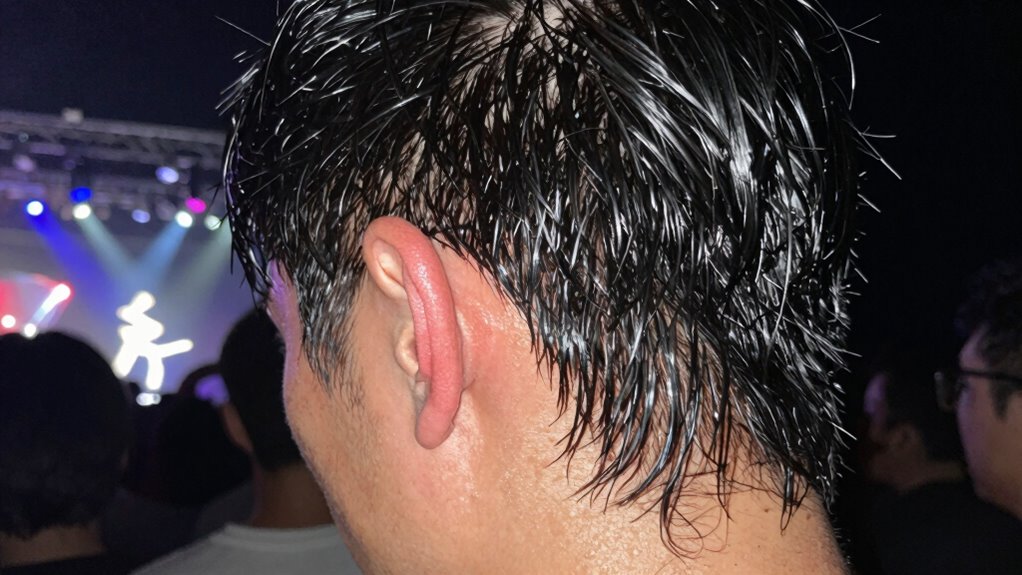
After attending a loud concert or event, you might notice that your ears feel full or plugged, which is a common reaction to exposure to high-volume sounds. This sensation is often caused by a buildup of ear pressure, as your ears try to equalize the difference between the air pressure outside and inside your ear. When you’re exposed to loud noises, the delicate structures within your ear can become overwhelmed, leading to a temporary imbalance that manifests as fullness or a plugged feeling. You might also experience a slight muffling of sounds or a decrease in hearing clarity, which can be unsettling.
This fullness is typically linked to a condition called ear pressure, which occurs when the Eustachian tube—the small passage connecting your middle ear to the back of your throat—struggles to open and equalize pressure. During loud events, the sudden increase in sound can cause your Eustachian tube to temporarily malfunction, resulting in a sensation of fullness. This is often accompanied by temporary hearing loss, where sounds seem muffled or less distinct. The good news is that this usually resolves on its own within a few hours or days, as your ear gradually restores its normal pressure and function.
However, if you notice that your ears remain full or your hearing doesn’t return to normal, it could be a sign of more considerably damage or an ear infection. The temporary hearing loss associated with loud sounds is generally reversible, but repeated exposure can lead to cumulative damage to your inner ear, potentially resulting in permanent hearing issues. That’s why protecting your ears during loud events is essential—using earplugs can considerably reduce the risk of pressure buildup and hearing loss.
To alleviate discomfort, try swallowing, yawning, or gently blowing with your nose pinched shut—these actions can help open the Eustachian tube and release excess pressure. Maintaining hydration and avoiding inserting objects into your ear can prevent further irritation or injury. If your ear fullness persists, worsens, or is accompanied by pain or dizziness, seek medical attention. An audiologist or ENT specialist can evaluate your ear health, check for blockages, infections, or other issues, and provide appropriate treatment.
Understanding what’s happening when your ears feel full after a show can help you take steps to protect your hearing in the future. Remember, while temporary hearing loss and ear pressure are common and usually harmless, repeated loud exposures can cause more serious damage. Paying attention to your ears’ responses and taking preventive measures can keep your hearing healthy and your ears comfortable after any loud event. Proper ear care and protection are crucial for maintaining long-term hearing health, especially after exposure to loud sounds.
Frequently Asked Questions
Can Ear Fullness Be a Sign of Hearing Loss?
Ear fullness can be a sign of hearing loss, especially if it persists or worsens, and might relate to hobby-related hearing issues or music-induced ear pressure. If you notice ongoing fullness after exposure to loud sounds, it’s important to see a professional. Ignoring these symptoms can lead to further hearing damage. Protect your ears during loud activities, and seek advice if fullness or hearing difficulties continue.
How Long Does Ear Fullness Typically Last?
Ear pressure from a temporary blockage usually lasts a few hours to a day after a show. You might feel like your ears are still muffled, similar to being underwater. This sensation occurs as your ears adjust and the pressure equalizes. If it persists beyond a couple of days or worsens, you should see a healthcare professional. Most cases resolve naturally as your ears recover from the loud sound exposure.
Are There Effective Remedies for Relieving Ear Fullness?
Yes, there are effective home remedies and prevention tips for relieving ear fullness. Try gently yawning or swallowing to open your Eustachian tubes. Chewing gum or sucking on a candy can also help. Applying warm compresses around your ears can relieve pressure. To prevent future fullness, avoid sudden loud noises, stay hydrated, and use ear protection at concerts. If symptoms persist, consult a healthcare professional for proper diagnosis and treatment.
When Should I See a Doctor About My Ear Sensation?
If your ear sensation persists beyond a few days or worsens, see a doctor. Studies show that 12% of people experience ear discomfort annually, often due to earwax buildup or sinus pressure. Seek medical attention if you experience severe pain, sudden hearing loss, dizziness, or fluid discharge. Prompt care prevents complications and guarantees proper treatment, especially when common causes like earwax or sinus issues aren’t improving with home remedies.
Does Ear Fullness Indicate an Underlying Health Condition?
Ear fullness can indicate underlying health issues like ear infections or sinus pressure. If you notice persistent fullness, pain, or hearing loss, it’s a sign you should see a doctor. These symptoms can result from infections or sinus problems that need treatment. Don’t ignore ongoing discomfort, as it could lead to complications. Addressing these early helps prevent long-term hearing issues and guarantees your ear health stays in check.
Conclusion
Next time your ears feel full after a show, remember it’s your eustachian tubes balancing the pressure. Did you know that your eardrum vibrates around 20,000 times per second during loud music? That rapid movement can make your ears feel clogged or full. It’s a sign your body is protecting your hearing, so give them a break and avoid prolonged exposure. Your ears will thank you with clearer hearing and less discomfort later.