

To set boundaries at shows without conflict, use clear non-verbal signals like stepping back or turning away to indicate your need for space. If needed, politely speak up with phrases like, “I’d appreciate more room,” to assert yourself respectfully. Position yourself near venue edges or less crowded areas to maintain comfort. Being aware of crowd flow and adjusting your location helps. Prioritizing your own comfort encourages mutual respect — keep exploring for more tips on staying comfortable in crowds.
Key Takeaways
- Use non-verbal cues like stepping back or turning away to signal your need for more space.
- Address boundary issues early with polite, direct phrases such as “I’d appreciate more room.”
- Position yourself near less crowded areas or venue edges to maintain personal space comfortably.
- Combine eye contact with a gentle, firm smile to communicate boundaries without confrontation.
- Be mindful of crowd density and adapt your location or stance to stay within your comfort zone.
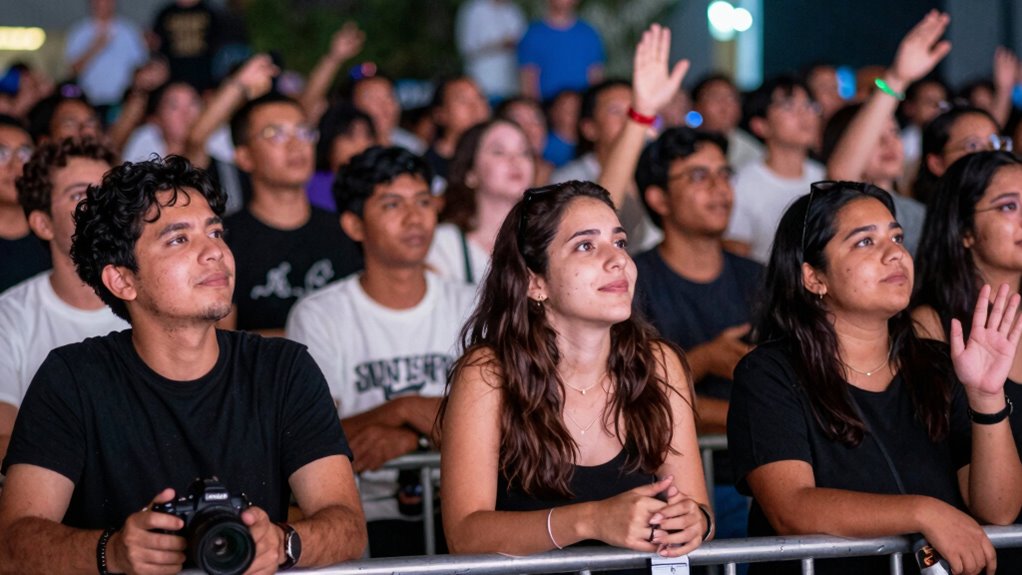
Have you ever felt uncomfortable because someone was too close at a concert or show? It’s a common experience, especially in settings where crowd density is high and personal boundaries are hard to maintain. When you’re packed tightly among strangers, it’s easy to feel overwhelmed or anxious, and you might worry about how to handle the situation without causing tension. The key is to recognize your own limits and to communicate them politely but assertively.
In crowded venues, the sheer number of people often means you can’t maintain the same personal space you might prefer. Still, you can be aware of your comfort zone and take steps to protect it. Pay attention to your body language and physical reactions—if someone is standing too close or invading your personal boundaries, you don’t have to accept it silently. Sometimes, people aren’t aware of their proximity, especially in dense crowd settings, but that doesn’t mean you have to suffer through discomfort. Setting clear boundaries is about respecting yourself first, which often encourages others to do the same.
Be aware of your comfort zone and use body language to set boundaries in crowded venues.
One effective approach is to use non-verbal cues to communicate your boundaries. For example, if someone is standing uncomfortably close, you can subtly step back or turn your body slightly away to signal that you need more space. Making eye contact and giving a polite but firm smile can also serve as a gentle reminder that your personal space matters. If the situation persists, don’t hesitate to speak up. Saying something like, “Hey, I’d appreciate a little more room,” is direct yet respectful, and most people will respond positively.
Managing personal boundaries in crowded environments also involves being aware of the overall crowd density. During peak times, such as main acts or popular shows, it’s harder to maintain space, but you can try to position yourself at the edges or in less crowded areas of the venue. Standing near exits or along the sides can give you more control over your personal space. Remember, it’s okay to move if you feel uncomfortable; your comfort and safety should always come first. Additionally, understanding the concept of Free Floating can help you stay calm and adaptable in unpredictable crowd situations.
Ultimately, setting boundaries at shows isn’t about confrontation—it’s about asserting your right to enjoy the experience comfortably. By being mindful of crowd density and clearly communicating your personal boundaries, you can help create a more enjoyable environment for yourself and others. Respecting your limits not only protects your well-being but also encourages a culture of mutual respect among concertgoers.
Frequently Asked Questions
How Can I Tell if Someone Is Invading My Personal Space?
You can tell if someone is invading your personal space by observing their body language cues and physical proximity. If they stand too close, lean in, or have persistent eye contact, they might be invading your space. You may feel uncomfortable, tense, or notice your body stiffening. Trust your instincts—if someone’s closeness makes you uneasy, gently step back or use a clear, calm voice to indicate your boundaries.
What Are Polite Ways to Ask for More Space?
You can politely ask for more space by using respectful requests and body language cues. Start with a friendly tone, saying something like, “Could I have a little more room, please?” Maintain open body language, like stepping back slightly or raising your hand gently, to signal your need. This approach helps communicate your boundaries clearly without causing conflict, making others more likely to respect your personal space.
How Do Cultural Differences Affect Personal Space at Shows?
Cultural perceptions heavily influence personal space expectations at shows. You might find that in some cultures, close proximity is friendly, while others value more distance. To navigate this, observe local behaviors and adjust your personal space accordingly. If someone encroaches, politely step back or use a friendly gesture to signal your comfort level. Respecting these cultural differences helps prevent misunderstandings and keeps the atmosphere enjoyable for everyone.
What Are the Signs of Discomfort in Crowded Environments?
You might notice subtle body language cues like shifting away, avoiding eye contact, or tense posture, signaling discomfort. Emotional reactions such as impatience, agitation, or feeling overwhelmed can also reveal you’re approaching your limit. When these signs appear, it’s a gentle reminder to respect your boundaries, take a breath, or step back. Paying close attention to these cues helps you navigate crowded environments while maintaining your comfort and connection.
How Can I Maintain Boundaries Without Offending Others?
You can maintain boundaries without offending others by practicing respectful communication and using non-verbal cues. Gently step back or hold up a hand to signal your need for space, and make eye contact to show your intentions are friendly. If someone gets too close, politely say, “I need a little space,” with a warm tone. Being clear and kind helps you set boundaries while respecting others’ feelings.
Conclusion
Remember, setting boundaries at shows is like planting a sturdy tree—you protect your space so it can stand tall and strong. By clearly communicating your needs, you create a safe haven amidst the crowd’s chaos. Respecting your limits not only keeps you comfortable but also encourages others to do the same. When you stand firm, you turn the wild dance of a crowded show into a harmonious melody where everyone can enjoy the music without feeling overwhelmed.