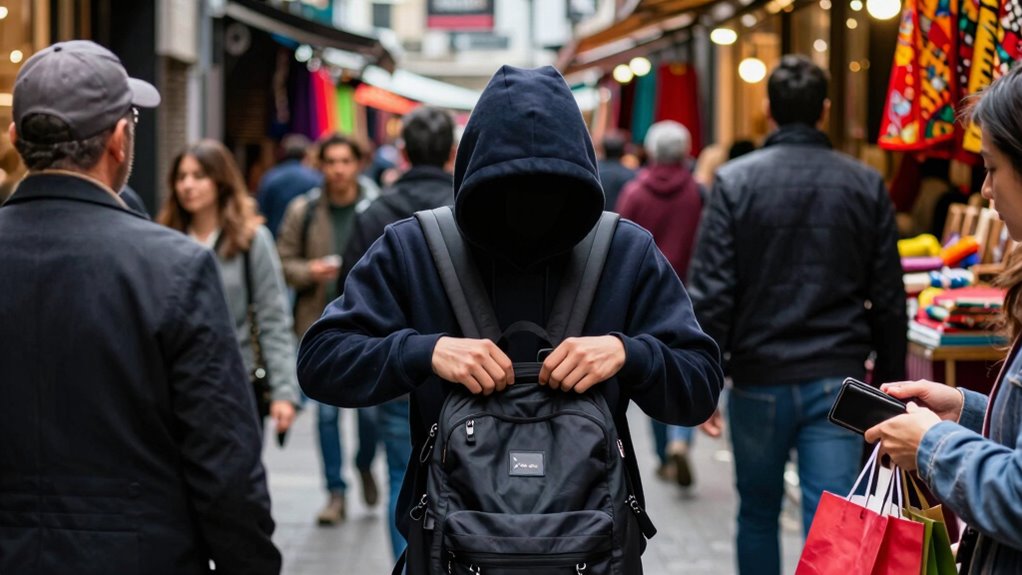

Pickpockets usually target crowded, busy spots where chaos and distractions are common. They focus on places like public transportation hubs, tourist hotspots, entrances to entertainment venues, and large events. They use tactics such as bumping into you, spilling drinks, or creating noise to divert your attention. If you’re distracted or glued to your phone or maps, you’re more vulnerable. Stay alert and keep your belongings close—more tips on how to stay safe are just ahead.
Key Takeaways
- Pickpockets often target crowded, noisy environments like public transportation hubs and busy tourist hotspots.
- They use distractions such as bumping, spilling, or asking for directions to divert victims’ attention.
- Victims are usually distracted, preoccupied with phones, maps, or hurried, making them easier to target.
- Common locations include entrances of entertainment venues, transportation stations, and places with high foot traffic.
- Recognizing suspicious behavior and keeping belongings close can help prevent theft in these areas.

Have you ever wondered how pickpockets operate so efficiently in crowded places? It’s not just luck; they use carefully planned techniques like distraction tactics and victim profiling to succeed. Their goal is to blend into the chaos and catch you off guard, making it easier to snatch your wallet or phone without you noticing. When you’re surrounded by noise, movement, and a rush of people, it’s the perfect environment for their tricks to work. They often position themselves near busy entrances, public transportation hubs, or tourist hotspots—places where people are distracted and less aware of their surroundings.
Pickpockets rely heavily on distraction tactics to divert your attention. They might bump into you intentionally, create a commotion, or ask for directions just as they’re reaching into your pocket. Sometimes, they work in pairs—one person creating a diversion while the other steals. This coordinated effort amplifies the chance of success because you’re less likely to notice someone tampering with your belongings. They also use gestures like dropping something or spilling a drink, which pulls your focus away from your bag or wallet. It’s a classic distraction, designed to occupy your hands and eyes so you don’t see the subtle move.
Pickpockets often work in pairs, creating distractions to steal unnoticed.
Victim profiling is another key element in their approach. Pickpockets often target specific types of people—those who appear distracted, busy, or preoccupied. If you’re glued to your phone, lugging around a large bag, or scanning a map, you’re a prime target. They observe patterns: who seems least aware of their surroundings, who’s rushing or distracted by conversations, or who’s carrying valuables in obvious places. Once they identify a likely victim, they plan their approach carefully, waiting for the right moment when your guard is down. Their experience tells them that tourists, elderly folks, or hurried travelers are often easier targets. Additionally, some may take advantage of seasonal events to increase their chances, knowing crowds are even more chaotic and distracted.
Understanding these tactics helps you stay alert. If you notice someone bumping into you repeatedly or acting overly friendly, stay cautious. Keep your belongings close, especially in crowded settings, and avoid distractions like your phone or map when you’re in high-risk areas. Recognizing victim profiling and distraction tactics isn’t about paranoia, it’s about protecting yourself. Being aware of how pickpockets operate enables you to spot their tricks early and respond confidently. With a little vigilance, you can enjoy your time out without falling prey to their carefully orchestrated schemes.
Frequently Asked Questions
How Do Pickpockets Identify Their Targets?
Pickpockets identify their targets by observing visual cues, like someone distracted or preoccupied, making them easier to approach. They often use distraction techniques, such as bumping into you or asking for help, to divert your attention. By paying close attention to your surroundings and body language, they spot someone who’s less aware, making it easier to steal without detection. Stay alert and watch for suspicious behavior.
Are There Specific Times When Pickpocketing Is More Common?
You should be extra cautious during busy times, as pickpocketing peaks during specific time patterns like holiday seasons and crowded events. Thieves take advantage of the chaos and distractions, making these periods more risky. Stay alert when you’re in crowded places, especially during holidays, festivals, or rush hours. Keep your belongings secure and avoid displaying valuables openly to reduce the chances of falling victim to pickpockets during these high-risk times.
What Are the Most Effective Ways to Prevent Pickpocketing?
Think of your belongings as treasures you guard fiercely. To prevent pickpocketing, implement strong security measures like zipped bags and secure wallets, and stay alert. Public awareness is your armor—stay vigilant, avoid distractions, and keep your valuables close. Trust your instincts and don’t let opportunists catch you off guard. By staying conscious and prepared, you turn the tables and make yourself a hard target for thieves.
Do Pickpockets Operate Alone or in Groups?
Pickpockets often operate in groups, using group tactics to distract and divide their victims. Solo operators do exist, but groups are more common because they can cover more ground and execute coordinated moves. When you’re in crowded areas, stay alert and watch for suspicious behavior. Whether alone or in a group, being aware of your surroundings helps you stay safe and avoid becoming a target.
How Can Victims Recover Stolen Belongings Quickly?
Recovering stolen belongings is like chasing shadows—quick action makes all the difference. You should report the theft to authorities immediately and contact your bank or credit card companies to prevent further loss. Use security tips like monitoring your accounts and changing passwords. Keep receipts and proof of ownership handy for recovery methods such as filing claims or insurance. Acting swiftly can help you reclaim what’s lost and minimize damage.
Conclusion
You might think crowded places are the only hotspots for pickpockets, but studies suggest they also target less obvious spots like quiet parks or busy markets. The truth is, pickpockets thrive where you least expect it, blending in and exploiting distractions. So, stay alert wherever you go—trust your instincts and keep valuables secure. Being aware of their patterns isn’t just smart; it could be the difference between a smooth day and a costly mistake.