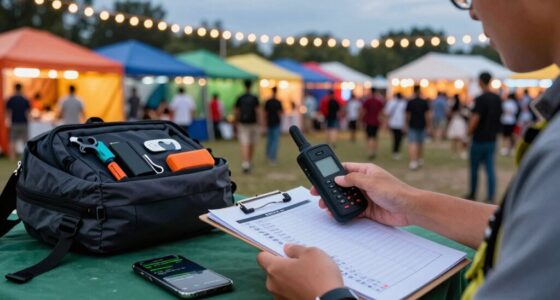
If someone falls in a packed crowd, stay calm and act quickly. Gently clear the area around them to prevent further injury, and communicate clearly to others to keep them back. If the person is hurt or unresponsive, call emergency services immediately and avoid moving them unless necessary. Support their head and comfort them until help arrives. Staying composed and organized can prevent chaos and ensure they get the help they need. Discover more tips to handle such situations effectively.
Key Takeaways
- Stay calm, alert others, and create space around the fallen person to prevent further injury.
- Gently guide people away and establish a clear path for emergency responders.
- Avoid moving the injured individual unless absolutely necessary; support their head if unconscious.
- Communicate clearly with the crowd and emergency services to coordinate assistance and maintain order.
- Reassure and comfort the fallen person, and wait for professional medical help to assess and treat their injuries.

When someone falls in a packed crowd, quick and calm action can prevent injuries and chaos. Your immediate response plays an essential role in maintaining crowd safety and guaranteeing the fallen person’s well-being. The first step is to stay alert and avoid panicking, as calmness helps you think clearly and act effectively. If you notice someone tripping or falling, don’t rush in blindly; instead, try to create space around them by gently guiding others away. This minimizes the risk of additional falls or injuries and keeps the situation under control.
Communication is key. Shout out a clear, firm message like “Help! Someone’s fallen!” to alert nearby attendees. This helps mobilize others to assist and spreads awareness quickly. If you’re close enough, offer a steady hand or help lift the person to their feet. Be gentle and cautious—avoid pulling or yanking, which could cause further harm. If the individual appears injured, such as having difficulty moving or showing signs of pain, don’t try to move them yourself. Instead, call for professional emergency response immediately, especially if they seem unconscious or hurt seriously.
Alert others with a firm call and assist carefully if safe, but avoid moving seriously injured individuals.
Crowd safety is paramount in these moments. Clear a path for emergency responders by asking others to step back and give space. If you’re part of event staff or security, ensure that pathways are unobstructed, and communicate with emergency services to expedite assistance. Your role includes evaluating whether the fallen person needs medical attention and informing responders promptly. Additionally, understanding the importance of crowd control can significantly improve response effectiveness. While waiting for help, keep the person comfortable if possible—support their head if they’re unconscious, and reassure them with calm words. Avoid giving them food or drink until trained medical personnel evaluate their condition.
Throughout the incident, stay focused on managing the crowd to prevent panic. People tend to follow cues, so your composed demeanor can influence others to remain calm and cooperative. Use your voice to direct the crowd away from the scene and prevent congestion. Remember, effective emergency response depends on swift, coordinated actions. Your prompt intervention can make a difference in preventing further injuries and maintaining order. Once professional help arrives, assist them as needed, and follow their instructions. Ultimately, staying alert, communicating clearly, and acting decisively are your best tools to guarantee everyone’s safety when someone falls in a packed crowd.
Frequently Asked Questions
How Can I Identify if Someone Is Unconscious in a Crowd?
You can identify if someone is unconscious in a crowded area by observing their responsiveness and movement. In high crowd density, look for someone who isn’t reacting to your emergency signaling or any nearby activity. They may appear limp or unresponsive, with no eye contact or verbal response. If you suspect unconsciousness, quickly check their breathing and call for help, alerting others to assist or get medical support promptly.
What Are the Best Ways to Prevent Crowd Falls?
Imagine a flowing river of people, each movement smooth and coordinated. To prevent crowd falls, focus on effective crowd management by controlling entry and exit points, maintaining clear pathways, and avoiding overcrowding. Implement emergency preparedness plans, such as designated walkways and trained staff to guide the crowd. Stay alert to signs of congestion, and encourage calm, steady movement. These strategies keep everyone safe and prevent accidents before they happen.
How Do I Assist a Person With a Disability During a Fall?
You should gently support the person with assistive mobility devices, making sure to stabilize them without causing further injury. Use accessible communication by calmly explaining what you’re doing and reassuring them. If they’re unable to get up on their own, help them to a safe area and call for medical assistance. Always prioritize their comfort and safety, and follow any specific instructions or preferences they have for assistance.
Are There Specific Signs of Crowd Crush Injuries?
Crowd crush injuries often hide behind subtle signs, like difficulty breathing, dizziness, or extreme weakness—like a warning whisper before a storm. If you notice high crowd density with people showing injury symptoms such as chest pain, inability to move, or pale skin, act fast. These signs indicate serious harm, and quick intervention can save lives. Stay alert, and remember, recognizing these cues is key to preventing tragedy.
What Legal Responsibilities Do Event Organizers Have for Crowd Safety?
As an event organizer, you’re legally responsible for ensuring crowd safety through proper crowd management strategies. You must have liability insurance to cover potential incidents and implement safety measures like barriers and clear exits. By proactively managing the crowd and adhering to safety regulations, you reduce risks and demonstrate your duty of care. Failing to do so could lead to legal liabilities if accidents happen, so prioritize safety at all times.
Conclusion
Remember, staying calm and acting quickly can make all the difference when someone falls in a crowded place. Don’t worry about causing a fuss—your prompt help can prevent injuries and keep everyone safe. Even if you’re worried about making a scene, your quick response shows you’re caring and responsible. So, stay alert, lend a hand calmly, and know that your actions can truly make a difference in keeping the crowd safe and secure.