
Your ears ring more at some venues because poor acoustic design causes excessive sound reflections and uneven distribution, making noise feel louder and putting extra strain on your ears. When sound bounces around unpredictably, your ears work harder to process it, increasing the chance of ringing and discomfort. If you want to understand how environment and acoustics affect your hearing, keep exploring these factors to protect your ears better.

Get audio and creator gear delivered free with Prime
- Fast, free delivery on millions of items
- Prime Video, Amazon Music and more included
- Member-only deals all year
Key Takeaways
- Poor acoustic design causes increased sound reflections, making some venues feel louder and raising ear strain.
- Excessive reverberation and echoes in certain spaces amplify perceived noise, leading to more ringing.
- Environments with inadequate sound absorption cause hotspots of high noise levels, stressing ears more.
- High sound levels combined with poor acoustics force ears to work harder, increasing tinnitus risk.
- Well-designed venues with proper sound management reduce reflections, lowering perceived loudness and ear ringing.
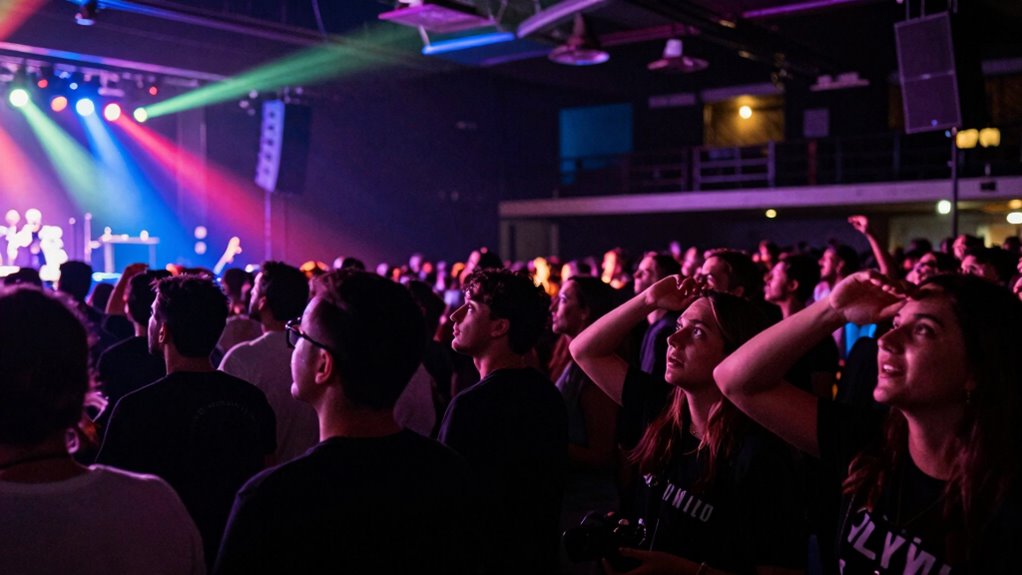
Have you ever noticed that your ears tend to ring more at certain venues? It’s a common experience, and it often comes down to the environment’s sound levels and acoustic design. When you’re in a loud, poorly designed space, the noise can overwhelm your ears, leading to that persistent ringing known as tinnitus. The key factors influencing this are how loud the environment is and how sound travels within it.
Sound levels are straightforward—the louder the environment, the more strain you place on your hearing. When noise exceeds safe levels, your ears try to protect themselves by overcompensating, which can cause ringing. Many venues, especially those with live music, clubs, or large crowds, tend to have high sound levels. If you’re exposed without ear protection, your auditory system gets overwhelmed, and your ears may ring afterward. The danger increases with duration; even a brief exposure to loud sound can trigger temporary ringing, and repeated exposure might cause long-term damage.
But sound levels aren’t the only factor; acoustic design plays a vital role too. Acoustic design refers to how a space manages sound—how it reflects, absorbs, or diffuses noise. Venues with poor acoustic design often have uneven sound distribution, with certain areas experiencing louder echoes or harsher reverberations. These reflections can amplify sound levels locally, making it seem even louder than it actually is. When the sound bounces around unpredictably, your ears work harder to process the noise, increasing the likelihood of ringing. Conversely, well-designed acoustic environments aim to control sound reflections, distribute sound evenly, and reduce unnecessary reverberations. These spaces help protect your ears by maintaining more comfortable sound levels and minimizing harsh echoes.
You might notice that in some venues, even if the overall sound level isn’t excessively loud, the acoustics make the environment seem overwhelming. That’s because sound reflections and poor design can create hotspots where noise feels more intense. In contrast, venues with better acoustic design—such as sound-absorbing panels, diffusers, and appropriate speaker placement—offer a more balanced auditory experience. This reduces the strain on your ears and lowers the chances of ringing afterward.
Understanding how sound levels and acoustic design influence your hearing can also help you recognize the importance of sound environment quality. Ultimately, understanding how sound levels and acoustic design influence your hearing helps you make smarter choices. If you’re attending a concert or event, look for venues that prioritize good acoustic design and consider using ear protection in loud environments. Not only will this help prevent ringing, but it also preserves your hearing health in the long run. Your ears are delicate, and the environment around you can make all the difference between a fun night and one that leaves you with ringing or worse.
ear protection earplugs for concerts
As an affiliate, we earn on qualifying purchases.
As an affiliate, we earn on qualifying purchases.
Frequently Asked Questions
Can Ear Ringing Indicate Hearing Loss or Damage?
Yes, ear ringing can indicate hearing loss or damage. If you notice ringing after exposure to loud environments with background noise, it’s a sign your ears might be affected. To prevent further damage, always use hearing protection in noisy settings and give your ears time to recover. Persistent ringing or hearing difficulties should prompt you to see a healthcare professional for a thorough evaluation.
Are Certain Music Genres More Likely to Cause Ringing?
Certain music genres, especially those with high sound intensity like rock, electronic, or metal, are more likely to cause ringing in your ears. When you listen to these genres at loud volumes, your ears are exposed to intense sound waves that can damage your hearing. To protect yourself, keep the volume at a safe level and take breaks, especially during concerts or festivals with loud sound environments.
How Does Age Affect Ear Ringing at Venues?
As you age, age-related hearing decline can make your ears more susceptible to ringing at venues. Senior hearing health becomes increasingly important because damaged hair cells and reduced hearing sensitivity can amplify tinnitus. You might notice ringing more often or intensely in noisy places. Protecting your ears, avoiding loud sounds, and scheduling regular hearing check-ups help manage and reduce the impact of age-related changes on ear ringing.
Does the Use of Earplugs Prevent Ringing?
Wearing earplugs does improve earplug effectiveness in preventing ringing, especially in loud venues. They reduce overall sound exposure, making it less likely you’ll experience ringing afterward. Venue acoustics also play a role—poor acoustics can amplify noise, increasing risk. Using well-fitted earplugs helps protect your ears by dampening loud sounds, so you can enjoy events without the discomfort or damage that causes ringing.
Can Ringing in the Ears Be a Sign of an Underlying Health Issue?
Yes, ringing in your ears can be a sign of an underlying health issue. It might be a silent symptom of hidden causes like ear infections, hearing loss, or even cardiovascular problems. If the ringing persists or worsens, don’t ignore it—seek medical advice. Recognizing these silent symptoms early helps address potential health concerns before they develop into more serious conditions.
sound absorbing panels for home theater
As an affiliate, we earn on qualifying purchases.
As an affiliate, we earn on qualifying purchases.
Conclusion
So, now you know why your ears ring more at certain venues. It’s all about the environment, volume, and your own ear health. Next time you hit a loud event, remember to protect your ears—it’s better to be safe than sorry. Don’t let ringing become a regular guest; otherwise, you might be playing with fire. Stay mindful, keep those ears safe, and don’t let the noise take control of your peace of mind.
noise-canceling headphones for loud environments
As an affiliate, we earn on qualifying purchases.
As an affiliate, we earn on qualifying purchases.
As an affiliate, we earn on qualifying purchases.
Fall Picks
fall essentials
As an affiliate, we earn on qualifying purchases.