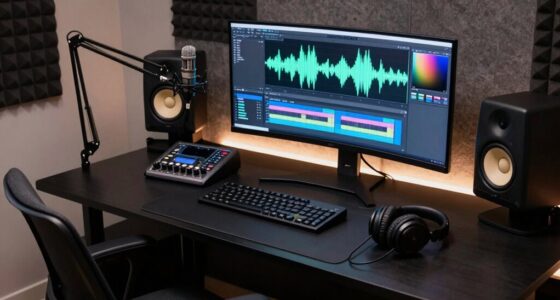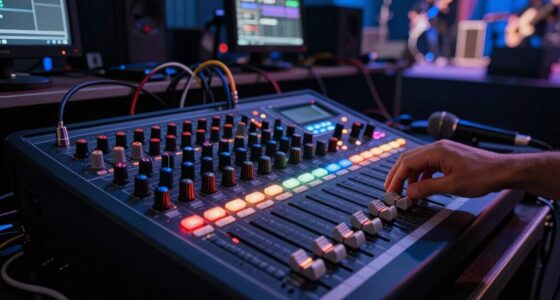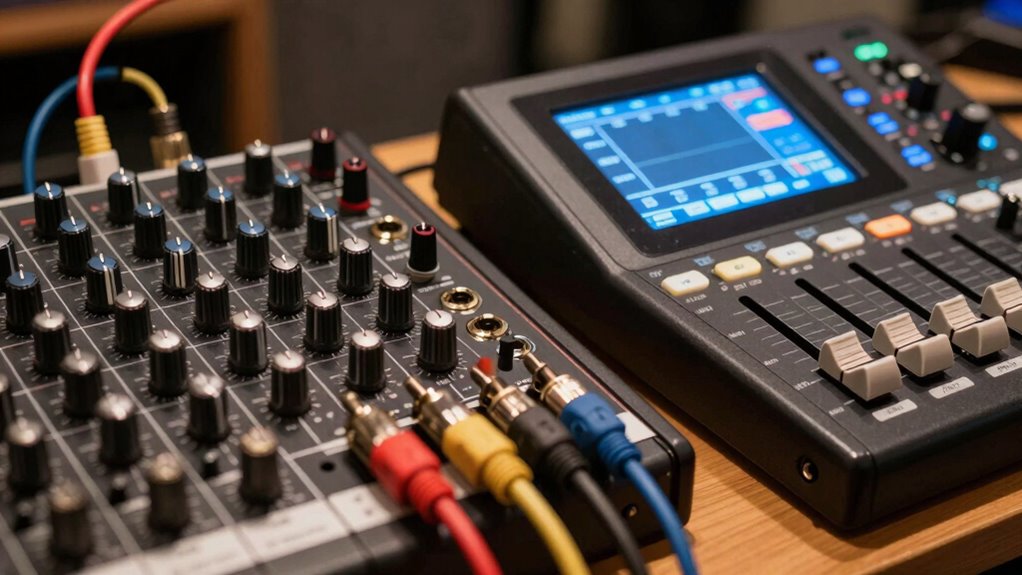

When choosing between analog and digital mixers for your band, consider what matters most to you. Analog mixers deliver a warm, natural sound and are simple to operate, making them reliable during live performances. Digital mixers offer more features, precise control, and easy integration with digital gear, though they take time to master. Both can work well, but understanding their differences helps you pick what suits your style. Keep exploring to discover which fits your band’s needs best.

Get audio and creator gear delivered free with Prime
- Fast, free delivery on millions of items
- Prime Video, Amazon Music and more included
- Member-only deals all year
Key Takeaways
- Analog mixers offer a warm, natural sound valued for live performances, while digital mixers provide pristine audio with extensive processing options.
- Analog controls are tactile and simple, enabling quick adjustments in live situations; digital mixers require learning but offer precise control.
- Analog mixers tend to be more reliable under high-pressure, live conditions due to fewer digital components.
- Digital mixers are more portable, integrate easily with digital gear, and support remote control and networked setups.
- Digital mixers offer advanced features like presets, onboard effects, and complex routing, but have a steeper learning curve for band use.
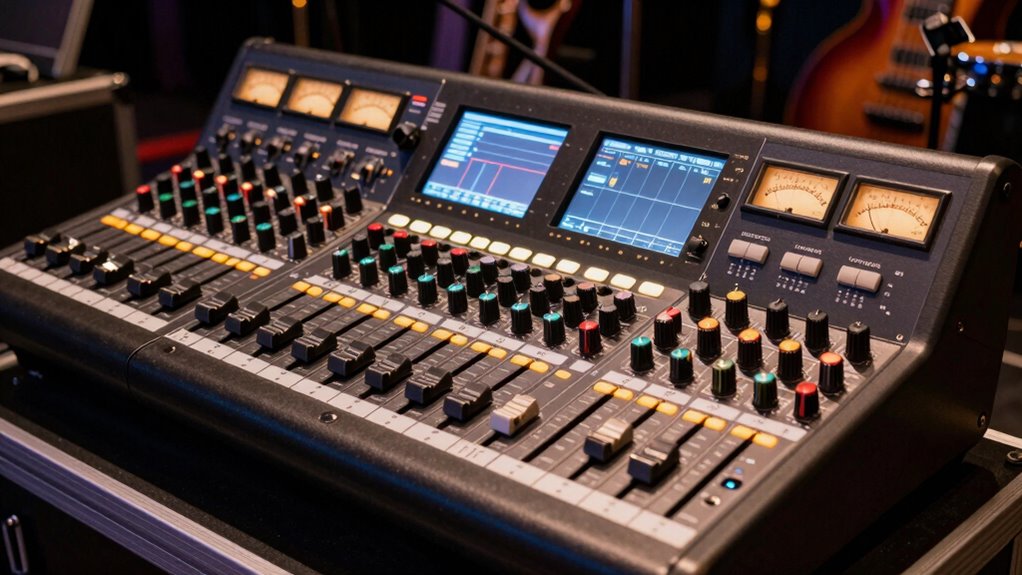
When choosing between analog and digital mixers for your band, understanding their strengths and limitations is essential to making an informed decision. Both types of mixers impact your sound quality and ease of use, but they do so in different ways. Analog mixers are prized for their warm, natural sound, which many musicians find more pleasing and musical. They typically have straightforward controls—knobs, faders, and switches—that make adjusting levels and effects intuitive. If you’re performing live and need quick, tactile control, an analog mixer’s simplicity can be a significant advantage. Plus, with fewer digital components, they often feel more reliable in high-pressure situations, reducing the risk of technical glitches during a performance.
On the other hand, digital mixers offer a different set of benefits, especially when it comes to sound quality and versatility. While some purists argue that digital sound can be less warm, modern digital mixers have made huge leaps, providing pristine audio with extensive processing options. These mixers give you the ability to save presets, recall settings instantly, and fine-tune your sound with precision. This makes them highly adaptable for various venues and different band setups. The ease of use in a digital mixer can be a double-edged sword: it might seem more complex at first glance, but once you learn the digital interface, you can achieve detailed sound adjustments more efficiently. With features like onboard effects, EQ, and routing options, digital mixers streamline your workflow, allowing you to focus more on performance and less on technical fiddling.
Portability is another consideration. Digital mixers tend to be more compact and lightweight, which is a big plus if you’re frequently moving gear or performing at multiple venues. They also often integrate seamlessly with other digital equipment, such as laptops and tablets, making setup and control more flexible. Additionally, understanding digital audio concepts can help you maximize the potential of these mixers. Recognizing the differences in audio signal processing between analog and digital systems can further inform your choice and enhance your overall sound. Moreover, digital mixers often come with remote control capabilities, enabling you to adjust settings from a distance, which can be useful during live performances. Furthermore, some digital mixers incorporate networking features that facilitate multi-room setups and remote troubleshooting, adding to their versatility. However, with this added complexity comes a learning curve—getting comfortable with digital interfaces takes some time, especially if you’re used to traditional analog controls.
As an affiliate, we earn on qualifying purchases.
Frequently Asked Questions
How Do Analog and Digital Mixers Compare in Terms of Durability?
You’ll find that analog mixers often have a build quality that feels sturdy, with durable components designed for rough gigging. Digital mixers, meanwhile, tend to have advanced circuitry that can sometimes be more sensitive, but quality models are built with robust components that guarantee long component longevity. Overall, both can be durable, but your choice depends on how well the build quality and component longevity align with your band’s demanding use.
Can Digital Mixers Be Used Without a Computer or External Software?
Yes, digital mixers can be used without a computer or external software, but you might face integration challenges and compatibility issues. Many digital mixers have built-in controls and displays that let you operate them independently. However, some advanced features or updates may require software or a computer connection. Be sure to choose a model with sufficient onboard controls to avoid relying on external devices, ensuring smoother live performances.
What Are the Best Maintenance Practices for Analog Mixers?
You should regularly maintain your analog mixer to keep it in top shape. Coincidentally, component cleaning is key—gently dust and clean all internal and external parts to prevent buildup. Connection checks are equally important; make certain all cables and connectors are secure and free of corrosion. By routinely practicing these steps, you’ll extend your mixer’s lifespan, prevent issues during gigs, and keep your sound clear and reliable.
Do Digital Mixers Require Special Training to Operate Effectively?
Yes, digital mixers often require some special training to operate effectively. Their user interface can be complex, with advanced features that influence sound quality. You’ll need to familiarize yourself with their menus, settings, and digital effects to get the most out of them. With proper training, you’ll quickly learn how to optimize sound quality, manage multiple channels, and utilize automation features that digital mixers offer for a seamless live performance.
Are There Specific Brands That Excel in Live Band Settings?
Yes, some brands excel in live band settings due to their reputation for sound quality and reliability. Brands like Yamaha, Behringer, and Allen & Heath are popular choices because of their solid build, user-friendly interfaces, and clear audio output. You’ll find that these brands consistently deliver excellent sound, making them ideal for live performances. Your choice should also consider your specific needs and budget, but these brands are a great starting point.
As an affiliate, we earn on qualifying purchases.
Conclusion
Ultimately, choosing between analog and digital mixers depends on your band’s needs and preferences. Both have their strengths—analog offers timeless simplicity, while digital provides versatility and advanced features. Remember, “you get what you pay for,” so invest in what truly enhances your sound and workflow. Trust your instincts, try both if possible, and you’ll find the right match to keep your music sounding its best on stage.
As an affiliate, we earn on qualifying purchases.
analog vs digital mixer comparison
As an affiliate, we earn on qualifying purchases.
As an affiliate, we earn on qualifying purchases.
Halloween Picks
halloween
As an affiliate, we earn on qualifying purchases.