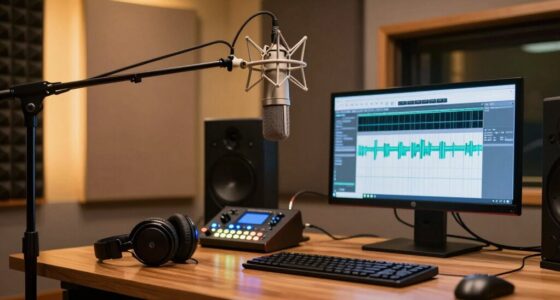
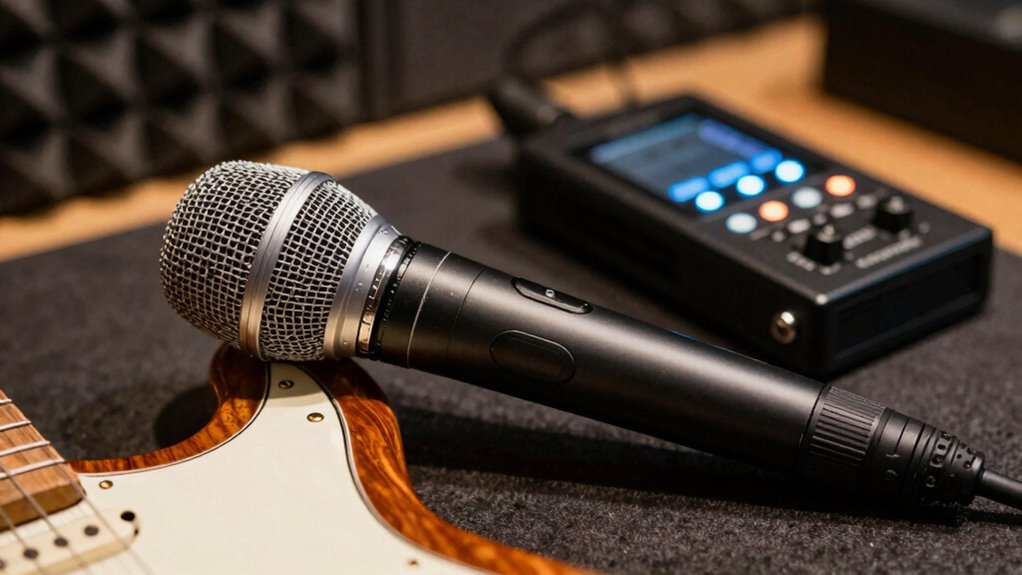

Choosing between DI and microphone recordings depends on your environment, instrument, and desired sound. Use DI for a clean, consistent signal when you want to minimize room influence, especially in controlled studio settings or for electric instruments. Opt for microphones when you want to capture natural resonance, ambiance, or a richer tone, particularly with acoustic instruments and vocals. Understanding these differences helps you select the best method—if you want to explore more, you’ll find useful insights ahead.
Key Takeaways
- Use DI for electric instruments needing clarity, consistency, and minimal room influence, especially in controlled studio environments.
- Choose microphones to capture acoustic instruments or vocals that benefit from natural resonance and room ambiance.
- DI reduces background noise and feedback risks, ideal for less-than-ideal acoustics or live settings.
- Microphones allow for expressive placement to add warmth, spatial depth, and character to recordings.
- The decision depends on desired sound character, environment, and the instrument’s natural qualities.
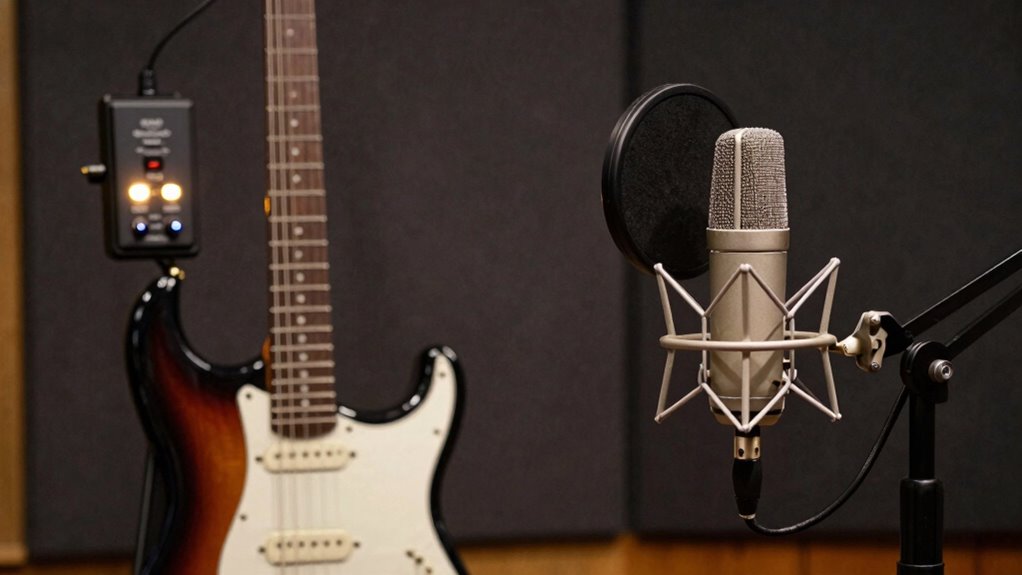
When choosing between DI (Direct Input) and a microphone for your audio setup, understanding their differences is essential. Both methods have unique advantages and are suited to different recording situations. Your environment, the instrument you’re recording, and the sound you want will influence your choice. DI is often favored for its simplicity and consistency, especially in controlled studio acoustics, where you can minimize background noise and unwanted reflections. Microphones, on the other hand, capture more of the room’s character, making microphone placement crucial for achieving the desired tone.
Choosing between DI and microphone depends on environment, instrument, and desired sound.
In a studio setting, the acoustics play a significant role. When you use DI, you bypass the room entirely, which means you avoid issues like room echo, reverb, or acoustic anomalies. This is particularly handy if your studio acoustics aren’t ideal or if you need a clean, direct sound. With a microphone, the room becomes part of the recording. Proper microphone placement is vital; positioning the mic correctly can enhance warmth, capture the instrument’s natural resonance, and add spatial depth. Poor placement, however, may result in boomy or thin sound, especially if the room has reflective surfaces or uneven acoustics.
If you’re recording electric guitars, basses, or keyboards, DI might be your best choice for a clear and consistent tone. It allows for easy editing and re-amping later, giving you flexibility during the mixing process. The direct connection also reduces the risk of feedback and background noise, which is especially beneficial in less-than-ideal acoustic environments. Conversely, when capturing acoustic instruments or vocals, a microphone can add richness and a sense of space that DI can’t replicate. Additionally, understanding the room acoustics and how they influence the sound can be crucial for making the right choice.
Your decision hinges on what you value more: control and clarity or natural ambiance. DI offers a straightforward, noise-free signal that’s easier to record in imperfect spaces. Microphones, however, demand careful microphone placement to avoid unwanted room sounds and to optimize the instrument’s full sonic potential. Experimenting with different placements can reveal how the microphone interacts with your room, revealing nuances that DI simply can’t provide.
Ultimately, understanding the role of studio acoustics and mastering microphone placement can help you decide when each method makes sense. For tight, controlled recordings, DI is often the best option. For capturing the warmth and character of an instrument or voice, a mic’s ability to incorporate room acoustics becomes invaluable. Knowing when to use each technique ensures you get the best sound for your project, regardless of your environment.
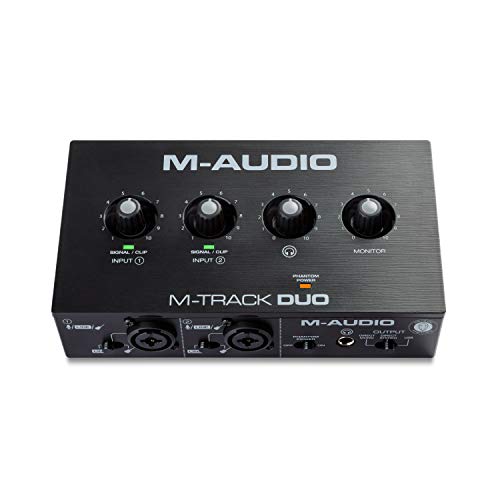
M-AUDIO M-Track Duo USB Audio Interface for Recording, Streaming and Podcasting with Dual XLR, Line and DI Inputs, plus a Software Suite Included
Podcast, Record, Live Stream, This Portable Audio Interface Covers it All – USB sound card for Mac or…
As an affiliate, we earn on qualifying purchases.
As an affiliate, we earn on qualifying purchases.
Frequently Asked Questions
How Do I Choose Between DI and Microphone for Vocals?
You should choose between DI and microphone for vocals based on your instrument compatibility and recording environment. If you want a clean, direct sound and your setup supports it, a DI is ideal, especially in a noisy or untreated space. Conversely, if capturing natural vocal tone and ambiance matters more, use a microphone. Consider your environment’s acoustics and the desired sound to make the best choice.
Can I Combine DI and Mic Recordings for Better Sound?
Sure, you can combine DI and mic recordings to craft a richer sound, especially if you want instrument isolation and a fuller tone. It’s like having your cake and eating it too—layering the direct signal with ambient mic captures adds depth. Just make certain your recording environment is controlled, so you avoid unwanted noise. Use your DAW to blend and balance these sources, creating a professional, polished mix that’s both clear and dynamic.
What Are the Cost DIfferences Between DI and Microphone Setups?
You’ll find that DI setups generally cost less because they require only a direct box and audio interface, which fits smaller budgets. Microphone setups, however, can be pricier due to high-quality mics, stands, and additional equipment. If you’re working with tight budget constraints, DI is a cost-effective choice. But if you want superior sound quality, investing in microphones might be worth the higher equipment costs.
How Do Room Acoustics Affect Microphone Recordings?
Imagine you’re recording vocals in a room with lots of reflections. These room reflections can cause reverberations that muddy your microphone recordings, making them sound less clear. Acoustic treatment helps manage these reflections, creating a controlled environment for cleaner sound. Without proper treatment, your microphone captures unwanted echoes, whereas a well-treated space guarantees your recordings are crisp and accurate, highlighting the importance of room acoustics in capturing high-quality sound.
Are There Specific Genres That Favor One Method Over the Other?
Certain genres favor either DI or microphone recordings based on genre preferences and recording environments. For example, electronic and pop music often prefer DI for clean, punchy sounds, especially in controlled studio settings. Conversely, acoustic and jazz recordings typically benefit from microphone captures, capturing the room’s ambiance and natural tone. Your choice depends on the desired sound and the recording environment’s acoustics, shaping the final audio quality.
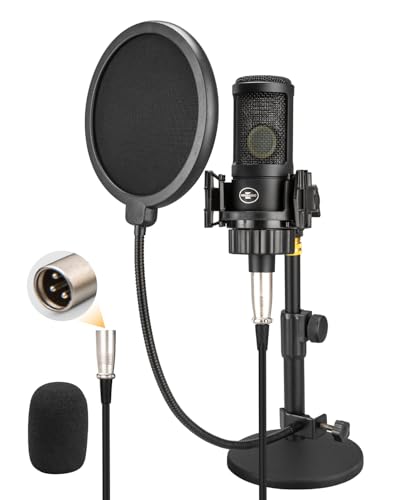
XLR Condenser Microphone with 26mm Large Diaphragm, Professional Cardioid Recording Studio Mic Kit with Metal Desktop Stand, Pop Filter for Streaming, Podcasting, Gaming, Voice-Over, Vocal, Youtube
26MM Large Diaphragm Gold Condenser Capsule : The XLR condenser microphone features a custom-designed 26mm large diaphragm condenser…
As an affiliate, we earn on qualifying purchases.
As an affiliate, we earn on qualifying purchases.
Conclusion
Ultimately, choosing between DI and mic depends on the sound you want. For example, if you’re recording a distorted electric guitar, a DI might give you a cleaner, more controllable tone. Conversely, capturing a live vocal performance benefits from a microphone’s natural warmth. By understanding each method’s strengths, you can make smarter choices—like combining both for a rich, layered sound—ensuring your recordings truly shine in any context.

Pyle 3 Piece Professional Dynamic Microphone Kit Cardioid Unidirectional Vocal Handheld MIC with Hard Carry Case & Bag, Holder/Clip & 26ft XLR Audio Cable to 1/4'' Audio Connection (PDMICKT34),Black
UNIDIRECTIONAL – Cardioid pickup pattern captures source signal such as guitar amplifier or vocalist, while shunning off-axis sound…
As an affiliate, we earn on qualifying purchases.
As an affiliate, we earn on qualifying purchases.

Shure SM57 Dynamic Microphone – Wired Cardioid XLR Instrument Handheld Mic for Guitar Amplifiers, Snare Drum, Percussion, Live Sound & Studio Recording, Black
INSTRUMENT CLARITY: A contoured frequency response with a refined presence boost enhances attack, detail, and clarity, helping guitar…
As an affiliate, we earn on qualifying purchases.
As an affiliate, we earn on qualifying purchases.