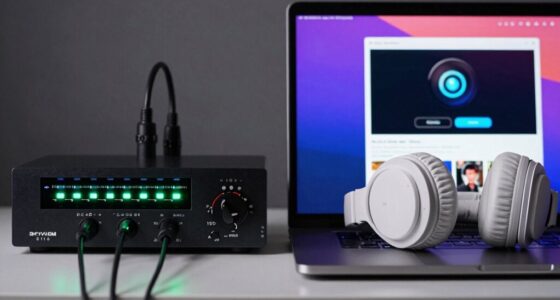


Impedance and sensitivity are key specs that influence how your headphones perform, but they often confuse people because they impact compatibility, volume, and sound quality differently. Impedance measures resistance and affects how much power your device needs, while sensitivity indicates how loud the headphones can get at a given power. Understanding these numbers helps you choose headphones that match your device and listening style. Keep exploring to get a clearer picture of these important features.
Key Takeaways
- Impedance (Ω) indicates resistance; low (16-32Ω) suits portable devices, high (250+Ω) for studio setups.
- Sensitivity (dB/mW) measures loudness; higher values mean louder sound at less power.
- Mismatched impedance can cause low volume or distortion; proper pairing ensures optimal sound quality.
- High sensitivity headphones are louder with less power but may lack nuance; low sensitivity need more power.
- Understanding both helps select headphones that match your device, improving sound clarity and performance.
What Are Headphone Impedance and Sensitivity?

Have you ever wondered what the terms impedance and sensitivity mean when shopping for headphones? Impedance measures how much resistance your headphones offer to the audio signal, affecting how they connect with devices and audio cables. Higher impedance headphones typically need more power from headphone amplifiers to perform well, making them suitable for high-end equipment. Sensitivity indicates how loud your headphones will get with a given amount of power; higher sensitivity means louder sound without extra amplification. Understanding these numbers helps you choose headphones that match your setup. For example, low-impedance headphones work well with portable devices, while high-impedance models benefit from dedicated headphone amplifiers. Knowing these specs guarantees your headphones deliver superb sound quality and compatibility. Impedance and sensitivity are crucial specifications that can influence your overall listening experience.
How Does Impedance Affect Compatibility With Devices?
Your device’s power output and impedance levels determine how well headphones will work together. If the impedance is too high, your device might struggle to drive the headphones properly, leading to lower volume or poor sound quality. Understanding these factors helps you choose headphones that match your device’s power and compatibility needs. For example, knowing about headphone impedance can help you select the right pair for your device’s output capacity.
Device Compatibility Factors
Impedance plays a vital role in guaranteeing device compatibility, as mismatched impedance can lead to poor audio quality or even damage. When choosing headphones, consider these factors:
- Low impedance headphones (below 50 ohms) are ideal for smartphones and portable devices, offering easy wireless connectivity.
- High impedance headphones (above 100 ohms) require dedicated amplifiers to access their full potential.
- Noise cancellation features work best with compatible power sources; mismatched impedance can weaken effectiveness.
- Wireless connectivity performance may drop if impedance isn’t suited to your device, causing lag or dropout issues.
- Understanding impedance matching is essential for optimizing audio performance and ensuring your headphones work seamlessly with your devices.
Matching headphone impedance with your device ensures optimal sound clarity, noise cancellation, and seamless wireless experience, preventing potential damage and guaranteeing compatibility.
Impedance and Power Needs
Since impedance directly influences how much power a device needs to operate effectively, selecting headphones with the right impedance guarantees they receive compatible power levels. Lower impedance headphones (around 16-32 ohms) require less power and work well with smartphones and portable devices, but they can produce more noise or distortion if driven by weaker sources. Higher impedance headphones (above 100 ohms) need a more powerful audio amplifier to reach ideal volume and sound quality. Using incompatible headphone cables or amplifiers can lead to insufficient power or potential damage. To guarantee compatibility, match your headphones’ impedance with your device’s output power, and choose high-quality headphone cables that can handle the required power without signal loss. Proper matching enhances performance and protects your gear. Additionally, understanding European cloud innovation can help you select equipment that meets modern standards for efficiency and security.
Why Is Sensitivity Important for Sound Volume and Clarity?
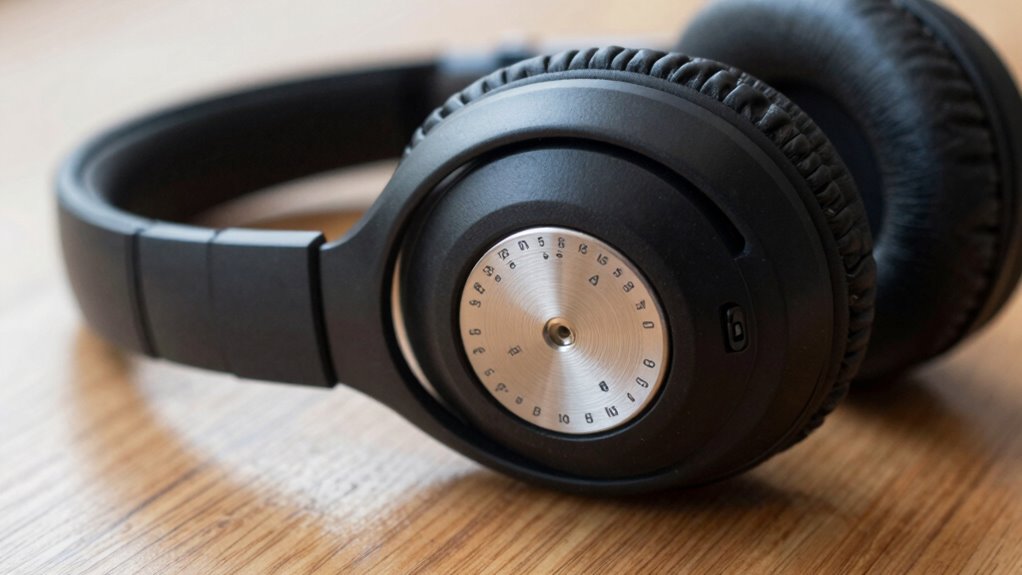
Sensitivity plays a essential role in determining how loud and clear your sound output will be. Higher sensitivity means your headphones produce more volume with less power, making details like frequency response and noise cancellation more effective. When sensitivity is high:
- You enjoy louder audio without increasing volume.
- Clarity improves, revealing subtle sounds and nuances.
- Noise cancellation features work better, as clearer audio enhances their effectiveness.
- You can select headphones suited for portable devices, which often have lower power output.
- Understanding the design and craftsmanship behind headphones can help in selecting models with optimal performance and durability.
Lower sensitivity headphones may require more power, risking distortion and muddy sound. Sensitivity influences how well you perceive the full frequency response, especially at higher volumes. Understanding this helps you choose headphones that deliver ideal volume and clarity for your listening environment.
How to Read and Compare Headphone Impedance and Sensitivity Ratings
Understanding how to read impedance and sensitivity ratings helps you choose the right headphones for your needs. You’ll want to compare these numbers to guarantee compatibility with your audio devices. By mastering these metrics, you can find headphones that deliver ideal sound quality and performance.
Deciphering Impedance Ratings
Reading impedance ratings can seem confusing at first, but understanding what these numbers mean is essential for choosing the right headphones. Impedance indicates how much a headphone resists electrical current, affecting compatibility and performance. To decipher these ratings:
- Lower impedance (below 50 ohms) usually means easier driving and higher volume on portable devices.
- Higher impedance (above 100 ohms) often requires more power but can deliver cleaner sound, reflecting better manufacturing standards.
- Impedance alone doesn’t determine headphone durability, but well-made models tend to maintain consistent impedance over time.
- Comparing impedance ratings helps you match headphones with your amp or device, ensuring ideal performance without damaging your gear.
- Understanding at-home audio technology can also help you select headphones that optimize your listening experience and longevity.
Always consider manufacturer standards to ensure your headphones are built for longevity and reliable sound.
Comparing Sensitivity Metrics
When comparing headphones, it’s important to look beyond impedance and consider sensitivity ratings, which indicate how loud a headphone can get with a given amount of power. Sensitivity is usually measured in decibels (dB) and helps you understand potential volume levels. However, keep in mind that a higher sensitivity doesn’t always mean better sound quality. Also, check the frequency response to see the range of sounds the headphones can reproduce—wider ranges often mean richer sound. Noise isolation is another factor that affects perceived loudness; better noise isolation reduces external sound, making lower sensitivity sufficient in noisy environments. Comparing these metrics together gives you a clearer picture of how a headphone will perform, especially in different listening situations.
Which Headphones Are Best for Your Listening Device?
Choosing the right headphones depends heavily on the listening device you use. To guarantee ideal performance, consider these factors:
- Wireless compatibility: If you prefer cordless convenience, opt for Bluetooth or wireless models that match your device’s connectivity.
- Impedance matching: Low-impedance headphones work well with smartphones and portable devices, providing sufficient volume without extra power.
- Studio monitoring: For professional audio work, select headphones with flat frequency response, often high impedance, designed for accurate sound reproduction.
- Device output power: Check your device’s output power to avoid underpowered headphones that won’t reach full volume or overpowered ones that could damage sensitive models.
- Vetted information on headphone specifications can help you better understand how impedance and other features impact compatibility and performance.
Matching headphone specs with your device’s capabilities guarantees the best listening experience, whether casual, mobile, or studio monitoring.
Common Myths About Impedance and Sensitivity
Many people believe that higher impedance headphones always deliver better sound quality, but this isn’t necessarily true. This is a common misconception rooted in technical inaccuracies. Impedance affects how much power your device needs, not the sound quality itself. For example, low-impedance headphones aren’t inherently inferior or “bad,” nor are high-impedance ones automatically superior. Misunderstanding this can lead you to choose headphones based on incorrect assumptions. Here’s a quick comparison:
| Impedance Level | Common Misconception |
|---|---|
| Low (16-32 Ohms) | They’re low quality or less durable |
| High (250+ Ohms) | Always better sound or more precise |
| Mid (50-100 Ohms) | The ideal balance for all devices |
| Low | Require powerful amps, but not always |
| High | Need special equipment, but not necessarily more accurate |
Knowing these myths helps you make smarter choices.
Tips for Choosing Headphones for Different Uses
Understanding the differences in impedance can help you select the right headphones for various activities. Your choice depends on your listening environment and the type of audio equipment you use. For example:
- Low-impedance headphones (below 50 ohms) are ideal for portable devices and casual listening.
- High-impedance headphones (above 100 ohms) suit studio setups or high-quality audio equipment.
- Noise-canceling headphones benefit from higher impedance for better sound isolation.
- Open-back headphones provide a natural soundstage for home listening but may not suit noisy environments.
- Matching impedance with your equipment ensures optimal performance and prevents damage, especially when selecting reliable, safe audio gear.
How Impedance and Sensitivity Impact Overall Sound Quality

Impedance and sensitivity directly influence how headphones deliver sound, shaping both clarity and volume. Higher impedance headphones often require more power to achieve ideal audio fidelity, which can impact sound detail and overall clarity. Low sensitivity headphones tend to produce less volume without sufficient power, affecting sound balance. Conversely, high sensitivity models can deliver louder sound with less power, but may sacrifice some nuance. Understanding these factors helps you match headphones to your audio source, ensuring balanced sound quality. When impedance and sensitivity align well with your device, you experience richer, more accurate audio. Proper matching prevents distortion, preserves sound details, and enhances overall sound quality, giving you a more immersive listening experience. Additionally, power requirements play a crucial role in determining how well headphones perform with different devices, affecting both volume and sound fidelity.
Frequently Asked Questions
Do Higher Impedance Headphones Always Sound Better?
Higher impedance headphones don’t always sound better. They can offer clearer audio quality at higher volumes, but they require more power from your device, so compatibility considerations matter. If your gear doesn’t supply enough power, you might experience lower volume or less ideal sound. Ultimately, the best headphones depend on your equipment and listening preferences, not just impedance. Focus on matching your gear with headphones that deliver the sound quality you want.
Can Headphones With High Sensitivity Damage My Ears?
Yes, headphones with high sensitivity can potentially damage your ears if you crank up the volume too much. It’s like playing with fire—your ear health is at risk when you ignore safe volume levels. Even a small increase in volume can turn into a big problem over time. Always keep your volume at a reasonable level, and your ears will thank you for it. Protect your hearing!
Is There a Universal Standard for Headphone Ratings?
There isn’t a universal standard for headphone ratings, which can make comparisons tricky. Audio jack standards like 3.5mm or USB-C help guarantee compatibility, but ratings like impedance and sensitivity vary widely across brands. You should also consider headphone durability when choosing, as well-made headphones tend to last longer. Always check specific product details and reviews, rather than relying solely on numbers, to find the best fit for your needs.
How Do Impedance and Sensitivity Affect Wireless Headphones?
You might think impedance and sensitivity don’t matter for wireless headphones, but they actually influence audio quality and power needs. Higher impedance can mean better sound but requires more power to perform well, which affects battery life. Sensitivity determines how loud your headphones get at a given power level. So, understanding these factors helps you choose wireless headphones that deliver great audio without draining your device’s battery.
Can I Use High-Impedance Headphones Without an Amplifier?
You can use high-impedance headphones without an amplifier, but your portable device might struggle with amplifier compatibility. High-impedance models often require more power, which many smartphones or portable players can’t provide. This means you may experience lower volume and poor sound quality. To get the best performance, consider using an external amplifier or choosing headphones with lower impedance suited for portable devices.
Conclusion
Understanding impedance and sensitivity helps you pick the right headphones for your device and sound preferences. Did you know that over 60% of users often choose headphones based on specs they don’t fully understand? By paying attention to these numbers, you can improve your listening experience and avoid unnecessary frustration. So, next time you shop, remember that the right specifications make all the difference between decent sound and truly great audio.