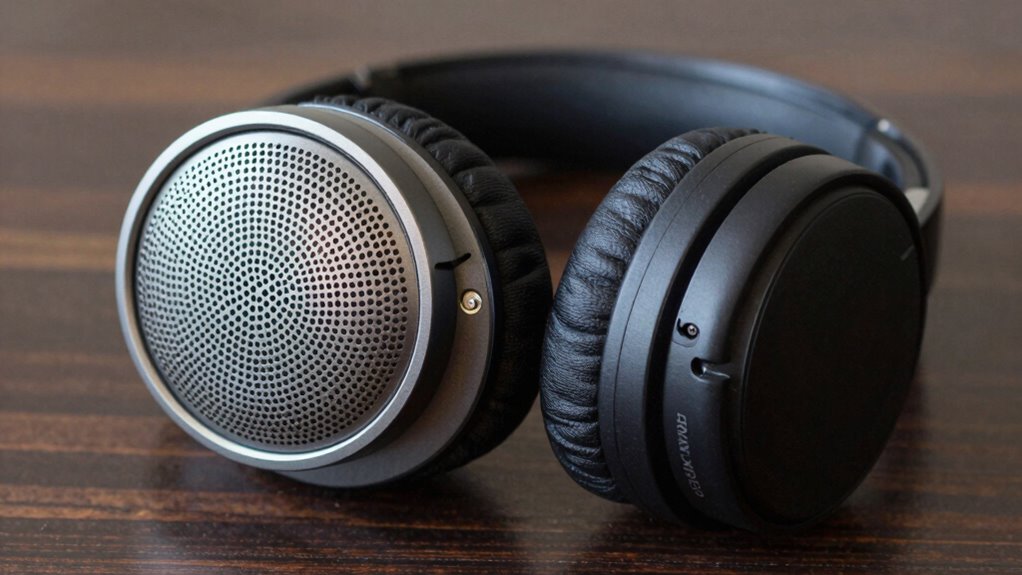

If you choose open-back headphones, you’ll notice a more natural, spacious sound with better soundstage and realism, making them ideal for detailed, critical listening. They, however, leak sound and don’t block out noise well, so they’re less suited for noisy environments. Closed-backs offer better noise isolation, punchier bass, and privacy but may feel less airy. The biggest differences lie in sound environment and noise control—stick around to discover how each can elevate your listening experience.

Get audio and creator gear delivered free with Prime
- Fast, free delivery on millions of items
- Prime Video, Amazon Music and more included
- Member-only deals all year
Key Takeaways
- Soundstage and spatial accuracy are significantly enhanced with open-back headphones, creating a more immersive listening experience.
- Open-backs offer a natural, balanced sound profile, while closed-backs emphasize bass and provide a more intimate sound.
- Noise isolation is much better in closed-back headphones, making them more suitable for noisy environments.
- Open-backs provide better airflow and comfort for long listening sessions, reducing heat buildup.
- Sound leakage is prominent in open-backs, impacting privacy and environment, unlike the sealed design of closed-backs.
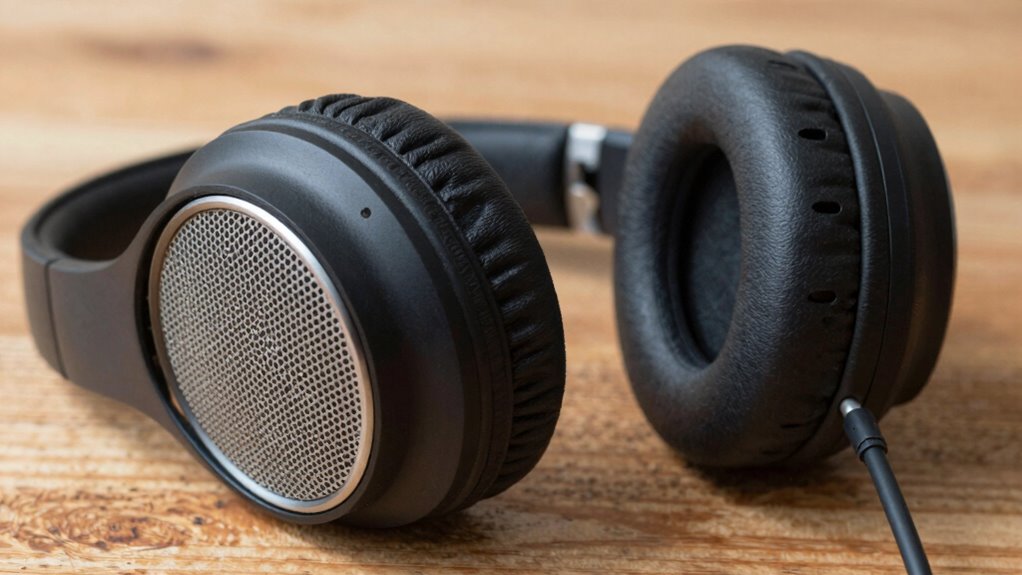
When choosing between open-back and closed-back headphones, understanding their fundamental differences is key to finding the right fit for your needs. If you’re serious about listening and want the best audio experience, you’ll notice that these designs influence sound quality, comfort, and practicality in distinct ways. Open-back headphones allow air and sound to flow freely through their ear cups, creating a more natural and spacious listening environment. This openness significantly enhances the soundstage, making it feel as if music surrounds you, which is especially beneficial for critical listening or enjoying complex compositions. You’ll find that the sound feels more immersive, with better spatial cues, allowing you to distinguish subtle details across different instruments or vocals.
However, this openness comes with a trade-off in audio isolation. Because sound leaks out and external noise seeps in, open-back headphones aren’t ideal for public or noisy environments. If you need to block out distractions or prevent sound leakage from bothering others, closed-back headphones are your better choice. Their sealed design enhances audio isolation, so you experience less external interference and less sound leakage outward. This makes closed-backs more suitable for commuting, office use, or any scenario where you want to focus solely on your music without disturbing others. While this sealed design can sometimes lead to a slightly less expansive soundstage, the trade-off is a more private and immersive listening experience in noisy settings. Additionally, some users may find that the comfort of closed-backs can vary depending on ear cup shape and padding, which is worth considering for extended listening sessions. Proper maintenance and durability also differ between the two types, impacting their long-term usability and overall performance.
In terms of sound quality, open-back models tend to deliver a more natural and balanced sound, thanks to their open architecture that mimics a real-world listening environment. This setup allows sound to move more freely, which can improve clarity and reduce listening fatigue during long sessions. Closed-back headphones, on the other hand, often emphasize bass and provide more punchy, direct sound. This is advantageous for genres like electronic or hip-hop, where bass response is critical, but it can sometimes make the sound feel less airy or spacious compared to open-backs. Additionally, the soundstage of open-back headphones can create a sense of depth and realism that is difficult to replicate with closed-back designs. The airflow within open-back models also helps prevent excessive heat buildup, which can contribute to increased comfort during extended use.
Ultimately, your choice depends on where and how you listen. If you prioritize soundstage enhancement and natural audio, open-back headphones are the way to go. If you need better audio isolation and privacy, closed-back models serve you best. Both have their strengths, but understanding these core differences helps you pick the headphones that truly match your serious listening needs. Furthermore, considering the acoustic environment in which you listen can greatly influence which design will serve you best. It’s also worth noting that maintenance and durability may differ between the two types, affecting long-term usability.
open-back headphones for critical listening
As an affiliate, we earn on qualifying purchases.
As an affiliate, we earn on qualifying purchases.
Frequently Asked Questions
Do Open-Back Headphones Leak Sound More Than Closed-Back?
Yes, open-back headphones leak more sound than closed-back ones. You’ll notice less sound isolation, so they’re not ideal for noisy environments. Open-backs also tend to be more comfortable because of better airflow, but that means others can hear your music more easily. If you want privacy and noise reduction, closed-back headphones are better. However, if you prioritize a natural sound and comfort, open-backs are the way to go.
Can Closed-Back Headphones Provide the Same Soundstage as Open-Back?
Closed-back headphones can deliver a surprisingly immersive soundstage, but it’s like trying to capture an ocean in a bottle—impressive, yet limited compared to open-backs. Their design aesthetics often prioritize sleek, portable styles over expansive listening. If portability considerations matter, closed-backs are more travel-friendly, but don’t expect the same airiness and spatial depth you get from open-back models. You’ll need to weigh these factors for serious listening.
Are Open-Back Headphones Better for Mixing and Mastering?
Open-back headphones are generally better for mixing and mastering because they offer a more natural soundstage and accurate audio reproduction. You’ll notice less sound isolation and noise cancellation, so external noise can interfere, but this openness helps you hear subtle details clearly. This accurate sound environment allows you to make precise adjustments, ensuring your mix sounds good on various systems. However, they’re less suitable in noisy environments due to limited noise cancellation.
How Do Open-Back Headphones Handle Bass Response?
Open-back headphones typically offer less bass response compared to closed-back models because their design allows sound to escape, reducing sound isolation. This means ambient noise can seep in, and you might find the bass less pronounced and less tight. If you prefer a more immersive bass experience with sound isolation from ambient noise, closed-back headphones are usually better. Open-backs prioritize natural sound over deep bass emphasis.
Are Closed-Back Headphones More Durable Than Open-Back Models?
Closed-back headphones are generally more durable than open-back models, especially since they’re built to withstand daily wear and tear. You’ll find they offer better noise isolation, which helps protect your ear health during long sessions. When considering comfort, it varies by design, but many users find closed-back headphones more secure and less prone to damage, making them a practical choice for serious listening and travel.
closed-back noise isolating headphones
As an affiliate, we earn on qualifying purchases.
As an affiliate, we earn on qualifying purchases.
Conclusion
Choosing between open-back and closed-back headphones is like picking the right window view—you’ll either enjoy the vast, airy landscape or a cozy, focused space. Open-backs let you feel the music breathe, perfect for immersive listening, while closed-backs keep your sound confined, ideal for privacy. Think of it as selecting your musical window—wide and panoramic or snug and private. Whichever you choose, make sure it fits your listening style and the world you want to immerse yourself in.
high fidelity open-back headphones
As an affiliate, we earn on qualifying purchases.
As an affiliate, we earn on qualifying purchases.
studio closed-back headphones for mixing
As an affiliate, we earn on qualifying purchases.
As an affiliate, we earn on qualifying purchases.
Fall Picks
fall essentials
As an affiliate, we earn on qualifying purchases.