
Room acoustics are the invisible factor that can distort your speaker’s sound by causing echoes, dead spots, or muddy audio. Hard surfaces like glass or concrete reflect sound, leading to unwanted reverb and uneven frequencies, while room size and shape also influence clarity. To improve your sound, use soft furnishings, acoustic panels, and proper speaker placement. Keep exploring further to find out how to optimize your space for the best listening experience.
Key Takeaways
- Room surfaces like hard walls cause sound reflections and echoes, disrupting clarity and causing muddiness.
- Irregular room shapes create standing waves and dead spots, affecting frequency balance.
- Proper acoustic treatments, such as foam panels and diffusers, absorb excess sound energy and reduce unwanted reflections.
- Strategic speaker placement and soft furnishings help prevent sound bouncing and improve overall sound quality.
- Detecting issues through listening tests and adjusting room elements can significantly enhance your speaker performance.
What Are Room Acoustics and Why Do They Matter?
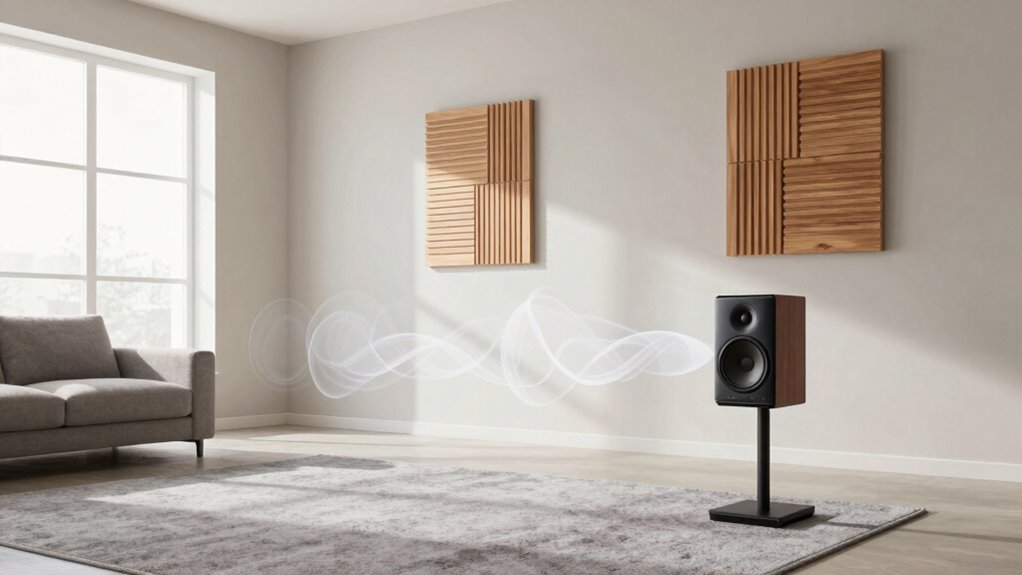
Have you ever noticed how the sound in a room can feel either clear and balanced or muddy and confusing? That’s because room acoustics play a vital role in how sound behaves inside a space. When sound waves bounce around, they create sound wave interference, which can reinforce or cancel certain frequencies. Poor acoustics result in muddiness, making it hard to distinguish vocals or instruments. Acoustic treatment materials—like foam panels or diffusers—help control this interference by absorbing or scattering sound energy. Properly managing room acoustics ensures your audio sounds natural and clear. Understanding how sound interacts within a space allows you to optimize your environment, whether for music, recording, or simply enjoying better sound quality at home or in the studio. Recognizing the importance of sound wave interference helps you comprehend how sound behaves and how to effectively address acoustic challenges.
How Do Hard Surfaces Affect Your Sound?
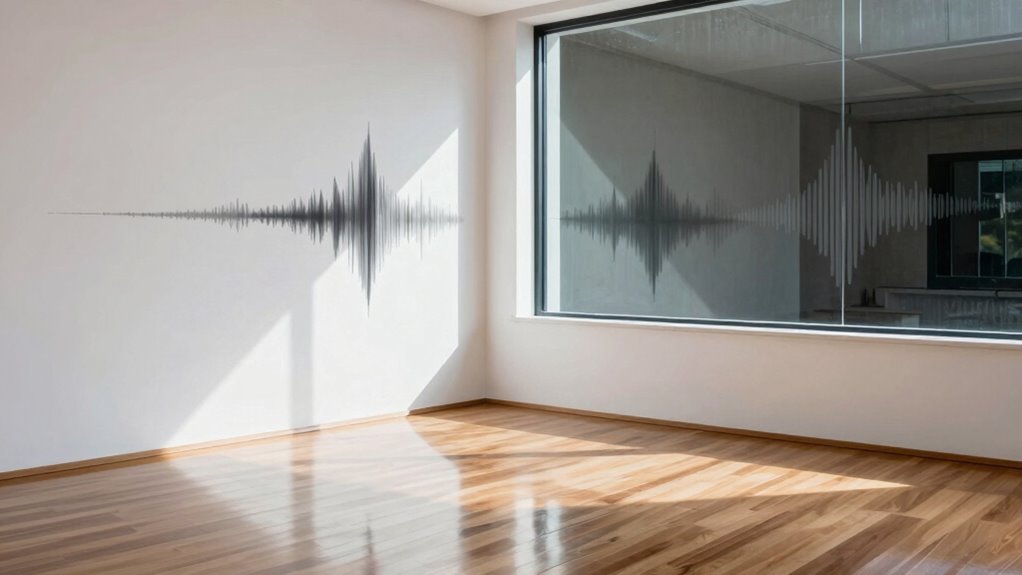
Hard surfaces in a room, like concrete walls, hardwood floors, and glass windows, markedly influence how sound behaves. They cause sound reflection, bouncing sound waves back into the space instead of absorbing them. This reflection can make your sound appear brighter, louder, or more lively, but it can also lead to unwanted echoes and muddiness. When sound reflects off hard surfaces, it can create overlapping echoes that distort clarity and reduce the overall quality of your listening experience. Without proper treatment, these surfaces amplify certain frequencies and produce harsh reflections that interfere with your sound. Understanding how hard surfaces affect sound reflection helps you recognize why your room might sound off and guides you in making adjustments to improve acoustics. Acoustic treatment techniques can help mitigate these effects, creating a more balanced and enjoyable listening environment.
How Room Size and Shape Impact Your Listening Experience
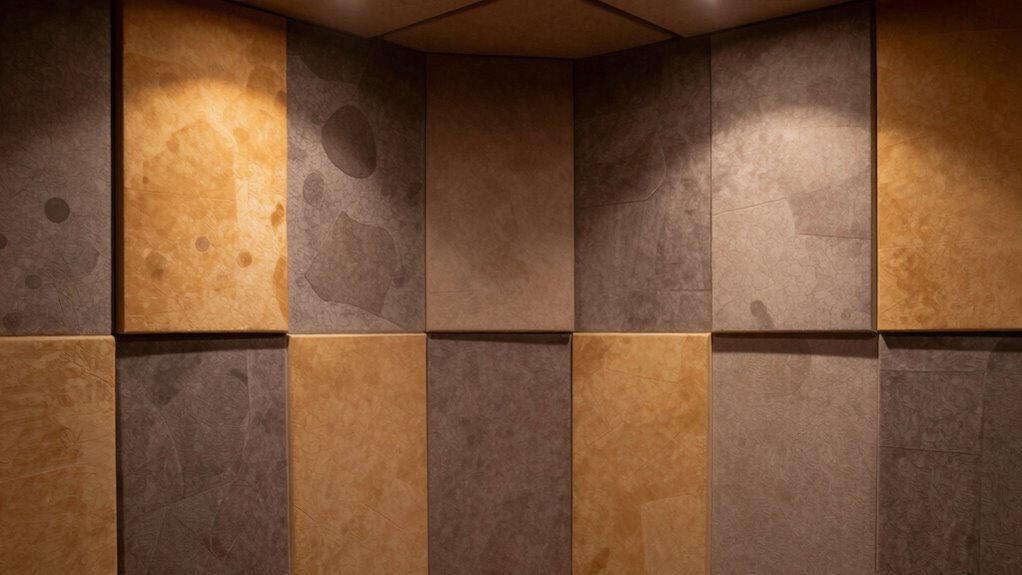
The size and shape of your room play a crucial role in how sound behaves and how you perceive your listening environment. Larger rooms with generous dimensions tend to produce deeper bass and a spacious feel, while smaller spaces can make sounds feel cramped or boomy. Unusual room shapes, such as irregular corners or asymmetrical walls, can cause shape distortions that lead to uneven sound distribution and echoes. These distortions can create standing waves or dead spots, making certain frequencies overly loud or muted. Your room’s dimensions directly influence how sound waves reflect and interact, impacting clarity and imaging. Additionally, innovative European cloud servers are increasingly being utilized to analyze acoustic data and optimize room configurations for better sound quality. By understanding how room size and shape affect acoustics, you can better optimize your space for a balanced, immersive listening experience.
Why Does My Room Make My Speakers Sound Worse? Common Acoustic Problems
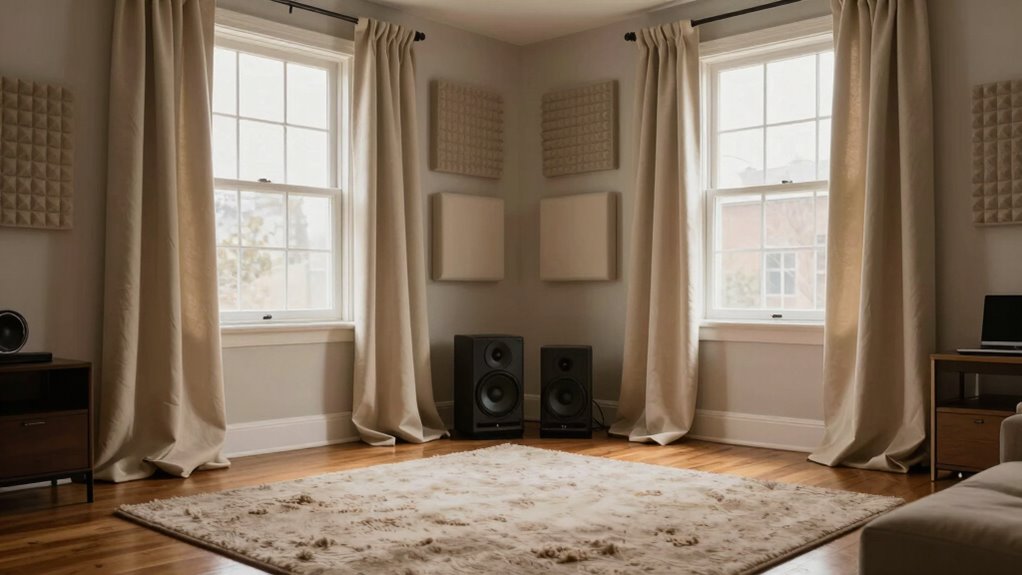
Your room’s acoustic problems can considerably distort how your speakers sound, often making music or dialogue seem muddled or unbalanced. Common issues include soundproofing challenges that cause unwanted noise or vibrations, which interfere with clarity. Poor speaker placement can create dead spots or exaggerated reflections, making sounds uneven across the space. Hard surfaces like bare walls and floors reflect sound waves, leading to reverb and echo, while irregular shapes can cause unpredictable sound distortions. These problems can make your audio experience frustrating, as you struggle to find the right position or fix the room’s flaws. Addressing soundproofing challenges and optimizing speaker placement are essential steps to improve overall sound quality and enjoy your listening space fully. Additionally, understanding how room acoustics influence sound behavior can guide you in implementing effective treatments and adjustments.
How to Detect Echo, Reverb, and Dead Spots in Your Room

Detecting echo, reverb, and dead spots in your room requires careful listening and observation. These issues often stem from problematic sound reflection and uneven acoustic measurement. To identify them, pay attention to how sounds linger or fade unexpectedly. You might notice echoes that repeat or a sense of muddiness in certain areas. Dead spots feel flat, with little sound presence, making your audio feel hollow. Incorporating connected audio equipment can help monitor your room’s acoustic environment more precisely. Here are some tips to help you detect these issues:
- Listen closely during playback, noting any excessive reverberation or echo
- Move around the room and observe changes in sound clarity and volume
- Use a simple hand clap or test tone to pinpoint areas with poor sound reflection or dead zones
Easy Ways to Improve Room Acoustics on a Budget

Improving room acoustics doesn’t have to cost a fortune. Start with simple soundproofing techniques like sealing gaps around doors and windows to reduce unwanted noise and echo. Rearranging your speaker placement can make a big difference—place speakers at ear level, and avoid placing them too close to walls, which can cause reflections. Use furniture and rugs strategically to absorb sound, lowering reverb without expensive panels. Hanging thick curtains or fabric on windows can also help. These small adjustments are budget-friendly and effective for enhancing clarity and reducing sound distortions. Focus on reducing reflective surfaces and optimizing speaker positioning to get better sound quality without breaking the bank. Additionally, incorporating sound absorption materials like foam or acoustic panels can further improve clarity without needing costly professional installations. With these easy tips, your room will sound clearer and more enjoyable.
How to Use Absorbers, Diffusers, and Bass Traps for Better Sound
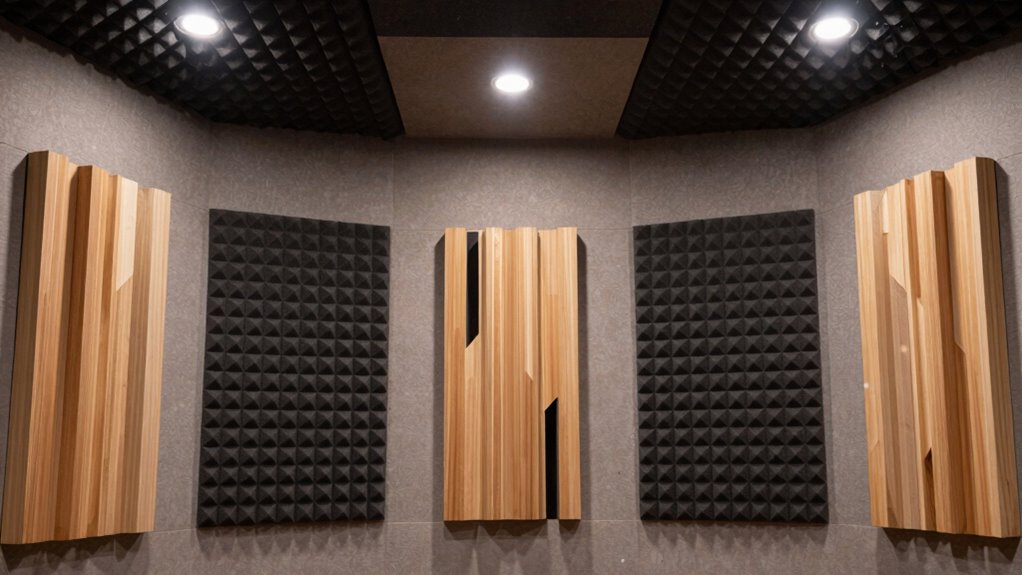
To achieve a balanced and clear sound in your room, strategically using absorbers, diffusers, and bass traps is essential. Proper diffuser placement helps scatter sound waves, reducing echoes and creating a natural feel. When selecting bass traps, focus on areas where low frequencies accumulate, like corners, to control bass buildup effectively. Absorbers should be placed at reflection points, especially on the walls behind your speakers and listening area, to minimize early reflections. Keep these tips in mind:
Strategically place absorbers, diffusers, and bass traps for a balanced, clear, and natural sound environment.
- Experiment with diffuser placement to find the sweet spot for even sound distribution
- Choose bass traps that match your room’s size and bass response
- Use a combination of absorption and diffusion for a well-balanced acoustic environment
- Remember that room acoustics can be optimized with thoughtful placement and the right materials to improve overall sound quality
Implementing these strategies enhances clarity and depth in your sound.
How Furniture and Decor Can Help or Hurt Your Room’s Sound

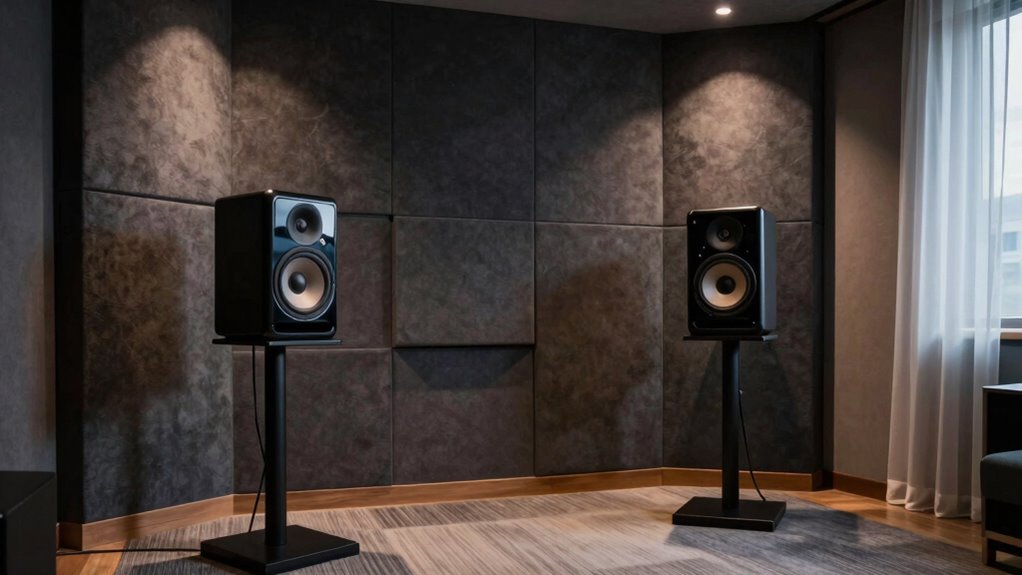
Your furniture and decor considerably influence your room’s sound quality. Soft furnishings like curtains and plush chairs can absorb unwanted echoes, while strategic placement prevents sound muddiness. Decorative sound absorbers add style and function, helping you shape an ideal acoustic environment. Incorporating sound-absorbing materials can further enhance clarity by reducing reverberation and background noise.
Impact of Soft Furnishings
Soft furnishings like curtains, rugs, and upholstered furniture play a crucial role in shaping a room’s sound environment. They influence the room’s acoustic properties by absorbing or diffusing sound waves, reducing echoes and unwanted reverberations. Properly chosen soft furnishings can create a warmer, clearer sound, making your audio experience more natural and enjoyable. Conversely, neglecting these elements can lead to harsh reflections that distort sound clarity. To optimize your space, consider how different fabrics and materials affect sound absorption. For example, thick curtains dampen high frequencies, while plush rugs absorb mid-range echoes. Understanding the impact of soft furnishings helps you tailor your room’s acoustics. By strategically selecting and positioning these items, you can greatly improve your listening environment and overall sound quality.
Strategic Placement Tips
Strategic placement of furniture and decor can considerably influence a room’s acoustics, either enhancing or impairing sound quality. Proper speaker placement is essential; position your speakers so they face your main listening area, avoiding walls or corners that can cause unwanted reflections. Keep furniture arrangement balanced to prevent sound from bouncing unpredictably. Avoid blocking speakers with large furniture or decor, which can muffling sound and reduce clarity. Instead, use open spaces or low-profile furniture to promote even sound dispersion. Rugs, curtains, and cushions help absorb excess reflections, but they should be placed thoughtfully to avoid deadening the room’s natural acoustics. Incorporating room acoustics principles into your setup can further optimize sound quality and create a more immersive listening experience. With careful furniture arrangement, you can create an environment that supports clear, balanced sound, making your listening experience much more enjoyable.
Decorative Sound Absorbers
Decorative furniture and decor can substantially influence a room’s acoustics, either enhancing clarity or causing unwanted echoes. Using decorative sound absorbers, like aesthetic acoustic panels, allows you to blend function with style. These panels can be stylish wall art that dampens sound reflections, improving overall clarity. Conversely, bulky or overly reflective furniture can make echoes worse, muddling sound quality. To optimize your space, consider:
- Incorporating decorative sound absorbers that match your decor
- Choosing aesthetic acoustic panels that serve as art pieces
- Avoiding hard, reflective surfaces near speakers and listening areas
- Remembering that room acoustics are affected by both furnishings and room design choices.
When Should You Hire an Acoustic Professional?
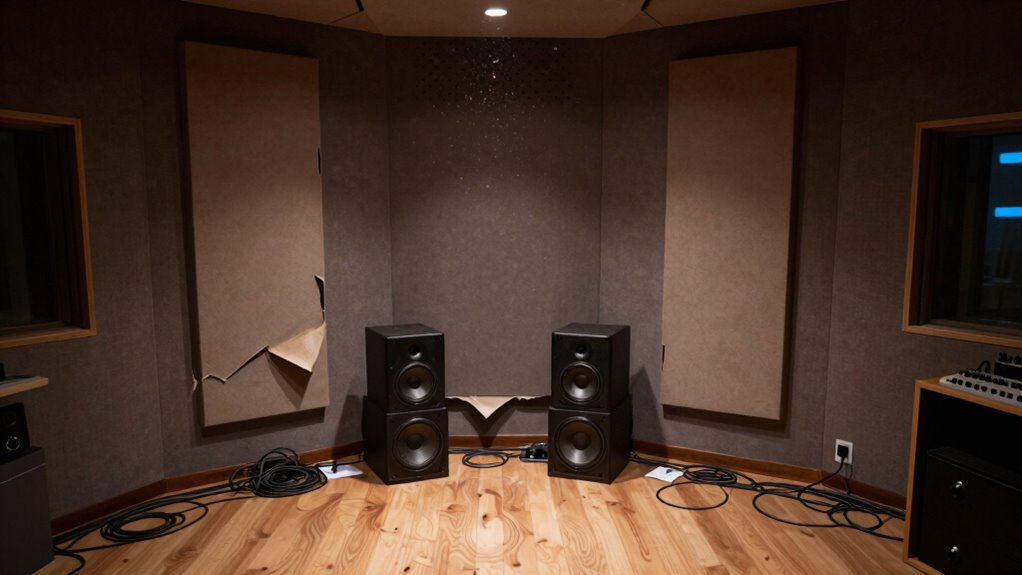
You should consider hiring an acoustic professional when your space has complex sound issues that you can’t resolve with simple solutions. If basic adjustments don’t improve clarity or eliminate persistent echo, a professional consultation becomes essential. An acoustic assessment can identify underlying problems that DIY methods might miss. Here’s when to seek expert help:
| Situation | Why to Hire a Professional |
|---|---|
| Unusual sound reflections or dead spots | Precise diagnosis and targeted solutions |
| Persistent echo or muddiness | Accurate measurement and tailored treatment |
| Need for room-specific acoustic design | Ideal setup for your space |
A professional can provide insights that save time and money, ensuring your room sounds perfect.
Quick Tips to Make Your Room Sound Better Today
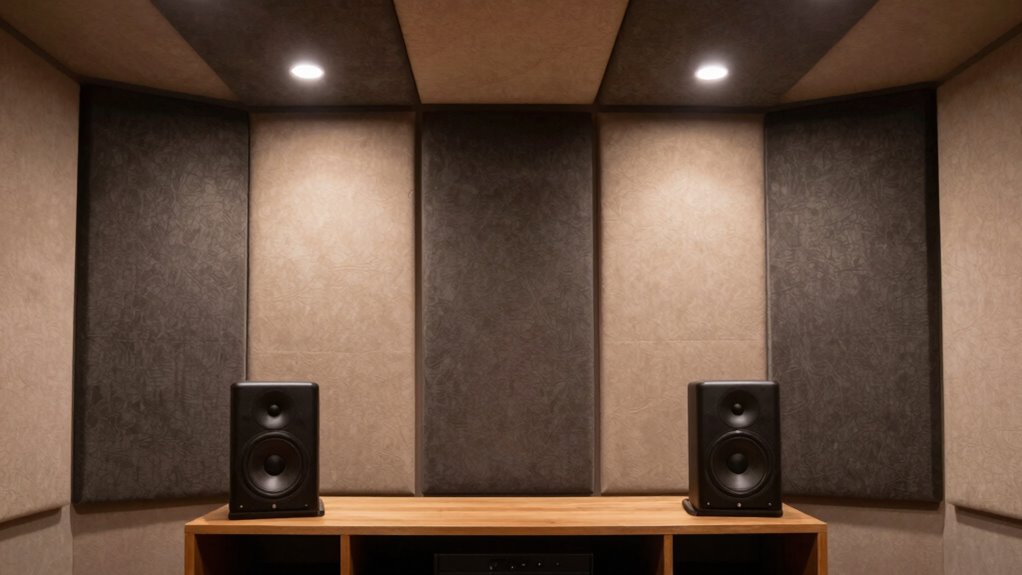
If your room still sounds off despite basic adjustments, there are quick fixes you can try today to improve its acoustics. One effective step is optimizing speaker placement—moving your speakers closer to walls or away from corners can reduce echo and improve clarity. Next, perform simple audio calibration using your receiver or speaker app; adjusting levels guarantees balanced sound across frequencies. Additionally, consider adding soft furnishings like rugs or cushions to absorb excess reflections. These small changes can make a noticeable difference in sound quality without needing extensive remodeling. Remember, proper speaker placement and quick audio calibration are key to immediate improvements. With a few simple tweaks, you’ll enjoy clearer, more natural sound right away.
Frequently Asked Questions
How Do I Measure My Room’s Acoustic Properties Accurately?
To measure your room’s acoustic properties accurately, start by using acoustic measurement tools like a calibrated microphone and software to capture the room impulse response. Place the mic at your listening position and run test signals to analyze reflections, reverberation, and frequency response. This data helps identify problematic areas, so you can optimize your setup for clearer sound and better acoustics.
What Are the Signs of Poor Room Acoustics During Listening?
You’ll notice poor room acoustics when your sound feels muddy or distorted, and you hear excessive echo or flutter echoes during playback. If your speakers aren’t positioned correctly, it can worsen these issues. Pay attention to echo detection; if echoes linger or bounce around, your room’s acoustics are likely off. Adjust your speaker placement, add soft furnishings, or use acoustic treatments to improve clarity and reduce unwanted reflections.
Can DIY Acoustic Treatments Damage My Room or Speakers?
DIY acoustic treatments can cause acoustic damage if you’re not careful, but they won’t harm your room or speakers if you follow proper guidelines. Watch out for DIY pitfalls like using inappropriate materials or installing treatments too close to your speakers, which can block sound or create unwanted reflections. Always research and test different setups carefully, and avoid overly aggressive treatments that might distort sound or damage surfaces.
How Often Should I Reassess My Room’s Acoustics After Modifications?
You should reassess your room’s acoustics every 6 to 12 months, especially after making adjustments like speaker placement or adding sound absorption. Studies show that even minor changes can markedly impact sound quality. Regular checks help you identify issues early, ensuring your acoustic treatments and speaker setup remain optimized. Keep an ear out for muffled sounds or uneven bass, and tweak your setup as needed for the best listening experience.
Are There Specific Materials That Work Best for Acoustic Treatment?
You should choose materials with high effectiveness for acoustic treatment, like mineral wool, foam panels, or fiberglass, as they absorb sound well. Acoustic panel types vary, including bass traps, diffusers, and absorbers, each suited for different issues. For the best results, pick materials that match your room’s specific needs and guarantee proper placement, which maximizes their effectiveness and improves your overall sound quality.
Conclusion
Understanding room acoustics is key to perfect sound. By tweaking your space with simple fixes, you can avoid turning your living room into a veritable echo chamber. Think of it like tuning a fine instrument—small adjustments make a big difference. Don’t wait for your sound to become as muddled as a Shakespearean fog; take action now and enjoy crystal-clear audio that’s as satisfying as a well-played lute.