
The ‘Smile Curve’ EQ mistake happens when you overemphasize certain frequencies, usually by broad boosting or cutting, which makes live music sound unnatural and disconnected from the artist’s emotional intent. This common error tricks the sound into feeling artificial, losing the warmth and authenticity of the performance. If you want to avoid this trap and preserve genuine emotion, there’s more to understand about the subtle art of emotional EQ adjustments.
Key Takeaways
- Overemphasizing mid-range boosts creates an unnatural, “smile-shaped” EQ curve that distorts the emotional authenticity of live sound.
- Relying on broad EQ adjustments instead of nuanced, transparent tweaks can lead to a fake, disconnected listening experience.
- Excessive high-frequency boosting to add brightness can mask other instruments, causing a congested and artificial mix.
- Ignoring vocal warmth and natural qualities results in a sound that feels overly processed and emotionally flat.
- Proper, subtle EQ balancing preserves the organic essence of live music, avoiding the “Smile Curve” mistake that makes performances sound fake.
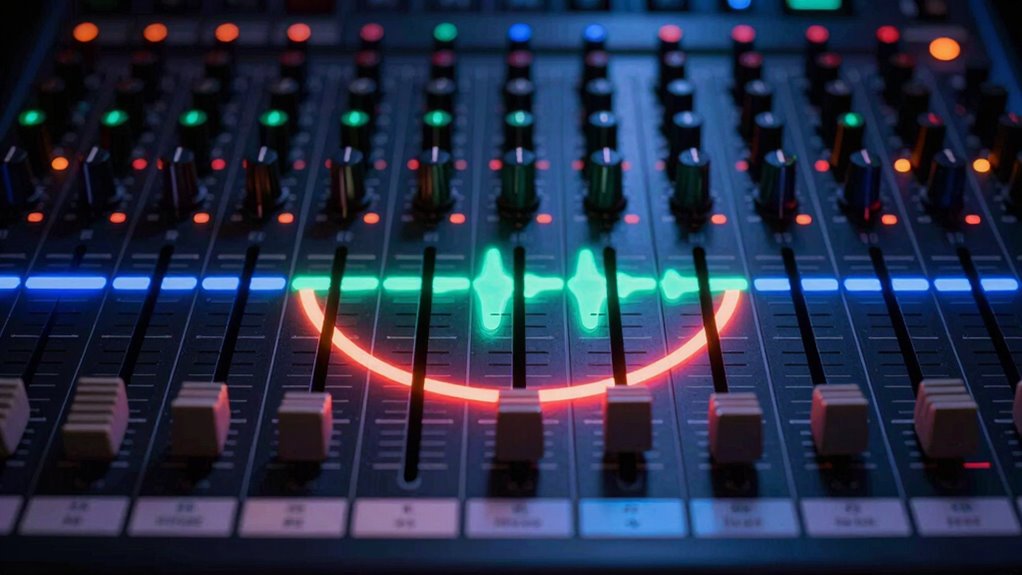
The Smile Curve EQ Mistake occurs when traders misjudge the significance of emotional intelligence (EQ) in market analysis, leading to costly errors. In the domain of live music production, a similar mistake happens when sound engineers overlook the nuanced role of EQ in creating a natural, engaging sound. Instead of understanding how to enhance vocal warmth or manage frequency masking, they rely on broad adjustments that flatten the music’s emotional impact. They might boost certain frequencies to make vocals stand out but forget that overdoing it can lead to an unnatural, ‘fake’ sound. This mistake often results in music that feels disconnected from the emotional depth intended by the artist, making the live experience less authentic.
Vocal warmth is a critical element of emotional connection in music. When you focus solely on boosting the mid-range frequencies to make vocals more prominent, you risk losing the natural richness that comes from subtle EQ adjustments. Overemphasizing certain frequencies can make vocals sound artificially bright or harsh, stripping away the organic feel that listeners crave. Instead, you need to listen carefully and understand how to enhance the warmth without overpowering the rest of the mix. EQ should serve to reveal the emotional core of the performance, not distort it.
Enhance vocal warmth subtly to preserve the emotional richness of the performance.
Frequency masking is another common pitfall that contributes to the “fake” sound. When multiple instruments occupy similar frequency ranges, they compete for space, causing certain sounds to become subdued or muddy. If you don’t address this properly, the mix can sound congested and artificial. For instance, boosting the high frequencies to make cymbals or vocals more prominent might seem like a solution, but it often exacerbates masking issues, making the overall sound less transparent. Instead, you need to carve out space for each element, carefully balancing the frequencies so they complement each other, preserving the authenticity of the live performance.
Applying EQ with emotional intelligence means knowing when to make subtle adjustments and when to leave things as they are. It’s about listening beyond the technicalities and sensing the emotional tone of the music. When you understand how vocal warmth and frequency masking interact, you avoid the trap of making things sound overly processed or “fake.” True mastery lies in enhancing the natural qualities of the performance, allowing the music’s authentic emotion to shine through. In doing so, you create a live sound that feels genuine, immersive, and emotionally resonant—never artificial.
Furthermore, understanding the role of quality assessment in sound design helps engineers focus on creating a balanced and authentic mix that truly captures the emotional essence of the performance.
Frequently Asked Questions
How Can I Identify if I’M Making the Smile Curve EQ Mistake?
You can identify if you’re making the smile curve EQ mistake by listening for a hollow, unnatural sound in your mix. Check for spectrum imbalance, where high and low frequencies are boosted excessively while midrange is cut, creating a dip in the middle. Also, watch out for frequency masking, where certain sounds clash or become muddy. If your mix sounds overly scooped or lacks warmth, you might be unintentionally applying the smile curve.
What Are the Signs of a “Fake” Sounding Live Mix?
A “fake” live mix feels like a painted portrait—too smooth, lacking depth. You’ll notice feedback issues crop up unexpectedly, and tonal imbalance makes instruments sound unnatural or overly polished. If your audience feels disconnected or the sound lacks energy, it’s a sign. You might also hear excessive EQ adjustments creating a hollow or plastic tone, revealing that you’ve fallen into the smile curve trap, sacrificing authenticity for perfection.
Are There Specific Genres More Affected by This EQ Mistake?
You’ll find that genres like pop, electronic, and rock are more affected by the ‘Smile Curve’ EQ mistake. These styles often rely on genre-specific effects to create a full, engaging sound, but over-EQing can strip this away, making the mix sound flat or fake. When you avoid this mistake, you boost audience engagement, ensuring your live music feels authentic and immersive, resonating better with your audience.
What Tools or Plugins Help Correct the Smile Curve Mistake?
To correct the smile curve mistake, you can use tools like EQ matchers and dynamic range compressors. Frequency masking helps identify overlapping frequencies that cause a hollow sound, allowing you to balance the mix. Compressors control the dynamic range, preventing certain elements from overpowering others. These tools work together to restore natural tonal balance, ensuring your live music sounds authentic and lively without sounding fake or overly processed.
How Does This Mistake Impact Audience Perception of Live Music?
Ironically, a mistaken EQ can boost audience engagement, but at the cost of sound authenticity. When the ‘Smile Curve’ is overcorrected, it makes live music sound artificial and disconnected, leaving listeners feeling like they’re missing the genuine vibe. This mistake erodes trust and dampens emotional connection, causing the audience to question the quality of the performance. Ultimately, it’s a trade-off: a lively show becomes a hollow experience, undermining true musical intimacy.
Conclusion
By avoiding the smile curve EQ mistake, you clear the muddiness, sharpen the clarity, and bring the live music to life. When you listen with fresh ears, you notice the warmth, the punch, the authenticity. You stop hearing a fake, processed sound and start feeling the true energy. It’s about more than just EQ; it’s about restoring the soul, capturing the moment, and making the music breathe as it was meant to.