A DAC turns digital audio signals into the analog sound you hear, enhancing clarity and preserving details for a richer listening experience. If you use basic devices like smartphones or computers for casual listening, your built-in DAC usually suffices. However, for high-resolution audio or audiophile setups, a dedicated DAC can markedly improve sound quality. To understand when a DAC makes a difference and when you don’t need one, keep exploring the details below.
Key Takeaways
- Converts digital audio signals into analog sound for playback through speakers or headphones.
- Acts as a bridge between digital devices and analog audio equipment, ensuring compatibility.
- Enhances sound quality by accurately preserving audio details and nuances during conversion.
- Not necessary if your device already has a high-quality built-in DAC suitable for casual listening.
- You may not need one if your current setup delivers satisfactory sound without noticeable distortion or noise.
What Is a DAC and How Does It Work?
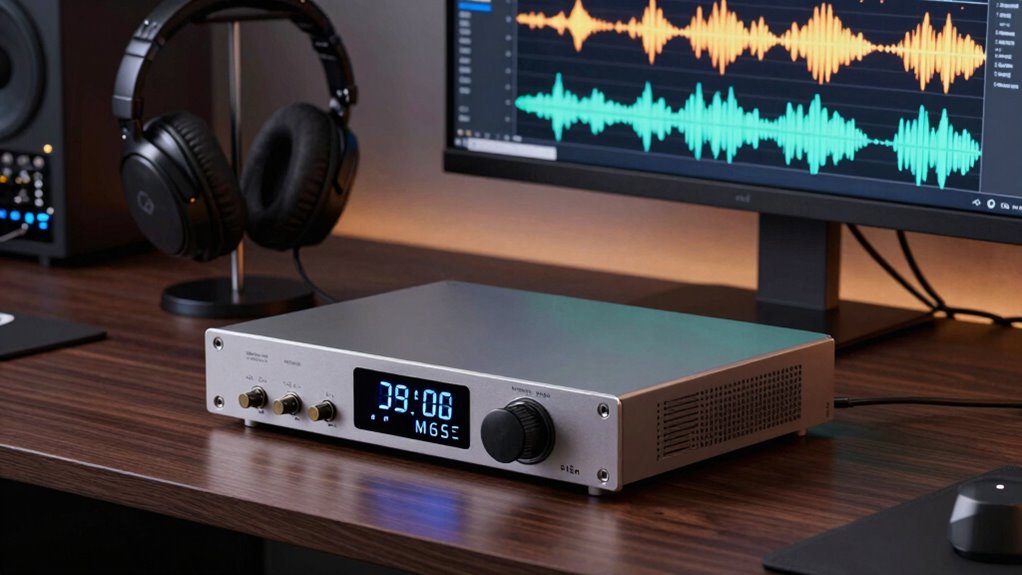
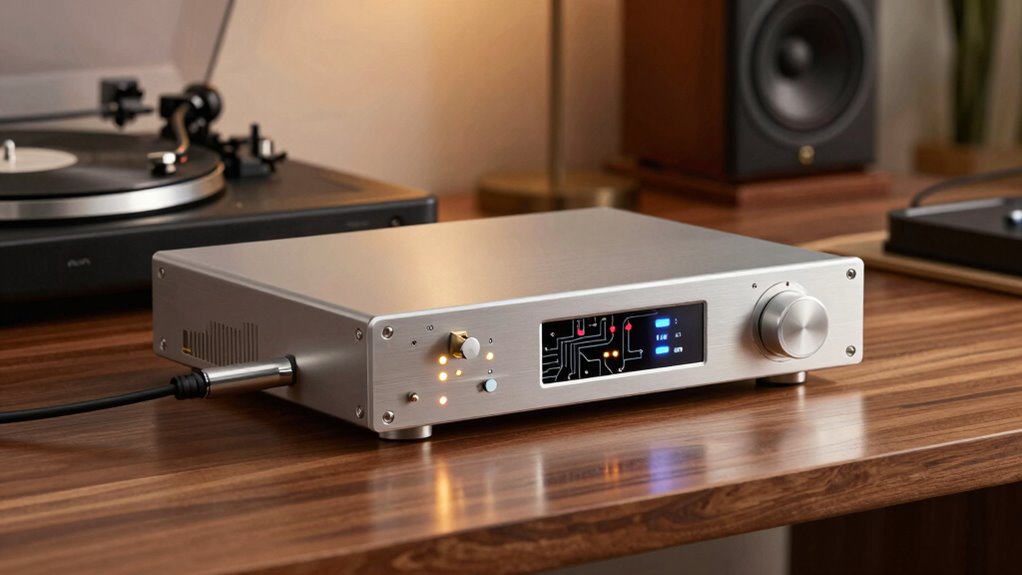
Have you ever wondered how digital audio signals become sound you can hear through speakers? It all starts with a DAC, or digital-to-analog converter. This device performs digital conversion, transforming the binary data from your music or audio file into an analog signal. The quality of this conversion directly affects your audio fidelity—how true to the original sound the output really is. A good DAC ensures that every detail, nuance, and depth of the music is preserved, giving you clear, natural sound. Without a DAC, digital files would stay in their binary form, and your speakers wouldn’t produce any sound. Essentially, the DAC bridges the gap between digital data and the analog world of sound, making your listening experience possible. Additionally, the quality of the DAC can influence the overall sound clarity and richness you perceive.
Do You Need a DAC for Your Audio Setup?
Determining whether you need a DAC depends on your current audio setup and listening preferences. If you mainly listen to casual music genres like pop or hip-hop with basic headphones, your device’s built-in DAC might be enough. But if you prefer high-resolution streams or audiophile-grade headphones, a dedicated DAC can improve sound clarity and detail. Consider these factors:
- Your headphone types: Do you use high-end or studio headphones?
- Music genres: Are you into jazz or classical, which benefit from better detail?
- Listening environment: Do you want richer sound at home or on the go?
- Device quality: Does your smartphone or computer have a decent DAC?
If you’re seeking crystal-clear audio, a DAC could be worth the investment. Otherwise, your current setup may suffice.
When Does Your Device Already Have a Built-In DAC?
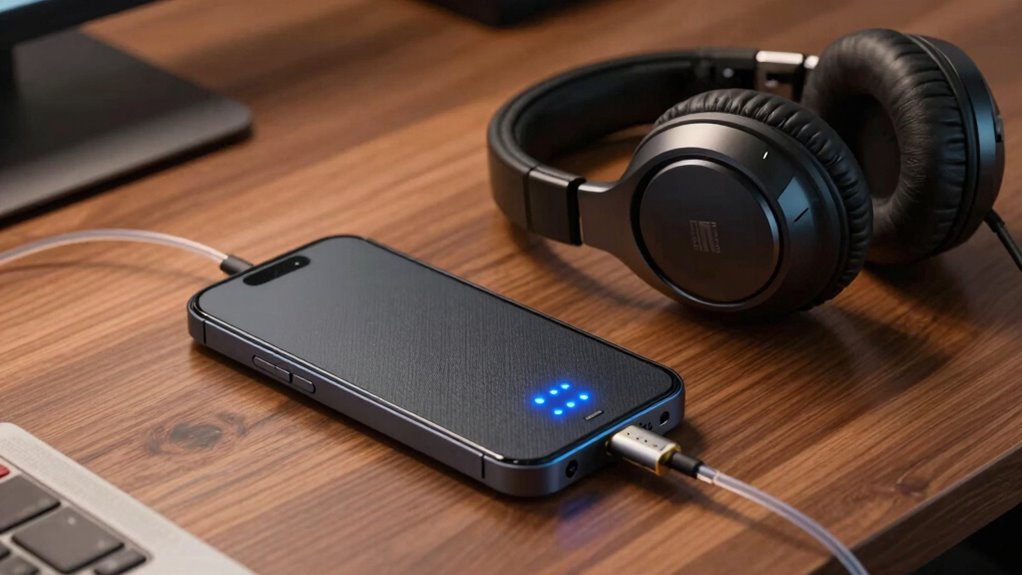
Many modern devices already include a built-in DAC that handles digital-to-analog conversion, making additional equipment unnecessary for casual listening. Smartphones, laptops, and tablets typically have integrated DACs designed to work seamlessly with their hardware, ensuring device compatibility without extra gear. If your primary goal is everyday audio, these built-in DACs usually suffice. Considering your budget, investing in a separate DAC isn’t necessary unless you’re seeking higher audio quality or specific features. For most users, the convenience and cost-effectiveness of using your device’s internal DAC make it a practical choice. Only when you need superior sound or have specialized audio needs should you consider bypassing the built-in DAC with an external one. Additionally, the environmental considerations of using integrated components can reduce electronic waste and promote sustainability.
Signs You Should Consider a Standalone DAC
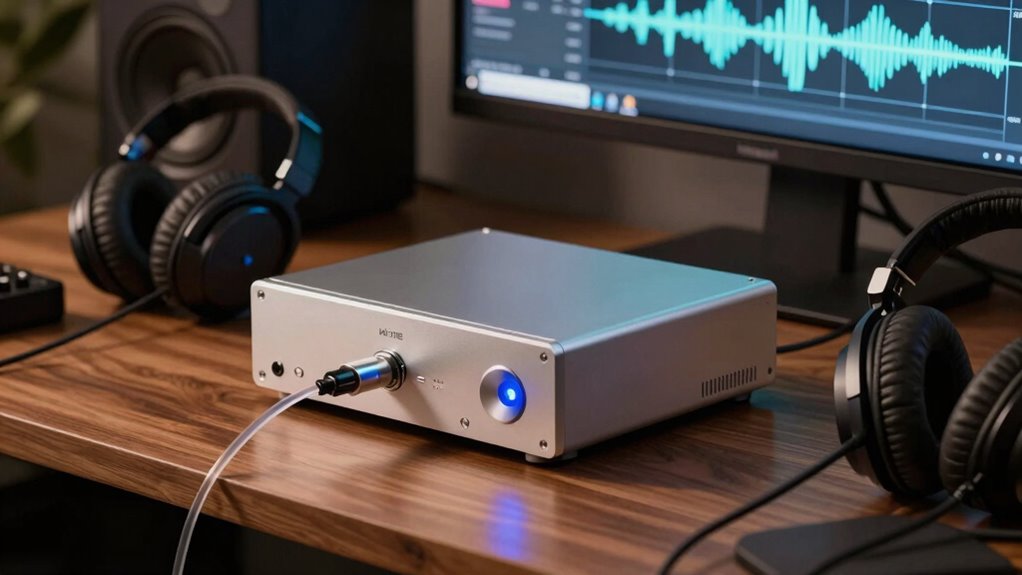
If you notice your music sounds dull or lacks clarity, a standalone DAC might help improve sound quality. You should also consider one if your devices aren’t compatible with your preferred equipment or if you listen in a noisy environment. Recognizing these signs can guide you toward better audio performance.
Sound Quality Improvements
You might notice your current setup isn’t delivering the clarity or detail you expect, especially when listening at higher volumes or with complex music. A standalone DAC can improve your experience by enhancing digital conversion and boosting audio fidelity. You’ll hear cleaner, more precise sound with less distortion and background noise. Consider a DAC if you experience:
- Shrill or muddled audio that masks details
- Inconsistent volume levels or background hiss
- Loss of clarity during dynamic passages
- A noticeable difference when switching between devices
A quality DAC refines the digital signal before it reaches your speakers, revealing nuances in your music that were previously hidden. Investing in a European cloud solution can also ensure your audio data is processed securely and efficiently, especially if you’re streaming or storing large music collections online. If you value clear, accurate sound, upgrading your digital conversion with a standalone DAC can make a significant difference.
Compatibility With Devices
Wondering whether your current audio setup truly maximizes sound quality? If you’re using devices with limited digital connections or relying on outdated analog inputs, a standalone DAC might be the upgrade you need. Check if your devices support modern digital formats like USB, optical, or coaxial connections, which can greatly improve compatibility and sound clarity. Some devices may only have built-in DACs that fall short of high-resolution audio, making a dedicated DAC a smart choice. If you find yourself juggling multiple gadgets with incompatible ports or experiencing distortion and noise, it’s a sign your system could benefit from a standalone DAC. Ensuring device compatibility is essential for seamless integration and accessing the full potential of your digital audio sources. Regularly assessing your battery performance metrics can also help determine if an upgraded DAC will make a noticeable difference in your overall audio experience.
Listening Environment Needs
Noticing persistent audio issues like background noise, distortion, or uneven sound levels often signals that your listening environment could benefit from a standalone DAC. If your listening room has high ambient noise or your audio sounds muffled or inconsistent, a DAC might help improve clarity and detail. Consider a standalone DAC if you experience:
- Background noise interfering with audio clarity
- Distorted or muffled sound during playback
- Uneven volume levels across different tracks
- Your listening environment has a lot of ambient noise that drowns out details
A dedicated DAC can filter out unwanted noise, enhance sound quality, and make your listening experience more immersive. If these issues sound familiar, upgrading with a DAC could be a worthwhile step. Additionally, understanding the importance of audio quality can help you decide whether investing in a DAC aligns with your listening needs.
Common Myths About DACs and Audio Quality
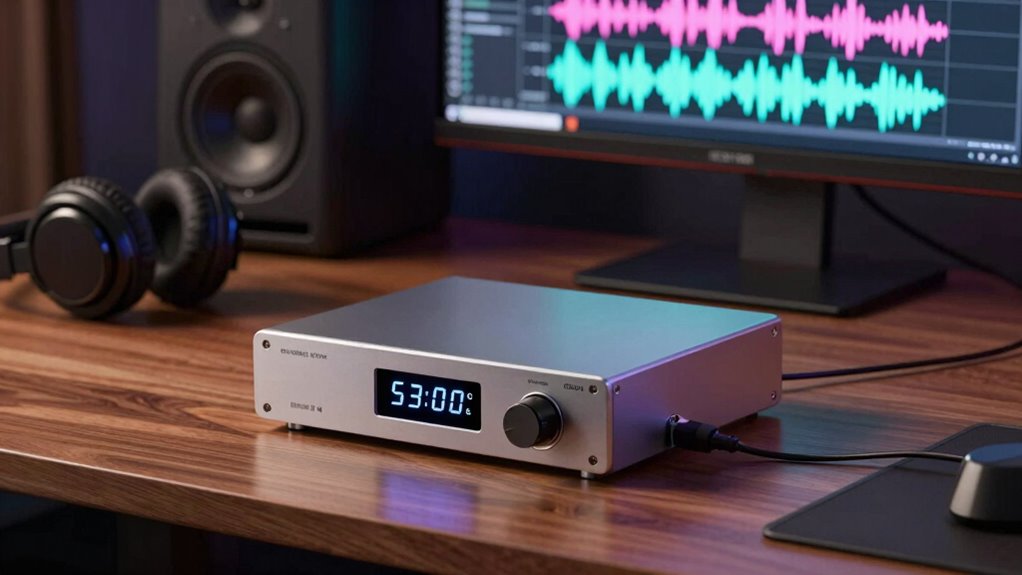
Many people believe that all DACs sound the same, but this is a common misconception. The truth is, audio myth often clouds sound perception. Higher-quality DACs can reveal more detail, reducing digital artifacts and improving clarity. However, your ears may not always notice subtle differences, especially on casual listening. Additionally, the Free Floating design and engineering of a DAC can influence its performance and sound quality. Here’s a quick comparison:
| DAC Quality | Sound Perception | Typical Use Case |
|---|---|---|
| Basic | Less detailed | Everyday casual listening |
| Mid-range | Noticeable improvement | Home listening |
| High-end | Rich, nuanced sound | Critical listening |
| Audiophile | Finest accuracy | Professional audio work |
Understanding these differences helps you decide when a better DAC truly makes a difference.
How to Choose the Best DAC for Your Needs
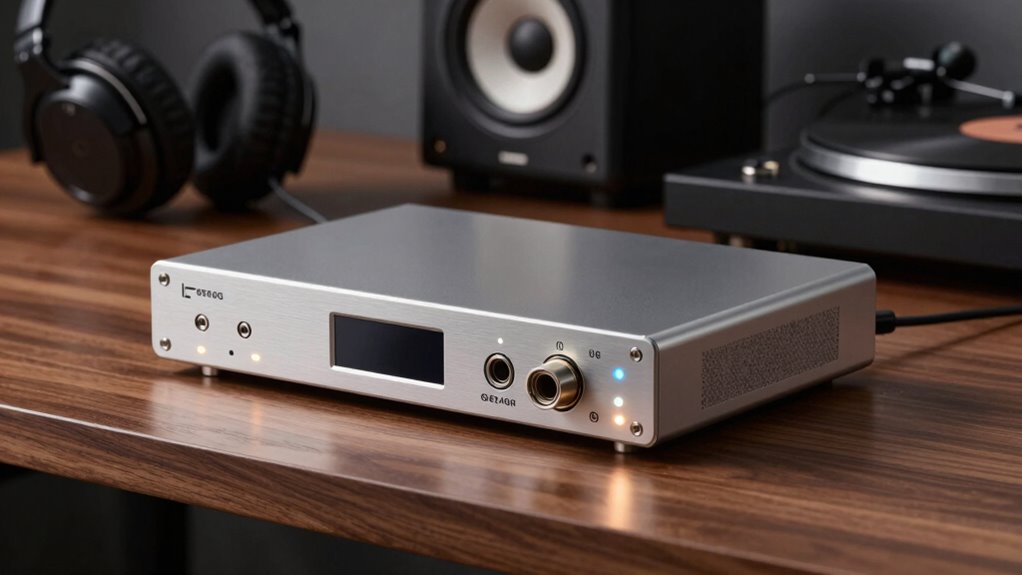
Choosing the right DAC depends on understanding your specific audio needs and how you use your devices. Think about the type of digital conversion and audio processing you require. For example, if you listen to high-resolution files, opt for a DAC with advanced digital conversion features. If you value portability, look for compact designs that still deliver quality sound. Consider whether you’ll connect via USB, optical, or other interfaces to ensure compatibility. Additionally, think about your future needs—upgrading or expanding your setup. Here are some tips:
- Match your DAC’s input options with your devices
- Prioritize high-quality digital conversion for better clarity
- Ensure it supports your preferred audio formats
- Evaluate the level of audio processing features you need
- Remember that outdoor-friendly tech can be beneficial if you plan to use your DAC in rugged environments
Choosing wisely ensures your setup sounds its best.
Is a DAC Necessary for Streaming Music?
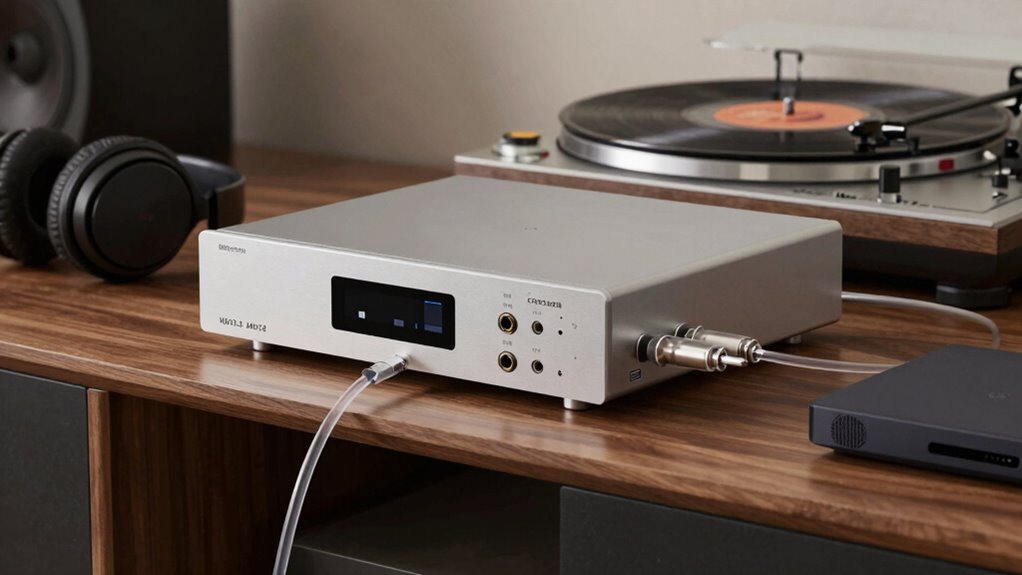
You might wonder if investing in a DAC improves your streaming music experience. While a DAC can enhance sound quality and guarantee device compatibility, it also comes with costs that may not fit everyone’s budget. Considering your priorities will help you decide if a DAC is a necessary upgrade for your setup. For example, understanding electronic components can help you evaluate whether such an upgrade truly makes a difference for your listening experience.
Improved Sound Quality
A digital-to-analog converter (DAC) can substantially enhance the sound quality of your streaming music by providing a clearer, more detailed audio output. It improves audio fidelity by ensuring accurate digital conversion, capturing nuances that might be lost otherwise. With a good DAC, your music sounds richer, more natural, and closer to the original recording. You’ll notice sharper vocals, deeper bass, and more precise instrument separation.
- Enjoy crisper sound with less digital noise
- Experience more authentic instrument tones
- Hear subtle details overlooked before
- Achieve a more immersive listening experience
A DAC’s quality directly impacts how well your device translates digital signals into sound, making it a worthwhile upgrade if you want the best audio fidelity possible.
Device Compatibility Issues
While a high-quality DAC can greatly improve audio clarity, it’s not always necessary for streaming music, depending on your device and setup. Many smartphones and computers have built-in digital-to-analog converters capable of handling common audio file formats like MP3, AAC, or streaming services’ compressed formats. However, if your device relies heavily on digital signal processing or supports high-resolution audio files, compatibility issues might arise. Some devices might not support certain formats or bit depths, limiting your listening options. In those cases, a dedicated DAC can help guarantee proper decoding and conversion, maintaining audio fidelity. But for most casual streaming, your device’s internal DAC suffices, and extra hardware isn’t crucial unless you’re seeking ideal sound quality or working with specialized audio formats.
Cost and Budget
Whether investing in a dedicated DAC is worth it often depends on your budget and how much you value audio quality. If you’re on a tight budget, high-end DACs may be out of reach, but there are affordable options with good reviews. Consider these factors:
- Price considerations: Cheaper DACs can still improve sound, but premium models offer advanced features.
- Brand reputation: Trusted brands often provide reliable performance and better build quality.
- Audio needs: For casual streaming, a basic DAC might suffice; audiophiles may prefer higher-end models.
- Long-term value: Investing a bit more can pay off if you want lasting performance and support.
Ultimately, weigh your budget against your desire for sound fidelity to decide if a DAC fits your streaming setup.
How Using a DAC Can Sometimes Make Your Sound Worse
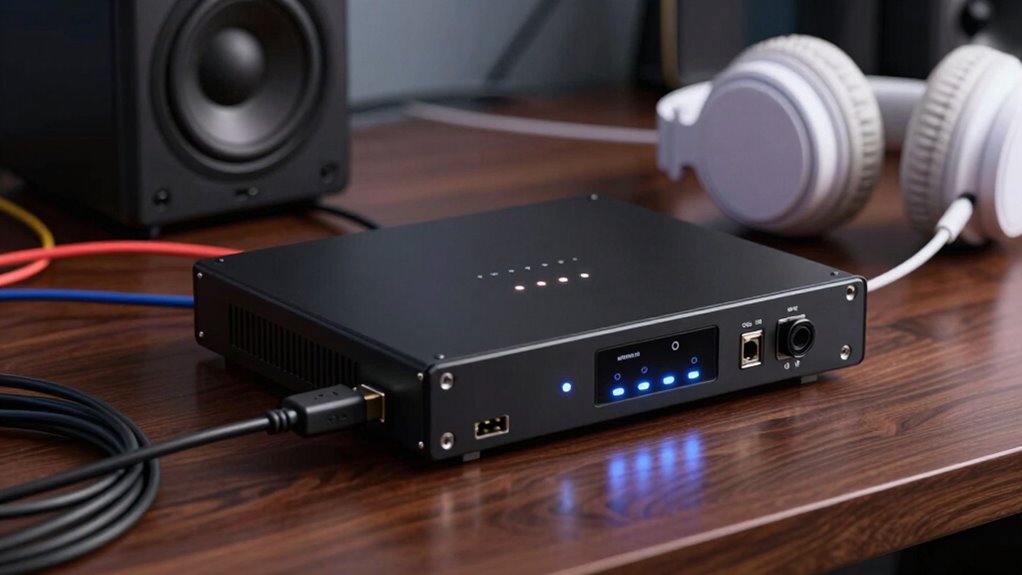
Using a DAC can sometimes worsen your sound quality if it isn’t properly matched with your audio equipment or if it introduces unwanted noise. When the digital to analog conversion isn’t compatible with your setup, it can cause distortions or reduce audio fidelity. Poorly designed or inexpensive DACs may generate electrical noise, hum, or static that interferes with your listening experience. Additionally, if your existing equipment already provides high-quality digital to analog conversion, adding an external DAC might not improve sound and could even degrade it. The key is ensuring the DAC’s specifications align with your source device and audio system. Otherwise, you risk compromising audio fidelity and ending up with worse sound, despite investing in a separate digital to analog converter. Proper audio system integration is essential to ensure your DAC enhances rather than hampers your listening experience.
Budget vs. High-End DACs: Which Is Right for You?

Choosing between a budget and a high-end DAC depends on your listening needs and budget. If you mainly listen to standard audio file formats like MP3 or AAC, a budget DAC might suffice, especially if you’re not focused on precise digital signal processing. However, if you stream high-resolution files or want the best clarity, a high-end DAC can handle complex digital signals more accurately. Consider these factors:
- Compatibility with various audio file formats
- Quality of digital signal processing
- Build quality and components
- Price versus your listening expectations
A high-end DAC often provides better detail and a more natural sound, but if your gear and files are simple, a budget option can deliver satisfying results. When designing your sound system, incorporating a professional audio component can make a significant difference in overall audio quality. Choose what aligns best with your setup and listening goals.
Alternatives to Buying a DAC That Can Improve Your Sound
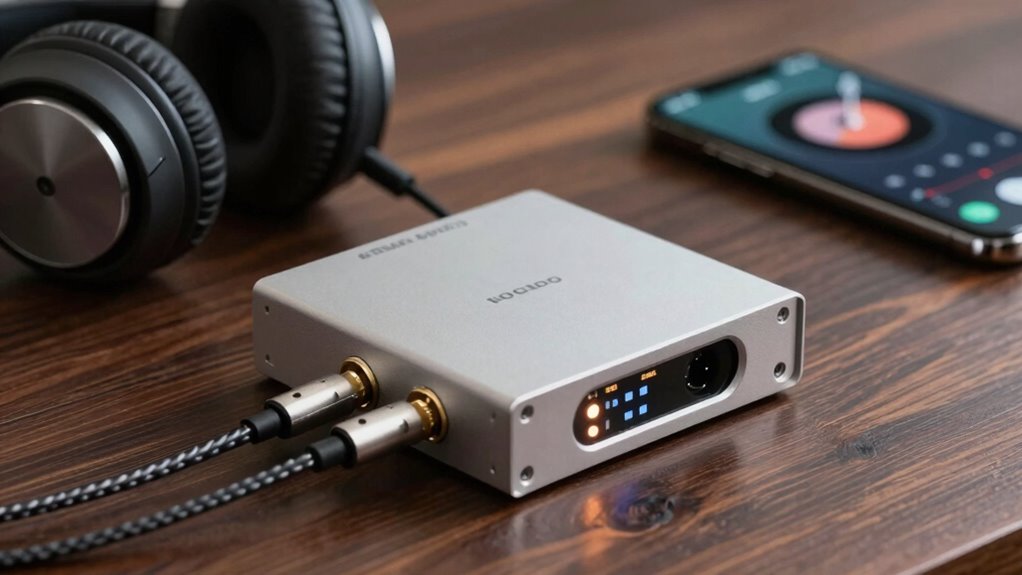
Improving your sound quality doesn’t always mean purchasing a new DAC; upgrading your cables and sources can make a noticeable difference. High-quality cables reduce signal loss and interference, resulting in clearer audio. Additionally, choosing better audio sources ensures you’re feeding your system the best possible input for maximum sound.
Using High-Quality Cables
Ever thought that upgrading your cables might make a noticeable difference in your sound quality? High-quality cables can enhance signal integrity, guaranteeing your audio remains clear and free of interference. Better cable quality reduces signal loss, preserving the details and dynamics of your music. When choosing cables, focus on shielding and materials that prevent noise and degradation. Keep in mind that even premium cables won’t fix fundamental issues like poor recordings or equipment mismatches. Here’s what to contemplate:
- Use well-shielded cables to block external interference
- Opt for sturdy connectors to ensure solid connections
- Match cable quality to your equipment for peak performance
- Avoid overly cheap cables that might compromise signal integrity
Investing in good cables can be a simple and effective way to improve sound without the need for a DAC upgrade.
Upgrading Audio Sources
Upgrading your audio sources can be a cost-effective way to enhance sound quality without investing in a new DAC. Better sources provide cleaner digital signals, reducing the load on your DAC’s analog conversion. For example, using high-resolution files or streaming services with lossless quality preserves more detail in the digital signal, resulting in clearer sound. Additionally, choosing devices with higher-quality internal components or dedicated digital outputs can improve your overall audio experience.
| Source Quality | Effect on Digital Signal | Impact on Sound |
|---|---|---|
| Lossless Files | Preserves detail | Clearer audio |
| Streaming Quality | Maintains integrity | Better clarity |
| Dedicated Outputs | Reduces interference | Improved fidelity |
Frequently Asked Questions
Can a DAC Improve Audio Quality for All Types of Music?
A DAC can improve audio quality for many music types by enhancing digital conversion, especially if your device’s built-in DAC isn’t high quality. It works best with high-resolution audio formats, providing clearer sound and better detail. However, if your music is compressed or your audio source is low quality, a DAC might not make a noticeable difference. In those cases, upgrading your audio source or speakers could have a bigger impact.
How Does a DAC Differ From an Audio Amplifier?
A DAC differs from an audio amplifier because it handles digital conversion and signal processing, turning digital audio into an analog signal your speakers can produce. An amplifier, on the other hand, boosts that analog signal’s power for playback. While a DAC focuses on accurately converting digital data into sound, an amplifier enhances volume and clarity, making sure your audio reaches the desired loudness without distortion.
Is It Necessary to Upgrade My DAC Regularly?
You don’t need to upgrade your DAC regularly, especially if your current hardware remains compatible with your setup. Focus on upgrade frequency only if you notice audio quality issues or hardware compatibility problems. As technology advances, newer DACs may offer better features, but if your current device meets your needs, there’s no rush. Keep an eye on your audio experience, and upgrade only when it genuinely enhances your listening quality.
Can Using Multiple DACS in One Setup Cause Issues?
Using multiple DACs in one setup can cause issues like synchronization problems and power supply interference. You might notice audio out of sync or increased noise if the DACs aren’t properly synchronized or if they share a power source. To avoid these issues, make certain your DACs are compatible, use proper grounding, and consider dedicated power supplies. This way, you keep your setup clean and your sound clear.
Are Portable DACS Suitable for Professional Audio Work?
You might think portable DACS are like trusty sidekicks, but for professional audio work, they’re more like lightweight racers. While they offer portable compatibility, they often fall short of professional-grade performance needed for studio precision. If you’re aiming for crystal-clear sound and reliability in a professional setting, investing in a dedicated, high-quality DAC guarantees your audio stays sharp and true, rather than getting lost in the noise like a whisper in a storm.
Conclusion
Ultimately, whether a DAC is essential depends on your ears and your gear. Think of it as a secret ingredient—sometimes it elevates your sound, other times, it’s unnecessary. Trust your senses and your setup, not just hype. Remember, the true magic happens when you enjoy your music, not just chase perfect equipment. After all, isn’t the heart of audio about feeling every note, not just hearing it?