
Your music sounds better at night because the environment is quieter, allowing your ears to focus more on the details. Relaxation reduces mental clutter, making it easier to perceive subtle nuances. Proper equipment and setup, along with fewer distractions, enhance sound clarity. Additionally, your ears become more sensitive to faint sounds, and the contrast between silence and music deepens emotional responses. Keep exploring to discover how environmental and physiological factors play a role in your nighttime listening experience.
Key Takeaways
- Reduced ambient noise and distractions at night improve sound clarity and allow finer details to stand out.
- Nighttime relaxation enhances focus and emotional engagement, enriching the listening experience.
- Less environmental interference and better equipment handling during the night amplify sound quality.
- Early detection and resolution of audio distortions ensure consistent, high-quality playback at night.
- Proper calibration and minimizing distractions optimize equipment performance, making nighttime ideal for listening.
Why Does Music Sound Better at Night? The Scientific Explanation

At night, your perception of music often feels more vivid and enjoyable, and science explains why. During nighttime, your brain experiences improved musical clarity, making individual notes and harmonies stand out more sharply. This heightened acoustic perception occurs because your environment is quieter, reducing background noise and distractions. When fewer sounds compete, your brain can focus better on the nuances of the music, enhancing its richness. Additionally, lower ambient noise allows for better processing of sound waves, which sharpens your overall auditory experience. As a result, music sounds clearer, more detailed, and more immersive at night. Your auditory system is more attuned, helping you notice subtleties you might miss during busy daytime hours. Moreover, your listening environment plays a significant role in how sharply you perceive music, especially when external noise levels are minimized.
How Relaxation Changes How Your Brain Perceives Music
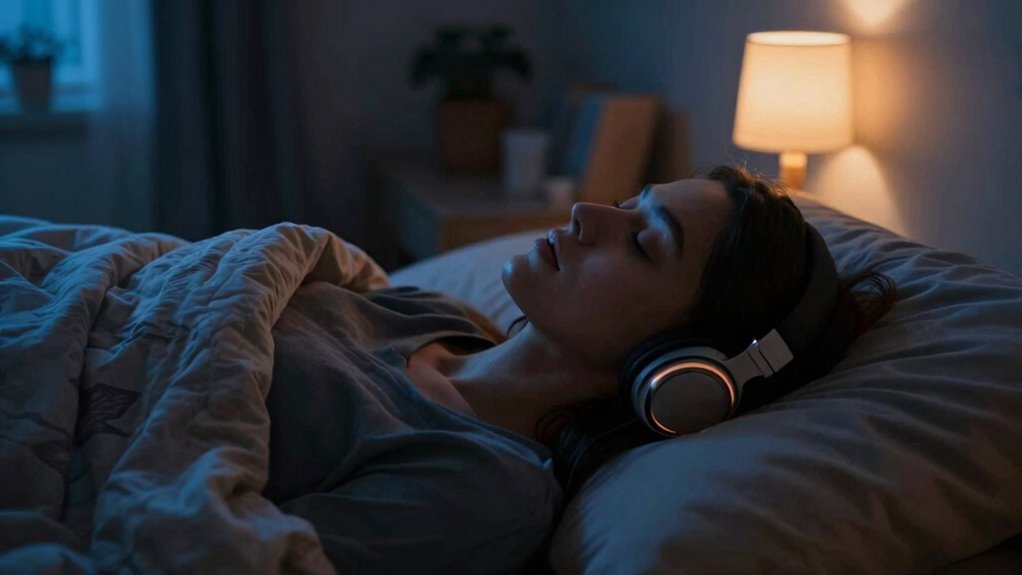
When you relax, your mind becomes less cluttered, making it easier to focus on the music. This heightened focus allows you to notice subtle details and emotions that you might miss when you’re tense. As a result, your brain perceives music as richer and more immersive. Additionally, a relaxed state can facilitate a Free Floating mindset, allowing your thoughts to drift freely and enhancing your overall listening experience.
Reduced Mental Clutter
Relaxation clears mental clutter, allowing your brain to focus more fully on the music itself. When your mind is calm, you experience greater mental clarity, making it easier to pick up on subtle details and nuances in the sound. Reduced cognitive load means your brain isn’t overwhelmed by distractions or stress, freeing up resources to process music more deeply. As a result, you perceive melodies, harmonies, and rhythms with heightened sensitivity. This state of relaxed awareness helps you connect emotionally and appreciate the intricacies of a song. At night, when your mind is less busy, your brain can better filter out extraneous thoughts, letting your auditory perception sharpen. Proper load‑planning ensures your mind isn’t overtaxed, enhancing your listening experience. Ultimately, less mental clutter enhances your overall listening experience, making music feel richer and more immersive.
Enhanced Sensory Focus
As your mind becomes more relaxed, your sensory receptors become more receptive to the details in music. This heightened sensory perception sharpens your auditory focus, allowing you to notice nuances you might miss when tense or distracted. With less mental clutter, your brain filters sounds more effectively, emphasizing subtle variations in tone, rhythm, and harmony. This enhanced sensory focus makes music feel richer and more immersive, drawing you deeper into the experience. When you’re relaxed, your brain allocates more resources to processing auditory input, creating a clearer, more detailed perception of music. Additionally, brain plasticity may help your brain adapt and refine how it interprets musical signals during times of calm. This shift isn’t magic; it’s your brain’s way of tuning in more precisely when you’re calm, transforming how you perceive and enjoy your favorite melodies.
How Ambient Noise and Silence Make Your Nighttime Listening Richer

Ambient noise and silence play a crucial role in enriching your nighttime listening experience by creating a natural soundscape that enhances music’s emotional depth. The subtle ambient noise acts as a backdrop, blending with your music to produce a richer, more immersive experience. Meanwhile, silence contrast sharpens your perception, making quiet moments feel more profound. This interplay allows you to notice details and textures in your music that daytime distractions might hide. Understanding this balance helps you appreciate how the environment influences sound perception. Additionally, being aware of European cloud innovation and the importance of sustainable infrastructure can inspire you to explore new ways to enhance your listening environment through advanced technology. Here’s a visual breakdown:
| Ambient Noise | Silence Contrast | Effect on Listening |
|---|---|---|
| Soft background sounds | Quiet moments | Highlights music details |
| Nature sounds | Stillness | Deepens emotional impact |
| City hum | Absolute silence | Enhances clarity |
| Room acoustics | Silence contrast | Enriches listening depth |
Why Your Perception of Sound Quality Improves After Dark

When night falls, your ears become more attuned to subtle nuances in sound, making your perception of audio quality sharper. This heightened sensitivity enhances how you experience music, aligning with your unique musical preferences. As a result, you’re likely to notice details that daylight masks. Additionally, the quiet environment allows emotional responses to deepen, making familiar melodies feel richer and more immersive. To maximize this effect, consider these factors:
- Reduced ambient noise highlights intricate musical layers.
- Lower distractions sharpen your focus on sound quality.
- Your brain processes music more emotionally when it’s quiet.
- Personal mood influences perceived audio richness.
- Sound perception can also be affected by environmental conditions, further amplifying your listening experience at night.
Together, these factors make your nighttime listening more vivid, engaging your senses and emotional connection more intensely than during the day.
Debunking Myths About Nighttime Music Listening
Many people believe that nighttime music listening automatically enhances sound quality, but this isn’t entirely true. Your perception often depends more on your music genre preferences and audio equipment choices than the time of day. Some assume that softer, more relaxing genres sound better at night, but that’s a myth—quality depends on how your equipment reproduces sound, not the clock. Upgrading your headphones or speakers can make a bigger difference than just waiting until evening. Additionally, believing that ambient noise levels or cooler air automatically improve audio isn’t accurate; it’s about how well your gear handles different frequencies and dynamics. Ultimately, your listening experience hinges on your equipment and playlist, not the hour. Don’t rely on myths—focus on optimizing your gear for better sound anytime. Understanding sound quality is essential to truly enhance your music experience regardless of the time.
Tips to Make Your Music Sound Even Better at Night
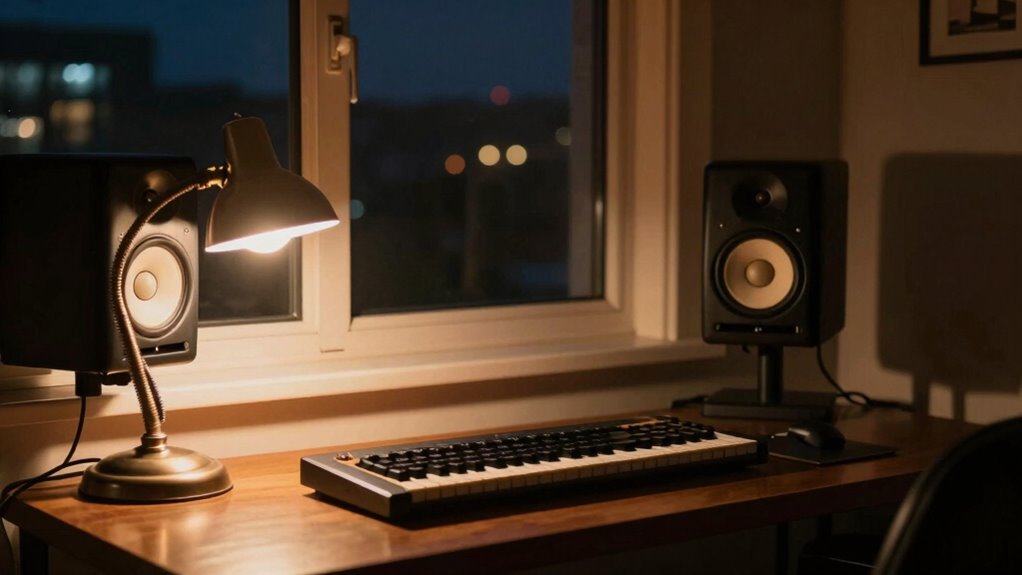
While myths suggest that nighttime automatically enhances your listening experience, the real key to better sound lies in how you optimize your music environment. To improve your nighttime listening, focus on creating a comfortable space that suits your listener mood. Here are four tips:
- Choose a quiet environment free of distractions.
- Adjust your speaker placement for ideal sound quality.
- Use soft lighting to relax and enhance your mood.
- Lower background noise, like fans or electronics, to allow clearer audio.
- Consider sound environment factors to further refine your listening experience.
When to Seek Professional Audio Help for Optimal Nighttime Listening
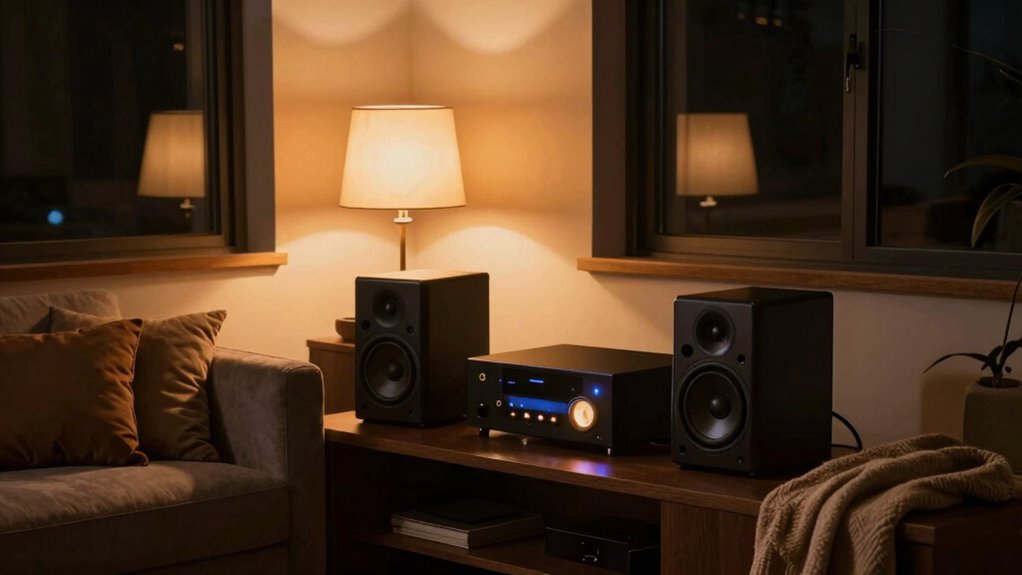
If your music sounds off or distorted even after adjustments, it’s time to contemplate professional help. Recognizing early signs of sound quality issues can save you from ongoing frustration. Consulting experts for calibration ensures your system delivers the best possible nighttime listening experience.
Recognize Sound Quality Issues
Sound quality issues can particularly diminish your nighttime listening experience, making it hard to enjoy your favorite music or relax in quiet. Recognizing these problems early helps you know when to seek professional audio help. Watch out for:
- Persistent audio artifacts like crackling or buzzing.
- Sudden drops in sound quality or volume inconsistencies.
- Unusual equipment behavior despite proper maintenance.
- Background hums or distortions that don’t go away.
- Connected equipment can sometimes contribute to these issues, especially if not properly integrated or maintained.
If you notice these signs, it’s time to consult a professional. Poor equipment maintenance or faulty components often cause audio artifacts and sound issues, so addressing them promptly ensures ideal listening. Recognizing these problems early keeps your nighttime music experience smooth and enjoyable.
Identify Acoustic Distortions Early
Acoustic distortions can subtly undermine your nighttime listening experience, often going unnoticed until they markedly impact sound clarity. If you notice your music sounds muffled, fuzzy, or uneven, it may be due to distortions in your audio setup. These distortions can stem from issues like equipment misalignment, loose connections, or speaker limitations. Early identification is key; pay attention to sudden changes in sound quality or persistent artifacts. When you detect consistent distortions, it’s a sign to seek professional audio help. Addressing acoustic distortions early ensures your system delivers the pure, clear sound you crave during quiet nights. Regularly monitoring audio quality can help catch issues before they worsen. Don’t ignore these signs—taking action now preserves your sound clarity and enhances your overall listening experience.
Consult Experts for Calibration
Noticing persistent distortions or uneven sound quality despite troubleshooting your setup indicates it might be time to consult a professional. Expert consultation for audio calibration can dramatically improve your nighttime listening experience. Consider seeking help if:
- You’ve tried basic adjustments but still hear inconsistencies.
- Your equipment produces unexplained hums or buzzing.
- You want precise calibration tailored to your space.
- You’re aiming for professional-grade sound quality.
A professional can perform accurate audio calibration, ensuring your system delivers ideal sound. They can identify issues beyond your DIY fixes, saving you time and frustration. Consulting an expert guarantees your gear is set up correctly, maximizing your listening pleasure during those peaceful night hours. Don’t hesitate to seek professional help for the best nighttime audio experience.
Frequently Asked Questions
Can Certain Types of Music Sound Better Specifically at Night?
Yes, certain types of music can sound better at night because ambient acoustics and emotional resonance enhance your listening experience. At night, the quieter environment reduces background noise, allowing you to fully immerse yourself in calming or evocative tunes. This creates a deeper emotional connection, making music like ambient or mellow genres feel more meaningful and vivid. So, your favorite melodies can truly come alive when you listen during nighttime hours.
Does the Time of Day Affect How I Perceive Bass and Treble?
You might notice that your sound perception shifts throughout the day, affecting how you perceive bass and treble. At night, your audio sensitivity increases due to lower ambient noise and changes in your brain’s alertness. Like tuning a radio, your ears adapt to different environments, sharpening your perception of deep bass or crisp treble. This subtle variation enhances your listening experience, making music feel richer or more immersive depending on the time.
Is There a Way to Optimize My Home Audio for Nighttime Listening?
You can optimize your home audio for nighttime listening by adjusting room acoustics and speaker placement. Move your speakers to a central spot away from walls to reduce echo, and incorporate furniture or rugs to absorb excess sound. Use your room’s natural contours to enhance bass and treble, creating a warmer, clearer sound. These tweaks help you enjoy better audio quality when the house is quiet and the atmosphere is relaxed.
Do Personal Habits Influence How I Experience Music at Night?
Your personal routines and mood fluctuations greatly influence how you experience music at night. Like a ship steering changing tides, your habits can guide your emotional response, amplifying or softening the music’s impact. When you stick to calming routines or adjust your mood before listening, you create a more immersive experience. Paying attention to these habits helps you access deeper connections with your favorite tunes, making nighttime listening even more meaningful.
Are There Health Benefits to Listening to Music at Night?
Listening to music at night can boost your health by improving sleep quality and reducing stress. When you unwind with calming tunes, your body relaxes, making it easier to fall asleep and stay asleep longer. This nightly habit can lower cortisol levels, helping you manage stress better. Overall, incorporating music into your evening routine supports better rest and mental well-being, contributing to a healthier lifestyle.
Conclusion
As night falls, your mind becomes a quiet garden where melodies bloom with richer color and deeper roots. The darkness washes over your senses, turning your music into a shimmering tapestry woven with relaxation and subtle ambient whispers. Embrace these moments, and let your soundscape become a starry night sky—vast, serene, and alive with hidden depths. When you listen at night, you’re not just hearing music; you’re exploring a universe of sonic wonder.