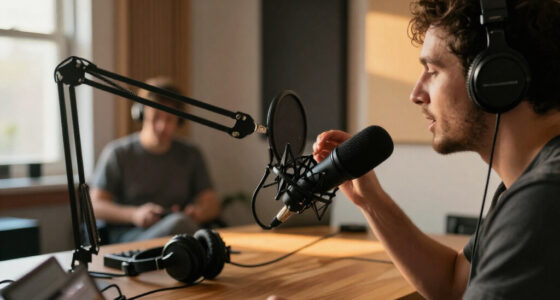
Choosing between the Shure SM7B and the RØDE PodMic is a choice between a premium broadcast microphone and a much less expensive dynamic mic built for podcasting. Both are designed to work close to the speaker and help keep room sound from dominating a recording, so either can suit a treated studio or a modest home setup. The difference is in the details: the SM7B offers selectable frequency shaping, more physical isolation from handling and vibration, and a familiar broadcast sound, while the PodMic keeps the package simpler and costs far less.

Get audio and creator gear delivered free with Prime
- Fast, free delivery on millions of items
- Prime Video, Amazon Music and more included
- Member-only deals all year

Shure MV7+ USB-C and XLR Podcast Dynamic Microphone with Stand, Black
- ✔ Microphone type: Dynamic
- ✔ Connectivity: USB-C and XLR
- ✔ Pickup pattern: Unidirectional

Shure MV7+ USB-C and XLR Podcast Dynamic Microphone, Black
- ✔ Microphone type: Dynamic
- ✔ Connectivity: USB-C and XLR
- ✔ Pickup pattern: Unidirectional
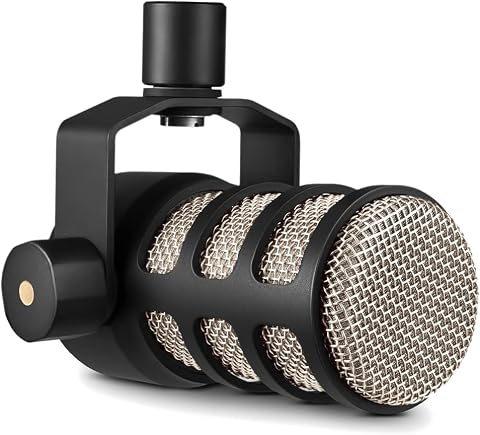
RØDE PodMic Cardioid Dynamic Broadcast Microphone
- ✔ Microphone type: Dynamic
- ✔ Connectivity: XLR
- ✔ Pickup pattern: Cardioid, unidirectional
That price gap matters because neither microphone works on its own: you also need an XLR interface or mixer, a stand or boom arm, and cables. The SM7B can also call for a preamp with ample clean gain. Choose it if its tone controls, build, and established studio reputation solve a real need in your workflow. Choose the PodMic if you want a solid, broadcast-style starting point and would rather spend the savings on recording space, headphones, or an interface.
At a Glance
| Criteria | Shure SM7B | RØDE PodMic | Winner |
|---|---|---|---|
| Price and value | Premium price; worthwhile when its controls and construction matter to your work | Far less expensive; strong value for a podcast-focused setup | B |
| Sound shaping | Switchable low-cut and presence boost, plus internal tone-shaping options | Fixed voicing; use mic position, EQ, or processing for tone adjustments | A |
| Gain requirements | Low output; benefits from a high-gain interface or clean booster | Also needs a suitable XLR preamp; check interface gain before buying | Depends |
| Room-noise handling | Dynamic, close-mic design can reduce room pickup, though placement and room acoustics still matter | Dynamic, close-mic design helps focus on the speaker but cannot remove room sound | Tie |
| Build and mounting | Established broadcast-style body with internal shock isolation and multiple mounting options | Robust metal construction; mounting hardware varies by package and region | A |
| Setup and accessories | XLR connection; usually sold without a boom arm, and may need a gain solution | XLR connection; requires an interface or mixer and a compatible mount | Depends |
| Best-fit use | Frequent studio use, voice work, and buyers who value on-mic tone control | New podcasters, budget-conscious studios, and users wanting a straightforward mic | Depends |
Shure MV7+ USB-C and XLR Podcast Dynamic Microphone with Stand, Black
For a podcast desk that may evolve from solo recording to a more involved studio chain, the Shure MV7+ with stand gives us the most flexible starting point in this lineup. USB-C can connect directly to a computer, while XLR leaves room to route through an interface or mixer later. That makes it easier to change the recording workflow without replacing the microphone. The included stand also makes this listing more ready to place than the microphone-only MV7+ configuration.Its Voice Isolation, real-time noise reduction, and Auto Level Mode target common spoken-word problems: surrounding noise and a speaker shifting position or volume. These controls can help keep a session consistent, but they do not remove the need for close placement or a reasonably quiet space. The LED touch panel adds mute control and monitoring at the desk, and the MOTIV Mix app offers sound controls such as reverb.Compared with the RØDE PodMic, this Shure option needs less additional gear for a computer-based setup and offers more onboard digital adjustment. The PodMic, however, brings an integrated swing mount and a more conventional XLR-only approach. The tradeoff here is a heavier listed package and a reliance on compatible software and connected power; the supplied operating system information names Windows 10 and macOS 12. This pick makes the most sense when convenience and future connection flexibility outweigh a minimalist analog workflow.
Pros:
- USB-C and XLR support direct computer use and interface-based recording.
- Voice Isolation, denoising, and Auto Level Mode provide vocal-focused controls.
- Included stand makes the listed configuration easier to set up at a desk.
- LED touch panel combines mute and monitoring functions.
Cons:
- The listed weight is 3.6 lb, making the setup less convenient to move frequently.
- Listed operating system compatibility specifies Windows 10 and macOS 12.
- Digital controls and app features add complexity compared with the PodMic’s XLR-only workflow.
Best for: Podcasters who want USB-C recording now, an XLR path later, and a stand included for a straightforward desk setup.
Not ideal for: Traveling creators prioritizing a light kit, or buyers who want a simple XLR microphone without software-based controls.
Bottom line: We recommend this MV7+ configuration for a flexible professional desk setup that benefits from both direct USB-C connection and a future XLR path.
“We recommend this MV7+ configuration for a flexible professional desk setup that benefits from both direct USB-C connection and a future XLR path.”
Shure MV7+ USB-C and XLR Podcast Dynamic Microphone, Black
This second Shure MV7+ is the better fit when we already own a boom arm, desk stand, or other mounting hardware. Its central appeal is the same flexible combination as the first pick: USB-C for a direct computer connection and XLR for a mixer or interface. For a creator moving between remote interviews and a more permanent recording chain, keeping both routes available can simplify future changes.Shure’s automatic level adjustment and real-time denoising are designed to keep spoken vocals more consistent as a speaker shifts or background noise intrudes. The LED touch panel includes tap-to-mute and level monitoring, while the app provides sound adjustments and reverb effects. These features put it ahead of the RØDE PodMic for someone who values in-mic digital controls, though the RØDE’s integrated swing mount can make its physical placement more self-contained.The distinction from the stand-included MV7+ listing is about package fit, not a different role in the signal chain. We would choose this version if the mounting part of our setup is already solved; otherwise, the first listing is more immediately convenient. Like the other Shure, it needs a connected setup and the stated compatibility is limited to Windows 10 and macOS 12. Its listed frequency range reaches 16 kHz, while the PodMic listing specifies a wider range; those figures alone do not establish which sounds better for a particular voice.
Pros:
- USB-C and XLR outputs suit both simple and interface-based recording.
- Auto Level Mode and denoising are aimed at consistent spoken-word capture.
- Touch panel includes level monitoring and tap-to-mute.
- Dynamic unidirectional design is suited to a close-mic podcast position.
Cons:
- The listing does not include the stand supplied with the other MV7+ option.
- Requires a connected computer or audio chain rather than independent operation.
- Listed frequency range tops out at 16 kHz.
Best for: Podcasters who already have a stable mic arm or stand and want USB-C convenience with an XLR upgrade path.
Not ideal for: First-time buyers who need a complete mounting setup, or anyone who prefers a hardware-only XLR signal chain.
Bottom line: We would choose this MV7+ when our mount is already in place and we want Shure’s digital controls in a dual-output microphone.
“We would choose this MV7+ when our mount is already in place and we want Shure’s digital controls in a dual-output microphone.”
RØDE PodMic Cardioid Dynamic Broadcast Microphone
The RØDE PodMic is the most focused choice for a podcast studio already built around an interface or mixer. Its XLR-only connection keeps the microphone’s role clear: it is a dynamic broadcast mic in a traditional signal chain, not a direct-to-computer USB device. The cardioid pickup pattern is intended to favor the person speaking into the front while reducing pickup from other directions, which can help in a shared or less-treated room when we position it carefully.RØDE includes an internal pop filter and shock mounting, aimed at reducing plosive bursts and vibration before they become distractions in a recording. Its all-metal construction and integrated swing mount give it a sturdy, purpose-built presence. Compared with either MV7+, it offers fewer onboard controls and no USB convenience, but it avoids making the recording workflow depend on app-based adjustment or digital features.The key cost of that simplicity is the rest of the chain: we need an XLR interface or mixer, plus an appropriate cable, before connecting to a computer. The Shure options are easier for direct computer recording and can move between USB and XLR; the PodMic is better suited to buyers who have already chosen their studio hardware. Its listed weight is 937 g, so it is not the obvious pick for a lightweight mobile rig. We would skip it if we need plug-and-play USB or frequently change recording locations.
Pros:
- Cardioid pattern is designed to focus on a nearby speaker and reject off-axis room sound.
- Internal pop filter helps manage plosives.
- Internal shock mounting helps reduce vibration transfer.
- All-metal body includes an integrated swing mount.
Cons:
- XLR connection requires an audio interface or mixer for computer recording.
- No USB output or onboard digital processing features.
- Listed weight of 937 g may be cumbersome for a portable setup.
Best for: Podcast hosts with an interface or mixer who want an XLR dynamic microphone with an integrated swing mount.
Not ideal for: Beginners seeking direct USB-C recording, or mobile creators who need a lighter, self-contained setup.
Bottom line: We recommend the PodMic for an established XLR studio where its integrated mount and straightforward broadcast design suit the existing chain.
“We recommend the PodMic for an established XLR studio where its integrated mount and straightforward broadcast design suit the existing chain.”
As an Amazon Associate we earn from qualifying purchases.
Key Differences
The clearest difference is how much flexibility and refinement you get for the extra cost. The SM7B lets you alter its frequency response at the microphone and includes internal features intended to isolate handling and mechanical noise. That helps when a consistent vocal sound matters across sessions or speakers, and it can reduce some of the work needed later. It does not automatically sound better on every voice; mic distance, speaking style, room, and processing remain important.
The PodMic is a simpler proposition. Its fixed voicing can work well for spoken-word recording, and its lower cost leaves more of a budget for the interface, headphones, room treatment, or a reliable arm. It gives up the SM7B’s built-in tone options and its particularly established broadcast role. For most new podcasters, those are sensible sacrifices if the PodMic’s sound suits their voice and their recording chain. The savings are less compelling for a studio that will use the mic daily and benefits from its controls.
Both models are XLR dynamic microphones, so neither is a plug-and-play USB choice. A suitable preamp, stand, and close speaking technique are part of the purchase. Before choosing, check the gain available from your interface and confirm what mounting accessories are included with the specific PodMic package. A microphone cannot compensate for a noisy room, poor positioning, or an unsuitable recording chain.
Detailed Comparison
Price and value (RØDE PodMic wins — major)
The PodMic wins on entry cost by a wide margin, a major difference for buyers building a complete setup. The SM7B makes sense when its tone controls, isolation features, and established use justify paying more. If spending the difference means settling for a weak interface or no boom arm, the PodMic is the better practical purchase.
Sound shaping (Shure SM7B wins — moderate)
The SM7B wins by a moderate margin because its switches offer ways to adjust the low end and presence at the microphone. The PodMic has a fixed response, though microphone placement and later EQ can shape the result. In practice, the Shure gives a producer more control before recording; the RØDE is simpler if its default character already suits the speaker.
Gain requirements (moderate difference)
Neither is a clear winner for every setup. Both need an XLR preamp, and the SM7B is well known for requiring substantial clean gain. The PodMic also needs adequate interface gain, so buyers should check specifications and leave headroom rather than assume any interface will drive either one comfortably. This is a moderate practical concern: a gain booster may add cost to either setup.
Room-noise handling (minor difference)
This is a tie in broad category: both are dynamic microphones intended for close spoken-word use. Neither removes room echo, computer fans, traffic, or other noise by itself. The speaker’s distance, mic placement, and the room’s acoustics have more impact than choosing between these two models, so the gap is minor for most buyers.
Build and mounting (Shure SM7B wins — moderate)
The SM7B has the edge for refined studio integration, including internal shock isolation and multiple mounting options. The PodMic also has a substantial metal build, so it is not a fragile budget substitute. The difference is moderate for a busy studio where vibration control and repeatable mounting matter, and minor for a stationary home desk.
Setup and accessories (moderate difference)
Neither microphone is a complete recording kit: both need an interface or mixer, cable, and mount. The PodMic’s lower cost makes it easier to assemble a balanced system, but included mounts and accessories can vary by package. The SM7B is straightforward for established studios with suitable hardware, yet its gain needs can add another component. The winner depends on what you already own.
Best-fit use (major difference)
The SM7B is the stronger choice for professional rooms, voice talent, or frequent hosts who will use its tone controls and robust mounting. The PodMic is a better fit for new shows and solo creators who want a credible XLR microphone without making the mic consume the whole budget. This is a major fit distinction, though neither is universally better.
Shure SM7B: Pros and Cons
Pros:
- Selectable frequency shaping supports different voices and recording styles
- Internal shock isolation helps reduce some mechanical noise
- Established broadcast microphone with flexible mounting
Cons:
- Costs substantially more than the PodMic
- Low output may require a high-gain preamp or booster
- Does not include the full setup needed to record
RØDE PodMic: Pros and Cons
Pros:
- Much lower purchase cost
- Purpose-built for close spoken-word recording
- Leaves more budget for an interface, headphones, or room improvements
Cons:
- No onboard tone-shaping switches
- Still requires an XLR interface or mixer and adequate gain
- Package contents and mounting accessories should be checked before purchase
Who Should Choose What
Choose Shure SM7B if:
- You record often and want selectable tone controls at the microphone.
- Your studio already has a suitable gain chain and you value refined mounting and isolation.
- You need a recognized broadcast mic for voice work or a shared studio.
Choose RØDE PodMic if:
- You are starting a podcast and want to keep microphone costs under control.
- You prefer to put the savings toward your interface, headphones, boom arm, or room.
- You want a straightforward dynamic XLR mic and are comfortable shaping tone through placement or software.
Skip both if: You need USB connectivity, frequent mobile recording, or a microphone that includes its own preamp and monitoring. Compare USB microphones or portable recording systems instead.
Value for Money
For most first-time podcasters, the PodMic is the better value. Its lower price can fund parts of the recording chain that affect the finished result just as much as the microphone: a capable interface, a stable arm, closed-back headphones, or modest acoustic treatment. That value depends on the package and local pricing, so check whether a mount is included and account for every required component.
Pay more for the SM7B when you will use its controls and construction regularly, or when it needs to serve a professional studio with repeatable results. Paying the premium solely because it is famous is hard to justify: a microphone’s reputation does not guarantee it will suit a particular voice or room. If the extra spend leaves you short on gain or basic accessories, keep the money and build a balanced PodMic setup.
Final Verdict
For a new podcast or a budget-conscious home studio, choose the RØDE PodMic. It captures the core appeal of a close-mic dynamic podcast microphone while leaving room in the budget for the rest of the setup. For a professional studio, frequent voice work, or a host who will use selectable tone shaping and the SM7B’s studio-oriented design, choose the Shure SM7B and pair it with a suitable preamp.
The deciding factor is whether the SM7B’s added control and studio features solve a recurring problem for you. If they do, its higher cost can be justified. If you mainly need a dependable spoken-word mic and a complete recording chain, the PodMic is the clearer recommendation.
Frequently Asked Questions
Is the Shure SM7B worth the extra cost over the RØDE PodMic?
It is worth paying more if you will use the SM7B’s tone switches, internal isolation, or studio flexibility on a regular basis. For a first podcast setup, the PodMic often offers better value because the savings can go toward an interface and other essentials.
Do the SM7B and PodMic need a cloudlifter or booster?
Not always. Both need an XLR preamp with enough clean gain, and the SM7B in particular can be quiet with some interfaces. Check the gain specifications of your interface and your intended recording level before adding a booster; it is not automatically required.
Which microphone is better for a noisy room?
Both are dynamic microphones designed for close use, but neither cancels room noise. Move the mic close to your mouth, keep its rear rejection aimed toward unwanted sound where practical, and address echo or steady background noise in the room.
Can I connect either microphone directly to a computer?
Both use XLR, so a computer needs an audio interface or mixer with an XLR input and sufficient gain. Neither is a direct USB microphone.