![2026 Emmy Awards Winners Revealed [Updating Live]](https://deadsetlive.com/wp-content/uploads/2026/09/2026-emmy-awards-winners-revealed-updating-live-featured-200x110.jpg)
TL;DR

Get audio and creator gear delivered free — and shop member deals
- Fast, free delivery on millions of items
- Access to Prime Big Deal Days deals on October 6–7
- Prime Video, Amazon Music and more included
Myles Kennedy has publicly refused to use AI in his songwriting, describing it as cheating. This stance underscores broader industry concerns about AI’s role in music creation.
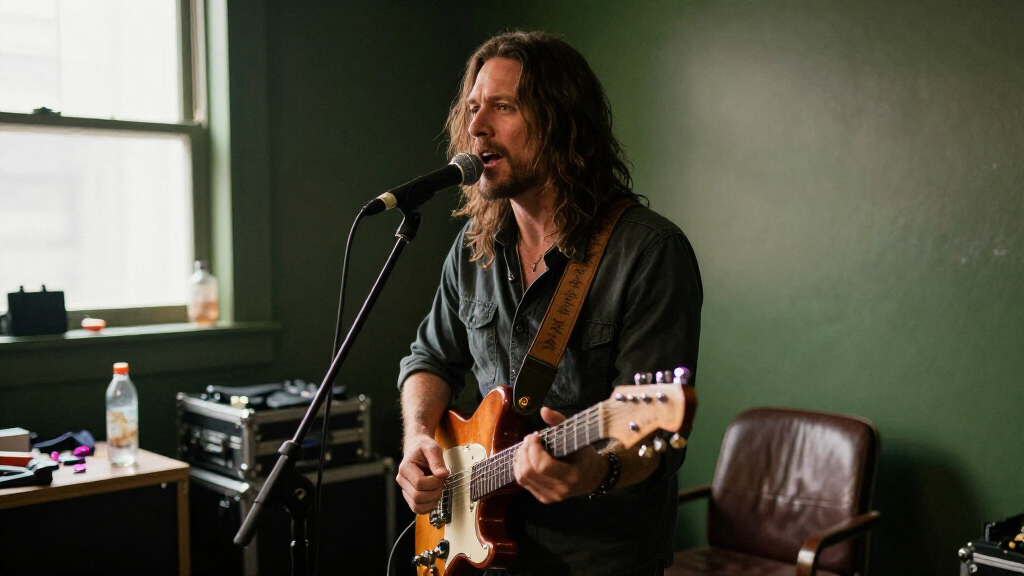
Guitarist and vocalist Myles Kennedy has publicly declared he will not use artificial intelligence to write songs, calling the idea a form of cheating. His stance comes amid rising industry discussions about AI’s role in music creation, but Kennedy emphasizes his dedication to authentic, human-driven songwriting.
In a recent interview, Myles Kennedy stated, “Absolutely, I refuse to use AI to write songs. Why would I cheat myself?” He explained that he values the creative process that comes from human emotion and experience, which he believes AI cannot replicate. Kennedy’s position aligns with a growing segment of artists who oppose AI-generated music, citing concerns about authenticity and artistic integrity. While some industry figures explore AI tools for efficiency or inspiration, Kennedy’s comments reinforce a stance that prioritizes traditional artistry. It remains unclear whether Kennedy’s position is a broader statement against AI in the music industry or specific to his personal creative philosophy.Kennedy’s remarks have attracted attention as AI continues to influence various creative fields, sparking debates about ethics, originality, and the future of human artistry. The singer’s comments also come at a time when AI-generated content is increasingly prevalent in music, with some artists and labels experimenting with AI-assisted songwriting and production. Kennedy’s firm stance emphasizes a desire to preserve the human element in music, contrasting with the technological shift many others are exploring.
Implications for Artistic Integrity in Music
Kennedy’s refusal to use AI underscores ongoing concerns about authenticity and artistic integrity in the digital age. As AI tools become more sophisticated and accessible, artists face choices about embracing or rejecting these technologies. Kennedy’s stance highlights a broader debate: whether AI can truly replicate human emotion and creativity or if its use diminishes the value of genuine artistic expression. His position may influence fans and fellow musicians, contributing to a divide over AI’s role in the future of music. The significance lies in how artists’ attitudes toward AI could shape industry standards, audience perceptions, and the preservation of traditional craftsmanship.As an affiliate, we earn on qualifying purchases.
Growing Industry Debate on AI in Music
The use of AI in music creation has increased over the past few years, with some artists and producers experimenting with AI-assisted songwriting, composition, and production. Major tech companies and startups have introduced AI tools aimed at simplifying music production or generating new compositions. While some see AI as a valuable tool for inspiration and efficiency, others, including certain artists and industry veterans, express concern about losing the human touch. Public discussions about AI’s ethical implications and impact on artistic jobs are intensifying, especially as AI-generated music begins to appear more frequently in commercial releases. Kennedy’s comments reflect a segment of the industry wary of the potential erosion of authenticity.“Absolutely, I refuse to use AI to write songs. Why would I cheat myself?”
— Myles Kennedy
As an affiliate, we earn on qualifying purchases.
Unclear if Kennedy’s stance signals industry-wide rejection
It is not yet clear whether Kennedy’s position is part of a larger movement among artists or a personal choice. The industry remains divided, with some embracing AI tools and others opposing them. The broader impact of his statement on industry practices or fan reception is still developing, and no official industry consensus has emerged.As an affiliate, we earn on qualifying purchases.
Future of AI in music and artist opinions
Further statements from artists and industry leaders are expected as AI technology advances and becomes more integrated into music production. Watching how fans and industry stakeholders respond to vocal opposition like Kennedy’s will indicate whether a larger movement against AI-assisted music is forming. Additionally, upcoming releases may showcase whether artists who oppose AI maintain their stance or reconsider in response to technological and commercial pressures.As an affiliate, we earn on qualifying purchases.
Key Questions
Does Myles Kennedy oppose all uses of AI in music?
Based on his recent statement, Kennedy explicitly refuses to use AI for songwriting, emphasizing his belief in traditional methods. It is unclear if he opposes all AI applications in music or just songwriting specifically.
Why do some artists oppose AI in music?
Many oppose AI due to concerns over authenticity, originality, and the potential loss of human creativity. They argue that AI-generated music lacks emotional depth and undermines artistic integrity.
Could AI still be used in Kennedy’s future projects?
While Kennedy has publicly rejected AI for songwriting, it remains uncertain whether he might reconsider in the future or if he would accept AI tools for other aspects of music production, such as mixing or mastering.
How is the industry responding to AI’s rise in music?
The industry is divided: some embrace AI for efficiency and innovation, while others warn of risks to authenticity and artistic value. The debate is ongoing, with no clear consensus yet.
Source: rss
Halloween Picks
halloween
As an affiliate, we earn on qualifying purchases.