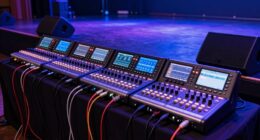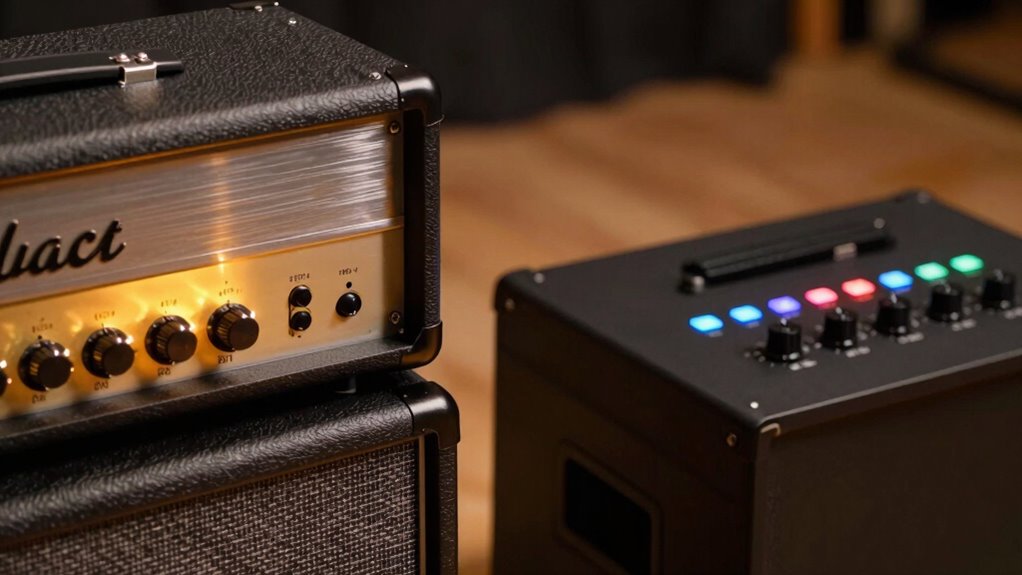

For rehearsals and small shows, a modeling rig offers portability, versatile tones, and quick setup, making it easy to switch styles on the fly. If you prefer authentic vintage sound and a traditional feel, a bass amp delivers that warm, organic tone, especially for fixed performances. Your choice depends on whether you value convenience or classic sound. Keep exploring to find out which option suits your gig style best.

Get audio and creator gear delivered free — and shop member deals
- Fast, free delivery on millions of items
- Access to Prime Big Deal Days deals on October 6–7
- Prime Video, Amazon Music and more included
Key Takeaways
- Modeling rigs offer portability and quick setup, ideal for frequent rehearsals and small gigs with limited space.
- Vintage bass amps provide authentic tone and tactile feel, favored for traditional sound preferences.
- Modeling rigs deliver versatile tone options and built-in effects, suitable for diverse styles and quick sound changes.
- Larger bass amps can be bulky and less convenient for small shows compared to lightweight modeling systems.
- The choice depends on whether authentic vintage sound (bass amp) or versatility and convenience (modeling rig) is prioritized.
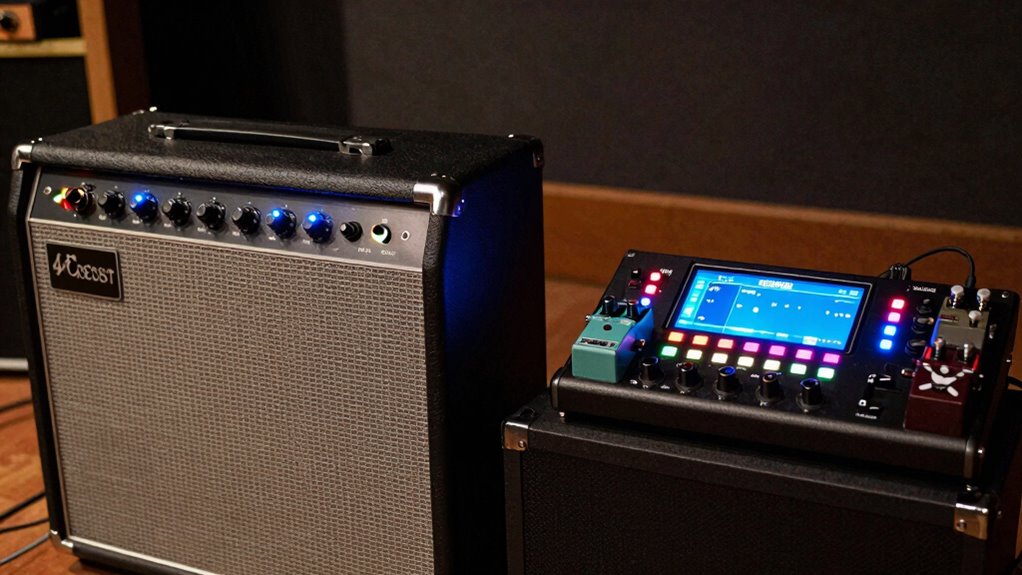
When choosing between a bass amp and a modeling rig, understanding the key differences can help you make an informed decision. Both options have their strengths, but your priorities—whether it’s sound quality, convenience, or versatility—will determine which is best for rehearsals and small shows. A bass amp is a traditional choice, often favored for its authentic vintage tone. If capturing that warm, classic sound is essential, a dedicated bass amp with vintage voicing options might be the way to go. It delivers a rich, organic feel that many players love, especially when performing in intimate settings. However, you should also consider portability concerns. Bass amps, especially those with larger speaker cabinets, tend to be bulky and heavy, making transportation more challenging. If you frequently move from gig to gig or rehearse at different venues, a hefty amp can become a logistical hurdle.
On the other hand, modeling rigs offer a modern, flexible alternative. They replicate a wide array of tones, from vintage to contemporary, often with just the tap of a button. This versatility means you can dial in the perfect sound for any song or style without lugging multiple amps or pedals. For rehearsals and small shows where space is limited, a compact modeling rig can be a game-changer. It provides a range of tones that would otherwise require several pieces of equipment. Plus, many models are lightweight and easily portable, so you can set up quickly and focus on your playing rather than heavy gear logistics. Additionally, advancements in modeling technology have made these rigs increasingly convincing in their tone replication. The ability to simulate different amp types at a moment’s notice adds a significant advantage for live performance versatility. Moreover, the integration of modern features like built-in effects and connectivity options further enhances their appeal for small gigs. It’s also worth noting that digital modeling continues to improve, making these rigs more realistic and expressive than ever before.
While some purists might prefer the authentic vintage tone of a traditional bass amp, modeling rigs have come a long way in replicating those sounds convincingly. They allow you to switch from a warm, tube-driven vibe to a modern, hi-fi clarity without changing hardware. This flexibility is especially useful for small gigs with diverse setlists, or when you want to experiment with different styles without investing in multiple amps. Still, if you’re after an ultra-organic sound and prefer the feel of analog gear, a vintage-style bass amp might be more satisfying, despite its portability concerns.
Ultimately, your choice hinges on what matters most: the authentic vintage tone, the convenience of portability, or a mix of both. If you value simplicity and classic sound, a vintage bass amp might be your best bet. If you prioritize versatility and ease of transport, a modeling rig offers a practical, all-in-one solution perfect for rehearsals and small performances.
As an affiliate, we earn on qualifying purchases.
Frequently Asked Questions
How Do Maintenance Costs Compare Between Bass Amps and Modeling Rigs?
Maintenance costs for bass amps generally involve higher repair expenses and power consumption, especially if the amp is older or heavily used. Modeling rigs tend to have lower repair costs because they use digital components that are less prone to physical damage. Additionally, modeling rigs often consume less power, reducing ongoing energy expenses. Overall, you might find that modeling rigs are more cost-effective in the long run due to lower repair and power costs.
Can Modeling Rigs Replicate All Vintage Bass Amp Tones Accurately?
While modeling rigs have come a long way, they can’t perfectly replicate all vintage bass amp tones, especially when it comes to sound authenticity. You might get close, but the rich, nuanced vintage tone often remains elusive. The contrast between digital precision and analog warmth highlights the limitations of modeling rigs, reminding you that some sonic qualities are best achieved with classic vintage amps for truly authentic sound.
What Are the Power Requirements for Portable Gig Setups?
For portable gig setups, you need to take into account battery life and power consumption. Most battery-powered systems last several hours, but it varies with usage and equipment type. Look for gear with efficient power consumption to maximize runtime. Portable rigs with rechargeable batteries or AC adapters work best, ensuring you stay powered through rehearsals and small shows. Always check your gear’s battery capacity and power needs beforehand to avoid surprises during performances.
Do Modeling Rigs Have Better Durability for Touring Use?
Modeling rigs generally have better durability for touring because of their superior build quality and material durability. They’re designed with rugged components that withstand the rigors of frequent transport and handling. Unlike some traditional amps, modeling rigs often feature sturdy casing and high-quality materials, making them more reliable on the road. If you tour regularly, investing in a modeling rig can give you peace of mind knowing it’s built to last.
How Does Initial Purchase Cost Differ Between the Two Options?
You’ll find that a bass amp typically has a higher initial purchase cost compared to a modeling rig, especially when considering quality and power. The price comparison shows that modeling rigs often come at a more budget-friendly price point, making them attractive for beginners or those with limited budgets. Budget considerations play a big role, and if you’re looking for affordability without sacrificing sound, a modeling rig might be your best choice.
As an affiliate, we earn on qualifying purchases.
Conclusion
Ultimately, whether you choose a bass amp or a modeling rig, it’s about what fits your style and needs. Think of the amp as a trusty old friend—reliable and straightforward—while the modeling rig is like a chameleon, versatile and adaptable. For rehearsals and small shows, pick the one that feels right in your hands, because in the end, it’s your sound that’ll steal the spotlight. Your perfect tone is waiting just around the corner!
As an affiliate, we earn on qualifying purchases.
As an affiliate, we earn on qualifying purchases.
Fall Picks
fall essentials
As an affiliate, we earn on qualifying purchases.