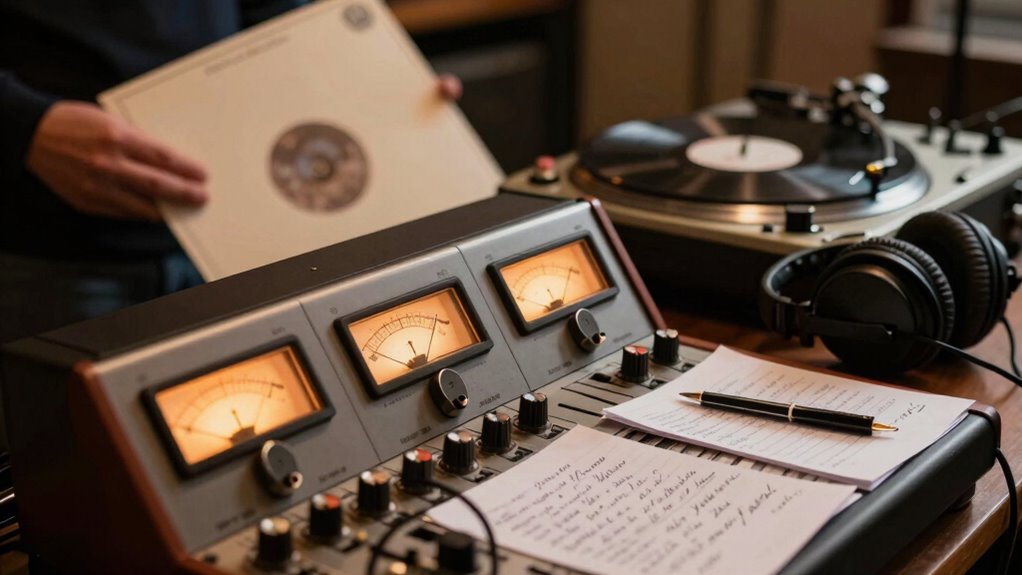

To train your ear with live recordings without fancy apps, focus on active listening. Pick high-quality, authentic recordings that reflect real instrument sounds and musical diversity. Concentrate on one element at a time, replay sections to catch details, and take notes. Practice identifying instruments, melodies, and harmonic progressions, gradually increasing complexity. Keep your environment distraction-free, and make ear training part of your daily routine. If you keep at it, you’ll open more advanced listening skills.
Key Takeaways
- Focus on active listening by isolating specific elements like melodies, rhythms, or instruments within live recordings.
- Use high-quality, authentic live recordings with clear sound to accurately identify instruments and musical nuances.
- Replay sections multiple times, taking notes to deepen your understanding of musical textures and interactions.
- Practice identifying tuning differences, improvisations, and dynamic shifts to enhance your ear beyond basic recognition.
- Create a routine of daily focused listening sessions in a quiet environment to develop consistent and sharp listening skills.
Why Are Live Recordings Great for Your Ear Training?
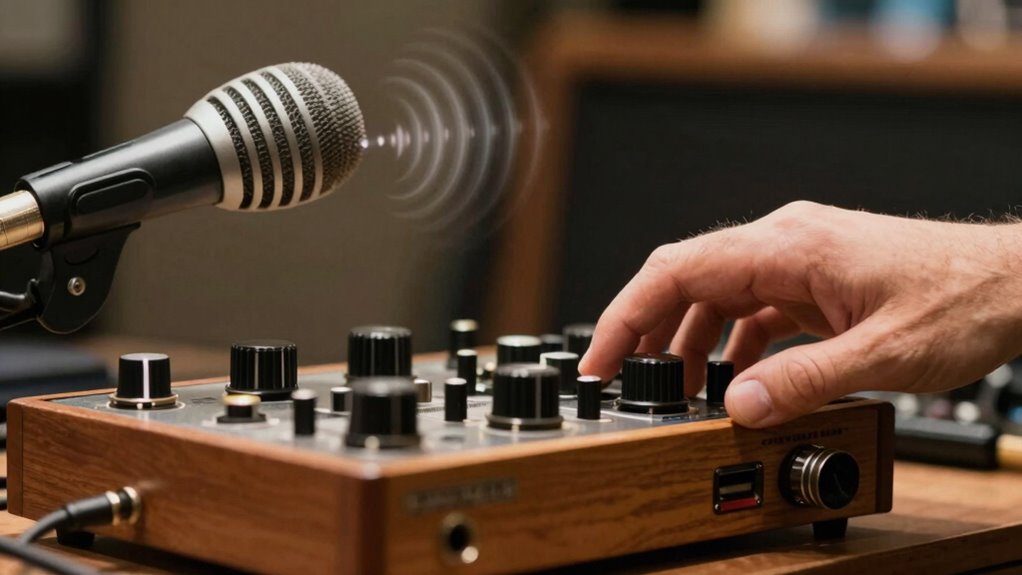
Have you ever wondered why live recordings are so valuable for ear training? They expose you to real-time variations in sound, helping you develop a deeper understanding of music theory in context. Listening to live performances sharpens your ability to identify instruments, as their unique timbres and playing styles stand out more clearly. Unlike studio recordings, live tracks often feature improvisations, dynamic shifts, and audience noise, which challenge your ear and improve your focus. This authenticity forces you to rely on your listening skills rather than polished production. By regularly practicing with live recordings, you’ll strengthen your capacity to recognize different instruments and grasp complex musical concepts more intuitively. Incorporating dynamic range into your practice sessions further enhances your ability to distinguish subtle differences in volume and tone, making your ear training more realistic and effective.
How to Find and Pick the Best Recordings for Practice
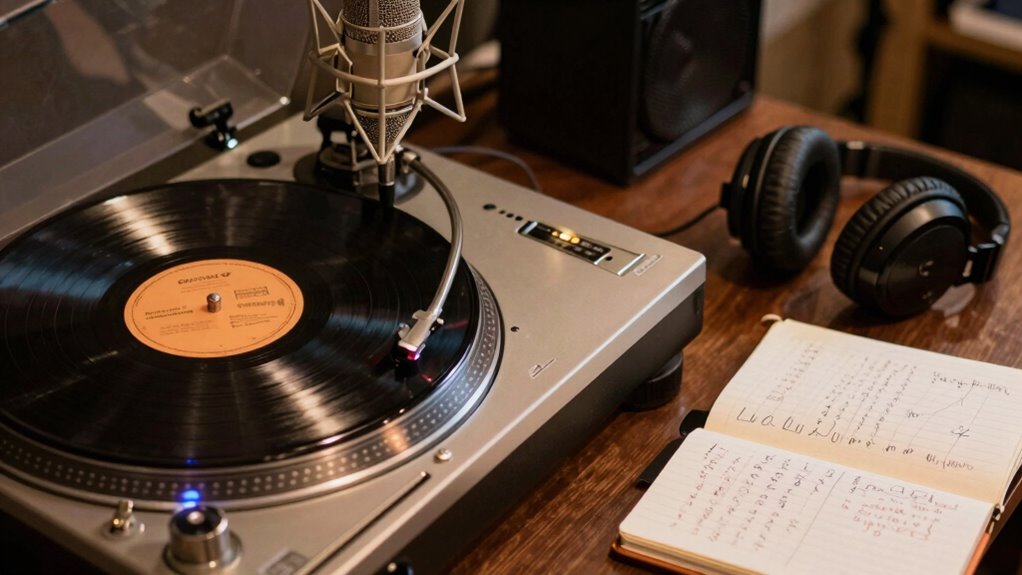
Start by selecting clear, authentic recordings that let you hear every detail without distortion. Then, focus on choosing a variety of musical styles to challenge and improve your listening skills. This approach guarantees you develop a well-rounded ear capable of recognizing different sounds and techniques. Incorporating diverse genres can also help you understand different musical expressions and nuances, further sharpening your auditory skills.
Choose Clear, Authentic Recordings
Choosing the right recordings is essential for effective ear training. You want recordings with excellent recording clarity, where every instrument and vocal is distinct. Clear sound helps you focus on pitch, tone, and rhythm without confusion. Authentic sound is equally important; it should reflect real, unprocessed performances, so you’re training your ear to recognize genuine musical nuances. Avoid recordings with heavy effects, muddiness, or background noise, as these can distort your perception. Seek out high-quality live recordings or well-recorded studio tracks that showcase the true sound of the instruments and vocals. The goal is to practice with recordings that accurately represent the music, so your ear develops a keen sense of pitch and tone in a realistic setting. Incorporating free floating elements into your listening environment can further enhance your ability to discern subtle musical details.
Focus on Musical Diversity
To effectively train your ear, it is vital to expose yourself to a wide range of musical styles and genres. This diversity helps you recognize different instrument tuning and tonal qualities. Seek recordings that feature various instruments and arrangements, so you can practice identifying individual parts by ear. During song analysis, pay attention to how different genres use harmony, rhythm, and melody, which sharpens your listening skills. Listening to diverse music also trains your brain to adapt to different tuning systems and tuning discrepancies, making your ear more flexible. Recognizing market shifts like the recent control of 50% of Bitcoin supply by new holders can also inform your understanding of how external factors influence sound and rhythm in music. By intentionally selecting recordings that challenge your listening abilities across styles, you’ll develop a more versatile ear and improve your overall musical perception.
How to Listen Actively and Focus on Specific Elements in Music?

When you listen actively, you train your ears to pick out specific elements within a piece of music, which enhances your overall understanding and appreciation. Active listening involves focusing your attention on different aspects of the music, like rhythm, melody, or instrumentation. Use focus techniques such as:
- Concentrate on one element at a time, like the bass line or vocal harmony
- Isolate sections to understand how they fit into the whole song
- Replay recordings to catch details you missed initially
- Take notes on what you hear to reinforce your focus
- Engaging with classic arcade games can also sharpen your listening skills by requiring focused attention on gameplay sounds and cues.
These strategies help you develop sharper listening skills and better distinguish individual components. By practicing active listening intentionally, you’ll notice your ability to analyze and appreciate music deepening over time.
Simple Ear Exercises to Recognize Chords, Melodies, and Harmonic Content
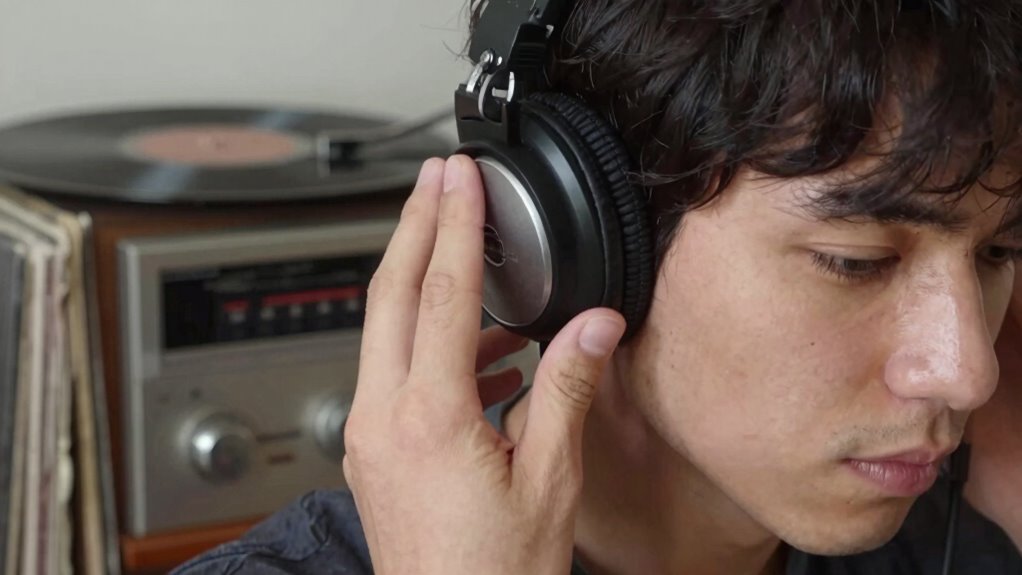
Building on your active listening practice, simple ear exercises can sharpen your ability to identify chords, melodies, and harmonic structures. Focus on interval recognition by singing or humming between notes in a chord or melody. Incorporate rhythm exercises to internalize timing and pulse, which help distinguish harmonic changes. Try listening to live recordings and pause frequently, asking yourself: What chord is that? Is the melody ascending or descending? Use this table to deepen your understanding:
| Harmonic Element | Exercise Method |
|---|---|
| Chord recognition | Sing root and third of chords |
| Melody identification | Hum along and note intervals |
| Harmonic content | Identify progressions by ear |
Consistent practice enhances your ability to decode complex harmonic content naturally. Additionally, detect passive voice in your listening helps improve clarity and precision in musical analysis.
Tips for Progressing From Basic to More Complex Listening Tasks
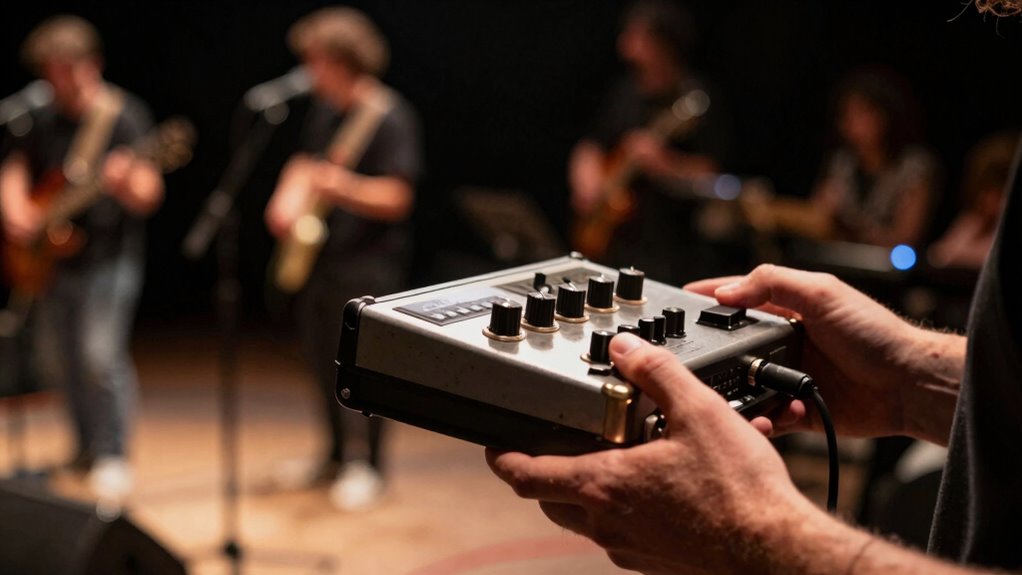
To improve your ear, start by gradually increasing the complexity of what you listen to. Focus on specific elements like rhythm, harmony, or melody to sharpen your skills. This targeted approach helps you progress more effectively and build confidence with each step. Incorporating online resources and courses can further enhance your understanding and practice outside of live recordings.
Gradually Increase Complexity
As you become more comfortable with basic listening exercises, gradually increasing the complexity helps you develop a more refined ear. Start incorporating tasks like interval recognition to challenge your pitch accuracy and understanding. Add rhythm drills that involve identifying syncopation or changing tempos to sharpen your timing. To progress, consider these steps:
- Mix simple melodies with more intricate ones, focusing on different intervals.
- Practice rhythm drills with faster or irregular patterns.
- Layer multiple elements, like melody and harmony, to listen more analytically.
- Increase the speed of recordings gradually to improve your agility.
- Pay attention to subtle cues, such as changes in sound quality, to enhance your perceptual skills.
This steady escalation guarantees you’re not overwhelmed and builds your confidence in handling more sophisticated listening tasks.
Focus on Specific Elements
Once you’ve started to handle more complex melodies and rhythms, honing in on specific musical elements can *particularly* sharpen your listening skills. Focus on details like instrument tuning, which affects pitch accuracy and overall sound quality. Pay attention to how different instruments blend or stand out, and try to identify improvisation techniques used by musicians. Listening for subtle changes in dynamics or articulation helps you understand the expressive choices performers make. Practice isolating individual elements within a recording—such as a solo or a particular instrument—and analyze how they interact with the rest of the ensemble. This targeted approach trains your ear to pick up on nuanced details, moving you beyond basic recognition to a deeper appreciation of complex musical textures. Additionally, listening environment plays a crucial role in your ability to discern these details clearly.
Common Mistakes to Avoid When Using Recordings for Ear Training

Using recordings for ear training can be highly effective, but it’s easy to fall into common pitfalls that hinder your progress. One mistake is overgeneralization—assuming one example applies universally, which can lead to incorrect conclusions. Neglecting context is another issue; ignoring the musical environment around a note or chord can cause misunderstandings. Additionally, relying solely on passive listening limits your growth, and skipping variation reduces your ability to recognize sounds in different settings. To avoid these pitfalls, stay aware of the bigger picture, focus on specific elements without jumping to broad assumptions, and actively engage with recordings. Remember, effective ear training requires attention to detail and understanding the context in which sounds occur.
How to Incorporate Recording Practice Into Your Regular Music Routine
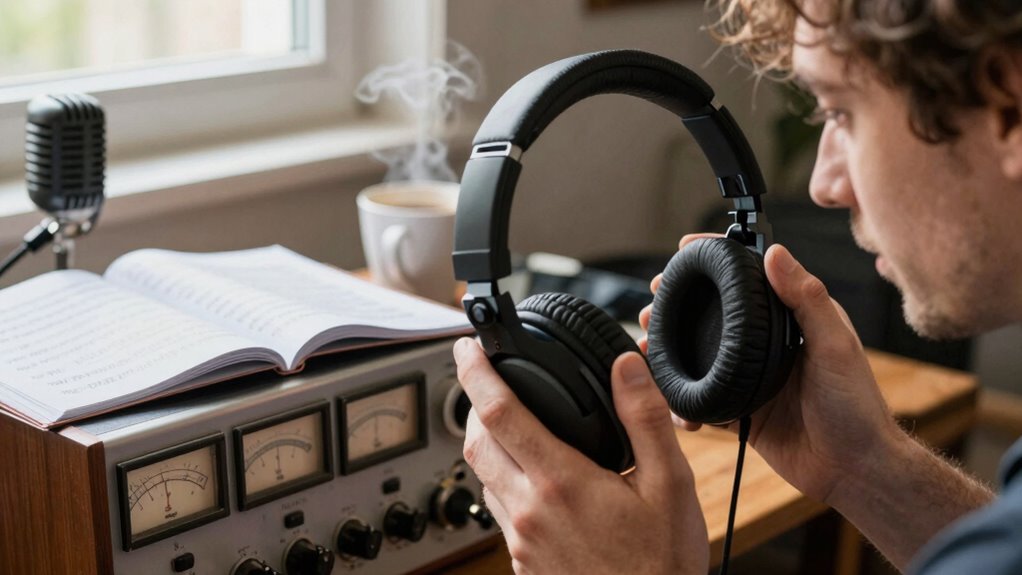
To effectively incorporate recording practice into your daily routine, start by setting aside dedicated time each day for focused listening. Make sure your listening environment is quiet and free from distractions, allowing you to fully engage with the recordings. Consistent practice helps strengthen your musical memory, making it easier to recall and identify details in the music. Incorporate short sessions into your daily schedule, such as reviewing a recording during breaks or after practice. By doing this regularly, you’ll develop a sharper ear and deeper understanding of musical nuances. Over time, your ability to recognize chords, melodies, and rhythms will improve naturally, making ear training an integral part of your overall musical growth.
Frequently Asked Questions
How Often Should I Practice With Live Recordings?
You should practice with live recordings at least 3-4 times a week to see steady progress. Consistency is key, so aim for regular sessions rather than sporadic ones. Incorporate a variety of recordings—different genres, instruments, and tempos—to challenge your ear and improve your listening skills. By maintaining this routine and mixing up your practice material, you’ll develop better pitch recognition and overall musical perception faster.
What Equipment Is Necessary for Effective Listening?
Ever wondered what equipment is essential for effective listening? You mainly need good-quality headphones, as headphone quality directly impacts your ability to distinguish nuances. Use recordings in clear formats like WAV or high-bitrate MP3s to guarantee sound fidelity. While a basic setup works, investing in decent headphones and choosing proper recording formats enhances your training, making it easier to identify subtle differences and improve your ear training skills efficiently.
Can I Use Recordings for Training Different Musical Styles?
Yes, you can use recordings to train your ear across different musical styles. Focus on diverse recording selections that showcase genre versatility, from jazz and classical to rock and electronic. Listening to various genres helps you identify unique features, such as different rhythms, harmonies, and instrumentation. Regularly switching between styles sharpens your listening skills and broadens your musical understanding, making your ear more adaptable and perceptive.
How Do I Measure My Ear Training Progress?
Sure, because measuring your ear training progress is as fun as watching paint dry, right? Just track your improvement in interval recognition and pitch accuracy over time. Record yourself regularly, then compare your recent attempts to earlier ones. Notice how your ability to identify intervals and hit the right pitch improves. It’s a simple, honest way to see if your ear is actually getting sharper—or just pretending to be.
Are There Specific Genres That Enhance Ear Training Better?
Certain genres like jazz, blues, and classical music enhance your ear training more effectively because they emphasize complex harmonies and intricate melodies. Focus on genre-specific recordings to improve your style adaptation and develop a keen sense of chord progressions, scales, and rhythms. By immersing yourself in these genres, you’ll train your ear to recognize subtle nuances and adapt to different musical styles more easily.
Conclusion
Using live recordings is a powerful way to sharpen your ear without fancy apps. By choosing the right recordings, listening actively, and gradually increasing complexity, you’ll notice steady improvement. Stay consistent, avoid common pitfalls, and make recording practice a regular part of your routine. Over time, your ability to recognize chords, melodies, and harmonic nuances will grow stronger, bringing you closer to true musical mastery. Keep listening, stay patient, and enjoy the journey.